Top

Huobi Co-Founder Acquires 10 Million CRV Tokens

Web3 & Enterprise·August 04, 2023, 2:53 AM

Jun Du, Chinese Co-Founder of Seychelles-headquartered global crypto exchange Huobi, has recently completed the purchase of 10 million curve tokens (CRV) from Curve founder Michael Egorov.

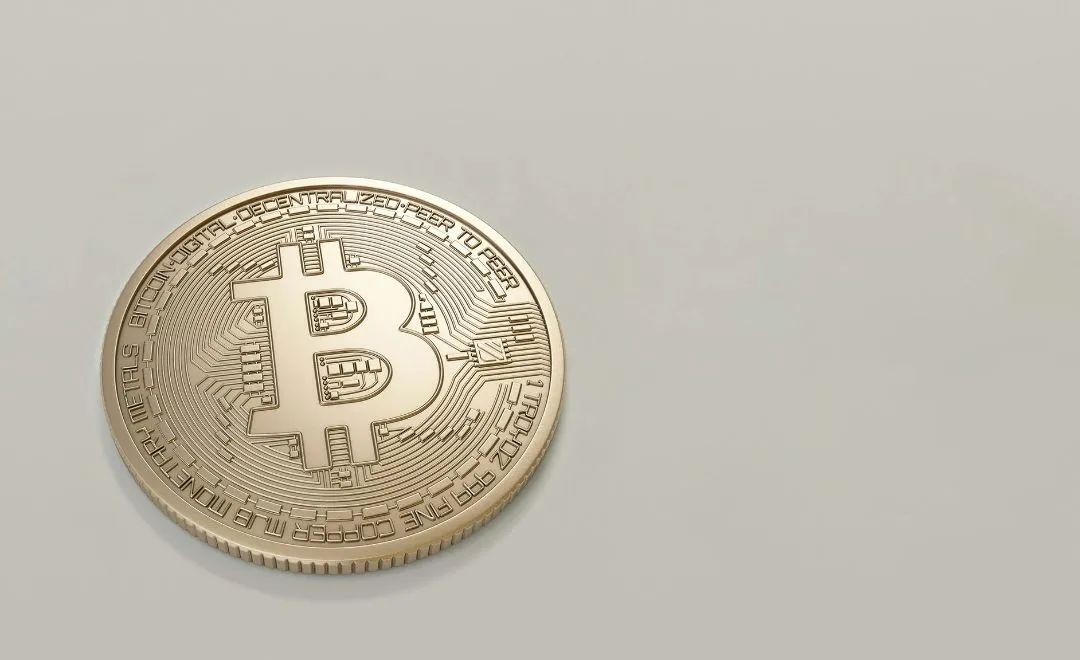
Photo by Growtika on Unsplash


Curve protocol loan exposure

The transaction amounted to $4 million and is part of Egorov’s ongoing efforts to mitigate his at-risk loan exposure, a further consequence of last week’s $52 million hack of the Curve DeFi protocol.

Initially, Du expressed his interest in acquiring 10 million CRV tokens at the prevailing rate of $0.40. This price aligned with multiple over-the-counter (OTC) agreements between Egorov and various cryptocurrency individuals. According to a report by The Block, Du later confirmed the purchase through a Twitter direct message, revealing that he had chosen to lock up the acquired tokens as veCRV. This lock-up mechanism grants voting rights within the Curve platform while requiring the tokens to remain locked for a specified duration.

“I intend to uphold this lock-up for at least a year, with optimism for continuous improvements within the Curve ecosystem,” Du stated, highlighting his commitment to the project’s long-term growth.

On his Twitter account, Du emphasized his unwavering support for Curve, drawing parallels to his past backing of BendDAO during a liquidity crisis. He clarified: “Challenges faced now are transient, and collective support will foster a stronger industry.”

Alongside being a Co-Founder at Huobi, Du holds the positions of CEO at New Huo Tech, a digital asset service platform, and Co-Founder and General Partner (GP) at the Web3 fund ABCDE.


Ongoing token sell-off

In actively managing liquidation risk, Egorov is persistently offloading CRV tokens to bolster his loan position, given his significant exposure. He has utilized multiple DeFi lending platforms to secure loans, predominantly employing CRV tokens as collateral to borrow stablecoins. His borrowing activity on platforms like Aave alone has involved $56 million in stablecoins against $149 million worth of CRV collateral.

Egorov’s health ratings on these platforms have improved recently, hovering around 1.67 or higher. Nonetheless, there remains a lingering risk associated with potential liquidation of his positions if CRV’s price were to dip substantially. This could potentially lead to bad debt scenarios for the platforms, particularly due to the substantial proportion of CRV supply involved.


Sales of 72 million CRV

Egorov’s token sales have amounted to 72 million CRV, according to Nansen analyst Sandra Leow. Notable recipients of these tokens include Tron Founder Justin Sun, crypto trader “DCFGod,” and Andrew Kang, Co-Founder of Mechanism Capital.

Aave Chan Initiative, an entity tied to the Aave protocol, has proposed that the Aave treasury allocate funds to purchase up to $2 million worth of CRV tokens. The intention is to lock up these tokens as veCRV for an extended period, potentially up to four years. This move is aimed at further reinforcing the stability of CRV’s market dynamics.

More to Read
View All
Web3 & Enterprise·

Sep 06, 2023

Korbit Passes Post-Audit for ISMS-P and ISO Certifications

Korbit Passes Post-Audit for ISMS-P and ISO CertificationsSouth Korean crypto exchange Korbit announced on Wednesday that it has successfully passed a post-audit to maintain its Personal Information and Information Security Management System (ISMS-P) certification and four different International Organization for Standardization (ISO) certifications — ISO 27001, ISO 27017, ISO 27018, and ISO27701.“By maintaining our ISMS-P and ISO certifications this year, we were able to reaffirm the stability and trustworthiness of Korbit’s personal information protection capabilities and security management system,” said Oh Se-jin, CEO of Korbit.Photo by FLY:D on UnsplashRigorous criteriaThe ISMS-P is a security management system jointly operated by the Ministry of Science and ICT and the Personal Information Protection Commission, representing the highest level of security management in Korea. It combines 80 requirements for Information Security Management System (ISMS) certification and 22 requirements for Personal Information Management System (PIMS) certification, totaling 102 requirements that must be met. Once obtained, certification is valid for three years, and annual post-audits are required to maintain its validity.Korbit first obtained ISMS-P certification in September of 2021 and has once again passed this year’s post-audit that was conducted last Wednesday.Meeting international standardsIn addition, the exchange had previously passed post-audits for four ISO certifications related to information protection and personal information management systems earlier in June. This includes ISO 27001 for information security management systems, ISO 27017 for information security controls on cloud services, ISO 27018 for protection of personally identifiable information (PII) in public clouds, and ISO 27701 for privacy information management systems.This achievement demonstrates Korbit’s commitment to reliability and security when operating and managing exchange services.“As a crypto exchange, we will continually focus on strict security management to ensure the protection of customer information and assets,” said CEO Oh.

news
Policy & Regulation·

Feb 09, 2024

Settlement approved but sealed by judge in BlockFi-3AC case

A settlement agreement between failed crypto lender BlockFi and bankrupt Singaporean crypto hedge fund Three Arrows Capital (3AC) has received approval from a U.S. judge. However, the specifics of the settlement remain sealed, citing concerns raised by yet another failed crypto platform, FTX. Dispute resolvedDuring a hearing on Feb. 6, New Jersey Bankruptcy Court Judge Michael Kaplan resolved the dispute, which saw BlockFi claiming $129 million owed by 3AC, while the Singapore-based firm contended that BlockFi owed it $280 million. Judge Kaplan's decision to keep the settlement agreement sealed stemmed from a perspective that unsealing it would be counterintuitive. BlockFi had filed a motion to seal the settlement terms last month. The U.S. Trustee objected to the seal, asserting that the debtors hadn't provided sufficient justification for sealing the agreement.Photo by mk. s on UnsplashSensitive settlement termsBlockFi justified the need for confidentiality, citing the sensitive commercial nature of the terms, which could potentially impact ongoing litigation involving FTX. The approval of the settlement now paves the way for BlockFi to proceed with distributions from the lending estate to its 100,000 creditors, with the firm owing up to $10 billion. Central to the dispute were preferential payments, transactions made just before bankruptcy that could have given the recipient more than they would have received through court proceedings. The resolution of counterclaims between BlockFi and 3AC follows mediation ordered by Judge Kaplan in October, likely culminating from a two-day hearing starting on Jan. 5 aimed at resolving the matter conclusively. This settlement follows another agreement between 3AC and Genesis, settling $1 billion in claims by 3AC. The company filed for bankruptcy in July 2022, attributing the extreme fluctuations in cryptocurrency markets as the reason for its collapse. Projected 46% 3AC creditor recoveryAccording to a December report to creditors by Teneo, it's estimated that 3AC creditors will receive approximately 45.74% of their claims from the bankrupt estate. As of Dec. 18, 2023, 3AC's assets were valued at $1.16 billion, while recognized claims for distribution stood at $2.7 billion. In an ongoing effort to secure 3AC's assets, a British Virgin Islands (BVI) court froze $1 billion in assets belonging to 3AC's founders, amid the liquidation process. This move is part of a broader strategy to seek recoveries from the founders and Kelly Chen, wife of one of the co-founders. 154 claims totaling $3.4 billion were filed against the 3AC estate, with $200 million not admitted for distribution and $322 million rejected or expected to be rejected. Additionally, claims worth $76 million are currently under dispute. BlockFi, along with eight affiliates, filed for Chapter 11 bankruptcy in November 2022. The firm cited significant exposure, including obligations owed to BlockFi by FTX-linked hedge fund Alameda Research, assets on the FTX platform and an undrawn credit line from FTX. 3AC’s collapse in June 2022, followed by FTX's downfall, led to BlockFi's bankruptcy filing in late November 2022. In a separate development, OPNX, a crypto bankruptcy claims platform launched by 3AC co-founders Su Zhu and Kyle Davies, announced its cessation of operations, with plans to shut down by Feb. 14.  

news
Policy & Regulation·

Nov 13, 2025

Crypto fraudster sentenced in UK after record $6B Bitcoin seizure

As cryptocurrencies increasingly position themselves as a recognized asset class and potential hedge against fiat inflation, illicit activity tied to digital tokens is becoming more visible. A recent high-profile case in the UK has brought this issue into sharp focus, centering on a fraud scheme originating in China. According to BBC News, the case involves Qian Zhimin, a woman who raised funds from more than 100,000 investors in China by claiming to operate a crypto mining company that also develops health products. Instead, she laundered the proceeds and fled the country. On Nov. 11, Qian was sentenced to 11 years and eight months in prison by a UK court.Photo by Vasilis Chatzopoulos on Unsplash$6B fraud and lavish lifestyle​Qian entered Britain on a forged passport in September 2017 and proceeded to live an extravagant lifestyle, renting a mansion in Hampstead for over £17,000 ($22,700) per month. She was arrested in northern England in April 2024, and it was found that she held roughly 61,000 Bitcoin, valued at roughly £5 billion ($6.6 billion), having converted portions of her holdings to cover her substantial living expenses. ​The sheer scale of her wealth was revealed after police searched her rented residence, discovering the Bitcoin reserves on hard drives and laptops. It marks the largest crypto seizure ever recorded in the UK. During the raid, officers also found four other individuals at the property illegally employed to handle household tasks such as shopping, cleaning, and security. ​Since Qian’s arrival in the UK, the value of her Bitcoin holdings has appreciated more than 20-fold. With the fraudster now sentenced, victims are seeing a glimmer of hope for restitution. A civil case scheduled for early next year will determine the fate of the seized assets. However, while many defrauded Chinese investors are reportedly preparing to file claims, establishing a clear paper trail may prove difficult. Many victims routed funds through local intermediaries rather than transferring them directly to Qian’s firm. ​U.S. Bitcoin forfeiture and Beijing’s allegationsWhile the UK courts grapple with the aftermath of Qian’s fraud, a separate crypto controversy is brewing between the U.S. and China, highlighting Beijing's continued vigilance over the sector despite its 2021 ban on trading and mining. According to Cointelegraph, the state-supported National Computer Virus Emergency Response Center (CVERC) has alleged that American authorities are connected to the disappearance of roughly 127,000 Bitcoin, valued at around $14.5 billion, from the LuBian mining pool. ​These allegations surfaced after the U.S. filed a civil forfeiture claim in October against Chen Zhi, the Cambodia-based founder of the Prince Group, who is believed to have owned the assets prior to the breach. At the time of the filing, the U.S. Treasury Department noted that the funds were already under its control. ​CVERC contends that Washington hasn't explained how it accessed the assets. Citing data from analytics firm Arkham, the Chinese agency suggested the funds had been under U.S. control for over a year. They argued that the prolonged inactivity of the Bitcoin before the formal seizure is inconsistent with the typical behavior of hackers seeking quick profit, implying state-level involvement. Economic chess between Washington and BeijingThis matter of Bitcoin control adds a new layer of complexity to U.S.–China relations, even as a trade truce between the two countries took effect on Nov. 10. In a report by CNBC, Washington cut tariffs on China’s fentanyl-linked imports to 10% and extended a reciprocal rate reduction under that agreement. In exchange, Beijing is said to have eased certain restrictions on rare earth exports. Analysts at Morgan Stanley suggest that China is maintaining its export-control regime, implemented in April, to retain strategic leverage. They caution that recurring negotiations and strategic divergence will remain defining features of the evolving bilateral relationship. 

news
Loading