Top

Crypto Exchange Bithumb Holds Free Trading Event To Boost User Base and Liquidity

Web3 & Enterprise·August 01, 2023, 6:34 AM

Bithumb, South Korea’s second-largest cryptocurrency exchange, has announced a major “no trading fee” event in an attempt to narrow the gap with its competitor Upbit, the leading exchange in the market.

The event started on August 1, with select listed virtual assets available for trading without having to pay a fee on the exchange’s Korean won market.
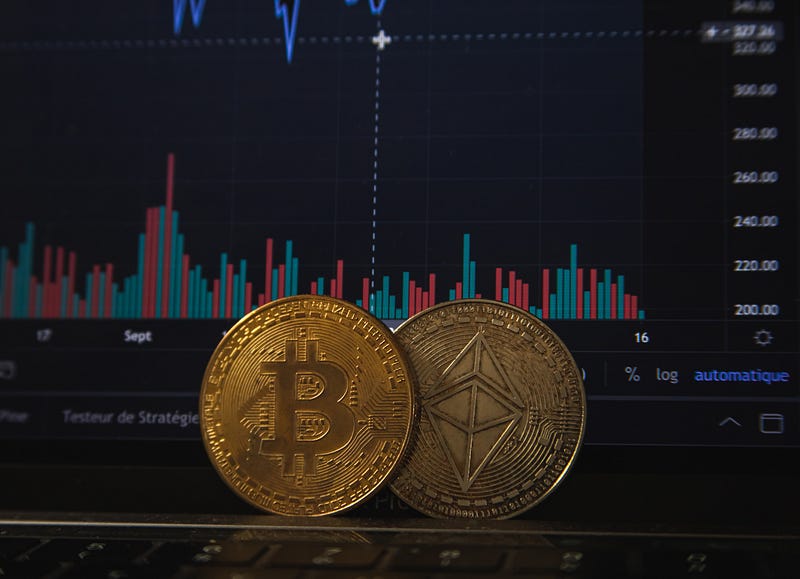
Photo by Pierre Borthiry — Peiobty on Unsplash


Assets with no trading fees

Aptos (APT), Stacks (STX), Flow (FLOW), Sui (SUI), Bitcoin Gold (BTG), FirmaChain (FCT2), Blur (BLUR), Waves (WAVES), Metal (MTL), and Loom Network (LOOM) will be the first assets to have no fees during the event.

The cryptocurrencies eligible for free trading can easily be distinguished by the blue “Free” badge displayed next to their names. Users can also check the full list through the “Fee-Free” category displayed at the top of the exchange chart.

The event is scheduled to continue until further notice and an additional ten assets eligible for free trading will be added every week as well.


Boosting liquidity

According to a Bithumb official, the virtual assets to be unveiled later on will be “subject to active domestic and international investment,” and the exchange will strategically select those that have the highest potential to expand liquidity.

Through this event, Bithumb aims to support the diversification of cryptocurrency investors’ portfolios and increase its user base, thereby enhancing trading liquidity.


More to Read
View All
Web3 & Enterprise·

Apr 26, 2024

Phemex introduces Lending Protocol and Pulse Season 3

Stella Chan, the chief operating officer of Phemex, a crypto derivatives exchange with a presence in Turkey and Singapore, recently provided details of the company’s unveiling of its Lending Protocol and SocialFi initiative Pulse Season 3. In an interview with Cointelegraph, Chan outlined that since the founding of the firm in 2019, the company has been evolving and working towards carving out a niche for itself in the industry. The executive confirmed that the exchange business has reached a point where daily trading volume now exceeds $2 billion across more than 300 trading pairs. Pulse Season 3Chan is also the co-founder of Phemex’s Pulse, a social trading platform that rewards users while attempting to foster a community spirit within the crypto sphere. As part of Phemex events held at Token 2024 in Dubai last week, the company announced Pulse Season 3, a SocialFi mechanism to incentivize community engagement. The initiative introduces casting and tipping features. Casting is a means through which community members can post up content. Meanwhile, tipping serves as a method through which other community members can acknowledge and reward high-quality community member contributions. Through this initiative Phemex is hoping to deliver an enhanced experience where trading seamlessly intersects with trending topics and insightful content.Photo by Shubham Dhage on UnsplashPhemex Lending ProtocolAlongside Pulse Season 3, the company has also launched the Phemex Lending Protocol, a feature allowing users to borrow crypto at competitive rates while earning interest. As part of that offering, all loans are safeguarded through the collateralization of the user’s digital assets. With an initial liquidity allocation of $22 million, this protocol has been established with an eye towards empowering traders to amplify their capital without selling their assets, while aligning in a more general sense with the user’s overall trading needs. Phemex is attempting to spearhead the transition towards greater user autonomy without compromising security. The Phemex Lending Protocol is central to that effort, offering users competitive borrowing rates and opportunities for passive income generation.  Standing testament to that, the platform offers interest rates on USDT starting at 3.57%. For those that hold vePT, the wrapped version of the platform's native Phemex token (PT), an additional 30% discount on borrowing rates is being offered. vePT is destined to act as a token which confers voting authority in the not too distant future, relative to Phemex’s governing decentralized autonomous organization (DAO). The platform is further enabling capital efficiency from the service user’s perspective by applying very little restriction so that funds can be withdrawn and redeployed at will, with minimum delay. Coming off the back of these announcements during Token 2024, the company appears to be following through on that momentum. Taking to the X social media platform on April 25, Chan outlined details of a plethora of user experience (UX) upgrades relative to its Pulse offering. Future plansLooking ahead, Phemex envisages the offering of a broader range of products tailored to user needs. Plans for an automated market maker (AMM) protocol aim to provide users with passive earning opportunities by contributing to liquidity. Additionally, Phemex is exploring the development of an on-chain credit scoring mechanism, leveraging its soulbound digital identity token to enhance access to decentralized finance (DeFi).

news
Web3 & Enterprise·

Sep 23, 2025

First Toyota vehicle in Bolivia purchased with USDT as inflation bites

In a first for Bolivia, Japanese automaker Toyota saw one of its vehicles purchased with the stablecoin USDT, according to a recent X post by digital asset trust company BitGo. The transaction underscores growing cryptocurrency adoption in the Latin American country, which is grappling with soaring inflation and a shortage of U.S. dollars. The transaction was facilitated by a partnership between Toyosa (the official Toyota distributor in Bolivia), BitGo, and Tether, the issuer of the USDT stablecoin. The sale highlights the increasing use of digital assets for commercial and retail payments, as the global stablecoin market cap recently reached an all-time high of $293 billion at the time of publication. Confirming the milestone, Tether CEO Paolo Ardoino stated on the social media platform X that, in addition to Toyota, the USDT stablecoin is now also accepted by distributors of BYD and Yamaha vehicles in Bolivia.Photo by Christina Telep on UnsplashCrypto use surges amid inflation and dollar shortage The development comes as Bolivia faces 25% inflation, the highest in 34 years. With the local economy under pressure, many Bolivians are moving their money into cryptocurrencies in an effort to protect their savings, according to Bloomberg. U.S. dollars have become increasingly scarce. Unofficial exchange rates have jumped to 14 bolivianos per dollar, nearly twice the government's rate. That gap is pushing people toward stablecoins like USDT, which are easier to access and hold their value. The shift is already showing up in payment trends. Digital transactions surged more than fivefold in the first half of 2025, reaching nearly $300 million. Regional adoption and Toyota’s blockchain pushThe rise in crypto use in Bolivia is part of a broader shift across Latin America. According to a recent report from analytics firm Chainalysis, crypto adoption in the region jumped from 53% to 63% in the 12 months ending June 2025. The only region to outpace this growth was Asia-Pacific, which saw a 69% year-over-year increase. El Salvador stands as another prominent example in the region, having adopted Bitcoin (BTC) as legal tender in September 2021 and currently holding over 6,300 BTC in its treasury. Separately, Toyota Motor Corporation has been actively exploring applications for blockchain technology. In March, its subsidiary Toyota Financial Services, in collaboration with Daiwa Securities and MUFG Bank, launched its first security token bonds on Progmat, a platform founded by MUFG with backing from other big banks like Sumitomo Mitsui Banking Corporation (SMBC) and Mizuho. The initiative is aimed at strengthening the Toyota Group’s ties with individual investors and supporting the growth of the digital bond market. 

news
Policy & Regulation·

Sep 11, 2025

Vietnam launches five-year pilot to regulate crypto asset trading

Vietnam has launched a five-year pilot program imposing stringent new rules on the cryptocurrency industry, signaling a move toward tighter control over the rapidly growing sector. According to a Sept. 9 report from the Government Electronic Newspaper, cited by Cointelegraph, the resolution put the regulatory framework into immediate effect. The move aims to establish clear rules for the trading and issuance of crypto assets in the country.Photo by Silver Ringvee on UnsplashLocal currency and licensing requirementsUnder the new pilot program, all crypto transactions must be conducted in the local currency, the Vietnamese dong. The rules stipulate that only Vietnamese-registered enterprises may issue digital assets, while foreign investors can access them only through crypto asset service providers (CASPs) licensed by the Ministry of Finance. Firms seeking a license face high barriers to entry. Applicants must demonstrate profitable business operations for the two consecutive years preceding their application. Furthermore, CASPs are required to maintain a minimum capital of 10 trillion dong (approximately $379 million). The pilot also places firm restrictions on the nature of crypto assets themselves. They must be backed exclusively by real, tangible assets. The issuance of assets backed by fiat currencies or securities is prohibited. Broader legal contextThis pilot program follows the country's decision in June to officially legalize digital assets, with the new law set to take effect on Jan. 1, 2026. The legislation categorizes digital assets into two types: virtual assets, used for exchange or investment, and crypto assets, which rely on encryption for validation. The law clarifies that neither category includes securities, digital representations of fiat currency, or other financial instruments already defined under existing civil and financial laws. The framework also mandates that regulatory agencies implement robust measures to ensure cybersecurity and combat money laundering and terrorism financing. High adoption and tech initiativesThe government's focus on regulation comes as no surprise, given Vietnam's position as a global leader in cryptocurrency adoption. A recent study by Chainalysis ranked Vietnam fourth in its 2025 Global Crypto Adoption Index, highlighting widespread grassroots activity across both centralized and decentralized platforms, similar to trends seen in India and Pakistan. Beyond regulation, Vietnam is actively leveraging blockchain technology for national infrastructure. The government has deployed NDAChain, a national blockchain platform designed to authenticate and trace data origins. Developed by the National Data Association, it aims to provide a decentralized layer of trust for critical systems in e-government, finance, healthcare, and education, addressing the vulnerabilities of centralized data models. Hanoi's crypto ambitions also extend beyond its borders. Last month, Vietnam's Military Bank signed a memorandum of understanding (MOU) with Dunamu, the operator of South Korea’s largest crypto exchange, Upbit. The partnership is aimed at developing Vietnam’s financial landscape, with Dunamu providing expertise on establishing a crypto exchange, building a regulatory framework, and implementing investor protection measures. 

news
Loading