Top

Bitkub Addresses Market Conditions Thru Job Cuts

Web3 & Enterprise·July 14, 2023, 12:49 AM

Bitkub Capital Group, the parent company of Thailand’s largest digital asset exchange Bitkub Online, has made adjustments to its workforce and employee benefits in an effort to manage costs during challenging economic conditions.
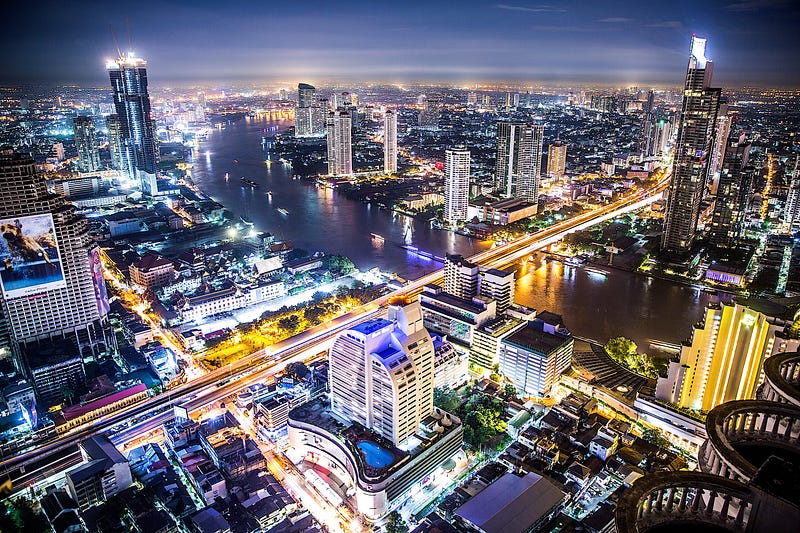
Photo by Braden Jarvis on Unsplash


5.5% staff reduction

According to a statement released on Wednesday, approximately 5.5% of personnel within the Bitkub Capital Group have been let go, while around 2% of staff at Bitkub Online were also affected.

Contrary to reports in local media suggesting that half of the company’s employees were terminated in late June, Bitkub Capital Group clarified that the reduction in workforce was relatively small compared to the overall number of employees in the group.


Change in employee benefits

The company did not provide specific details about the changes in employee benefits, only stating that one perk had been removed. The decision to implement these measures stems from the current economic downturn and the need to manage costs effectively, Bitkub explained.

Bitkub Capital recorded a net profit of 1.3 billion baht ($37.49 million) in 2022, marking the second consecutive year of profitability for the company. However, net profit declined by 39% compared to the previous year, falling from 2.1 billion baht in 2021. Expenses also surged from 117 million baht in 2021 to 394 million baht in 2022.

Bitkub Capital Group encompasses various entities in addition to the crypto exchange, including Bitkub Ventures (the venture capital arm), Bitkub Labs (also known as Bitkub Academy, the education arm), Bitkub Blockchain Technology (a consulting company focused on blockchain), and Bitkub Infinity (a portfolio management service provider).

Bitkub Online, the crypto exchange unit, reported a profit of 341 million baht for the financial year ending on December 31, 2022, representing an 86% decline compared to the previous year. Total revenues for 2022 amounted to 2.8 billion baht, which marked a significant decrease of 48% compared to its peak performance in 2021 when it generated 5.5 billion baht in revenue.

In a separate development, Asphere International, a game publisher listed on the Bangkok Stock Exchange, recently acquired a 9.22% stake in Bitkub Online for 600 million baht, valuing the startup at 6.5 billion baht.


Broader regional trend

The downsizing at Bitkub reflects a broader trend among technology companies in the region. In June, aCommerce, a local e-commerce enabler, laid off at least 20 employees citing similar economic challenges. The same month, Grab, the Singapore-based ride-hailing and food delivery giant, announced a significant round of layoffs, with 1,000 employees, including the Thailand team, being let go.

Bitkub’s decision to adjust its workforce and streamline employee benefits is a response to the economic headwinds it faces. It’s not the company’s first setback. Last year, Thailand’s Securities and Exchange Commission (SEC) penalized the firm’s CTO, Samret Wajanasathain, on the basis of insider trading.

The cyclical nature of the digital asset exchange business means that Bitkub can seek to weather this storm and benefit from the upside once market conditions inevitably become more favorable in the not too distant future.

More to Read
View All
Markets·

May 29, 2024

Mt. Gox moves $9B in Bitcoin for first time in years

Wallets belonging to the defunct Japanese Bitcoin exchange Mt. Gox have transferred over 140,000 Bitcoin (BTC), valued at approximately $9 billion, to an unknown address.  Sell-off fearsThis significant movement began in the early hours of Tuesday morning in Asia, marking the first such transfer from Mt. Gox’s cold wallets in over five years. Julio Moreno, head of research at CryptoQuant, initially confirmed that 12,239 Bitcoin had been transferred from Mt. Gox over the course of an hour. A short time later, he provided an update on X, stating:"All coins have been transferred to a new address." Despite market disquiet, the prevailing view which subsequently emerged is that the transfer is believed to be part of a plan to distribute assets back to creditors before the October 31, 2024 deadline. Alex Thorn, head of research at Galaxy Digital, shared his perspective on X, suggesting that most of the transferred Bitcoin would likely be held by creditors rather than being sold on the open market. Despite these reassurances, the market reacted negatively for a time. Bitcoin's price dropped by 1.4% since the start of Asian trading hours, falling to a low of $67,680 from a Monday high of over $70,000.Photo by Kanchanara on UnsplashNo Bitcoin FiresaleTo quell fears of a massive Bitcoin sell-off, Mark Karpeles, the former CEO of Mt. Gox, addressed the situation on X. He stated: “As far as I know, everything is fine with MtGox. The trustee is moving coins to a different wallet in preparation for the distribution that will likely happen this year. There is no imminent sale of bitcoins happening." Rehabilitation trustee Nobuaki Kobayashi also issued a press release, clarifying that no sale of Bitcoin or Bitcoin Cash (BCH) had taken place. He assured that the group was "managing bitcoin and bitcoin cash in a secure manner." Wallet activity reveals that these movements were executed through thirteen transactions. A test transaction worth $3 was made on May 20, followed by another smaller transaction of $160 early Tuesday. The remaining transactions varied from $1.2 million to $2.2 billion worth of Bitcoin. Bitinfocharts data shows that all of Mt. Gox's Bitcoin has now been consolidated into a single wallet. A long road to repaymentIn September 2023, Mt. Gox’s trustee announced that the repayment deadline had been extended by 12 months to October 31, 2024. It looked like repayments were imminent in November. However, those communications referenced cash repayments rather than the distribution of Bitcoin and Bitcoin Cash. Some cash repayments had started in December 2023. Speculation in January that the bankruptcy estate would begin the distribution of Bitcoin led to market fears of the impact that would have on the Bitcoin unit price. The extension provided a longer timeframe for preparing the distribution of assets to creditors. Mt. Gox, launched in 2010, quickly rose to prominence, becoming the largest Bitcoin exchange by 2013, handling 70% of all Bitcoin trades worldwide. However, the exchange faced a dramatic downfall in early 2014.  It suspended trading and stopped all withdrawals after losing hundreds of thousands of Bitcoin in a hack. Subsequently, the site went offline, and the company filed for bankruptcy protection after losing over 800,000 Bitcoins. Creditors have been waiting for repayment ever since.

news
Policy & Regulation·

May 11, 2023

A Korean Lawmaker’s Crypto Holdings Worth $4.5M Spark Controversy

A Korean Lawmaker’s Crypto Holdings Worth $4.5M Spark ControversySouth Korean lawmaker Kim Nam-kuk, a member of the opposition party Democratic Party of Korea (DPK), has recently come under scrutiny due to his reported possession of 800,000 WEMIX tokens from January to February last year, as reported by the Maeil Business Newspaper. These tokens were worth approximately 6 billion KRW or $4.5 million at the time. While Korean lawmakers are obligated to disclose their wealth, virtual assets are an exception. The disclosure of Kim’s ownership of these tokens has ignited controversy, as it unveiled a wealth magnitude significantly greater than previously understood.Photo by Karolina Grabowska on PexelsTravel Rule regulationA central issue in the unfolding dispute is the source of Kim’s investment in the WEMIX tokens. It has been reported that he purchased a significant amount of these tokens between January and February last year and withdrew the entire sum between February and March before the crypto exchange implemented measures to comply with the Travel Rule regulation. This rule requires that financial authorities be informed of transactions over 10 million KRW ($7,500). After the crypto exchange reported the transactions to the Financial Intelligence Unit of the Financial Services Commission, the government agency requested a warrant to search Kim’s account due to the transactions’ abnormality. However, the court dismissed the request.Jeonse deposit to LG Display sharesIn response to the controversy, Kim took to a YouTube channel on Tuesday to explain his WEMIX token investments. He stated that he had retrieved 600 million KRW ($450,000) after his jeonse contract expired and used the money to purchase LG Display shares. Jeonse a housing rental system in Korea where tenants put up a lump-sum refundable deposit on a rental space for a two-year stay. Kim claims that these LG Display shares later rose in value to 985.7 million KRW ($744,000) in January 2021 and that he used this sum to purchase the tokens.Account balance and WEMIX tokensDespite his explanation, there are still questions surrounding Kim’s sudden increase in his bank account balance. His account balance reportedly increased from 100 million KRW ($76,000) at the end of 2020 to 1.12 billion KRW ($850,000) by the end of 2021, which raised suspicions. If Kim had directed all the money withdrawn from the LG Display shares to WEMIX tokens, it is unclear where the additional $774,000 in his account came from. Kim has reportedly explained to his party’s leadership that he retrieved the principal amount of his investment due to the increase in the WEMIX token price. However, this explanation has not satisfied some critics.Insufficient explanationIn an attempt to address these concerns, Kim shared part of his bank transaction records on Monday. However, this disclosure has fallen short of addressing all the questions that have been raised, such as the precise amount invested in the tokens and their purchase prices. There is still significant public scrutiny and skepticism surrounding Kim’s explanation for his crypto holdings, and it remains to be seen if further disclosures will be made.Kim apologized to the Korean public via Facebook for any disappointment caused, especially amid challenging economic conditions. However, he denied accusations of using undisclosed information or unlawfully acquiring wealth. Kim maintained that all transactions were transparently made using only his own wallets through his real-name bank accounts.Potential insider trading and conflict of interestNevertheless, the public’s acceptance of his explanation is yet to be seen, as questions about his $4.5 million virtual assets persist, particularly given his reported total wealth of around $1.1 million. There are concerns surrounding the possibility of insider trading. Furthermore, Kim’s participation in proposing a bill to defer tax implementation on digital assets has triggered suspicions of a potential conflict of interest.Call for an impartial third partyRecent updates indicate that the prosecution is considering requesting a warrant against Kim in relation to the controversy surrounding his crypto holdings. The Anti-Corruption and Civil Rights Commission is also examining if his participation in proposing the bill constitutes a conflict of interest. It is evident that an impartial third party will need to investigate and analyze all relevant information to resolve this dispute. Until a thorough and unbiased investigation takes place, the public’s concerns and questions are likely to continue.

news
Markets·

Jul 11, 2023

Singapore and the Philippines Lead Crypto Interest in Southeast Asia

Singapore and the Philippines Lead Crypto Interest in Southeast AsiaSingapore and the Philippines have emerged as the frontrunners in Southeast Asia’s crypto landscape in 2023, capturing the majority of regional interest.Research carried out by Malaysian cryptocurrency data aggregator CoinGecko reveals that on a per capita basis, Singapore holds a 43.5% share of crypto interest, followed closely by the Philippines with 40.3%.Photo by Kenneth Koh on UnsplashRegional crypto hubSingapore has established itself as a crypto hub not only within Southeast Asia but also in the wider Asia region. It was previously ranked as the third most crypto-curious country globally and has consistently been one of the top Web3 gaming countries for three consecutive years.Other countries in Southeast Asia, including Malaysia, Thailand, Vietnam, and Indonesia, also contribute to the region’s crypto interest, although at more modest levels. Combined, these countries represent 14.7% of the per capita crypto interest in the region so far this year.GameFi driving interestIn the Philippines, crypto interest is primarily driven by GameFi, and the country has maintained its position as the leading Web3 gaming country from 2021 to 2023. The Philippines witnessed the Axie Infinity mania, with local gaming guilds and inspiring rags-to-riches success stories. Additionally, it was among the top countries embracing meme coins earlier this year, alongside Malaysia.Vietnam shares a strong interest in GameFi, placing it among the top Web3 gaming countries for three consecutive years. Thailand and Indonesia have witnessed substantial trading volumes on their crypto exchanges, with $37.94 billion and $23.97 billion respectively in 2022.Notably, Malaysia has a significant presence in the crypto industry, despite its relatively smaller impact. The country is home to two prominent crypto data tools, CoinGecko and Etherscan, which were founded by Malaysian teams and are headquartered in the country.In contrast, smaller Southeast Asian economies such as Cambodia, Myanmar, Brunei, Laos, and Timor-Leste have a combined share of only 1.5% of regional crypto interest per capita. While these markets remain largely untapped, their low adoption rates are unlikely to improve in the near term. Except for Brunei, which is a wealthy nation, the smaller Southeast Asian economies are categorized as lower-middle income countries.Regarding the specific cryptocurrencies drawing attention in Southeast Asia in 2023, Layer 1, GameFi, meme coins, and DeFi-related crypto have emerged as the most popular categories. The top-ranking cryptocurrencies within these narratives account for 22.2% each of the region’s interest so far this year.The Philippines, as the top Web3 gaming country, showcases three GameFi cryptocurrencies — Smooth Love Potion (SLP), Ronin (RON), and Wemix (WEMIX) — among its most popular choices. Malaysian investors also show interest in DeFi projects like Maple (MPL) and BoringDAO (BORING), in addition to Bitcoin.Singapore’s popular crypto choices include The Graph (GRT), Bitcoin (BTC), and Pepe (PEPE). Vietnam demonstrates ongoing interest in Aptos (APT) and privacy tool Bob (BOB), while Thailand focuses on Gala (GALA) and Canto (CANTO). Finally, Indonesia monitors Not Financial Advice (NFAI) and AirSwap (AST).Overall, Singapore and the Philippines lead the way in crypto interest within Southeast Asia, while other countries in the region also contribute to the evolving crypto landscape.

news
Loading