Top

Hang Seng Ponders Crypto Product Offering

Web3 & Enterprise·June 30, 2023, 12:07 AM

Hang Seng Investment Management Co., the largest exchange-traded fund (ETF) manager in Hong Kong, is considering entering the decentralized ecosystem.

According to a report in local news media in Hong Kong on Wednesday, Li Peishan, the firm’s Director and Executive President, stated that Hang Seng is paying close attention to the development of digital assets. She clarified that the company is examining the possibility of including digital assets within its existing investment product offering.
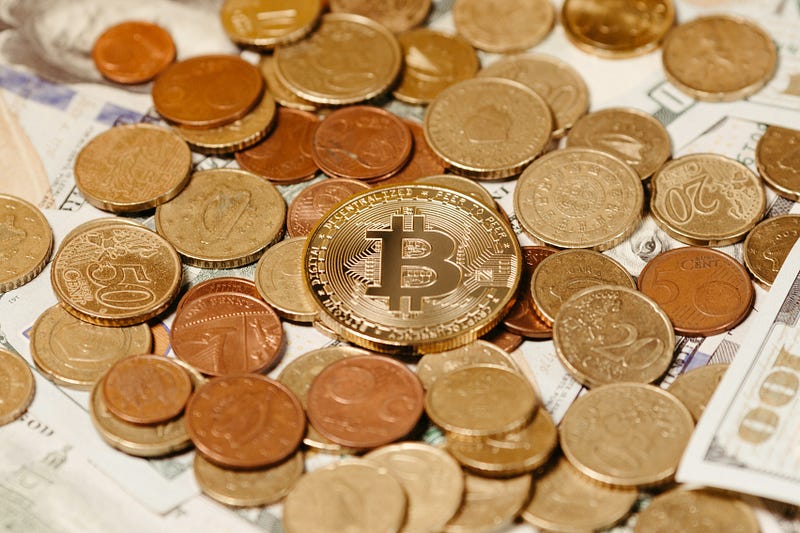
Photo by Jonathan Borba on Unsplash


Crypto ETF expansion

This news comes shortly after HSBC, one of the largest banks in Hong Kong, introduced Bitcoin (BTC) and Ethereum (ETH) ETFs to its customers, becoming the first bank in the region to do so. This development has opened up possibilities for greater cryptocurrency adoption in the area.

While most people in the space recognize that the authorities in the US have gone too far in their clampdown on the digital assets space, it’s interesting to note that recent weeks have seen a plethora of established TradFi players filing Bitcoin spot ETF applications. That list includes the world’s largest asset manager, BlackRock, multinational financial services firm Fidelity Investments, WisdomTree, VanEck, and others.


Assessing potential

Peishan stated that while the company does not have a specific plan to develop a crypto ETF, Hang Seng is actively assessing the potential of incorporating digital assets into their existing investment products. She highlighted the remarkable growth in the average daily asset management scale, which has surged by 80% since December and has surpassed HK$12 billion.

On June 24, Leung Fung Yee, the CEO of the Securities and Futures Commission of Hong Kong (SFC), emphasized the importance of crypto service providers embracing the next generation of the web and finance. He expressed Hong Kong’s ambition to establish itself as the central hub for crypto companies, fostering innovation within the region.

Responding to Yee’s statement, the Hong Kong Virtual Assets Consortium (HKVAC) announced the inclusion of XRP, SHIB, and ADA in its newly developed HKVAC index. The creation of the HKVAC index aims to assist investors in analyzing the potential of cryptocurrencies and gaining insights into their prospects.

The digital assets landscape in Hong Kong is evolving rapidly, driven by increasing interest in the asset class and the recognition of their transformative potential. Hang Seng Investment Management’s exploration of the decentralized ecosystem signifies the growing demand for exposure to cryptocurrencies among traditional financial institutions.


TradFi Integration

The introduction of Bitcoin and Ethereum ETFs by HSBC represents a significant milestone in the adoption of cryptocurrencies within the traditional banking sector. This recent indicator from Hang Seng suggests that we are likely to see more developments unfold within the ETF space in Hong Kong in the not-too-distant future where digital assets are concerned. That view is further endorsed by the findings of a recent report produced by the Hong Kong Stock Exchange, pointing to the yet-to-be-realized potential of crypto ETFs.

As the industry continues to mature, the integration of digital assets into traditional investment products is likely to become increasingly common, leading to a more diversified and inclusive financial ecosystem.


More to Read
View All
Web3 & Enterprise·

Oct 31, 2023

Thailand’s KBank Furthers Crypto Business Through Satang Acquisition

Thailand’s KBank Furthers Crypto Business Through Satang AcquisitionKasikornbank (KBank), Thailand’s second largest bank, is expanding its involvement in the digital assets sector through the acquisition of a majority stake in the local crypto exchange Satang.Photo by Lisheng Chang on UnsplashTradFi embracing cryptoThe acquisition, involving a purchase of 97% of Satang’s shares, is a significant move in the context of an ongoing trend of traditional financial institutions embracing digital assets. The deal was officially announced on Monday, as disclosed on KBank’s official website.KBank executed the acquisition through its newly established subsidiary, Unita Capital, whose registered capital is valued at 3.7 billion Thai baht (approximately $103 million). Unita Capital specializes in investments within the digital asset sector. This move underlines the bank’s commitment to stay ahead in the dynamic world of digital finance.Subsidiary formationIn light of the acquisition, Satang Corporation is set to undergo a name change and will soon be known as Orbix Trade Company Limited. Unita Capital has established a number of other subsidiary companies as a consequence of the buy-out.KBank’s cryptocurrency venture will be structured into three distinct divisions. Orbix Custodian has been formed, focusing on secure digital asset storage and management. There is a growing demand for reliable digital asset custody services. KBank will use Orbix Custodian as a vehicle to capitalize on that growth opportunity.Orbix Invest has been established to act as the venture arm of the business relative to the digital assets space. It will focus on fund management in meeting the needs of clients looking for exposure to the digital assets sector. Lastly, Orbix Technology has been established to concentrate on blockchain technology development.Satang, a prominent player in the Thai cryptocurrency scene, operates a cryptocurrency exchange alongside a range of digital asset services. Notably, Poramin Insom, the founder of Satang, is recognized for his role in launching Firo (formerly Zcoin), a privacy-centric cryptocurrency. Insom confirmed the acquisition via a Facebook post on Monday, acknowledging the evolution of Satang as it transitions under KBank’s ownership.Insom stated: “I’ve been at Satang since 2017 until now, six years have passed. Currently, Satang on the trading board has already exited according to the news. And there should be an official announcement soon.” He also highlighted Satang’s diversified ventures, including Satang Technology, a blockchain service platform, and Satang Space, focusing on space-related endeavors.This strategic move by KBank follows its recent launch of a $100 million fund, introduced in September, targeting investments in Web3, fintech, and artificial intelligence (AI). In 2022, KBank launched Bigfin, a digital asset investment analysis platform. Bigfin has since been integrated with the Binance platform.Last year the bank backed Thai digital asset and blockchain startup Forward, a project that is working on developing a decentralized derivative platform.KBank is recognized as the second largest lender in Thailand based on assets, trailing behind Bangkok Bank. Thai NVDR Company Limited is the largest shareholder of KBank, as per data from the Stock Exchange of Thailand (SET), with the SET itself owning 99.9% of NVDR’s shares.

news
Web3 & Enterprise·

Sep 23, 2025

First Toyota vehicle in Bolivia purchased with USDT as inflation bites

In a first for Bolivia, Japanese automaker Toyota saw one of its vehicles purchased with the stablecoin USDT, according to a recent X post by digital asset trust company BitGo. The transaction underscores growing cryptocurrency adoption in the Latin American country, which is grappling with soaring inflation and a shortage of U.S. dollars. The transaction was facilitated by a partnership between Toyosa (the official Toyota distributor in Bolivia), BitGo, and Tether, the issuer of the USDT stablecoin. The sale highlights the increasing use of digital assets for commercial and retail payments, as the global stablecoin market cap recently reached an all-time high of $293 billion at the time of publication. Confirming the milestone, Tether CEO Paolo Ardoino stated on the social media platform X that, in addition to Toyota, the USDT stablecoin is now also accepted by distributors of BYD and Yamaha vehicles in Bolivia.Photo by Christina Telep on UnsplashCrypto use surges amid inflation and dollar shortage The development comes as Bolivia faces 25% inflation, the highest in 34 years. With the local economy under pressure, many Bolivians are moving their money into cryptocurrencies in an effort to protect their savings, according to Bloomberg. U.S. dollars have become increasingly scarce. Unofficial exchange rates have jumped to 14 bolivianos per dollar, nearly twice the government's rate. That gap is pushing people toward stablecoins like USDT, which are easier to access and hold their value. The shift is already showing up in payment trends. Digital transactions surged more than fivefold in the first half of 2025, reaching nearly $300 million. Regional adoption and Toyota’s blockchain pushThe rise in crypto use in Bolivia is part of a broader shift across Latin America. According to a recent report from analytics firm Chainalysis, crypto adoption in the region jumped from 53% to 63% in the 12 months ending June 2025. The only region to outpace this growth was Asia-Pacific, which saw a 69% year-over-year increase. El Salvador stands as another prominent example in the region, having adopted Bitcoin (BTC) as legal tender in September 2021 and currently holding over 6,300 BTC in its treasury. Separately, Toyota Motor Corporation has been actively exploring applications for blockchain technology. In March, its subsidiary Toyota Financial Services, in collaboration with Daiwa Securities and MUFG Bank, launched its first security token bonds on Progmat, a platform founded by MUFG with backing from other big banks like Sumitomo Mitsui Banking Corporation (SMBC) and Mizuho. The initiative is aimed at strengthening the Toyota Group’s ties with individual investors and supporting the growth of the digital bond market. 

news
Web3 & Enterprise·

Aug 03, 2023

SK C&C to Spearhead Establishment of Korea’s First Alternative Trading System

SK C&C to Spearhead Establishment of Korea’s First Alternative Trading SystemSK C&C, the information communications technology arm of South Korean conglomerate SK Group, is set to launch the country’s first Alternative Trading System (ATS) — a securities trading venue that is more loosely regulated than an exchange — in the second half of next year.The firm announced on Wednesday that it will commence the multilateral trading system construction project for Nextrade, a corporation dedicated to preparing the ATS.Photo by Kanchanara on UnsplashCollaborative effort of securities institutionsNextrade was initiated by seven securities firms, including the Korea Financial Investment Association, and was jointly established by 34 participating institutions, including 19 securities companies, three securities-related institutions, and four tech companies in November of last year.SK C&C in particular has been working with Nextrade since 2019. When the corporation was still a consultative body of securities firms, the SK subsidiary was in charge of consulting on various matters regarding the establishment of the ATS and functional system requirements.Establishing a solid foundationThe aforementioned construction project aims to establish a multilateral trading system and an operation and management system to support the trading, brokerage, and agency functions of listed securities and depositary receipts on the ATS, which Nextrade will proceed with upon its official approval in the second half of next year. SK C&C will take on a major role in leading this task.“Based on our digital IT service capabilities that we have accumulated within the financial sphere, we will establish an efficient and reliable multilateral trading system that is on par with regular exchanges,” said Kim Nam-sik, head of the SK C&C Financial Digital2 Group.Besides facilitating multilateral trading, SK C&C will develop an information distribution system that processes investment information in connection with the Korea Exchange and the Korea Securities Depository, as well as a trading support system responsible for product information management, trading statistics, and administration.Trading after hoursThe ATS will allow trading past normal trading hours, which are usually from 9 AM to 3:30 PM — an especially attractive selling point for buyers and sellers. This will be made possible by compiling product information based on closing prices after the market closes, which will create an environment that allows for trading after hours.This service will not only be convenient for office workers but also help them refer to official announcements and the status of overseas markets to make more informed decisions, SK C&C said.Securities that can be traded after hours will be limited to listed stocks and depository receipts on the Korea Exchange for the time being, but SK C&C is reportedly looking into allowing trading of security tokens, non-security virtual assets, and NFTs.Ensuring uninterrupted operationsNotably, there will also be a Disaster Recovery Center, which will serve to protect the ATS’ major systems and data assets and ensure business continuity. A data backup system will be set up to reduce backup time and swiftly recover from any failures in case of potential security threats.Furthermore, the ATS plans to introduce new types of orders to enhance investor benefits in the domestic capital market, setting it apart from the Korea Exchange.

news
Loading