Top

Chinese Nationals Detained in Crypto Mining Clampdown in Libya

Policy & Regulation·June 24, 2023, 12:11 AM

Authorities in Libya have detained 50 Chinese nationals suspected of involvement in an illicit crypto mining operation in Zliten, a city located 160 kilometers east of the Libyan capital of Tripoli.

The attorney general’s office in Libya made the announcement on Friday, revealing that the individuals were caught operating a cryptocurrency mining farm within an abandoned iron factory.
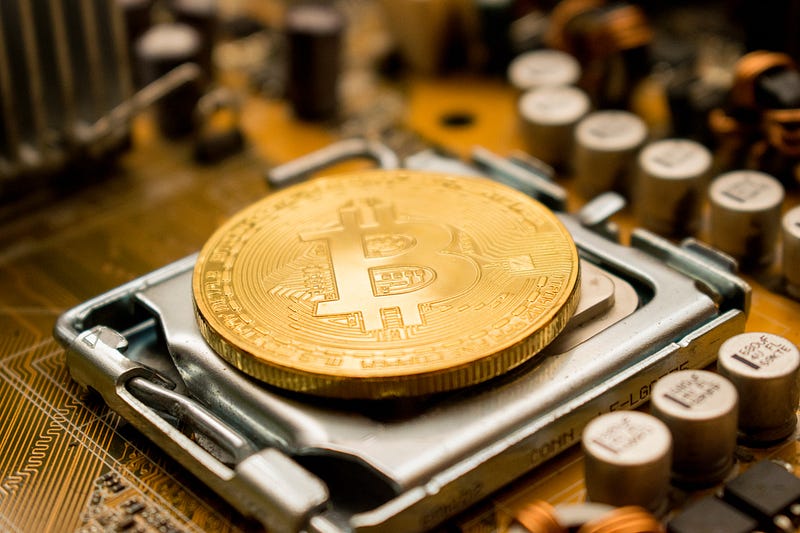
Photo by Dmitry Demidko on Unsplash


Mining operation dismantled

Photos and videos released by the office of Attorney General Siddiq Al-Sour showcased the dismantling process of the extensive mining systems discovered in Zliten.

This is not the first instance of Chinese miners being detained for crypto mining activities in the North African country. The development follows the recent arrest of ten other Chinese nationals in the city of Misrata on the Mediterranean coast, as well as at two sites within the capital, Tripoli. The individuals were apprehended on Wednesday while being caught “red-handed” with numerous powerful equipment used for intricate proof of work (PoW) mining calculations. The mining rigs were subsequently confiscated by the attorney general’s office.


Mining ban

Despite the official ban on cryptocurrency mining in the country, Libya has witnessed a high prevalence of such activities, with the nation recording the highest percentage of cryptocurrency mining across the African continent in 2021. It is estimated that Libya accounted for approximately 0.6 percent of global Bitcoin production during that year.

Libya’s appeal as a destination for cryptocurrency mining stems from its low electricity costs, which stand at a remarkably low rate of $0.004 per kilowatt hour. This cost is approximately 40 times cheaper than in the United States, making Libya an attractive location for miners.

While energy may be cheap, the increased demand for electricity that crypto mining brings puts a strain on what was an already vulnerable power grid in the country. That has resulted in frequent and lengthy power blackouts, particularly during the summer months.

A lack of oversight has also encouraged an influx of Chinese miners, albeit with these recent arrests, it appears that the Libyan authorities are stepping up the level of oversight and enforcement. The vast majority of Bitcoin miners were based in China up until a mining ban was enforced in 2021.


Global issue

That event led to an exodus of miners internationally. Some established themselves legally in the United States and elsewhere. The first casualty of illegal mining was Kazakhstan. The sudden arrival of miners led to its power grid coming under pressure. As a consequence, the Central Asian country clamped down on the activity, and later regulated it.

In response to these illegal activities, Libyan authorities have intensified their efforts to combat cryptocurrency mining operations. They are conducting investigations into alleged mining sites in Tripoli and Misrata, aiming to curtail these activities and mitigate the strain on the country’s electricity infrastructure.

The recent arrests highlight the ongoing challenges associated with illegal mining activities in jurisdictions globally where cheap energy can be exploited, giving rise to the need for enhanced regulatory measures to address these issues.


More to Read
View All
Policy & Regulation·

Mar 27, 2024

Korean financial authority to heighten oversight on token listing with new guidelines

The South Korean financial authority will establish new policies and guidelines for token listing and provide admirable examples from past listing events for local exchanges to follow, according to local media outlet News1.  So far, fiat-to-crypto exchanges in Korea have been listing tokens on their platforms under a guideline issued by Digital Asset eXchange Alliance (DAXA) – a self-regulatory consultation group comprised of five major Korean crypto exchanges. The existing DAXA guideline outlines basic yet vague instructions, which have allowed exchanges to list tokens largely at their discretion.  However, the new guideline from the financial authority, expected to be released by this June, will mark the government’s first official manual on token listing. This is in line with the upcoming Virtual Asset User Protection Act, which will be effective in July. Photo by Hitesh Choudhary on UnsplashSetting clear guidelines for token listingsThe new guidelines are expected to include examples of past fraud detection and real-time monitoring cases which are deemed to have set precedents for the industry players. Moreover, the financial authority plans to distribute past exemplary cases of token listing as early as April, which is anticipated to set a model listing process and help local crypto exchanges adhere to the law and requirements.  This announcement comes after the local game company Wemade relisted its native token WEMIX on Korbit, one of DAXA's member exchanges, just a year after it was delisted on major exchanges due to its deviant practices in token issuance. The relisting of WEMIX has since raised concerns among crypto insiders about the lack of criteria regarding token listings. More refined token listing process As the crypto market's bullish trend continues, Bithumb and Coinone – the second and third-largest exchanges in Korea – are stepping up their efforts to speed up the listing of new coins. Industry experts expect these exchanges will double down on their efforts in screening and reviewing processes for tokens to align with the new guidelines in the future.  An official from the Korean Financial Intelligence Unit (FIU) said that while the anticipated listing process is not legally binding, it will definitely have a more profound impact on local crypto exchanges compared to the self-regulated DAXA guidelines.  

news
Web3 & Enterprise·

Aug 11, 2023

Alchemic Investment and Nanuhm Angels Collaborate to Boost Web3 and Blockchain Investments

Alchemic Investment and Nanuhm Angels Collaborate to Boost Web3 and Blockchain InvestmentsKorean deep tech investment firm Alchemic Investments announced that it has entered into a partnership with venture capital firm Nanuhm Angels to enhance investments in blockchain, Web3, artificial intelligence, and deep tech.Photo by Precondo CA on UnsplashInvesting in the future of Web3 in KoreaThe two firms will work with the city of Incheon — a metropolitan city located near the nation’s capital of Seoul — to discover promising Web3 companies while strategically investing in and nurturing startups that aspire to innovate existing businesses using blockchain technology.They will also participate in Incheon’s roadmap for fostering blockchain businesses after Incheon Technopark’s blockchain company acceleration program kicks off this year. This program supplies Incheon-based startups and small companies with the resources required to grow their blockchain businesses, thereby establishing Incheon as a blockchain hub.“Just as Japan and Hong Kong are leading the Web3 market in Asia, many Korean startups are also likely to emerge as leaders of the market once a legal foundation is established in the country,” said Min Kyung-man, CEO of Alchemic Investments.“We plan to support global expansion through our network with major overseas companies and institutions that highly value Korea’s growth potential in leading the technologies of the future.”About Alchemic InvestmentsAlchemic Investments was established in March of this year and invests in areas such as Web3, fintech, and AI. Housing seasoned professionals in asset management and strategic investment in major corporations, the company is currently in the process of recruiting investors to establish its first fund, aiming for a funding scale of 30 billion KRW (approximately $22.7 million).About Nanuhm AngelsNanuhm Angels works with partners who have experience in managing funds worth 110 billion KRW, as well as acceleration experts skilled in business model validation and refinement and investor relations. Its investment portfolio consists of companies such as Rezi, Onthelook, and NS Studio.It is also an operator of the aforementioned Incheon Technopark blockchain company acceleration program along with a consortium consisting of Web3 gaming studio Ret Games and on-chain risk rating solution developer Undefined Labs.

news
Web3 & Enterprise·

Sep 01, 2023

Singapore’s FOMO Pay Forges Collaboration With Notabene

Singapore’s FOMO Pay Forges Collaboration With NotabeneFOMO Pay, a regulated digital payment and banking solutions provider operating under Singapore’s regulatory umbrella, has joined forces with Notabene, a platform tailored for crypto-industry decision-making.Photo by Towfiqu barbhuiya on UnsplashPre-transaction decision makingThe strategic alliance was announced via a blog post published to FOMO Pay’s website on Thursday. Through that communication, FOMO Pay revealed that this collaboration with Notabene will be a key contributor towards the firm’s efforts to elevate its know-your-transaction (KYT) capabilities, ensuring access to accurate and verified business information.A focal point of this partnership lies in amplifying FOMO Pay’s compliance measures, bolstering customer security, and cultivating a foundation of trust in the domains of digital payments and digital assets.Wee Teck Lim, the Head of Compliance at FOMO Pay, emphasized that this partnership mirrors the company’s efforts towards full compliance with global regulations, enhancing anti-money laundering (AML) strategies and decision-making.Responding to regulatory pressureWith a regulatory spotlight on crypto and crypto-related businesses over the past year, market participants are making greater efforts to adhere to national and global compliance rules and guidelines. This move by FOMO Pay not only aids it in adhering to rigorous guidelines but also reinforces the battle against money laundering, terrorism financing, and other such concerns.Pelle Braendgaard, CEO of Notabene, articulated the symbiotic significance of this partnership. He noted that this collaboration stands as a tangible testament to the efficacy of the travel rule implementation, effectively fostering secure and streamlined digital asset transactions. This alignment of missions between FOMO Pay and Notabene, Braendgaard maintains, resonates with their shared aspiration to establish a digital asset ecosystem that is safer and more accessible.FOMO CryptoFOMO Pay, which has been licensed as a payment institution by the Monetary Authority of Singapore (MAS), boasts an array of products including FOMO Payment, FOMO iBank, and FOMO Crypto. Through FOMO Crypto, the firm is actively constructing Asia’s inaugural licensed gateway, which will offer a seamless connection between fiat and digital currencies.Notabene is headquartered in New York although it casts its operational net across several countries. The platform claims to empower real-time decision-making, while offering sanctions screening for counterparties and self-hosted wallet identification, all with a view towards enabling digital transactions.Partnership focusIn bootstrapping the business, it appears that FOMO Pay has been relying heavily on engaging in industry partnerships. In 2021 it joined the DBS Digital Exchange (DDex) as a member. Its purpose in doing so was to leverage the institutional grade digital custodian and exchange services offered by DDex, a service extended by DBS Bank, Singapore and Southeast Asia’s largest bank.Last year, the company partnered with Ripple, using Ripple’s On-Demand Liquidity (ODL) solution to support its cross-border treasury flows. Moving away from traditional payment rails towards Ripple’s ODL product meant that FOMO Pay could free up working capital and optimize business cash flow.As further evidence of FOMO Pay’s efforts to maintain regulatory compliance, in July the company partnered with Elliptic, a crypto asset risk management firm, in an effort to enhance its customer onboarding due diligence check process.

news
Loading