Top

OKX Follows Path Towards Dubai Licensing

Policy & Regulation·June 15, 2023, 11:32 PM

Seychelles-headquartered OKX, one of the world’s largest cryptocurrency exchanges, has expressed its intention to seek regulatory approval for operating in Dubai as part of its expansion strategy in the Middle East.

With that objective, the company has obtained a Minimum Viable Product (MVP) preparatory license, an interim step on its path towards full licensing. That’s according to a press release published on Thursday.

Tim Byun, OKX’s Global Head of Government Relations, emphasized the growing trend of regulation within the industry. In an interview with Reuters, Byun stated: “We would like to get ahead of that curve and be regulated in a sound manner.” The move comes in the wake of recent legal action taken by the Securities and Exchange Commission (SEC) in the United States against Binance and Coinbase, two of the largest crypto exchanges, for alleged breaches of SEC rules.
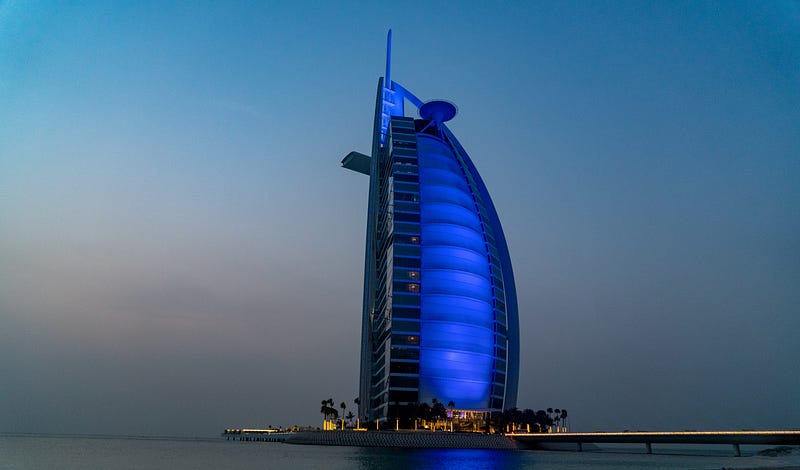
Photo by Marcus Herzberg on Pexels


Switching to Dubai

Byun believes that the SEC’s actions will compel more market participants to seek out innovative regulators such as Dubai’s Virtual Asset Regulatory Authority (VARA).

To support its expansion plans, OKX intends to hire 30 staff members following the opening of an office last month in the Dubai World Trade Center, strategically located in the business and financial hub of the United Arab Emirates.

Byun further explained that by expanding its services from Dubai to jurisdictions like Saudi Arabia or Bahrain, where no domestic regulatory framework is in place, the local populations would benefit significantly from OKX’s regulation under an international regulator.


Following Bahamian regulation

Currently regulated in the Bahamas, OKX does not allow customers from the United States to utilize its platform due to regulatory concerns. Following the collapse of FTX in November of last year, the Bahamas has suffered reputationally.

It’s seen as a jurisdiction with much looser regulation and as the FTX debacle demonstrated, one that proved to be totally ineffective in preventing the epic fraud that occurred in that instance.


Effective regulatory framework

In contrast, Dubai and the United Arab Emirates (UAE) in general seem to be making a much better effort towards a workable yet effective regulatory framework. Established in March 2022, VARA serves as the regulatory authority overseeing the burgeoning virtual asset sector in Dubai, excluding the Dubai International Financial Centre financial free zone. The United Arab Emirates has been actively working towards positioning itself to become a global crypto industry hub.

No company has yet obtained a license for VARA’s full market product (FMP) stage, which would grant permission to serve retail clients. Byun revealed that OKX intends to apply for such a license.

Byun concluded by expressing OKX’s willingness to be regulated and licensed in jurisdictions that adopt a balanced, clear, and transparent approach to the industry. The exchange is committed to operating within frameworks that prioritize investor protection and promote market integrity.

More to Read
View All
Markets·

Dec 30, 2023

OKX delisting sparks privacy coin price slump

In a move announced on Friday, OKX, the Seychelles-headquartered cryptocurrency exchange, declared its decision to delist 20 trading pairs by Jan. 5, triggering a notable price fall for major privacy coins such as Monero, Dash and ZCash. The exchange cited that the affected pairs did not align with its listing criteria, though specific details were not disclosed.Photo by Khara Woods on UnsplashPrivacy coin delisting trendWhile OKX did not explicitly articulate the rationale behind this move, industry observers are speculating that it could be part of the exchange’s broader efforts to comply with evolving regulatory measures. Privacy coins have increasingly drawn regulatory scrutiny due to concerns about potential illicit activities within the crypto space. Earlier in the year, Binance had also announced the delisting of several privacy coins to ensure compliance with local laws and regulations. The broader context of regulatory pressures on privacy-focused cryptocurrencies seems to be impacting major exchanges’ decisions. In 2022, Huobi cited regulatory pressures when it took the decision to delist Monero and other privacy coins. Kraken was further ahead of the curve still, delisting Monero for UK customers in November 2021. Downward price actionFollowing OKX’s announcement on Friday, the prices of privacy-focused cryptocurrencies, notably Zcash (ZEC) and Monero (XMR), experienced a decline. The entire sector of “privacy cryptos” has witnessed a 7.1% decrease in overall market capitalization, according to an index of such coins compiled by Malaysian crypto indexing firm CoinGecko. During this period, Monero and Zcash have seen unit price declines of 4.5% and 10.7%, respectively. Other tokens set for delisting, including Dash, Powerpool and Horizen, have recorded declines of up to 14%. OKX has provided guidance to users, advising them to cancel orders related to the affected trading pairs before the delisting date to avoid automatic cancellation, a process that may take 1–3 working days. Concurrently, the exchange has halted deposits for the impacted cryptocurrencies and plans to cease withdrawals by Mar. 5, 2024, affording holders sufficient time to withdraw their assets. However, once the delisting is complete, trading these digital assets on OKX will become impossible. Interestingly, certain privacy coins like MINA continue to be listed on the exchange, experiencing a 7.5% increase following the delisting announcement. It’s crucial to note that OKX’s delisting is not exclusive to privacy tokens, as it also includes other trading pairs associated with digital assets such as Kusama, Flow, Kyber Network and Aragon. The fight for privacySome crypto community members have voiced their concerns on social media, with many fearing that the innovation may be ‘captured’ by the various state authorities over time. However, ex-Monero developer Ricardo Spagni (AKA “Fluffypony”) was nonchalant about the whole thing, judging by his comments. In a post on social media platform X, he wrote: ”Monero users and contributors literally couldn’t care less about delistings at this point.” As the regulatory landscape evolves, cryptocurrency exchanges are navigating these challenges, impacting the availability and value of specific tokens on their platforms. Investors and privacy advocates alike will be closely watching how such regulatory compliance measures continue to shape the crypto market and crypto use.  

news
Policy & Regulation·

Sep 11, 2025

Vietnam launches five-year pilot to regulate crypto asset trading

Vietnam has launched a five-year pilot program imposing stringent new rules on the cryptocurrency industry, signaling a move toward tighter control over the rapidly growing sector. According to a Sept. 9 report from the Government Electronic Newspaper, cited by Cointelegraph, the resolution put the regulatory framework into immediate effect. The move aims to establish clear rules for the trading and issuance of crypto assets in the country.Photo by Silver Ringvee on UnsplashLocal currency and licensing requirementsUnder the new pilot program, all crypto transactions must be conducted in the local currency, the Vietnamese dong. The rules stipulate that only Vietnamese-registered enterprises may issue digital assets, while foreign investors can access them only through crypto asset service providers (CASPs) licensed by the Ministry of Finance. Firms seeking a license face high barriers to entry. Applicants must demonstrate profitable business operations for the two consecutive years preceding their application. Furthermore, CASPs are required to maintain a minimum capital of 10 trillion dong (approximately $379 million). The pilot also places firm restrictions on the nature of crypto assets themselves. They must be backed exclusively by real, tangible assets. The issuance of assets backed by fiat currencies or securities is prohibited. Broader legal contextThis pilot program follows the country's decision in June to officially legalize digital assets, with the new law set to take effect on Jan. 1, 2026. The legislation categorizes digital assets into two types: virtual assets, used for exchange or investment, and crypto assets, which rely on encryption for validation. The law clarifies that neither category includes securities, digital representations of fiat currency, or other financial instruments already defined under existing civil and financial laws. The framework also mandates that regulatory agencies implement robust measures to ensure cybersecurity and combat money laundering and terrorism financing. High adoption and tech initiativesThe government's focus on regulation comes as no surprise, given Vietnam's position as a global leader in cryptocurrency adoption. A recent study by Chainalysis ranked Vietnam fourth in its 2025 Global Crypto Adoption Index, highlighting widespread grassroots activity across both centralized and decentralized platforms, similar to trends seen in India and Pakistan. Beyond regulation, Vietnam is actively leveraging blockchain technology for national infrastructure. The government has deployed NDAChain, a national blockchain platform designed to authenticate and trace data origins. Developed by the National Data Association, it aims to provide a decentralized layer of trust for critical systems in e-government, finance, healthcare, and education, addressing the vulnerabilities of centralized data models. Hanoi's crypto ambitions also extend beyond its borders. Last month, Vietnam's Military Bank signed a memorandum of understanding (MOU) with Dunamu, the operator of South Korea’s largest crypto exchange, Upbit. The partnership is aimed at developing Vietnam’s financial landscape, with Dunamu providing expertise on establishing a crypto exchange, building a regulatory framework, and implementing investor protection measures. 

news
Web3 & Enterprise·

Aug 17, 2023

Intella X Partners With Aptos Foundation to Accelerate Growth of Web3 Gaming

Intella X Partners With Aptos Foundation to Accelerate Growth of Web3 GamingIntella X, the Web3 blockchain gaming platform developed by Neowiz, a South Korean gaming company, has forged a strategic partnership with the Aptos Foundation, an esteemed layer-1 blockchain entity.Photo by Shubham’s Web3 on UnsplashAptos’ expansion in KoreaDedicated to nurturing the growth and advancement of the Aptos Network, a community-centric layer-1 network, the Aptos Foundation operates grant programs designed to expedite the expansion of the Aptos ecosystem. Seizing this collaboration as a valuable opportunity, the foundation envisions expanding the network’s presence in the Korean gaming market.These two entities will be collaborating across various technological and business domains, with the goal of enhancing the Intella X ecosystem and fostering the success of its Web3 projects.Empowering newcomers in Web3Intella X’s mission revolves around establishing an accessible platform that guides newcomers into the Web3 landscape. Beyond its gaming offerings, Intella X stands as a decentralized exchange, NFT launchpad, and NFT trading platform.On the global stage, Intella X has taken proactive strides to amplify its ecosystem’s reach. Among its notable achievements is a recent alliance with Yield Guild Games (YGG), a DeFi-powered gaming guild boasting a user base of over 450,000 worldwide. The cooperation between these entities will delve into the integration possibilities of YGG’s soulbound reputation tokens into Intella X Wallet (IX Wallet), the dedicated Web3 wallet for the Intella X platform.

news
Loading