Top

Gulf Binance Secures Thai Digital Asset License

Policy & Regulation·May 27, 2023, 1:18 AM

Binance, one of the world’s leading cryptocurrency exchanges, has secured a digital asset operator license in Thailand, paving the way for the launch of a new crypto exchange and broker. The license, granted by the Ministry of Finance of Thailand and overseen by the Southeast Asian country’s Securities and Exchange Commission (SEC), ensures that the upcoming platform will operate in compliance with regulatory requirements.
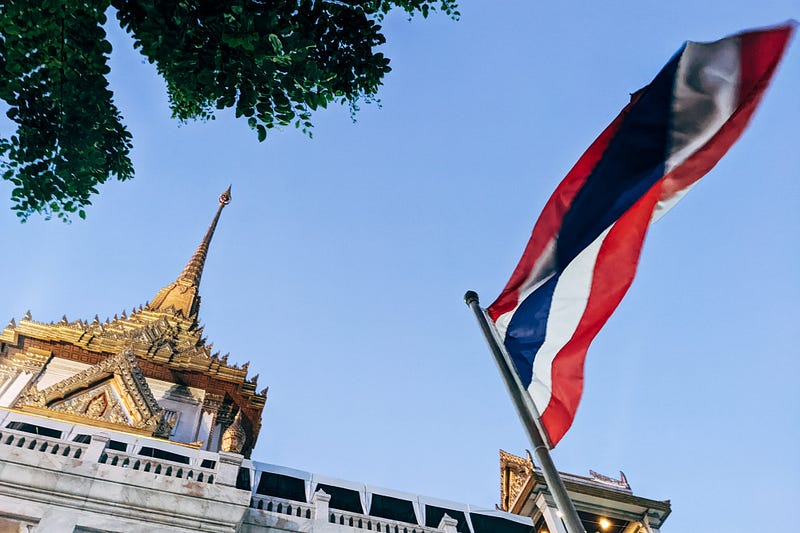
Photo by Markus Winkler on Unsplash


License award

The license was awarded to Gulf Binance, a joint venture between Binance and Gulf Innova Co., Ltd., a subsidiary of Gulf Energy Development PCL. It marks a significant milestone in Binance’s expansion efforts. The partnership was initiated through a memorandum of understanding signed in January 2022, as both parties recognized the potential of establishing a digital asset exchange in Thailand.

Richard Teng, the head of Asia, Europe, and MENA at Binance commented on the development: “By harnessing Binance’s expertise together with Gulf’s established local presence and network, Gulf Binance aims to showcase the full potential of blockchain technology to meet the needs of Thai users. Local users can expect access to a trusted and regulated service that prioritizes user security alongside compliance with local regulations.”


Combined expertise

Gulf Innova, as a prominent player in the Thai business landscape, brings extensive expertise and experience in the digital asset trading sector to the joint venture. The conglomerate, headed by billionaire Sarath Ratanavadi, operates in various industries, including energy production, telecommunications, and digital businesses.

By combining Binance’s unparalleled growth and expertise in the digital asset space with Gulf’s established presence and knowledge in Thailand, the partnership aims to create a powerful synergy that drives innovation, fosters growth, and provides exceptional value to users in the digital asset ecosystem.


Q4 launch

The new crypto exchange is expected to commence operations in the fourth quarter of 2023, although further details about the platform will be disclosed closer to the launch.

Often criticized for its opaque structure, Binance is showing renewed commitment to transparency and regulatory compliance. As regulatory frameworks are put in place in varying jurisdictions, global crypto businesses are having to change corporate structures in order to meet these changing requirements. That’s evidenced by Binance’s Thai joint venture, its launch of a separate corporate entity in the form of Binance Japan and a similar move by crypto exchange BitMEX in Hong Kong.

Thailand has emerged as a significant cryptocurrency hub in Southeast Asia, with its capital city, Bangkok, ranked 10th globally in The Crypto Readiness Index published by Recap, a cryptocurrency tax software company. Despite the ban on cryptocurrencies as a payment method, Thailand continues to flourish as a hub for trading and investment activities in the crypto space.

That ban on cryptocurrency payments, implemented by the SEC in April 2022, aimed to safeguard the stability of the financial system and mitigate potential risks to the economy. The SEC identified price volatility, cyber theft, and personal data leakage as concerns associated with cryptocurrencies. However, the regulatory measures did not impede trading or investment activities, allowing the crypto industry to thrive.

Chainalysis, a leading blockchain analysis company, ranked Thailand 8th in its Global Crypto Adoption Index for 2022, surpassing countries like Russia, China, Nigeria, Turkey, Argentina, and the UK. This recognition highlights Thailand’s progressive stance toward digital assets and its growing adoption within the country.


More to Read
View All
Policy & Regulation·

May 27, 2023

Study Places Hong Kong as Leader in Crypto Readiness

Study Places Hong Kong as Leader in Crypto ReadinessHong Kong, according to a recent study conducted by Forex Suggest, has emerged as the leading jurisdiction worldwide in terms of its readiness for cryptocurrencies. The study evaluated various factors such as the number of blockchain startups per 100,000 people and the density of crypto ATMs in relation to the population.Photo by Traxer on UnsplashZero capital gains taxThe attractiveness of Hong Kong for investors in the crypto space stems from its advantageous tax policies. The study noted that Hong Kong does not levy capital gains taxes on cryptocurrency, making it an appealing destination for crypto enthusiasts. The United States and Switzerland secured the second and third positions, respectively, in the rankings of the most crypto-ready countries.In recent times, Hong Kong has actively embraced investments from digital asset companies and is poised to implement new regulations for the industry. Effective from June 1, the city’s new rules aim to establish Hong Kong as a global hub for digital assets. These regulations permit licensed cryptocurrency trading platforms to offer services to retail investors while incorporating measures to safeguard individual traders.Global crypto firms are gearing up for that new licensing approach, carving out separate corporate entities in order to meet the regulatory requirements which the Hong Kong regulator, the Securities Futures Commission (SFC), has set. Another Hong Kong regulator, the Hong Kong Monetary Authority (HKMA), is also opening up to embrace digital asset innovation through a pilot project implicating the tokenization of real world assets.Regarding the number of blockchain startups, Hong Kong boasts three startups per 100,000 individuals, securing the second position globally. Topping the list is Switzerland, with an impressive count of 12.9 blockchain startups per 100,000 residents, amounting to a total of 1,128.The study also highlighted that countries such as Hong Kong, Switzerland, Panama, Portugal, Germany, Malaysia, and Turkey impose the lowest taxes on cryptocurrencies. These nations exempt individuals from capital gains taxes on profits derived from cryptocurrency trading.Crypto ATM proliferationWhen considering the prevalence of crypto ATMs, Hong Kong ranks third globally, with two ATMs per 100,000 people, totaling 149 ATMs. The United States takes the top spot with nearly 34,000 crypto ATMs, but when normalized to the population, it has 10.1 ATMs per 100,000 individuals.Regressive measures in USIn contrast to Hong Kong’s favorable environment, regulators in the United States have intensified their efforts to tighten regulations on cryptocurrency exchanges, leading many within the industry to advocate for clearer guidelines. Consequently, several exchanges are exploring jurisdictions that offer more favorable conditions.Forex Suggest emphasized that the report’s findings were based on extensive data analysis, taking into account factors such as tax regulations, legislation, the presence of blockchain startups, and the level of interest in cryptocurrencies. Each jurisdiction received a normalized score out of 10 for each factor, and the overall rankings were determined by averaging these scores.Hong Kong’s position as the most crypto-ready jurisdiction in the world showcases its commitment to fostering innovation and becoming a global leader in the digital asset space. With its advantageous tax policies, growing number of blockchain startups, and forthcoming regulations, the autonomous Chinese territory is solidifying its position as an attractive destination for businesses and investors in the cryptocurrency space.

news
Policy & Regulation·

Sep 20, 2023

CoinEx Reveals Insights Into Recent Platform Hack

CoinEx Reveals Insights Into Recent Platform HackHong Kong crypto exchange CoinEx has issued a further update relative to the security breach that occurred on the platform last week resulting in one of the exchange’s hot wallets being compromised.Photo by FLY:D on UnsplashImmediate responseIn the immediate aftermath of the $70 million hack, CoinEx took action to safeguard user assets and initiate an investigation into the incident. It suspended all deposit and withdrawal services and executed an emergency shutdown of the hot wallet server. Following this, the company securely moved the remaining assets to cold storage, commencing the process of reconstructing and deploying a new wallet architecture.The firm also engaged in an investigation, spearheaded by its wallet and security teams, to ascertain the extent of the breach. Moreover, CoinEx claims to have proactively reached out to fellow exchanges to freeze any assets related to the attack.Haipo Yang, the Founder and CEO of CoinEx, conveyed his apologies to affected users through his personal X (formerly Twitter) account. He emphasized the team’s commitment to restoring services promptly and reassured users that their funds will remain secure.Following up on that commitment, CoinEx published an update on the hot wallet hack on September 15 to address these concerns individually.New wallet deploymentThe exchange expects to finalize wallet upgrades within the upcoming week, after which withdrawals will gradually be phased in, subject to security evaluations. The CoinEx team is currently working on developing and deploying an entirely new and robust wallet system capable of managing activities across 211 chains and 737 assets.The firm has outlined that each of its product lines operates independently, featuring its own risk control system. Consequently, the security incident that occurred on CoinEx will not affect the integrity of its other product lines.In its most recent update on Tuesday, the Hong Kong crypto exchange confirmed that 80% of its wallet system has now been reconstructed. It added that it has initiated preparations to enable the withdrawal system on the platform. It stated:”Details about the resumption of withdrawals, including specific dates, times, and arrangements, will be announced on the CoinEx website. Please stay updated on our announcements for the latest information.”Ongoing investigationRegarding the identity of the attacker, CoinEx has confirmed that the matter is currently under investigation. While some security firms have made attribution claims, the company is focusing primarily on deploying the new wallet architecture, restoring affected users and functionalities, and enhancing overall security.At the same time, the company has initiated communications with the hackers in a bid to proactively seek a mutually agreeable resolution. While the incident implicates the loss of a substantial amount of funds, the firm maintains that in the context of the overall business, the sum represents only a small percentage of total assets under its management.Exchange security remains a major challenge in the crypto sector, with hacks happening on an ongoing basis. Last week, Seychelles-headquartered peer-to-peer crypto platform Remitano acknowledged a $2.7 million hack. At the beginning of September, crypto gambling platform Stake was reported to have suffered a $41 million hack.

news
Web3 & Enterprise·

Jul 07, 2025

Bitstamp awarded MPI license in Singapore

Singaporean regulator, the Monetary Authority of Singapore (MAS), has awarded cryptocurrency exchange Bitstamp a Major Payment Institution (MPI) trading license.Photo by Julien de Salaberry on UnsplashExpanding into APACIn a blog post published on July 3, Bitstamp proclaimed that it is “globally trusted & now licensed in Singapore.” The company described the acquisition of the license as a milestone that “marks the start of [its] expansion into the APAC region.” It emerged in June 2024 that Bitstamp had been acquired by American trading platform Robinhood. The $200 million acquisition was finally completed last month. Bitstamp signaled last September that it planned to expand its institutional business across Australia and Asia. Earlier this year, parent company Robinhood outlined that it would use Bitstamp to crypto offerings in Singapore in 2025.Acquiring licensesAt that time, Johann Kerbrat, vice-president and general manager of Robinhood Crypto, said that “part of the reason why Bitstamp was attractive was because of their licenses with Singapore, in addition to its institutional business.” This latest license award strengthens the company’s efforts in gaining more traction in Asia. Licensing is all the more relevant given the recent actions of the Singaporean regulator. Last month, MAS set a June 30 deadline for unlicensed crypto firms operating out of the city-state and serving overseas customers to cease offering such services. Over recent years, Singapore has been striving towards establishing itself as a global hub for crypto startups. It has been successful in that endeavor insofar as a whole host of international crypto businesses have established a presence there.  However, its recent move to curb unlicensed firms working out of Singapore in providing services internationally has been interpreted as a much more cautious approach being taken by the Singaporean authorities. The regulator clarified its concerns recently:”MAS has set the bar high for licensing and will generally not issue a licence. The money laundering risks are higher in such business models and if their substantive regulated activity is outside of Singapore, MAS is unable to effectively supervise such persons. Without a licence, such DTSPs [Digital Token Service Providers] will have to cease their regulated activities.”Caution in Singapore to benefit Hong KongSingapore has been competing with cities like Hong Kong to develop and maintain that crypto hub status. Some commentators have expressed the view that Hong Kong will benefit from this latest move in Singapore.  Joshua Chu, a lawyer who co-chairs the Hong Kong Web3 Association, told the South China Morning Post (SCMP) recently that “this is likely to attract quality projects [to Hong Kong] looking for a compliant, liquid, and globally connected base.” In addition to licensing achieved in Asia, Bitstamp has acquired licensing in a number of European countries such as Italy, Spain, France and the Netherlands. Last month, Robinhood launched the trading of tokenized stocks and exchange-traded funds (ETFs) for users resident within the European Union (EU). It also revealed that it is in the process of building out a layer-2 network on top of the Arbitrum blockchain with a view towards using it to host tokenized real-world assets (RWAs).

news
Loading