Top

Funding Round Sees HashKey Target Unicorn Valuation

Web3 & Enterprise·May 22, 2023, 12:24 AM

Leading financial technology company, Hong Kong-based HashKey Group, is looking to raise between $100 million and $200 million based on a $1 billion dollar company valuation that sees it take on unicorn status.

According to an initial report by Bloomberg, early stage talks on the fund raise are progressing positively. It cites sources familiar with the matter in suggesting that as the fund raise negotiations progress, the terms of the offering, extent of the capital raise, and the valuation upon which its all based could change.
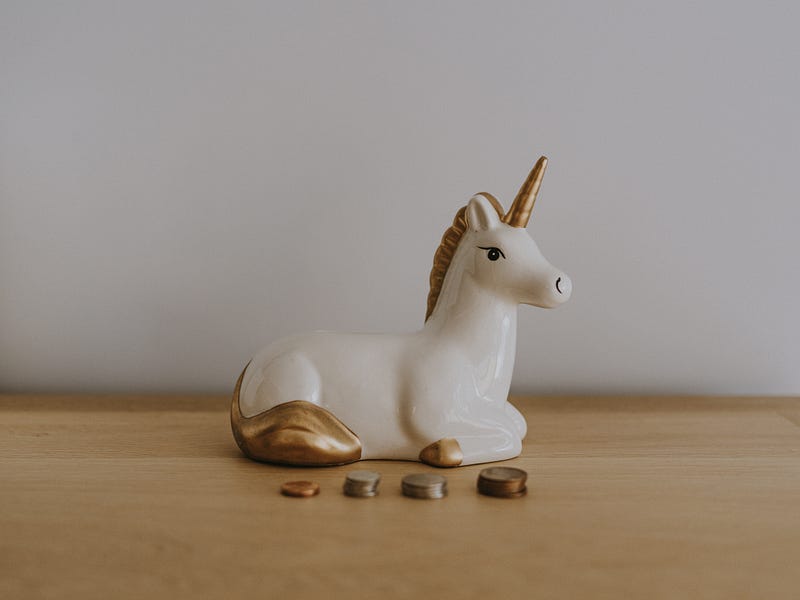
Photo by Annie Spratt on Unsplash


Leveraging a crypto-friendly environment

The Web3 infrastructure developer and digital asset management firm has decided to take advantage of favorable conditions in Hong Kong in order to raise capital. The current business backdrop in the Chinese autonomous territory is particularly positive, and something that’s likely to make the capital raise a much easier task.

Hong Kong has sought to create a crypto-friendly environment by way of both word and deed over the course of the past six months. With that being the case, it’s logical that there is tremendous opportunity for businesses like HashKey to achieve rapid growth in the nascent digital assets sector.

Under the supervision of the Hong Kong regulator, Hashkey has already started to offer its services, one of only two companies (alongside OSL) to be permitted to trade in advance of the full implementation of licensing next month.

While there have been some difficulties relative to banking the digital assets sector in Hong Kong, ZA Bank, Hong Kong’s largest virtual bank, has stepped up with the aspiration of banking the sector. ZA Bank is expected to facilitate crypto-fiat conversions with both of the currently licensed exchanges, HashKey and OSL, where customers can swap crypto into fiat currencies. The bank will also offer basic banking services to local web3 startups, a category that is currently underserved by traditional financial institutions.

HashKey itself is cognizant of the conditions being right on the ground in Hong Kong and the opportunity that presents. Its chairman, Xiao Feng stated that Hong Kong is “very serious about building an international virtual asset center,” when speaking at the city’s Web3 Festival recently, an event that drew 13,000 attendees on its first day.


Diversified service offering

The firm’s activities in Hong Kong extend to HashKey Pro, a Hong Kong-compliant virtual asset exchange, and HashKey Capital, an investment firm. In April, the company established HashKey Wealth.

This wealth management service offers investors access to a wide range of digital assets, including Bitcoin, Ethereum, and other cryptocurrencies, together with alternative investments such as decentralized finance (DeFi) projects and non-fungible tokens (NFTs).

The program is designed to meet the needs of both institutional and high net worth individual investors. The investment strategies offered vary, ranging from passive to actively managed portfolios. Different risk profiles are employed to suit investors’ preferences. The program also provides a range of other services, including custody, trading, and portfolio rebalancing, to ensure that investors can manage their investments with ease.


More to Read
View All
Web3 & Enterprise·

Jun 12, 2023

METACON 2023 to Explore Innovative Metaverse Business Models

METACON 2023 to Explore Innovative Metaverse Business ModelsAccording to a report by local crypto news outlet Tokenpost, METACON 2023, a conference focused on Web3 and the metaverse, is set to take place from June 29 to 30 at COEX, a convention and exhibition center in Seoul. This year’s event marks the third anniversary since its inception in 2021.Photo by GuerrillaBuzz on UnsplashInsights on the MetaverseAs the main event of Seoul Meta Week (SMW), METACON aims to showcase cutting-edge metaverse applications, explore innovative business models, and find ways to penetrate new markets. Titled “WEB 3.0 X METAVERSE: The Future of Hyper-Connected Experience,” METACON 2023 will feature presentations and discussions from approximately 40 speakers representing prominent companies. Among the featured speakers are representatives from The Sandbox, Google Cloud, Tencent, Shutterstock, DRESSX, The Fabricant, Nexon Korea, Amorepacific, SK Telecom, and LG Uplus.On June 29, Kerry Murphy, the Founder and CEO of The Fabricant, will provide insights into the impact of digital fashion on the real-life fashion industry. Following that, Murphy will engage in a discussion with Natalia Modenova, the Founder & COO of DRESSX, to talk about the philosophy of Web3 and collaborative efforts in shaping trends in digital fashion.Participation from traditional banksIn addition, visitors to the conference will have the opportunity to hear from representatives of four traditional Korean banks: KB Kookmin Bank, Shinhan Bank, Hana Bank, and Woori Bank. Other discussions throughout the event will cover a wide range of topics, including the work environment, digital art, the popularization of Web3, investments, and generative artificial intelligence (AI).The following day of the conference will commence with a keynote speech titled “Unlocking Brand Value in the Metaverse” by Sebastien Borget, the Co-founder and COO of The Sandbox, a community-driven blockchain gaming platform. After that, Dade Orgeron, the VP of 3D Innovation at US stock image provider Shutterstock, will deliver a talk on generative AI as a creative tool and discuss the company’s AI license policy.An official from Seoul Meta Week (SMW) stated that this year’s program was specifically designed to provide an agenda that encourages interaction between newcomers to the Web3 industry and established projects.

news
Web3 & Enterprise·

Nov 23, 2023

Seoul Labs to build layer 2 blockchain mainnet using SASEUL

Seoul Labs to build layer 2 blockchain mainnet using SASEULSouth Korean blockchain solutions provider Seoul Labs announced Thursday (local time) that it will build a layer 2 mainnet utilizing the third-generation blockchain engine SASEUL. This comes in an effort to strengthen the scalability of the SASEUL network and improve capabilities for large-scale traffic processing. Layer 2 refers to a set of off-chain solutions built on top of a layer 1 network to reduce bottlenecks with scaling and data.Photo by Shubham Dhage on UnsplashScalability and stabilitySeoul Labs plans to actively utilize the mainnet’s core functions, such as its HAP-2 hypothesis acceptance verification algorithm and dual chain mechanism as well as its ability to solve storage space problems. In particular, the HAP-2 hypothesis acceptance verification algorithm is a more efficient method for generating blocks than the proof of Work (PoW) algorithm that is widely used in blockchain mainnets, significantly improving scalability.According to the company, the layer 2 mainnet will implement an approach to becoming a node on the network without a graphics processing unit (GPU).“By building the layer 2 mainnet, we will be able to build the SASEUL blockchain network into a stable and scalable platform,” said Dohee Jang, CEO of Seoul Labs.Multifaceted solutionThe project is also poised to become a solution to the excessive computing resources and electrical energy required to run blockchain networks that lead to environmental repercussions. In addition, the company is facilitating research and development for the implementation of central bank digital currencies (CBDCs) into the global economy. Notably, the South Korean government is also planning to launch a CBDC pilot project by 2024.“Recently, central banks around the world have been promoting the integration of CBDCs, but they are facing various problems in terms of scalability and speed,” said an unnamed employee at ArtiFriends, the company behind the SASEUL mainnet. “Layer 2 mainnet is a stable and scalable platform suitable for CBDCs.”

news
Markets·

Dec 30, 2023

OKX delisting sparks privacy coin price slump

In a move announced on Friday, OKX, the Seychelles-headquartered cryptocurrency exchange, declared its decision to delist 20 trading pairs by Jan. 5, triggering a notable price fall for major privacy coins such as Monero, Dash and ZCash. The exchange cited that the affected pairs did not align with its listing criteria, though specific details were not disclosed.Photo by Khara Woods on UnsplashPrivacy coin delisting trendWhile OKX did not explicitly articulate the rationale behind this move, industry observers are speculating that it could be part of the exchange’s broader efforts to comply with evolving regulatory measures. Privacy coins have increasingly drawn regulatory scrutiny due to concerns about potential illicit activities within the crypto space. Earlier in the year, Binance had also announced the delisting of several privacy coins to ensure compliance with local laws and regulations. The broader context of regulatory pressures on privacy-focused cryptocurrencies seems to be impacting major exchanges’ decisions. In 2022, Huobi cited regulatory pressures when it took the decision to delist Monero and other privacy coins. Kraken was further ahead of the curve still, delisting Monero for UK customers in November 2021. Downward price actionFollowing OKX’s announcement on Friday, the prices of privacy-focused cryptocurrencies, notably Zcash (ZEC) and Monero (XMR), experienced a decline. The entire sector of “privacy cryptos” has witnessed a 7.1% decrease in overall market capitalization, according to an index of such coins compiled by Malaysian crypto indexing firm CoinGecko. During this period, Monero and Zcash have seen unit price declines of 4.5% and 10.7%, respectively. Other tokens set for delisting, including Dash, Powerpool and Horizen, have recorded declines of up to 14%. OKX has provided guidance to users, advising them to cancel orders related to the affected trading pairs before the delisting date to avoid automatic cancellation, a process that may take 1–3 working days. Concurrently, the exchange has halted deposits for the impacted cryptocurrencies and plans to cease withdrawals by Mar. 5, 2024, affording holders sufficient time to withdraw their assets. However, once the delisting is complete, trading these digital assets on OKX will become impossible. Interestingly, certain privacy coins like MINA continue to be listed on the exchange, experiencing a 7.5% increase following the delisting announcement. It’s crucial to note that OKX’s delisting is not exclusive to privacy tokens, as it also includes other trading pairs associated with digital assets such as Kusama, Flow, Kyber Network and Aragon. The fight for privacySome crypto community members have voiced their concerns on social media, with many fearing that the innovation may be ‘captured’ by the various state authorities over time. However, ex-Monero developer Ricardo Spagni (AKA “Fluffypony”) was nonchalant about the whole thing, judging by his comments. In a post on social media platform X, he wrote: ”Monero users and contributors literally couldn’t care less about delistings at this point.” As the regulatory landscape evolves, cryptocurrency exchanges are navigating these challenges, impacting the availability and value of specific tokens on their platforms. Investors and privacy advocates alike will be closely watching how such regulatory compliance measures continue to shape the crypto market and crypto use.  

news
Loading