Top

Animoca Brands Holding $3.4B in Cash and Reserves

Web3 & Enterprise·May 12, 2023, 12:44 AM

Digital entertainment, blockchain and gamification firm Animoca Brands provided an update on its financial position on Thursday, disclosing $3.4 billion in cash and assets as held on its balance sheet and in tokenized reserves as of April 30.
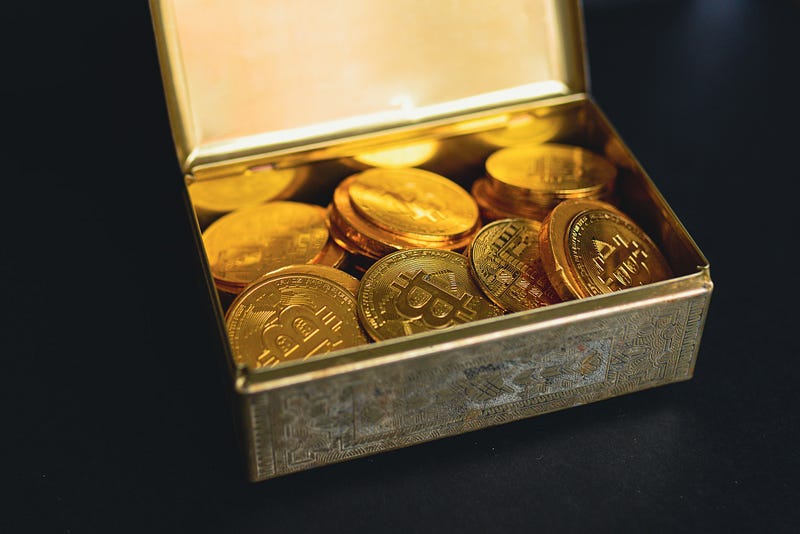
Photo by regularguy.eth on Unsplash


A financial breakdown

The Hong Kong-based Web3 firm published the interim financial report to its website. Breaking that down further, the company is holding $194 million in cash and stablecoin reserves. Additionally, $566 million is being held in liquid digital assets. This includes reserves of $SAND, the native token of the Ethereum-based Sandbox virtual metaverse.

Beyond this, Animoca holds $2.7 billion in a varied portfolio of digital asset reserves, linked to its majority owned Web3 subsidiaries and portfolio companies. The firm outlined that it intends to release additional financial updates in the near future. That will include an audited financial statement for 2020. Furthermore, a summary statement of business activity for 2022 will be released, together with similar business highlights pertaining to Q1, 2023.


Adjusting to changing market conditions

It’s likely that Animoca took the decision to release this data at this point to bolster confidence in the company, off the back of a number of announcements that may have led some in the industry to question the overall financial health of the company.

According to a report published in March by Reuters, Animoca Brands cut its target for its metaverse fund by 20% to $800 million. The scaling back was understood by many crypto sector commentators to be a reaction by the company due to changing market conditions within the crypto space. It was the second such adjustment the company made. In November 2022, the firm was working on the new fund, initially proposing a target of $2 billion. Once January came around, Animoca took the decision to scale that target back by half to $1 billion.

Subsequent to reports of the fund scale-back being published, Animoca Brands CEO Yat Siu reacted, telling one crypto media outlet that “the claim that the Animoca Capital fund target was ‘cut’ from $2 billion to $1 billion is not correct, because $1 billion has always been within the range declared.”

Playing down the news further, the company added: “There’s no doubt that the FTX and banking crises have had a serious impact on available venture capital, but fundraising for the Animoca Capital fund is in progress. When the raise is concluded, we will inform the market with the appropriate details, including the final size of this fund.”

Siu stated that as the source of that report was an unnamed source, it was difficult to figure out the agenda of that person in broadcasting that claim.

Animoca is perceived in the industry as a key player, particularly so when it comes to NFTs, blockchain-based gaming and the metaverse. The firm is classed as a Crypto Top 40 company by Forbes, while being a winner of Deloitte’s Technology Fast 50 award. Deloitte’s Technology Fast 50 program ranks fast growing companies based upon their percentage revenue growth over the course of three years.

More to Read
View All
Markets·

Mar 13, 2024

Korean banks see over $1.5B outflow in funds to crypto market

Recently, the top five Korean banks have seen a significant outflow of funds in their demand deposits – worth about KRW 2 trillion ($1.52 billion) – to crypto markets as local investors are rushing to withdraw their money from banks to invest in the crypto and stock markets. The recent surge of Bitcoin to KRW 100 million prompted the funds’ outflow, local media Etoday reported. This is a substantial turn from just a week ago, when these banks saw a KRW 23.5 trillion increase in their demand deposits just in a month.  The previous rise in demand deposits at banks, however, was also driven by local investors who used these accounts as a “station” to temporarily store their money for future crypto investments. These accounts are highly liquid, since users can deposit or withdraw funds at any time without incurring penalties from banks.Photo by Emile-Victor Portenart on UnsplashBank deposits flowing into crypto Data from the five banks –  KB Kookmin Bank, Shinhan Bank, Hana Bank, Woori Bank and NH Nonghyup Bank – show that their combined demand deposits totaled KRW 612.4 trillion on Friday, down KRW 2.2 trillion from late last month.  The crypto investing trend has prompted investors to withdraw their funds not only from demand deposit accounts, but also from fixed deposit and installment savings accounts. During the same period, the five banks’ fixed deposits saw a KRW 5.1 trillion decline from KRW 886.2 trillion to KRW 881 trillion, with installment savings decreasing by KRW 2.5 trillion, from KRW 33.2 trillion to KRW 30.6 trillion.  In particular, NH Nonghyup Bank, which offers real-name accounts to the crypto exchange Bithumb, has witnessed a decline of over KRW 2 trillion in its demand deposits over the past week. Shinhan Bank also reported an increase in dealing with more crypto assets.  Bullish crypto and stock market With Bitcoin prices hitting a new high, the U.K. bank Standard Chartered forecasts that Bitcoin could eventually reach $200,000 by 2025. The excitement around crypto has boosted the amount of cryptocurrencies traded against the Korean won across the top five crypto exchanges in Korea, reaching KRW 78 trillion.  Korean stock markets are also signaling a bullish sentiment, with the amount of investor deposits exceeding KRW 53 trillion this month. Investor deposits refer to customer deposits at securities companies saved for investment purposes or those left unclaimed after selling stocks.  Declining interest rates Meanwhile, local savings products with over 4% interest rates are no longer to be seen. According to the Korea Federation of Banks, a one-year savings product with the highest interest rate among the top five local banks offers an annual rate of 3.55%.  Online-only banks, which typically offer relatively higher rates than other traditional banks, are rapidly lowering rates on their saving products. The highest annual rate for Kakao Bank’s fixed deposits products stands at 3.5%, down by 0.1 to 0.2 percentage points depending on their maturity.  Kbank has also decreased rates for fixed deposits by 0.05 percentage points, lowering the rate for its flagship fixed deposits product from 3.7% to 3.65%. 

news
Policy & Regulation·

Dec 28, 2023

China disrupts massive crypto-related laundering operation

While cryptocurrencies may be banned in China, crypto trading activity continues in some corners, nonetheless, sometimes through accessing overseas exchanges. With that, authorities recently uncovered a massive underground banking operation that exploited crypto trading platforms to evade local forex regulations.Photo by Manuel Joseph on Pexels$2.2 billion laundering operationOn Sunday, an account on popular Chinese social media platform WeChat run by China’s State Administration of Foreign Exchange (SAFE) published details of the $2.2 billion laundering operation bust. Xu Xiao, the Inspector at the Qingdao Branch of the State Administration of Foreign Exchange, revealed that the scheme involved underground banks who purchased virtual currencies and then sold the virtual currencies through overseas trading platforms to obtain the foreign currency they needed. This process, he explained, completes the conversion of yuan and foreign currencies, constituting the illegal act of buying and selling foreign exchange. Stringent capital controlsChina enforces stringent rules on money transfers outside the country. Citizens are limited to exchanging up to $50,000 in foreign currency and require a permit for transactions beyond that limit. Any transaction exceeding the limit without a permit is considered money laundering. During a recent investigation, authorities seized cryptocurrencies valued at approximately $28,000 in Tether, Litecoin and other digital currencies. However, the operation is estimated to have facilitated the movement of over $2.2 billion, involving more than a thousand bank accounts across 17 provinces and municipalities. Monetary control loopholesChina, once the largest cryptocurrency market, imposed a comprehensive ban on crypto exchanges in September 2017 and subsequently expanded its restrictions to include crypto mining and trading. Despite these measures, reports have surfaced about underground crypto exchange operations. Earlier this year, an investigative report by the Wall Street Journal found that global exchange Binance continues to do thriving business with Chinese customers. Global crypto exchanges are reportedly still onboarding Chinese clients indirectly. The South China Morning Post (SCMP) recently accused Binance of facilitating Chinese crypto trading accounts by falsely claiming they are from Taiwan. While mainland China adopts a hostile stance towards cryptocurrencies, the special administrative region of Hong Kong remains progressive in the sector. Hong Kong’s regulatory authorities have introduced specific rules for cryptocurrencies and are licensing crypto exchanges operating within the jurisdiction. Arthur Hayes, the co-founder of the BitMEX crypto derivatives platform, recently described Hong Kong as the gateway for mainland China to global capital markets. Hayes asserted that wealthy Chinese individuals all bank in Hong Kong and with that, they all have access to crypto exchanges and brokers. In Cambodia, it is understood that illicit Chinese-linked activities oftentimes implicate the use of U.S. dollar stablecoin Tether (USDT) to move funds in and out of China even though Tether is banned in Cambodia. The latest crackdown in China underscores the ongoing challenges faced by authorities in controlling crypto-related activities, highlighting the dynamic nature of such activity within and adjacent to mainland China. As regulatory scrutiny intensifies, the contrast between mainland China’s approach and Hong Kong’s more open stance toward cryptocurrencies becomes increasingly evident. 

news
Policy & Regulation·

Mar 10, 2025

Government-owned bank enables crypto trading through digital app in Dubai

Dubai-based Emirates NBD, one of the United Arab Emirates’ (UAE) top banks, has enabled a crypto trading service via its subsidiary bank, Liv Digital Bank. Liv Digital Bank has launched the crypto trading service through its Liv X mobile banking app. App users now have the ability to buy, hold and sell a range of cryptocurrencies. Users will have access to custody solutions. They can control both virtual currencies and fiat currencies from within one application.Photo by Markus Winkler on UnsplashAquanow collaborationThe offering has been brought online through a collaboration with digital assets infrastructure provider Aquanow. Taking to X, Aquanow CEO Phil Sham said that "incumbent institutions like Emirates NBD will play a pivotal role in driving the next wave of digital asset adoption.” Aquanow has acquired the necessary licensing from the Virtual Assets Regulatory Authority (VARA) in Dubai to enable the service offering on a compliant basis. Sham told Cointelegraph that the collaboration “showcases how traditional banking and digital assets can coexist, providing consumers with seamless, secure, and compliant access to the evolving digital economy.” Zodia as digital asset custodianZodia Custody, a virtual asset custodian that serves institutional clients, has been chosen to custody assets held as a result of crypto trading on the app. The custodian, a subsidiary company of British multinational banking group Standard Chartered, launched its service in Dubai back in 2023. Emirates NBD is government-owned and the UAE’s second largest bank. The service will facilitate users in trading Bitcoin (BTC), Ethereum (ETH), Solana (SOL), XRP, Cardano (ADA) and some other cryptocurrencies. The bank’s Group Head of Retail Banking and Wealth Management, Marwan Hadi, commented on the development, stating: “Offering cryptocurrency on Liv X is the next step towards the overall vision of Liv being a pioneer in innovation and excellence.” He added that “with the highest crypto adoption rate in the UAE, [Emirates NBD is] keen to launch [its] own virtual asset offering to capitalise on this trend.” This is not the first touch point with the crypto sector for the Emirates NBD subsidiary. Last year, Liv Digital partnered with tokenized real-world assets (RWA) firm Ctrl Alt. Accessing Ctrl Alt’s RWA tokenization expertise, Liv is opening investing opportunities for its customers in the area of tokenized assets. In November 2024, Emirates NBD signed up as a member of the Partior Network, the distributed ledger technology (DLT) clearing and settlement network. Partior uses tokenized instruments for the wholesale settlement of cross-border payments in conjunction with correspondent banks. In the past, the Dubai-based bank had made efforts to educate its customers with regard to the benefits of cryptocurrency and blockchain. Last year, American blockchain analysis firm Chainalysis reported that the Middle East and North Africa (MENA) accounted for 7.5% of global digital asset trading volume over the course of 12 months from July 2023 to June 2024. Chainalysis itself chose Dubai to set up its regional headquarters in May 2024.

news
Loading