Top

Coinbase Signals Interest in UAE Base

Web3 & Enterprise·May 09, 2023, 12:07 AM

In further evidence of a contrast in progression relative to the approach taken to digital assets in the United States versus other world regions, US crypto exchange Coinbase is understood to be considering the United Arab Emirates (UAE) as a potential strategic hub for the company.
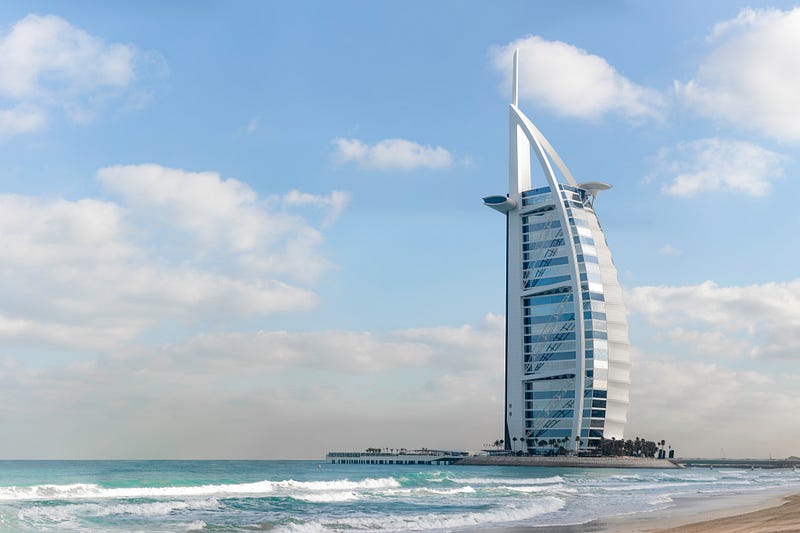
Photo by Aleksandar Pasaric on Pexels


Cause and effect

A number of weeks ago, while Gary Gensler of the Securities of Exchange Commission (SEC) was facing a grilling in a House Financial Services Committee hearing on Capitol Hill in Washington, Brian Armstrong of Coinbase put out a statement saying that if the regulatory approach to crypto in the United States didn’t change, then the company would choose to locate itself elsewhere.

It hasn’t taken Armstrong long to act on that intention. Late last month, the digital assets platform took its first step outside the United States by securing a license to operate in Bermuda. In line with Armstrong’s earlier comments, the move was seen as a strategic action taken by the company to expand its operations on a global basis.

Armstrong had warned that unless regulators in the US provided complete regulatory clarity in relation to the activities of cryptocurrency firms, then the innovation would quickly develop in offshore havens. Alongside the announcement of the license to trade in Bermuda, a blog article was published which indicated that the company was also in discussion with regulators in Abu Dhabi in the UAE with a view towards potentially obtaining a license to operate there.


Blog article

Fast forward to Sunday, with the publication of yet another blog article by the company, and it seems that the company is hinting at a much stronger likelihood of establishing a UAE base. The article outlines that over the course of the next week, the Coinbase founder and CEO and the company’s executive team are in the UAE to participate in a round of meetings with regulators, industry partners, policymakers, clients and web3/crypto founders.

The article outlines that Armstrong would give a keynote at the Dubai Fintech Summit, while elaborating that “the region has the potential to be a strategic hub for Coinbase, amplifying our efforts across the world.” In a recent interview with Bloomberg TV, the Coinbase CEO said that “we are looking for a home to set up an international hub that could serve the long tail of countries in the world.”

At the Dubai Fintech Summit on Monday, Armstrong stated that the UAE “is leading the way regionally in crypto” and that it could be a potential international hub. He added: “I would say that the UAE’s approach has been more forward thinking than the US.”


UAE crypto aspirations

There’s no doubt that the UAE is trying to develop itself as a center for crypto and digital asset innovation. The country’s Prime Minister has said as much, declaring his intention to establish the Middle Eastern nation as a key player in the future of crypto. Both the Emirates of Dubai and Abu Dhabi have been proactive in working towards a digital asset regulatory framework, complete with a crypto licensing program in recent months.


More to Read
View All
Policy & Regulation·

Jul 02, 2025

Malaysian regulator seeks feedback on crypto framework enhancements

The Securities Commission Malaysia (SC), the statutory body tasked with regulating and developing capital markets within the Southeast Asian nation, has published a consultation paper in an effort to garner public feedback on potential enhancements to its crypto regulatory framework. In a press release published to its website on June 30, the SC claimed that its proposals seek “to enhance competitiveness of Malaysia’s regulated digital asset market, improve investor protection and strengthen the resilience and integrity of [Digital Asset Exchange] operators.”Photo by Vlad Shapochnikov on UnsplashEasing listing requirementsIn the event that the proposals are adopted, one key change would see a liberalization of the listing requirements for digital assets. Where certain key eligibility criteria have been met, the regulator would allow the listing of digital assets on digital asset exchanges without prior SC approval. The regulator stated that it wants to make this change in order to speed up the time taken to get digital assets to market as they emerge. By setting out additional criteria, there will be greater exchange operator accountability. Exchange operators would bear responsibility for listing tokens in compliance with the requirements set out by the regulator.  Assets could only be listed once those assets and the underlying protocol and network had undergone security audits which had been carried out by an independent and qualified blockchain security auditor, with the audit results made public.  For the purposes of the “Liberalised Listing Framework,” the asset must have been trading on a Financial Action Task Force (FATF)-compliant virtual asset service provider (VASP) platform for a minimum of one year. The regulator believes that easing the listing requirements will result in a broader digital asset product offering being made available in Malaysia. Last month, Thailand’s Securities and Exchange Commission (SEC) started a public consultation process aimed at revising token listing rules. Coin listing processes have also come under scrutiny from the authorities in South Korea recently. Segregating client assetsAmong the proposals is a plan to oblige exchange platforms to properly segregate client assets from operational funds and assets held by the exchange business. In recent years, many failed crypto exchange platforms, most notably FTX, got into difficulty by co-mingling customer funds with operational funds. Furthermore, the regulator doesn’t want any cross-over of assets between the local exchange operator and any overseas affiliate companies it may have.The SC stated that it is cognizant of recent global exchange failures, which has led it towards further enhancing crypto exchange operational governance and controls. It suggests that only 10% of client assets should be held by a Malaysian exchange in hot wallets, with the remaining 90% held in cold or offline wallets. The SC said that it welcomes feedback from members of the various stakeholder groups on the proposals outlined. The public consultation period runs from June 30 through Aug. 11.  Malaysia is expected to have 4.74 million crypto users by 2026. That would equate to 13% of Malaysians using crypto by then.

news
Markets·

Jan 02, 2024

Mixed opinions on crypto as investment instruments revealed in Korean surveys

When Samsung Securities surveyed its high-net-worth clients about which investment assets they believed would be most effective for wealth growth in the future, only a small fraction, 1.9%, pointed to virtual assets, as reported by South Korean news outlet Newsis. The majority favored domestic and foreign stocks, which garnered a significant 45.4% of the vote. Following this, domestic and foreign bonds were chosen by 18.1% of respondents, and real assets like real estate and gold were also considered favorable, with 16.8% backing these options.Photo by Lukas on PexelsInvestment preferences of high-net-worth clientsThe survey conducted by Samsung Securities involved a select group of 368 participants, each with assets totaling KRW 3 billion ($2.3 million) or more. It focused on their perspectives regarding this year’s stock market trends and their individual investment strategies. This specific demographic provided insights into the investment preferences and outlooks of high-net-worth individuals. In the survey, when these individuals were queried about the methods they’ve used to accumulate their wealth, the most prevalent answer was investment in financial instruments such as stocks and funds, with 35.9% indicating this as their primary method. Business income was the second most common source of wealth, cited by 29.9% of participants. Wage income was also a significant contributor, mentioned by 19.6%. Additionally, gifts and inheritance played a role, accounting for 7.1% of wealth growth. Meanwhile, real estate investments were the least common, with only 6.5% of the respondents identifying it as a key wealth growth strategy. Regarding the optimal timing for stock purchases this year, a notable portion of the investors expressed a preference for the beginning of the year, with many pinpointing the first quarter as the ideal time, as indicated by 51.6% of respondents. This preference was followed by the second quarter, favored by 27.7%, the third quarter at 13.6% and the fourth quarter being least favored with only 7.1%. In terms of promising industries for investment, over half of the respondents, 50.6%, identified artificial intelligence (AI) and semiconductors as the most prospective sectors. These technologies are viewed as pivotal in shaping the future of the tech industry. Following AI and semiconductors, rechargeable batteries, which were the top-performing segment in the previous year, garnered notable interest, with 16.7% of respondents favoring them. The survey identified key figures likely to impact the stock market this year: former U.S. President Trump (30.4%), U.S. Federal Reserve Chair Powell (15.8%), U.S. President Biden (7.1%) and Saudi Prime Minister Mohammed bin Salman (3.3%). Business leaders like Tesla’s Elon Musk (6.0%), OpenAI’s Sam Altman (5.4%) and Novo Nordisk’s Lars Fruergaard Jorgensen (2.4%) were also mentioned for their influence. When asked about the most important issue of the financial market for the new year, 51.1% pointed to “interest rate cuts in major economies” as their top concern. Following this, 15.2% highlighted the outcome of the U.S. presidential election as a significant issue. Additionally, the advancement of new industries such as AI and robotics was flagged as an important topic by 10.3% of those surveyed. Stock market experts’ crypto optimismIn contrast, a 2024 stock market outlook survey by local media outlet Money Today, which polled 225 stock market experts, showed a more optimistic stance towards investing in cryptocurrencies this year. When questioned about their willingness to invest in crypto assets like bitcoin, 20% responded very affirmatively, and an additional 34.2% expressed a similar interest, totaling over half of the respondents showing readiness to invest in cryptocurrencies. Meanwhile, 18.7% were unsure, and 27.1% had negative views, including 16.4% saying “no” and 10.7% opting for “strongly no”. In the newspaper survey, when specifically asked about bitcoin’s future value, 24.9%, the largest group of respondents for this question, predicted that bitcoin’s price would reach or exceed KRW 70 million, the highest estimate provided in the survey’s options. Meanwhile, 17.8% of the experts estimated that the price would range between KRW 60 million and 70 million. 

news
Policy & Regulation·

Oct 11, 2024

Taiwanese regulator set to launch crypto custody pilot

Taiwan’s Financial Supervisory Commission (FSC), the independent government agency that regulates activity within Taiwan’s securities, virtual assets, banking and insurance sectors, is planning to invite applications from financial institutions to participate in a crypto custody services pilot program, scheduled to commence in Q1 2025. The Central News Agency (CNA), the national news agency of the Republic of China, published a report on Oct. 8, outlining the FSC’s intentions with regard to this crypto custody pilot program. The media outlet confirmed that three Taiwanese banks had expressed an interest in participating in the program.  The Director of the FSC’s Comprehensive Planning Division, Hu Zehua, outlined at a press conference that the regulator is planning to provide further information relative to the pilot program 15 days in advance of inviting applications from prospective participants. Photo by 張 峻嘉 on UnsplashPublic consultationAdditionally, the FSC executive outlined that the regulator intends to collect feedback from the public relative to the proposed pilot program, and fine-tune the process based upon that feedback. Hu stated that he recognizes that based on crypto custody activity carried out overseas, operational security is of paramount importance. Therefore, the FSC is interested in placing emphasis on this aspect of the activity as part of the pilot program.  Illicit funds and money laundering is another area of concern. With that the FSC executive outlined that financial institutions must proactively block virtual assets that are found to originate from illicit sources. In August a Taiwanese couple was indicted for laundering around $50 million in illegal funds through cryptocurrencies. Earlier this month, the FSC revised Taiwan’s regulatory framework relative to anti-money laundering (AML). The update now requires digital assets firms to register with the Taiwanese government by no later than September 2025. Failure to do so may result in these crypto companies being fined up to $156,000 or company executives facing up to two years in prison. Bitcoin, Ethereum and Dogecoin mentionedPilot program applicants will be expected to specify the type of digital assets they intend to custody. Explanatory information released by the FSC gave Bitcoin, Ethereum and Dogecoin as examples. Additionally, applicants are required to outline the type of client they will cater towards in providing a crypto custody service. Among the examples mentioned were virtual asset platforms, professional investors and general investors. The FSC announced at the end of last month that professional investors are now permitted to access foreign virtual asset exchange-traded funds (ETFs) and invest in them through a re-entrustment method. Taiwan has been making progress recently in bringing about regulatory clarity and establishing conditions within which Web3 companies can develop. The FSC had been working towards the production of draft crypto regulations over recent months. This followed a move by Taiwanese legislators in October 2024 to introduce the Virtual Asset Management Bill to parliament, with the objective of strengthening customer protections and establishing industry supervision. In September, the regulator released guidelines, including a measure which bans overseas crypto platforms from operating within the country. 

news
Loading