Top

Atomic Wallet Hacker Uses Lazarus Crypto Mixer

Web3 & Enterprise·June 07, 2023, 12:27 AM

The stolen cryptocurrency from the recent $35 million hack of Atomic Wallet is already being moved to a crypto mixer favored by North Korea’s notorious cyber-hacking group.
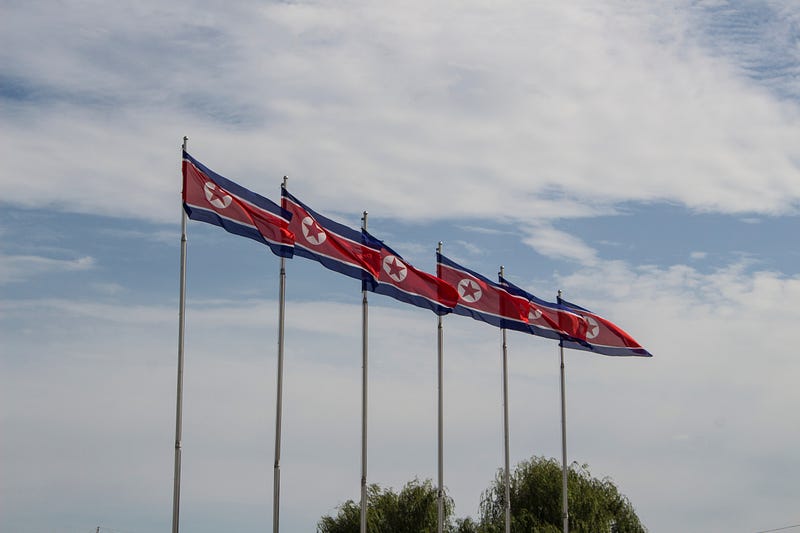
Photo by Micha Brändli on Unsplash


Sinbad.io

According to UK-based crypto compliance analysis firm Elliptic, the funds have made their way to a crypto mixer used by Lazarus Group, a notorious hacker group that focuses on crypto heists which is believed to have direct ties with the North Korean government.

On June 5, Elliptic’s Investigations Team revealed that it had traced the funds from the Atomic Wallet hack to the crypto mixer Sinbad.io. Lazarus had previously used the mixer to launder over $100 million in stolen crypto assets.

While the exact amount sent to the mixer was not specified, Elliptic noted that the stolen funds were being exchanged for Bitcoin before undergoing obfuscation through the mixer. Additionally, Elliptic reported that Sinbad.io is likely a rebranded version of Blender.io, another mixer extensively used to launder funds by the Lazarus Group. Blender.io has been sanctioned by the US Treasury.


Atomic Wallet hack

The hack of several user accounts on Atomic Wallet occurred on June 3, resulting in losses of up to $35 million. News of the issue broke with the following tweet from the project team (which has subsequently been deleted): “We have received reports of wallets being compromised. We are doing all we can to investigate and analyze the situation. As we have more information, we will share it accordingly.”

In a follow-up tweet the next day, the team confirmed that it was investigating the matter with the assistance of a number of “leading security companies.”

However, Atomic Wallet later downplayed the incident, stating that less than 1% of its monthly active users were affected. The project team was castigated by users for trying to present the hack as a minor incident. One user took to Twitter to call out the Atomic Wallet team for “having the nerve to come to the networks and say that only 1% of wallets were affected.”

The Atomic Wallet project is based out of Tallinn, Estonia, having been founded in 2017. It claims to provide a non-custodial decentralized multi-currency crypto wallet. The product supports over fifty coins and two hundred tokens. It also offers atomic swaps between digital assets, while also supporting integrations with instant exchanges such as Changelly, ShapeShift, and others.

Roland Säde, the Chief Marketing Officer of Atomic Wallet, assured users that the team is working tirelessly to recover the stolen funds. He emphasized the need to complete the investigation to develop a concrete plan.

Despite the ongoing efforts, Säde urged victims to track the illicit transfers and report them to popular crypto exchanges. By doing so, it was thought that may hinder the scammers from exchanging the funds.


Crypto hacking menace

Lazarus Group hackers have been the bane of the crypto space in recent years. Elliptic released a report last month that identified Japan as having been the country most adversely affected by the North Korean hackers. It’s understood that the estimated $721 million in stolen crypto from Japan-based entities amounts to nearly nine times the value of North Korea’s exports based on 2021 data.

While Atomic Wallet is directly reporting the incidents, Säde believes that having more individuals monitoring the hackers’ activities will make it more challenging for them to move the funds undetected. Unfortunately, Elliptic’s recent findings suggest that for many victims, it may already be too late to prevent further misuse of their stolen cryptocurrency.


More to Read
View All
Web3 & Enterprise·

Nov 21, 2023

NEOPIN and Sevenline Labs collaborate to boost Web3 gaming expansion

NEOPIN and Sevenline Labs collaborate to boost Web3 gaming expansionCentralized decentralized finance (CeDeFi) protocol NEOPIN has entered into a partnership with Sevenline Labs, a Korea-based company specializing in blockchain solutions. This collaboration is aimed at fostering expansion in the Web3 gaming ecosystem.Photo by Alicia Christin Gerald on UnsplashGames of different genres and platformsSevenline Labs is currently operating a Web3-powered esports tournament platform called Miracle Play. Leveraging application programming interfaces (APIs), the platform offers games of different platforms of genres on blockchain networks. It enables mobile, desktop, console and Web3 gamers to engage in diverse tournaments and earn rewards from competitions.Sevenline’s inaugural service, operating on the Polygon Network, has successfully completed a closed beta test specifically targeted at Indonesian communities. Currently, the company is in the process of conducting an open beta test. Looking ahead, Sevenline is planning to extend its support to various chains compatible with Ethereum virtual machines (EVMs). This expansion includes notable blockchain platforms such as Avalanche, Binance Smart Chain, Oasys, Solana and Klaytn. The ultimate objective of Sevenline is to orchestrate large-scale tournaments between different mainnets, with each of them representing a distinct faction.Through the collaboration between NEOPIN and Sevenline Labs, NEOPIN’s global partners will introduce their Web3 games to the Miracle Play platform. This move allows users to voluntarily host and participate in various tournaments, thereby enhancing the visibility and popularity of these games. Concurrently, Web3 gaming companies that have formed partnerships with Sevenline will be incorporated into the NEOPIN ecosystem.Native tokens to be supportedThe integration of the NEOPIN wallet with Miracle Play is a strategic move that aims to attract a global user base, particularly those who have completed Know Your Customer (KYC) and Anti-Money Laundering (AML) checks. This strategy presents a win-win scenario for both NEOPIN and Miracle Play. NEOPIN benefits by gaining access to a dedicated community of Web3 gamers who will actively organize and partake in tournaments on the Miracle Play platform. In return, Miracle Play taps into the decentralized finance (DeFi) user base associated with NEOPIN. Furthermore, both platforms plan to support their native tokens — the NEOPIN (NPT) token and the Miracle Play (MPT) token in the future.Ethan Kim, CEO of NEOPIN, expressed that the partnership will be beneficial in three aspects: attracting Web3 gaming partners, acquiring mutual users and expediting the adoption of the Web3 gaming ecosystem. He emphasized NEOPIN’s commitment to accelerating the global expansion of the NEOPIN ecosystem through these strategic efforts in promoting the Web3 gaming sector.

news
Web3 & Enterprise·

May 13, 2025

Binance partners with Bhutan on tourism payment system

The government of Bhutan, the Buddhist kingdom nestled in the Himalayas, has partnered with cryptocurrency payment service Binance Pay to launch the world’s first national-level crypto tourism payment system. In a recent blog post, Binance outlined details of the collaboration. Alongside the government and Binance, Bhutanese digital bank DK Bank will also play a role. The payment system enables international visitors to Bhutan who also happen to be Binance account holders to pay for a range of services within the kingdom.Photo by Mariia Shalabaieva on UnsplashFacilitating spending of over 100 cryptosUsing the Binance app, tourists visiting Bhutan can use dynamic or static QR codes in order to complete secure transactions via participating merchants in real time. The system supports users in spending over 100 cryptocurrencies to pay for goods or services, including hotel stays, tour guides and entrance fees to touristic sites. Payment using these digital assets will be settled instantly in Bhutan’s sovereign currency, the Ngultrum (BTN), with that settlement facilitated by DK Bank. Binance also asserted that the initiative facilitates inclusion and innovation by enabling small businesses in remote areas to accept crypto and in that way, to go digital. Bridging ‘cultures and economies’Binance CEO Richard Teng said that the initiative not only advances the use of crypto in the tourism sector, it also sets a precedent for “how technology can bridge cultures and economies.” Teng added:“This initiative exemplifies our commitment to innovation and our belief in a future where digital finance empowers global connectivity and enriches travel experiences.” Damcho Rinzin is also of the opinion that the initiative adds value beyond just being a tourism-related payment system. He stated:“This is more than a payment solution – it’s a commitment to innovation, inclusion, and convenience.” Binance described the new payment system as the first of its kind to offer end-to-end crypto-based payments at a national level, in a fully integrated manner. It added that previous systems established elsewhere had limitations and that by offering real-time confirmations, near-zero fees and a regulatory-compliant bank handling settlements, this system overcomes past limitations. Early adopterWhile Bhutan appears to have established a world-first with this system, it is no stranger to being innovative related to crypto. The kingdom has amassed a Bitcoin holding with a value in excess of $1 billion. It has collaborated with Bitcoin miner and Bitcoin mining equipment manufacturer Bitdeer on crypto-related ventures. In January it was announced that the Gelephu Mindfulness City (GMC), a special administrative region within Bhutan, is moving forward with plans to hold Bitcoin, Ethereum and BNB, a digital asset that was created by Binance back in 2017, within its strategic reserve. Bhutan’s early interest in crypto hadn’t gone unnoticed by Binance founder Changpeng Zhao (CZ). Last November, CZ commented on the X social media platform, in response to the news that Bhutan had accumulated in excess of $1 billion in Bitcoin, that many countries will use Bitcoin as a strategic asset going forward. The following month he visited the kingdom, meeting with the King of Bhutan.  During a panel discussion at Token2049 in Dubai in April, CZ commented that Bhutan is already advanced in its efforts to implement a national Bitcoin strategic reserve.

news
Policy & Regulation·

Apr 11, 2023

Dubai Increases Monitoring of Crypto License Holders

Dubai Increases Monitoring of Crypto License HoldersDubai is scrutinizing crypto license holders and license seekers more closely as a direct consequence of the collapse of Bahamas-based cryptocurrency exchange FTX, last year.On Wednesday Bloomberg cited people familiar with the matter who told it that Dubai’s Virtual Assets Regulatory Authority (VARA) has recently requested more information on the ownership structure, governance, and auditing procedures of applicants like global crypto exchange, Binance.©Pexels/Aleksandar PasaricCloser scrutinyAll international companies seeking permits are being asked for similar information. This stricter approach is a potential problem for Binance CEO Changpeng Zhao (CZ), who lives in Dubai and has made it a central point of expansion in the Middle East. The Emirate is attempting to balance fostering innovation with proper oversight of an industry that has been the subject of high-profile scandals in the past year.According to Sam Blatteis, CEO of The MENA Catalysts, which provides government-relations advice to fintech multinationals expanding in the Persian Gulf, “VARA wants to turn Dubai into a capital for the digital-assets economy while safeguarding its business ties with Western jurisdictions like Europe that are adopting more muscular crypto regulations.”CFTC lawsuitIn March, the US Commodity Futures Trading Commission sued Binance and CZ for allegedly violating derivatives regulations, claiming the firm had inadequate compliance procedures. Binance expressed disappointment with the lawsuit.The company claimed at the time that it had provided all necessary information to VARA regarding its ownership structure and external auditor, as well as answering any other queries on a proactive basis. VARA officials are also seeking information on the ownership, auditing, and board procedures at the global group level of Binance.Steering clear of FATFDue to its size and complexity, addressing these queries is taking longer. Binance’s complicated corporate structure includes several holding companies, three of which are named in the CFTC lawsuit, and multiple local entities. In February, a senior executive said Binance was attempting to hire an auditor for its entire balance sheet.Dubai is trying to get off the “gray list” of global money laundering and terrorist financing watchdog the Financial Action Task Force (FATF). To that end, it has cracked down on unlicensed over-the-counter (OTC) crypto exchanges, according to anonymous sources. Dubai belongs within the United Arab Emirates (UAE), with the foreign ministry of the UAE declining to provide any comment on the matter to Bloomberg. Komainu, Hex Trust, GC Exchange and Crypto.com are the four companies, in addition to Binance, that are licensed in the UAE, with the former three having only Preparatory Minimum Viable Product (PMVP) permits.Hex Trust said that providing additional information on ownership, auditing and board procedures didn’t prolong the application process for its Operational MVP license. Laurent Girouille, the head of Komainu’s regional office in Dubai, said the regulatory requirements were stringent. Meanwhile, Binance is awaiting the launch of Binance FZE, which is audited by Mazars and has a board of directors, while it upgrades to an Operational MVP license before applying for a Full Market Product permit.

news
Loading