Top

Yuan Surpasses Dollar in China Cross-Border Trade

Markets·April 27, 2023, 1:45 AM

There has been a lot of talk in recent weeks and months about the continued use of the US dollar as the global reserve currency and newly published data from Beijing now demonstrates that the Chinese yuan became the most widely used cross-border currency in China for the first time in March.
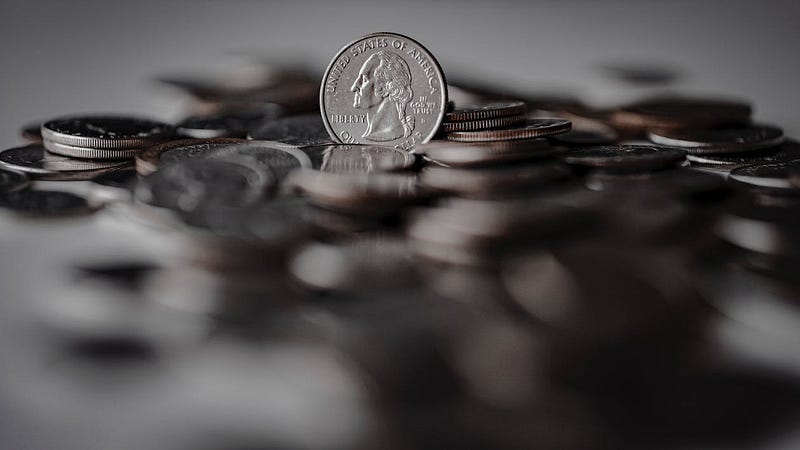
Dollar coin
©Pexels/VOLKAN SORKUN


Erosion of dollar dominance

Over the course of the month of March, the US dollar was used in 46.7% of cross border transactions. That’s down 1.1% on the preceding month. Meanwhile, the yuan was the currency of choice in cross border Chinese trade last month, used in 48.4% of all cross border transactions.

While this may seem impressive and it is encouraging for the Chinese authorities, it is still just a drop in the ocean when compared with the overall global cross border transaction statistics. Data produced by international financial messaging service, SWIFT, demonstrates that while the yuan’s share of global currency transactions relative to trade finance increased to 4.5%, that’s just a drop in the ocean. The same data set reveals that the US dollar accounted for around 84% of global cross border transactions in March.

While it’s unlikely that the US dollar will be usurped in its global reserve currency role over the short to medium term, certain cracks are beginning to emerge that serve to weaken the leading fiat currency. According to a recent report by emerging market focused management firm Eurizon SLJ Capital, the dollar demonstrated a decline in reserve currency use of 8% in 2022. Since 2016, the leading international currency has declined in use on an adjusted basis by 11%. It also emerged this week that Argentina will begin to pay China in yuan for imports. The move comes at a time when the South American country is experiencing an acute shortfall in its dollar reserves following a drought-induced decrease in agricultural exports which would have ordinarily brought more dollars into the country’s coffers.


Sanctions

In the case of Russia, China’s yuan replaced the US dollar in monthly trading volume in February for the first time, according to data compiled by Bloomberg. The emergence of the Russia Ukraine conflict in 2022, and more specifically the United States’ response to Russia as a consequence of the conflict, appears to have led to major change in terms of dollar use. Prior to the invasion, the trading volume of the Chinese yuan in Russia was negligible.

The United States introduced a raft of sanctions that made it difficult for Russian banks and Russian corporations to trade internationally. It also confiscated sovereign funds held in US dollars belonging to Russia.

It’s thought that this move has had wider repercussions as other nations have started to feel increasingly insecure in holding US dollars against that background. The logic is that any potential conflict between a nation and the United States could lead to a similar outcome. The US may have crossed a line that destroys confidence in other countries’ use of the US dollar.


Implications for cryptocurrency

While these weaknesses in the global reserve status of the US dollar are unlikely to lead to its demise in that role any time soon, they may well be a bellwether of what plays out over the longer term. US dollar weakness is one aspect. Set against that, it’s hard to imagine the yuan being so dominant as to ever be the leading world currency relative to international trade.

It’s far more likely that we may see several global ‘reserves’ share the role in the longer term. Bitcoin has been mentioned in the past as a candidate for this role given that it is not associated with any one nation. However, its current market capitalization and trading volume is minuscule by comparison with what would be required of a global reserve currency. That said, in a future where various currencies play a part in holding that reserve status, Bitcoin could very well see a modest but increasingly significant increase in its use for global trade purposes in the years ahead.

More to Read
View All
Web3 & Enterprise·

May 12, 2025

Grab partners with Solana ecosystem DePIN project to enhance mapping

NATIX Network, an open geospatial intelligence network built upon proprietary AI technology, has partnered with Southeast Asian superapp Grab to collaborate on autonomous driving technology and mapping. NATIX is a decentralized physical infrastructure network (DePIN) project that exists within the Solana ecosystem. Singapore-headquartered Grab offers a broad range of services via its app, including ride-hailing, package delivery and food delivery. Additionally, the firm offers mobile payments and insurance products.Photo by Afif Ramdhasuma on UnsplashReshaping the mapping industryIn a blog post published to its website on May 6, NATIX outlined that the strategic partnership has been formed with a view towards reshaping the mapping industry. It explained that the objective in this regard would be to combine Grab’s camera hardware and its AI-based map-making software stack with NATIX’s decentralized blockchain-powered mapping data.  Due to the nature of the services that it has offered in Southeast Asia since it was founded in 2012, Grab has, through necessity, become involved in mapping to enhance its service delivery. As a consequence, it has developed a suite of cameras including its KartaCam, a small action camera which can be mounted on bike helmets or car windshields, and a 360-degree standalone camera, KartaCam 2, with built-in sensors, AI image optimization and GPS capabilities. ‘Internet of Cameras’For its part, NATIX claims to have built the world’s largest on-street camera network. As part of the collaboration, NATIX will use Grab’s hardware and software technology to expand its “Internet of Cameras.” Posting on LinkedIn, GrabMaps set out its thoughts on the partnership, stating:”By combining GrabMaps' AI-powered mapping technology with NATIX's decentralised data network, we're enabling real-time, high-fidelity map updates across the globe. As part of this collaboration, NATIX will launch VX360, a device built on Grab's hardware platform that allows Tesla drivers to collect and share 360° vehicle imagery.” Appearing on the Unleashing DePIN podcast recently, NATIX Co-Founder and CEO Alireza Ghods outlined that NATIX will launch VX360, a proprietary device built by leveraging Grab’s existing hardware. He explained that this collaboration saves NATIX in terms of overall project cost and months of R&D, all of which enables it to get to market faster.VX360 enables Tesla drivers to capture and share 360-degree imagery.  Future potentialGhods spoke to the additional future potential that the collaboration holds: “The interesting part is that they have other types of devices as well, they have a dashcam, a 360 camera, and our plan is to definitely integrate all of this into our map making and data collection pipeline.” This is not the first partnership that GrabMaps has established related to mapping. Previously it formed collaborations with Microsoft’s Bing Maps, navigation and mapping app Mappls and location data specialist Loqate.  Ghods believes that NATIX can go one better than centralized mapping projects like TomTom and Google Street View. He told Cointelegraph that “a blockchain-based incentivization system provides better results in terms of frequency, participation, and coverage.” The NATIX co-founder asserted that such data can be gathered at a fraction of the cost via users’ devices.

news
Policy & Regulation·

Dec 03, 2024

HKMA incentivizes tokenization in Hong Kong

The Hong Kong Monetary Authority (HKMA), the Chinese autonomous territory’s central bank, has launched a scheme which subsidizes projects endeavoring to issue tokenized bonds. Grants of up to $321KThe objective behind the initiative, which was announced in a statement published to the HKMA website on Nov. 28, is to nurture moves towards tokenization within Hong Kong’s capital markets. The initiative, titled the Digital Bond Grant Scheme (DBGS), can be accessed by financial services firms for up to two digital bond issuances. The grant may cover up to 50% of what the HKMA describes as “Eligible Expenses” incurred in the process of issuing and establishing the digital bond. A maximum grant level of HK$2.5 million ($321,000) has been established. Digital bond issuers are entitled to the full grant where both basic requirements and additional requirements have been met. A half grant of up to HK$1.25 million ($160,600) has been established for those issuers who have met the basic requirements. The scheme has been opened to applicants from Nov. 28 onwards, with it having been set out to run for an initial period of three years. To fulfill the basic requirements, a bond must be issued in Hong Kong and either be issued on a decentralized ledger technology (DLT) platform, or the project itself must be based in Hong Kong while being involved in the running of a DLT platform.Photo by Fidel Fernando on UnsplashAdditional requirementsThe HKMA has listed four items under additional requirements. These include a need for a digital bond to be issued on a DLT platform run by an entity that is not an associate of the issuer. The bond issuance, whether effected in one instance or in tranches, must account for a value of greater than HK$1 billion ($128.5 million).  The bond must be issued to greater than five investors who are not connected with or associates of the issuer. Finally, the bond must be issued on either the Hong Kong Stock Exchange or a virtual asset trading platform (VATP) licensed and regulated by the Securities and Futures Commission (SFC). Project EvergreenIn 2021, the HKMA launched Project Evergreen, an initiative geared towards exploring how DLT could enhance processes and efficiency within capital markets. On Nov. 28 the HKMA published an update on the project, outlining that since its foundation, tokenization had gained considerable momentum, with $10 billion in tokenized bonds having been issued globally within the last decade. The Hong Kong government carried out two tokenized bond issuances as part of the project. Due to the second issuance being seven times larger than the first one, the HKMA believes that this accounted for institutional investors being attracted to the bond issuance.  In the update, the HKMA outlined that going forward, the plan is to promote wider adoption of what is viable, within the confines of what is possible. The central bank asserted that the DBGS was established on this basis. The update stated: "To fully reap the potential of DLT, we need to keep pushing the boundaries and explore further innovation." In a related development, a report published by the Financial Times on Nov. 28 suggests that the Hong Kong government is considering offering crypto tax breaks to hedge funds and private equity funds.

news
Policy & Regulation·

Jun 19, 2023

Korea’s Busan City to Develop Blockchain-Based Carbon Neutrality Platform

Korea’s Busan City to Develop Blockchain-Based Carbon Neutrality PlatformBusan Metropolitan City, known for being home to South Korea’s largest port, announced today that its consortium won the bid for the 2023 new local energy facilitation project offered by the Korea Energy Agency, an organization under the Ministry of Trade, Industry, and Energy (MOTIE). The consortium consists of five entities, including Busan City, tech solution provider Nuri Flex, and gas distributor Busan City Gas. As the winning bidder, Busan City and its collaborators will proceed with the development of a blockchain-based platform that promotes carbon neutrality.Photo by BERK OZDEMIR on PexelsCarbon neutralityThe primary aim of this project is to create a system that leverages surplus renewable energy to achieve carbon neutrality in the city’s port and industrial infrastructure. The initiative includes providing eco-friendly renewable energy to port and industrial facilities, establishing a blockchain-based carbon credit system to support businesses in joining the global corporate renewable energy initiative RE100, and facilitating the trading of surplus electricity. These measures are intended to save energy, enhance power system stability, and create greater value.Boosting green energy proportionThe project is set to take place from June 2023 to December 2024, with an estimated cost of 3 billion KRW ($2.3 million). The national and local governments will each finance 25% of the project, while the private sector will cover the remaining 50%. Upon completion of the project, Busan aims to increase the proportion of renewable energy within the city. Leveraging surplus energy and engaging in carbon credit trading, Busan expects to gain a competitive edge in the carbon-neutral sector.

news
Loading