Top

Tether eyes South Korean market as stablecoins gain momentum

Policy & Regulation·May 14, 2025, 2:43 AM

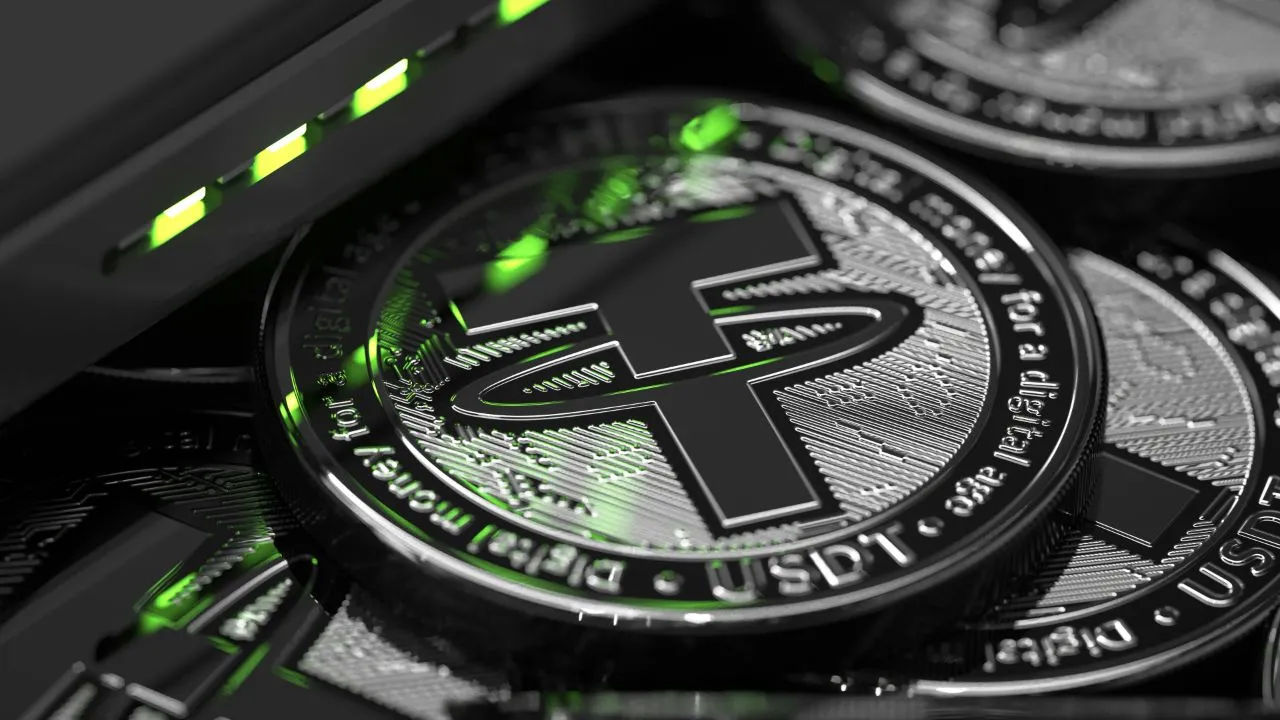
Tether, the company behind USDT, the popular dollar-backed stablecoin, is seeking to establish a presence in South Korea through remote hiring, according to a report from Maeil Business Newspaper citing industry sources.
https://asset.coinness.com/en/news/f9eb29e5cce05a746fb3edbb93f61e5d.webp
Photo by DrawKit Illustrations on Unsplash

Rather than opening a physical office, Tether is looking for a remote employee who will focus on increasing USDT adoption in Korea, exploring business opportunities, building partnerships and navigating the local regulatory landscape.


The expansion comes as stablecoins gain significant traction in South Korea. Data provided to lawmaker Min Byeong-dug from the country's five largest cryptocurrency exchanges via the Financial Supervisory Service (FSS) shows that dollar-pegged stablecoins accounted for 47% of crypto assets withdrawn from these platforms between January and March.


Central bank pushes for regulation

Meanwhile, South Korean officials are increasingly focused on regulating the stablecoin sector. Bank of Korea (BOK) Governor Rhee Chang-yong recently called for the swift implementation of stablecoin oversight, warning that they could bypass the country’s financial rules. During a press conference in Italy, Rhee argued that stablecoins pegged to either the Korean won or the U.S. dollar effectively function as alternative currencies and should be examined under existing money transfer laws.


Rhee has emphasized that authorities must first determine whether won-backed digital tokens should be permitted at all. Last October, during a national audit, he expressed concerns about stablecoins' dependence on fiat currencies and advocated for implementing a central bank digital currency (CBDC) instead.


These concerns were echoed by Ko Kyeong-cheol, head of BOK's electronic finance team, who recently highlighted at a financial law conference that stablecoins could profoundly impact the central bank's ability to carry out monetary policy, maintain financial stability and oversee payment settlements. Ko emphasized that if South Korea were to permit won-pegged stablecoins, the BOK should be involved early in the approval process to minimize potential risks to its policy objectives.


On the regulatory front, Financial Services Commission (FSC) Chairman Kim Byoung-hwan has indicated that discussions on developing a stablecoin regulatory framework are likely to begin in June as part of a broader initiative.


Presidential candidates weigh in on stablecoin future

The issue has also entered the political arena ahead of South Korea's June 3 presidential election. Lee Jae-myung, the Democratic Party of Korea's presidential candidate, has advocated for a market featuring won-based stablecoins. Lee argues that quickly adopting stablecoins would help South Korea keep pace with global trends and prevent capital outflows. His platform includes introducing spot crypto ETFs and reducing digital asset trading fees. 


Another candidate, Hong Joon-pyo of the People Power Party, also previously announced plans to explore the issuance of a won-pegged stablecoin before being eliminated in the party's primary election.


More to Read
View All
Web3 & Enterprise·

Aug 04, 2023

FTX Seeks Exclusion of Dubai Unit from Bankruptcy Proceedings

FTX Seeks Exclusion of Dubai Unit from Bankruptcy ProceedingsFailed crypto exchange FTX, which filed for bankruptcy in November, is now aiming to exclude its Dubai unit from the ongoing restructuring proceedings unfolding in the United States.Photo by Roman Logov on UnsplashNo previous business activityThe motion, filed with the bankruptcy court in Delaware on Wednesday, comes as FTX contends that its Dubai branch had not engaged in any business activities prior to the bankruptcy declaration, making its participation in the rehabilitation efforts unlikely.In the recent court filing on August 2, FTX put forth its argument that its Dubai unit, FTX Dubai, held a balance sheet that was solvent. Consequently, the exchange proposed that initiating a voluntary liquidation process in line with the laws of the United Arab Emirates (UAE) would expedite the distribution of its positive cash balance, settling liabilities, and liquidating assets.FTX Dubai, a wholly-owned subsidiary of FTX’s European arm, holds a sum of approximately $4.5 million across various accounts. However, $4 million of this amount remains restricted by the Virtual Assets Regulatory Authority (VARA) of Dubai, serving as a security measure for its license as a virtual asset service provider.Expired licensingFTX Dubai was originally awarded a license by VARA in July 2022, although it never got to a point where it offered any crypto-related services based on that license. On May 31 of this year, FTX Dubai management was informed by VARA that the regulator would not seek to renew the license if FTX Dubai didn’t act to terminate it. The license was subsequently suspended on July 12 by VARA.Licensing could have been useful to a new operator coming in to run the business. Earlier this week, the FTX Debtor filed a restructuring plan that leaves a path open towards relaunching the FTX International business outside of the United States. It’s clear that the current regulatory environment in the US is such that it’s simply not an attractive option to establish a restructured FTX business there.The FTX Debtor and its advisors are engaging with bidders for the business. In establishing a business on the right footing, it may be just as well that licensing will start afresh. To settle market doubts, the new entity will need to achieve a high level of compliance and industry-leading customer protections.FTX Dubai is now anticipated to collaborate with the designated liquidator to carry out essential administrative procedures, ensuring a systematic and efficient execution of the liquidation process. The company’s decision to file for bankruptcy on November 11, 2022, initiated bankruptcy proceedings for a total of 102 associated entities worldwide, reflecting the substantial impact of its financial turmoil.The matter is scheduled to be addressed in the court’s first hearing on August 23, shedding light on how the court will respond to FTX’s motion to remove its Dubai unit from the overarching bankruptcy proceedings in the US. This development underscores the complexities of a cross-border crypto bankruptcy, highlighting the intricacies of global regulatory frameworks in this evolving sector.

news
Web3 & Enterprise·

Aug 31, 2024

Stables Money partners with Coins.ph to use PHPC for cross-border remittances

Stables Money, an Australian platform that claims to be on a mission “to make stablecoins usable for everyday use,” has partnered with Philippines-based digital assets platform Coins.ph to use the latter’s peso-pegged stablecoin (PHPC) for remittances. Peso-denominated stablecoinIn a press release published to the Coins.ph website on Aug. 28, the firm laid out details of the deal. PHPC is a retail stablecoin which is backed by Philippine peso-denominated cash reserves and pegged to the peso on a 1:1 basis. The stablecoin was launched by Coins.ph in July.  It’s an ERC-20 token which runs on the Ethereum virtual machine (EVM)-compatible Ronin blockchain network. The stablecoin was accepted into the Bangko Sentral ng Pilipinas’ regulatory sandbox in May.Photo by Aeron Oracion on Unsplash$35 billion in remittancesThe Philippines has always been seen as a lucrative remittance market due to the high number of Filipinos who work outside of the country, sending funds home to family on a regular basis. In 2020, remittances back to the Philippines from overseas were just shy of $35 billion, according to data from the World Bank. It appears that Australia’s Stables Money has identified this opportunity, with the company entering the Philippine market back in March. The Philippine peso already accounts for over 25% of all outward transactions sent via the platform. Stables Money CEO Bernardo Bilotta spoke to the opportunity that the company is trying to exploit. He stated: "Recognizing the Philippines as a key player in global remittances, we expanded to deliver smooth PHP transactions. With 28.44% of our send transactions now in PHP, this move highlights our commitment to making cross-border payments hassle-free for those sending money to the Philippines.” Coins.ph has the intention of engaging in further industry partnerships in an effort to expand the reach of PHPC. That will mean additional collaborations with crypto exchanges, digital asset wallet providers and those financial institutions who are increasingly delving into the world of stablecoins. Commenting on this latest development, Wei Zhou, Coins.ph CEO, stated:”We’re encouraged to see growing adoption of PHPC among our user base. Our partnerships with Stables and Ronin underscore the vast potential of PHPC in cross-border transactions, trading and other financial activities.” Stables has also made efforts to expand through the use of Circle’s USDC stablecoin. Last month, it partnered with global payments card platform Mastercard in a collaboration which facilitates Stables users in purchasing goods using USDC at locations across 27 European countries where Mastercard is accepted. The firm’s partnership with Mastercard dates back to March 2023 when it entered into a similar collaboration relative to the Asia-Pacific region. Previous peso-based stablecoin projectsCoins.ph is not the first entity to try and drive adoption of a Philippine peso-based stablecoin. The Southeast Asian country’s UnionBank launched a similar product back in 2019. However, the product failed to find product-market fit and ultimately, it was withdrawn from the market. The company tried once again in 2022, attempting to launch a similar product through its digital bank subsidiary UnionDigital, in an effort that seems to have failed. More recently still, UnionBank subsidiary company UBX launched a peso-based stablecoin on Polygon back in March.

news
Web3 & Enterprise·

Jun 09, 2023

Animoca Brands Expands Focus to Non-US Markets

Animoca Brands Expands Focus to Non-US MarketsHong Kong-based Web3 and blockchain unicorn, Animoca Brands, is shifting its attention to markets outside the United States following the Securities and Exchange Commission’s (SEC) classification of its $SAND token as an unregistered security.This move comes after the SEC named $SAND, along with other tokens like Solana and Polygon, in lawsuits against major exchanges Binance and Coinbase Global. The labeling of these tokens as securities by the SEC poses legal risks for companies involved in their sale.Photo by Zulian Firmansyah on UnsplashNavigating regulatory challengesAnimoca Brands, led by Co-Founder and Chairman Yat Siu, has long embraced a global approach rather than focusing solely on one territory. Siu clarified the firm’s response to the latest regulatory development to the South China Morning Post (SCMP) via email on Thursday.He emphasized that while the SEC concentrates on the US, Animoca Brands operates in more progressive jurisdictions such as Hong Kong and Japan, where $SAND is widely available and accepted. In response to the recent blockchain-hostile climate in the US, the company has proactively started emphasizing other markets, reducing its reliance on the US market and mitigating potential risks associated with regulatory actions.Exchange business impactWhile Coinbase CEO Brian Armstrong has declared that his company has no intentions of delisting tokens labeled as securities by the SEC, this decision poses challenges for other exchanges less committed to selling these tokens. Dan Gallagher, Chief Legal Compliance and Corporate Affairs Officer of Robinhood Markets, expressed concerns about listing tokens due to regulatory rules and the uncertainty surrounding tokens created by organizations outside the US.These developments could have a chilling effect on exchanges, prompting crypto firms to consider moving away from the US market due to perceived uncertainty and the associated legal risks. As a demonstration of that, in a bankruptcy court hearing on Thursday, it emerged that the FTX Debtor is talking with bidders with a view to restarting the international business but restarting the US-based business is less certain.Animoca’s Middle East ventureIn a further display of its commitment to expanding outside the US, Animoca Brands announced plans in March to make significant investments, worth tens of millions of dollars, in the Middle East. This move reflects the company’s proactive strategy to tap into non-US markets and leverage the growth potential offered by progressive jurisdictions.Animoca Brands’ decision to prioritize non-US markets and reduce its reliance on the US market aligns with its global operating approach. The SEC’s classification of $SAND as a security has prompted the company to shift its attention to more progressive jurisdictions where $SAND remains widely accessible.As other firms, including Ripple, also explore growth opportunities outside the US, the global landscape of the crypto industry is evolving. By navigating regulatory challenges and expanding into promising markets, Animoca Brands aims to position itself for continued success and mitigate potential risks associated with the SEC’s actions in the US market.

news
Loading