Top

Shapella Upgrade to Have limited Impact on ETH’s Selling Pressure

Markets·April 13, 2023, 6:06 AM

The Shapella upgrade on the Ethereum network scheduled to take place on Wednesday will only have a limited impact on the selling pressure on ETH, according to a report by the research center at Korean cryptocurrency exchange Korbit.
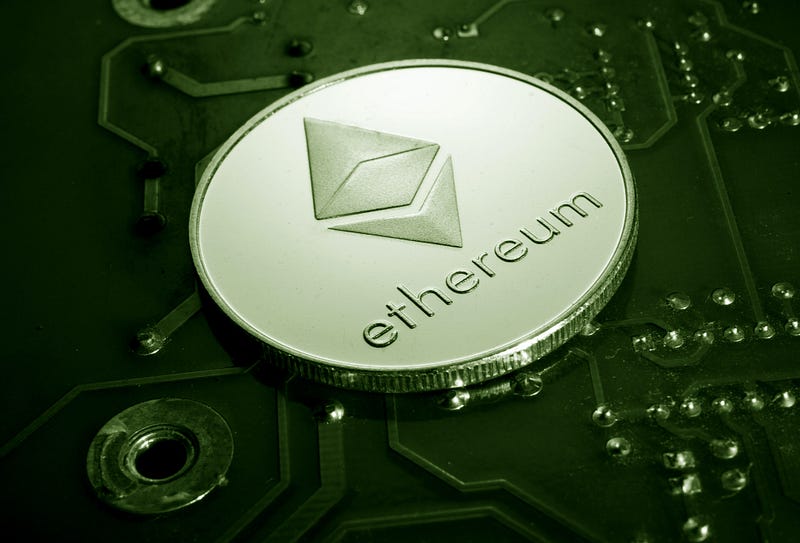
Ethereum coin
©Pexels/Jievani


Shapella upgrade

One of the key features of the Shapella upgrade is to allow withdrawal of staked ETH. This upgrade follows September’s Merge upgrade that switched the Ethereum network’s consensus algorithm from Proof of Work to Proof of Stake, significantly reducing electricity consumption.


Impact on selling pressure

To predict the impact of the Shapella upgrade on the selling pressure on ETH, the analysts at Korbit Research calculated the amount of time it takes for all the ETH staked as of March 22 to be withdrawn. They believe this calculation is relevant because withdrawals of staked ETH could trigger bulk sales, potentially imposing a greater selling pressure on ETH.

According to the findings, the daily sell volume for the first three days is expected to be 300,700 ETH, 0.254% of the circulating supply. This volume will gradually decrease to 43,000 ETH for the next six months and to 29,000 ETH for the following six months, each corresponding to 0.035% and 0.024% of the circulating supply, respectively.

All in all, bulk selling of ETH is not likely, considering it will take about a year and five months for all the staked ETH to be withdrawn and that the amount of withdrawable ETH will stay relatively low for each period. Furthermore, since this analysis assumes an extreme case, the market will be able to effectively handle the volume over the six month to 18 month period.


4 other reasons

In addition, Korbit Research outlined four other aspects that limit the selling pressure on ETH.

Firstly, there is some concern that the selling volume of ETH may increase due to unstaking resulting from the cessation of staking services at American crypto exchange Kraken. However, a decrease in the number of validators on the Ethereum network will raise the base reward. This may prompt those who unstaked ETH to stake them on other platforms, rather than selling them.

Second, ETH locked up at liquidity staking protocols such as Lido Finance and Rocket Pool provide liquidity for representations of staked ETH. These platforms allow users to stake fewer than 32 ETH for rewards. According to a February Binance Research report, 57.7% of ETH stakers enjoy liquidity and rewards. Therefore, there may be a limited impetus to divest of staked ETH.

Third, since only 41.1% of ETH stakers are seeing profits as of the time of writing the report, the remaining stakers would have to risk losses when withdrawing ETH. This suggests that those not yet seeing profits are more likely to keep ETH staked. Furthermore, Dune Analytics data shows that most of the ETH stakers with gains staked ETH when its price was relatively low, which indicates that they participated in staking in early days. Shivam Sharma, the author of the aforementioned Binance report, states that these ETH stakers are likely “some of the strongest Ethereum believers.”

Lastly, despite the Shapella upgrade, ETH withdrawals at different staking pools may not be initiated immediately. This could limit the circulation of withdrawable ETH, which in turn would hinder the selling pressure on ETH.


Macroeconomic factors

The Korbit researchers concluded their paper with a note that the selling pressure on ETH will be more influenced by macroeconomic factors than technical factors. They added that a possible downturn in the overall economy and corrections in risky asset markets might lead investors to sell ETH.


More to Read
View All
Web3 & Enterprise·

Oct 06, 2023

HKEX Launches Blockchain-Based Settlement Platform

HKEX Launches Blockchain-Based Settlement PlatformHong Kong Exchanges and Clearing Limited (HKEX) has unveiled a blockchain-based settlement platform in a move that could potentially transform the landscape of international stock trading, bolstering transparency, efficiency, and operational security.Photo by Ruslan Bardash on UnsplashHKEX SynapseAccording to an announcement on Wednesday (local time), the new platform is called Synapse, and it is set to launch on October 9. The platform utilizes smart contracts developed in the DAML programming language, offering a range of benefits for market participants.Synapse’s primary objective is to streamline post-trade workflows, minimize settlement risks, and enhance transparency in the financial markets. It will be deployed on HKEX’s Stock Connect, a program that allows international investors access to over 1,000 mainland Chinese stocks through Hong Kong routing.With an average daily turnover of RMB 109.3 billion ($15.18 billion) in the first half of 2023, up 5% from the previous year, with a 50% increase from 2020 levels, Stock Connect has established itself as an important channel for international investment.DAML-based smart contractsOne of Synapse’s standout features is its use of DAML, an open-source smart contract language. DAML has the capability to synchronize data across both blockchains and centralized databases, which can significantly improve operational efficiency. By incorporating smart contracts into the settlement process, Synapse enables automatic generation of settlement instructions, reducing the time and manual effort required for trade confirmation. This not only reduces the likelihood of errors but also accelerates settlement, enhancing liquidity and boosting investor confidence.Additionally, Synapse facilitates concurrent processing by simultaneously generating settlement instructions for all parties involved in the trade. This near-instantaneous status update mechanism is especially crucial when connecting traders across different markets. HKEX’s connection to Hong Kong’s Depository Trust and Clearing Corporation via its Institutional Trade Processing service further centralizes cross-border transaction matching, creating a robust ecosystem for seamless trading.Synapse’s launch reflects HKEX’s interest in nurturing international participation where Mainland China’s equity markets are concerned. Glenda So, HKEX Group Head of Emerging Business and FIC, expressed her enthusiasm for the platform’s potential to strengthen both market and investor growth strategies. She believes that Synapse will not only enhance post-trade efficiencies but also contribute to building a more resilient financial ecosystem.Established interest in crypto/blockchainThis is not HKEX’s first expression of interest in blockchain-based technology. In a report it published earlier this year, the Hong Kong stock exchange concluded that crypto exchange-traded funds (ETFs) have the potential to play an important part in building the next phase of digital asset expansion in Asia. Trading in the first crypto ETFs commenced on the platform in December of last year.It’s worth noting that Hong Kong has been rapidly evolving into a hub for Web3 firms, further emphasizing the importance of platforms like Synapse to enhance the efficiency and security of financial transactions in this dynamic environment. While developments in the crypto space are ongoing, Synapse’s blockchain-based settlement platform represents yet another milestone in the evolution of crypto and blockchain-centric financial infrastructure in the region.

news
Web3 & Enterprise·

Oct 02, 2024

Ripple scores DFSA license approval in Dubai

Blockchain-based digital payment network enterprise Ripple has announced that it has acquired in-principle approval of a financial services license from the Dubai Financial Services Authority (DFSA) in the United Arab Emirates (UAE). In a press release published on the firm’s website on Oct. 1, Ripple claimed that the approval “unlocks Ripple’s end-to-end payment services in the UAE, boosting Middle East operations.” The in-principle approval is a first step on the company’s path towards full approval. That eventuality will enable Ripple to offer cross-border payment services relative to fiat and digital assets, within the Dubai International Financial Center (DIFC) special economic zone.Photo by Moose Photos on PexelsExpanding Middle Eastern presenceThe company claims that pursuing the license is part of a broader strategy to expand its Middle Eastern presence. It follows on from the firm’s move in 2020 to establish its Middle Eastern headquarters in Dubai. Ripple claims that the licensing “significantly strengthens Ripple’s global footprint as a regulated entity and enables the introduction of seamless cross-border payment services, including Ripple Payments Direct (RPD), in the United Arab Emirates (UAE).” In moving from in-principle approval to full approval, Ripple will have further obligations to accomplish, such as securing office space within the DIFC special economic zone. The company had previously indicated its intention of establishing an office within the DIFC. Back in August, it emerged that Ripple had partnered with the DIFC Innovation Hub with a view towards promoting blockchain and digital asset innovation within the UAE. Regulatory clarity in the UAERipple is striving to become the first blockchain-enabled payment services provider licensed by the DFSA. Once licensed, the company plans to roll out its enterprise-grade digital asset infrastructure. Ripple’s XRP has been one of five digital assets approved by the DFSA such that investment funds are allowed to invest in it, although the regulator did indicate in June that it is moving towards expanding the list of recognized tokens. Mired in legal difficulties with local regulator the Securities and Exchange Commission (SEC) in its home market of the United States in recent years, the company signaled a change of strategy in 2023, indicating its interest in focusing more on international expansion. While speaking at an event in Dubai at the time, Ripple CEO Brad Garlinghouse said that Ripple was expanding in Dubai. Taking to X in relation to this latest milestone, Garlinghouse wrote that “regulatory clarity is what businesses want, and what consumers need,” adding that “the UAE understands that.” In the company’s press release, Garlinghouse referred to the “forward-thinking regulatory approach” being pursued in the UAE, which he believes is positioning the country “as a global leader in this new era of financial technology.” The UAE isn’t the only focus for the company’s international expansion. Ripple has established an office in Singapore which handles over 50% of the firm’s payment flows. On Oct. 1, U.S. investment bank Houlihan Lokey published a report in which it highlighted Ripple as an emerging competitor to the SWIFT cross-border payments system.  Although the company has had some success in navigating its way through litigation with the SEC in the U.S., it’s thought that the dispute may be prolonged further as some commentators have suggested that the SEC plans to appeal a recent court decision. 

news
Policy & Regulation·

Feb 03, 2024

Hong Kong's VSFG eyes spot ether ETF application in Q2

Venture Smart Financial Holdings Ltd. (VSFG), a Hong Kong-based financial services firm, is strategically positioning itself to enter the growing cryptocurrency exchange-traded fund (ETF) market, with its latest reveal being an interest in launching a spot ETH ETF in Q2.Photo by Michael Förtsch on UnsplashIn a recent interview with The Block, VSFG Chairman Lawrence Chu revealed the company's plans to apply for a spot ether ETF in Hong Kong. Executing on that plan is contingent upon the successful launch and approval of its spot bitcoin ETF. Q1 launch for bitcoin ETFLast month, the firm disclosed that it is gearing up for a spot bitcoin ETF launch within the first quarter of this year. VSFG was the first to reveal such an intention within the ETF space in Hong Kong. However, competition is already starting to bubble, as subsequently, Chinese asset manager Harvest Fund announced that it has gone one better and actually filed an application for a spot bitcoin ETF product in the Chinese autonomous territory. Chu shared insights into the firm's current status, mentioning that VSFG is in the final phase of preparing its application for a spot bitcoin ETF to be submitted to the Hong Kong Securities and Futures Commission. He emphasized the rigorous regulatory discussions that precede such submissions in Hong Kong, characterizing the imminent application as being in the advanced stages, stating, “Submission [for application] is almost like when you're 95% there.” Chu acknowledged the importance of ongoing conversations with regulators, expressing readiness by stating, “but that really depends on the conversation we have with the regulator. We will be ready.” Competitive spotlight on ETF feesHighlighting the evolving landscape in Hong Kong, Chu noted that nearly 10 fund companies are exploring the launch of potential spot crypto ETFs in the city. That call echoes similar comments made recently by Livio Weng, CEO of digital assets firm HashKey. The prospect of a potential fee war among asset managers was also discussed, drawing parallels with developments observed in the U.S. bitcoin ETF market. That seems likely, given that downward pressure on spot bitcoin ETF fees in the United States has also spread to Europe where Invesco and WisdomTree have cut fees by 60% on similar products. Global ether ETPsWhile commentators such as Standard Chartered Bank speculate on the likely approval of spot ether ETF products in the U.S. by May and VSFG indicates a potential Q2 launch in Hong Kong, there are already a number of similar products out in the wild around the world. According to data compiled by crypto data aggregator platform CoinGecko, the top 10 ether funds account for $5.5 billion in value. Among them is the XBT Provider ether exchange-traded product (ETP), the world’s first Ethereum-based security made available on a regulated exchange, namely Nasdaq Stockholm in Sweden, by crypto ETP specialist CoinShares. While the race is on in Hong Kong to launch crypto ETFs, on an international basis, competition is heating up as various global fintech hubs look to kindle what is likely to make up a significant part of the ETF sector pie in the years to come.

news
Loading