Top

3AC liquidators estimate 46% recovery while BVI court freezes $1B

Policy & Regulation·December 23, 2023, 12:08 AM

The joint liquidators of the now-defunct Singaporean crypto hedge fund Three Arrows Capital (3AC) have provided creditors with an estimated 45.74% recovery rate for their claims in the bankrupt estate. Meanwhile, in parallel proceedings in the British Virgin Islands (BVI), a court has frozen $1 billion of founders’ assets.

According to The Block, the details were disclosed in a December report to creditors by joint liquidators Russell Crumpler and Christopher Farmer of Teneo, the firm appointed to oversee the liquidation of the failed business.


$1.16B in assets

As of Dec. 18, the estimated value of 3AC’s assets was reported to be $1.16 billion, while claims totaling $2.7 billion are expected to be recognized for distribution. The liquidators highlighted that settlements in litigation against various parties, including DCG, Genesis and BlockFi, increased reported assets by an estimated $292 million. It’s important to note that the BlockFi settlement is still pending approval.

A total of 154 claims, valued at $3.4 billion, were filed against the 3AC estate. The report indicates that $200 million of claims were not admitted for distribution, and $322 million in claims have either been rejected or are expected to be rejected. Additionally, $76 million in claims are currently under dispute. The report reveals that initial distributions to creditors are being planned for the first quarter of the upcoming year.


Illiquid tokens

The breakdown of assets reveals that a large majority are illiquid tokens, subject to vesting periods, comprising 82% of the total. Only 6% of the portfolio is liquid, while equity and investments account for 6.9% and 4.8% is in cash. These illiquid tokens, totaling $563 million at current prices, consist of 13 different tokens with vesting schedules unlocking assets over the next three years, reaching $200 million by the end of 2024.

To date, the liquidators have staked some of these tokens, resulting in $5.4 million in staking rewards. Liquidation efforts, including the sale of $34.5 million worth of liquid tokens and $15 million in NFTs, along with other asset sales, have generated a total of $66 million.

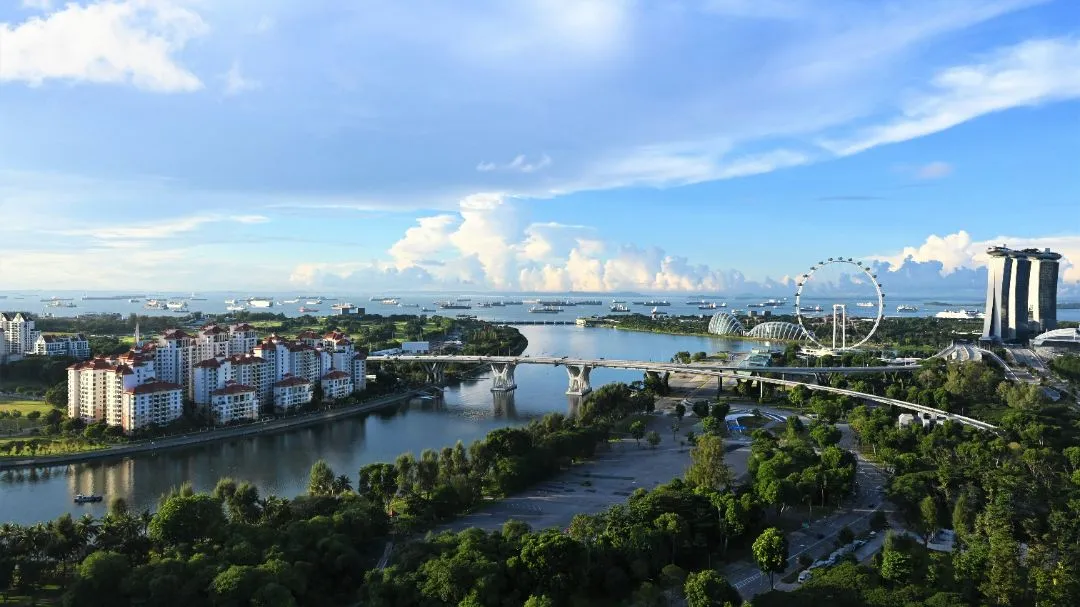
Photo by Kemp Fuller on Unsplash


Frozen assets

In a related development, Bloomberg reported on Thursday that a British Virgin Islands court has frozen assets totaling $1.1 billion belonging to 3AC co-founders Su Zhu and Kyle Davies, along with Davies’ wife Kelly Chen. The liquidators filed a claim for insolvent trading against the founders for $1.078 billion, with additional claims against Davies for $66 million and Chen for $4.6 million.

Teneo outlined the rationale behind the move in the following statement it made to Decrypt:

“The worldwide freezing order has been sought in connection with claims that are being pursued by the liquidators that allege, amongst other things, that the Founders should be held responsible for causing 3AC’s position to deteriorate by an amount that is equivalent to the value of the freezing orders sought.”

Su Zhu, who was under house arrest for the last few weeks, became free on Dec. 20. Zhu had been arrested in Singapore on Sept. 29 and sentenced to four months imprisonment, serving two-thirds of his sentence under house arrest.

Throughout the bankruptcy proceedings, legal fees have accumulated to $49.7 million while the report suggests ongoing efforts to maximize creditor recovery.

More to Read
View All
Web3 & Enterprise·

Mar 14, 2024

OKX scores payment institution license in Singapore

Leading cryptocurrency exchange OKX has acquired an in-principle approval from Singapore’s financial regulatory authority for a Major Payment Institution (MPI) license through its local arm, OKX SG.Photo by Mark Stoop on UnsplashEnabling broader service offeringAccording to a blog post published by the company on March 12, OKX confirmed the receipt of in-principle approval for the coveted license. The MPI license, issued by the Monetary Authority of Singapore (MAS), Singapore's primary financial regulatory body, represents an important step forward for the company. Once granted the full license, OKX will be empowered to offer digital payment token services and facilitate cross-border transfers within Singapore. A plethora of OKX executives took to social media to comment on the achievement. Hong Fang, President of OKX, expressed the company's long-standing interest in Singapore, describing it as a cornerstone of its global strategy. Fang emphasized Singapore's appeal to entrepreneurial ventures, citing its tech-savvy populace as early adopters. She praised the country's regulatory framework as "clear and thoughtful," enabling businesses like OKX to cultivate sustainable growth over the long term. With this regulatory approval, OKX intends to concentrate on bolstering its spot product offerings in the Singaporean market. Fang outlined plans to forge local banking partnerships to enhance customer experiences and expand service offerings in the future. In summarizing the company’s outlook, Fang wrote that OKX is looking to “build locally. Be compliant. Invest long-term.” OKX CEO Star Xu suggested that the firm intends to be a “long-term member of the Singapore fintech community” as a consequence of the approval. Global market expansionThe company’s CMO, Haider Rafique, pointed out that this latest license approval follows hot on the heels of further expansion in venues like Dubai, Argentina and Turkey. The in-principle license approval follows OKX's recent acquisition of a conditional license from Dubai’s cryptocurrency regulatory authority. On Jan. 16, the Virtual Assets Regulatory Authority (VARA) of Dubai granted OKX a license, enabling the exchange to provide regulated services as a virtual asset service provider within the region.On Feb. 27 the firm launched OKX TR, catering to the needs of crypto users in Turkey. In the same month, the company launched its services within the Argentinian market. MPI-licensed entities like OKX enjoy the privilege of facilitating multiple payment services, surpassing volume limitations prescribed for standard payment firms. This flexibility allows OKX to transcend the prescribed limits of three million Singapore dollars ($2.2 million) for individual payment services and a monthly cap of SG$6 million ($4.4 million) for multiple services. Joining OKX in the pursuit of regulatory compliance, BitGo, a prominent crypto custody business, also received an in-principle approval from MAS. BitGo announced on Jan. 10 that it had secured initial approval, subject to fulfilling additional requirements stipulated by the regulator. Several other notable cryptocurrency entities, including Crypto.com, Coinbase and Ripple, have already obtained complete payment institution licenses in Singapore. OKX's attainment of in-principle approval underscores the ongoing drive among market participants towards regulatory compliance and expansion into key markets. The move should help the firm to position itself well for further market growth as the digital assets space continues to progress.

news
Policy & Regulation·

May 20, 2024

Hong Kong digital yuan pilot lacks P2P capabilities

Hong Kong has launched a pilot program for the digital yuan, marking the People’s Bank of China's (PBoC) central bank digital currency’s (CBDC) first major deployment outside mainland China.  This initiative, facilitated by the Hong Kong Monetary Authority (HKMA), represents another step forward in the integration of the digital yuan into Hong Kong's financial ecosystem.Photo by bady abbas on UnsplashCross-border transactions rather than P2PAccording to a press release, the HKMA and PBoC are working together to enable Hong Kong users to set up personal e-CNY wallets using just their Hong Kong mobile phone numbers. The faster payment system (FPS) will support these e-CNY wallets, allowing users to top up their wallets through 17 retail banks in the Chinese autonomous territory. However, the e-CNY wallets are primarily designed for cross-border payments between Hong Kong and the mainland, and currently do not support person-to-person transfers within Hong Kong. This pilot aims to facilitate transactions for Hong Kong residents using their digital yuan wallets, marking the first integration of a CBDC through a major central bank. The Digital Currency Institute (DCI) is managing the interoperability infrastructure between the FPS and the digital yuan, with a focus on enhancing cross-border payments, a key objective on the G20 countries' roadmap. More functionality promisedLike blockchain protocols, the digital yuan pilot offers 24/7 payment capabilities. Eddie Yue, the chief executive of the HKMA, stated that the e-CNY application and wallet would gradually gain more functionality as the HKMA and PBoC work to encourage more retail merchants to adopt the system. Yue stated: “By expanding the e-CNY pilot in Hong Kong and leveraging the 24x7 operating hours and real-time transfer advantages of the FPS, users may now top up their e-CNY wallets anytime, anywhere without having to open a Mainland bank account, thereby facilitating merchant payments in the Mainland by Hong Kong residents.” The HKMA and DCI are planning upgrades to the e-CNY wallets through real-name verification, aiming to enable corporate use cases for cross-border trade settlements in the future. Adoption strugglesWith at least 140 countries exploring CBDC pilots, China's digital yuan is among the most advanced. China has been actively promoting its CBDC, even paying monthly salaries in e-CNY to government workers and employees of state-owned enterprises. However, as reported by the South China Morning Post, many recipients are hesitant to use the digital yuan due to privacy concerns and other limitations. China's central bank aims to increase the use of the yuan in Hong Kong, especially in tourist areas. Last June, digital yuan ATMs were installed in the resort city of Sanya in an attempt to target use of the currency by tourists. Although the city of Jinan embarked upon an initiative last year to enable digital yuan payments on its bus system, the currency is not yet widely accepted for public transportation across China.  Meanwhile, Hong Kong is in the second phase of its own CBDC pilot, the e-HKD, and has launched a regulatory sandbox for stablecoins to foster communication between regulators and issuers of fiat-pegged stablecoins in the region. 

news
Web3 & Enterprise·

Oct 23, 2023

Infinite Block Selected For Tech Startup Incubator Program

Infinite Block Selected For Tech Startup Incubator ProgramSouth Korean blockchain fintech company Infinite Block announced Monday that it has been selected to participate in the Tech Incubator Program for Startups (TIPS) program.“Being selected for TIPS as the first domestic custodial services company to do so carries significant importance, as it acknowledges our technological capabilities and business viability on an international scale,” said the company’s CEO Jeong Gu-tae.Photo by Mimi Thian on UnsplashPaving the way for an innovative futureTIPS is a private investment-led technology entrepreneurship program organized by the Korea Business Angels Association and Korea Institute of Startup and Entrepreneurship Development (KISED) — two affiliated institutions under the Ministry of SMEs and Startups — to foster startups that possess innovative technology.The program appoints and designates venture founders to serve as angel investors and leaders of technological enterprises as a given startup’s incubator and/or accelerator. Throughout the two-year duration of the program, the startups can take advantage of angel investor networking and mentoring and receive KRW 500 million (approximately $370,000) in research and development (R&D) funding from the government. They can also receive an additional KRW 200 million in commercialization funds.Infinite Block, which specializes in custody services tailored to corporate-owned virtual assets, was selected for TIPS by attracting investment from the fintech innovation fund operated by venture company Infobank. This is part of a series of strategic investments that it secured within just six months of its establishment, including those from leading domestic financial institutions like banks and securities companies.Pioneering fintech developmentThe company has consistently been boosting efforts to expand into a prominent fintech platform, starting by receiving approval from Korea’s Financial Services Commission (FSC) to become a virtual asset service provider (VASP) and later on obtaining ISO 27001 certification for the information security management system of its blockchain platform. More recently, it launched a custody-based Ethereum staking service for corporate clients.“We will strive to provide trustworthy digital asset infrastructure by implementing a fintech platform that not only offers innovation through blockchain and cyber security technology but also meets regulatory requirements assigned by financial authorities,” Jeong stated.

news
Loading