Top

Tether fueling Cambodia’s dark economy despite ban

Policy & Regulation·December 20, 2023, 1:17 AM

Despite being officially prohibited for trade in Cambodia, Tether (USDT), the leading USD stablecoin, has been found to be integrated into the Southeast Asian nation’s shadow economy.

That’s according to a report published by the South China Morning Post (SCMP) on Sunday. The publication cites security experts, who it claims have highlighted the pivotal role of USDT, emphasizing its low fees and unrestricted capability to expedite the movement, concealment and laundering of money.
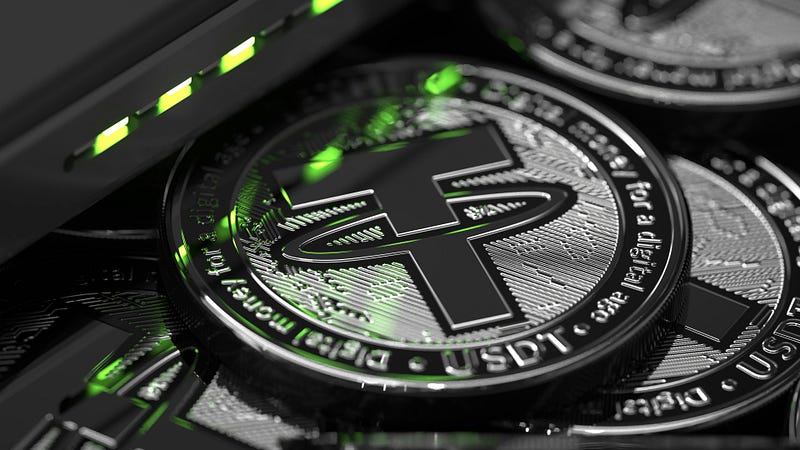
Photo by DrawKit Illustrations on Unsplash


Pig butchering

The U.S. Department of Justice’s November seizure of nearly $9 million traced to over 70 victims of online scams underscored Tether’s involvement. Collaborating with Tether Holdings and the crypto trading platform OKX, the investigation identified assets linked to “pig butchering” cyber scams in Southeast Asia, freezing an additional $225 million. While specific details regarding the origin of these assets remained undisclosed, Southeast Asia, including Cambodia, has emerged as a hub for money laundering related to online gaming and cyber scams.

Cybersecurity expert Ngo Minh Hieu from the Vietnamese government’s National Cyber Security Centre warned of the susceptibility of cryptocurrencies to scams and Ponzi schemes, particularly targeting less informed investors. This heightened risk has spurred a surge in money laundering and online scams, leading to a spike in arrests.


Official line versus reality

In many jurisdictions, the official line taken on cryptocurrency and digital assets doesn’t necessarily reflect the reality. China clamped down on crypto trading and mining a number of years ago. Despite that, a Wall Street Journal investigation earlier this year found that global crypto exchange Binance had a thriving China-centric business.

The same seems to be true in Cambodia with respect to its official ban on crypto. Owners of both physical and online crypto exchanges in Phnom Penh openly admit to providing a parallel financial service in the developing economy. The prevalence of neon signs advertising exchange rates in Chinese yuan for USDT underscores the widespread usage of Tether in the region, particularly within Cambodia’s dark economy.


Critics chime in

News of the illicit use of Tether in Cambodia has prompted a response from long-standing critics of the company. Tether’s harshest critic has been a pseudo-anonymous persona on the X platform with the username “Bitfinex’ed.” That account wrote:

”Tether. The choice for organized crime & criminals. Giancarlo Devasini once said, ‘We’re going to have to learn to bank like criminals.’”

Despite its role in facilitating illicit activities, the extent of Tether’s penetration into Cambodia’s economy remains challenging to ascertain. Globally, approximately 84 billion USDT is in circulation, with banks, exchanges and platforms flourishing, leveraging social media and encrypted channels to advertise seamless and reliable digital solutions for money flow challenges.

One such platform, Huione Pay, operates in a bank-like setting, engaging customers in discussions about USDT exchange options. A closer look at Huione’s publicly available USDT exchange activities reveals insights into Tether’s role in enabling transactions within Cambodia.

Some conversations in Chinese seek “pure white assets,” indicating funds from legitimate sources, while others do not request such provenance. These exchanges also advertise products and services crucial to scam operators, such as the sale of SIM cards from different countries.


More to Read
View All
Policy & Regulation·

Aug 31, 2024

Global crypto fraud suspect arrested in Istanbul

Accused of one of the world's largest cryptocurrency scams, Andreas Szakacs, a Swedish national who became a Turkish citizen under the name Emre Avcı, was detained in Istanbul. The alleged international fraud scheme, led by Szakacs, began in 2019 under the guise of OmegaPro, a company dealing in forex and cryptocurrency trading. OmegaPro claimed to generate significant profits for its investors through complex financial algorithms and high-risk leveraged trading. The company, registered in opaque jurisdictions like Saint Vincent and the Grenadines and headquartered in Dubai, promised returns as high as 300% within 16 months, attracting investors from across the globe. High-profile endorsements and lavish eventsTo bolster credibility, Szakacs and his partners, including well-known figures in the finance and crypto sectors like Dilawar Singh and Mike Sims, organized extravagant events. These included the OmegaPro Legends Cup, a football tournament featuring former stars like Ronaldinho, Kaka and Iker Casillas, who were branded as OmegaPro ambassadors. The company also sponsored car races and held opulent conferences in luxury hotels, where gifts and prizes were distributed to participants, further enticing new investors. OmegaPro's operations spanned multiple continents, with representatives in countries such as Colombia, Mexico, the UK and Nigeria. Over time, the company claimed to have attracted 1.5 million investors. However, in late 2022, as withdrawals were suddenly halted, suspicions grew. By July 2023, the company had shut down, leaving an estimated three million investors defrauded and $4 billion unaccounted for.Photo by Xiaoyi Huang on UnsplashAs OmegaPro collapsed, investors from around the world began filing complaints. In France alone, over 1,500 victims have initiated a class-action lawsuit. Similar legal actions have been reported in countries including Mexico, Congo and Myanmar. Despite multiple investigations, the whereabouts of Szakacs and his partners remained unknown—until recently. A tip-off leads to arrest in IstanbulThe breakthrough came on June 28, when an anonymous informant tipped off Turkish authorities about Szakacs' presence in a luxury villa in Istanbul's Acarkent neighborhood. Following an investigation, the Istanbul Gendarmerie identified 18 complainants connected to OmegaPro. On July 9, Szakacs was arrested in a raid on the villa, where authorities found 32 cold wallets containing cryptocurrencies, along with extensive documentation related to OmegaPro’s operations. During questioning, Szakacs denied all allegations, claiming that OmegaPro was a legitimate business that went bankrupt in late 2022, resulting in significant losses for him and his partners. He also refused to provide access to the cold wallets and the encrypted data on his devices. Despite his defense, Szakacs was charged with fraud using information systems and detained by the Beykoz Criminal Court of Peace on July 10. Ongoing legal battles and future implicationsAs the investigation continues, authorities are scrutinizing Szakacs' digital transactions, which reportedly involve $160 million in movements over a single month. His legal team argues that investors knowingly took on risks in the forex market, but the sheer scale of the losses—especially the $103 million claimed by a Dutch complainant representing 3,000 victims—has intensified the case. The outcome of this case could set a precedent for how international crypto-related fraud is handled, particularly in an era where digital currencies and high-risk investments are increasingly intertwined. 

news
Web3 & Enterprise·

Jul 21, 2023

Bitget Targets MENA Business Expansion

Bitget Targets MENA Business ExpansionBitget, the Seychelles-based cryptocurrency derivatives exchange, is setting its sights on the Middle East and North Africa (MENA) as the region emerges as a fast-growing crypto hub.The firm announced its expansion plans via a press release which was published on Thursday. With countries like the United Arab Emirates (UAE) and Bahrain embracing crypto, more exchanges are taking notice and entering the market. Bitget has now joined the ranks of a series of crypto companies seeking to establish a foothold in the region.Photo by Kyle Glenn on UnsplashIncreasing crypto adoption and interestCiting the region’s impressive crypto adoption rate, which accounted for 9.2% of global transactions between 2021 and 2022, Bitget is capitalizing on the growing interest in digital assets. The UAE alone experienced a remarkable 400% increase in registered crypto businesses over two years, driving a surge in global digital asset trading by 10%. Moreover, blockchain-related educational programs have tripled in the region, which contributes to 8% of the overall mining hash rate. All of these are creating a favorable environment for Bitget’s expansion.Dubai officeTo support its entry into the Middle East, Bitget has opened an office in the heart of Dubai and has already hired 60 new employees for various mid and back-office positions. The company aims to scale its Middle East team further, with plans to hire 30 to 60 more professionals over the next two years.Bitget is not alone in recognizing the potential of the Middle Eastern market. Bybit, another major cryptocurrency exchange, recently obtained local licenses to operate in the digital assets space in the UAE, having moved its global headquarters to Dubai in April.OKX, one of the largest exchanges by volume, also received a Minimal Viable Product (MVP) Preparatory License from the Dubai Virtual Assets Regulatory Authority (VARA). Binance is also eyeing the Middle East, with Binance Dubai poised to become the primary focus for the company’s development efforts, given regulatory challenges in Europe and the US.Global expansion strategyBitget’s expansion into the Middle East is part of its broader global scaling strategy. The company has already registered as a Virtual Asset Service Provider (VASP) in Poland and Lithuania, and it launched a localized Turkish website earlier this year.Founded in 2018, Bitget boasts a user base of over 8 million users across more than 100 countries, offering copy trading services. The company’s move to the Middle East showcases its determination to tap into new markets and solidify its position as a global player in the cryptocurrency exchange landscape.There’s been a lot going on at Bitget in recent months, in addition to these regional expansion plans. In May the company announced a corporate social responsibility project named “Blockchain4Youth,” cleverly identifying the importance of connecting with the younger demographic which is far more likely to drive crypto and blockchain adoption.Earlier this month it launched a crypto loans product offering while last week it provided transparency via its proof of reserves initiative, demonstrating a 223% level of reserves and outlining that the company is debt free.

news
Policy & Regulation·

Dec 29, 2023

Indonesia sets out crypto exchange registration requirement

In response to the expanding demand for cryptocurrencies in Indonesia, the government has laid down a directive, requiring crypto exchanges operating within the Southeast Asian country to register with the recently inaugurated Commodity Future Exchange (CFX).Photo by Bisma Mahendra on UnsplashMandatory requirementThe CFX was established back in July as the world's first national bourse exclusively dedicated to digital assets. The national exchange has been modeled to replicate exchanges in traditional markets like the NASDAQ, but in this case, focusing entirely on digital assets. Under regulations introduced in 2019 by the Indonesian Commodity Futures Trading Regulatory Agency (Bappebti), crypto exchanges in the country must seek authorization. Even exchanges operating legally since 2014 fall under the category of "prospective crypto exchanges" and must undergo a rigorous process to gain recognition as legitimate entities affiliated with the CFX. Safeguarding investorsThis regulatory initiative aims to create a secure environment for crypto investors while simultaneously serving as a platform for tracking digital asset transactions for taxation purposes. Beyond the regulatory oversight, registering with the CFX also acts as a gateway for the Indonesian government to monitor cryptocurrency transactions for taxation purposes. The authorization process involves registration with self-regulatory organizations (SROs) like the CFX, followed by scrutiny by Bappebti to assess the company's suitability to operate. Only after meeting all requirements can a crypto exchange be issued a crypto exchange license (PFAK). Failure to complete the new procedures and registrations within the specified timeframe, set for Aug. 17, 2024, will result in the inability to operate in Indonesia. Currently, there are 29 prospective crypto exchanges in Indonesia that must obtain authorization to continue their operations. Regulatory oversight change in 2025It is noteworthy that a significant regulatory overhaul in 2025 will shift the oversight of cryptocurrency regulation from Bappebti to Indonesia's Financial Services Authority (OJK). This change could potentially reclassify cryptocurrencies as securities, potentially impacting taxation. While crypto assets are currently subject to Value Added Tax (VAT) and Income Tax (PPh) as commodities, reclassification as securities may lead to a reduction in taxes. In late February, Didid Noordiatmoko, head of Bappebti, announced the nation's intention to launch its state-backed crypto exchange by mid-2023. The exchange will be operated by a private-sector company rather than the government, with private-sector crypto platforms executing trades on the exchange. Crypto adoptionThe surge in demand for cryptocurrencies in Indonesia is evidenced by official data from 2023, indicating that the number of registered crypto traders exceeds that of stock traders. Data published in October outlined that Indonesia has seen a 10.1% year-on-year increase in the number of crypto investors in the country, bringing that figure to 17.79 million citizens. The increase in interest in crypto among Indonesians has not been lost on the country’s politicians as crypto appears to have become an election issue. Gibran Rakabuming Raka, a vice-presidential candidate in the upcoming Indonesian election, expressed the aim to accelerate Indonesia's position as a leader in the digital revolution by cultivating expertise in blockchain and cryptocurrencies. 

news
Loading