Top

Analysts expect crypto market cap to triple or more next year

Markets·December 19, 2023, 3:55 AM

The Korbit Research Center, affiliated with South Korean cryptocurrency exchange Korbit, published a report last Friday that provides projections for the crypto market in 2024.

The paper includes contributions from its team, notably head of research Peter Chung, as well as research analysts Choy Yoon-young, Kang Dong-hyun and Kim Min-seung.

Peter Chung predicts that the total market capitalization of cryptocurrencies could soar to $5 trillion, more than three times greater than its current level of $1.6 trillion. He attributes this potential growth to three key factors: the possibility of the U.S. Federal Reserve easing its monetary policy, the potential approval of spot bitcoin and ether exchange-traded funds (ETFs), and the anticipated Bitcoin halving event expected in April 2024.
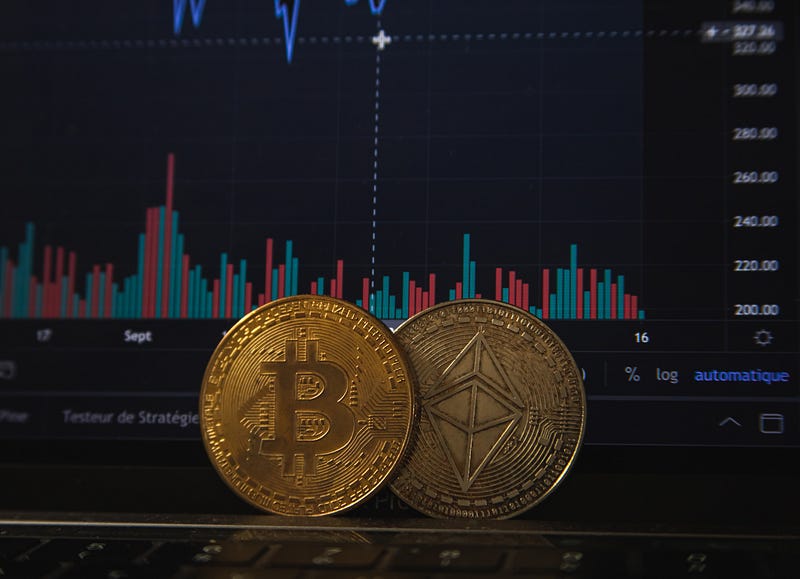
Photo by Pierre Borthiry — Peiobty on Unsplash


Factors driving crypto market growth in 2024

Peter Chung suggests that the growth of the crypto market will be driven by the expanding utility of virtual assets. He believes that once ETFs for bitcoin and ether are approved, these cryptocurrencies will become more versatile as investment options. This, in turn, is expected to enhance their reputation and foster wider adoption, having a significant influence on the broader crypto ecosystem beyond the two most dominant cryptocurrencies.


Real-world assets and financial firms

Choy anticipates that the U.S. Securities and Exchange Commission (SEC) will approve spot bitcoin and ether ETFs by the first half of next year. On a different note, Kang focuses on the importance of blockchain technology, particularly emphasizing real-world assets (RWAs) and roll-up solutions. Kang highlights that since RWAs are closely linked with traditional financial institutions, an influx of capital from these entities is likely to boost the RWA market. This interaction between traditional finance and blockchain technology could be a key driver of growth in the sector.


Regulatory changes and landscape shift

Kim Min-seung, another analyst from the team, forecasts that upcoming regulatory developments could alter the dynamics of the cryptocurrency market. A notable development in this regard is the forthcoming implementation of the Virtual Asset User Protection Act in South Korea, set for July next year. According to Kim, these changes might result in a scenario where only competitive cryptocurrencies survive.

Kim elaborates that the perception of virtual assets is poised for a shift. Currently, crypto investors tend to base their decisions on expectations of arbitrary cryptocurrency inflation. However, once new regulations are implemented, investors are likely to start assessing the actual value of virtual assets more critically. This shift in approach could lead to a more value-driven and stable cryptocurrency market, as speculative tendencies might decrease and a focus on intrinsic value increases.

According to local news outlet website The Asia Business Daily, Peter Chung anticipates further growth in the cryptocurrency market next year, following its rebound this year. He suggests that this growth trajectory will not only continue but also attract increased attention from the public.


More to Read
View All
Web3 & Enterprise·

Apr 24, 2023

Korean Cafe Attracts Customers with NFTs

Korean Cafe Attracts Customers with NFTsA South Korean cafe owner has employed non-fungible tokens (NFTs) as an ingenious marketing strategy to attract customers.©Pexels/Leeloo ThefirstNFT holder benefitsIn an interview with Korean crypto news outlet Digital Asset, Yoo Hyun, the entrepreneurial business owner, explained that he was seeking a strong marketing tool to capture the attention of the NFT market. Yoo was interested in seeing if his cafe could remain profitable while also offering substantial benefits to its customers.Since April 2022, Yoo has released a total of 50 Ethereum-based NFTs related to his cafe, Hide Me, Please (HMP), in two separate batches of 25 each. The first set of NFTs grants holders a free cup of coffee or drink daily for life, while the second set offers an extra drink or dessert with each drink purchased.Increased revenueThis unique NFT initiative has led to increased revenue for the cafe. Kim Dae-sung, the CFO of HMP, explained that the cafe’s monthly revenue increased by 15% compared to the same period last year.HMP is currently selling 500 NFTs as a third set and plans to release more depending on demand. Yoo highlighted the importance of an appealing interior design and tempting desserts, as NFT holders visiting for a free coffee may be enticed to purchase a dessert as well.Regular customersYoo asserts that the food and beverage industry hinges on retaining regular customers and believes NFTs can help achieve that objective. HMP aspires to become a community-based platform, and according to Kim, many digital artists are interested in the space that the cafe provides because it enables them to connect with clients. Collaborations often take place, and while the cafe charges for food and drinks, it does not charge for space rental. This approach fosters a positive impression and contributes to a strong brand image.High-quality cafeAt present, about 5% of HMP’s customers hold NFT memberships. Yoo and Kim plan to increase this number to 10% but no higher, as excessive reliance on NFT members could jeopardize the business. They underlined the significance of remaining a high-quality cafe, staying true to the core foundation of their enterprise. As they anticipate the growth of the Web 3.0 ecosystem, Yoo and Kim believe that with continued efforts, HMP will gain even greater value.

news
Policy & Regulation·

May 24, 2024

Thai regulator takes action against deceptive crypto ads

In an effort to safeguard crypto investors from falling prey to misleading advertisements, the Securities and Exchange Commission (SEC) of Thailand has intensified its scrutiny of promotional campaigns within the crypto sphere. Photo by Dave Kim on UnsplashBroker agent eventsOn April 29, the Bangkok Post reported that the SEC has raised concerns regarding the potential violation of local regulations through introducing broker agent (IBA) events. These events, the SEC clarified, may breach regulations as IBAs are only permitted to promote digital token services to deter speculation on cryptocurrencies, categorized as high-risk assets. IBAs, acting as local conduits for partner digital asset exchanges, typically earn commissions by onboarding clients within a specific market. Such practices are common for exchanges or brokers that don't directly operate in certain markets. Deputy Secretary-General Anek Yooyuen conveyed the commission's unease over crypto exchanges offering preferential treatment to onboard users. Yooyuen stated: "When operators organise sales promotions by offering rewards to entice people to use the service, this could encourage use of the service without considering the investment risks. This is especially the case for cryptocurrencies.” Warning of consequencesHe cautioned that failure to adhere to these guidelines would result in “punishment according to the law.” While cryptocurrency exchanges are legal in Thailand, they must secure local approval. Notably, last month, Thailand even greenlit asset management firms to launch private funds, offering Bitcoin exchange-traded funds (ETFs) exclusively to institutional and ultra-high-net-worth investors. Nonetheless, the country recently prohibited the sale of cryptocurrency lending products and mandated that exchanges prominently display risk warning messages. International regulatory trendThis move by the Thai SEC mirrors actions taken by regulators in other major crypto markets. For instance, the United Kingdom's Financial Conduct Authority (FCA) issued 450 alerts for illegal crypto ads in 2023 alone. Similarly, Spain’s principal securities market regulator, the National Stock Market Commission, denounced fraudulent crypto asset promotions in November 2023, emphasizing companies’ obligations to adhere to local laws. Thai advertising guidelines mandate businesses and advertisers to substantiate the “facts” presented in their campaigns, failing which could lead to legal repercussions. A recent incident provides a case in point. Hackers hijacked advertisements on Etherscan, redirecting users to phishing sites aimed at draining crypto wallets. Scam Sniffer, a blockchain investigation firm, attributed the widespread phishing campaign to the inadequate oversight by advertisement aggregators. The company made the following statement on the matter: “Etherscan aggregates ads from platforms like Coinzilla and Persona, where insufficient filtering could lead to exposure to phishing attempts.” The wallet drainer scam involves enticing users to counterfeit websites and coercing them to link their crypto wallets, enabling scammers to siphon funds into their own wallets without user authentication or consent. This is not the first time that the authorities in Thailand have homed in on crypto-related advertising. In August 2023, the Southeast Asian country’s Ministry of Digital Economy and Society (MDES) outlined that it had engaged with social media firm Meta, owner of Facebook, informing it that its response to the proliferation of fraudulent platform ads relative to crypto had been inadequate. 

news
Web3 & Enterprise·

Nov 05, 2024

Gemini receives in-principle MPI license approval in Singapore

American crypto exchange and custodian Gemini announced via its blog on Oct. 29 that it has been awarded in-principle approval for a Major Payment Institution (MPI) license from the Monetary Authority of Singapore (MAS). In an X post on Oct. 23, Dan Clarke, who worked for Gemini in Singapore in an International Marketing & Operations role in 2021, outlined that back then the company ran the first crypto-related full page ad in the Straits Times with the slogan “We’re in Singapore. For Good.” Fast forward three years and it appears that Gemini is making good on that commitment through this latest regulatory-compliant milestone.Photo by Swapnil Bapat on UnsplashSingapore to play a crucial roleThe MPI license will enable Gemini to offer digital payment tokens and cross-border money transfer services in Singapore. Gemini’s Asia-Pacific (APAC) business is headed up by Saad Ahmed. Ahmed commented that Singapore has been at “the heart” of its operational expansion within the APAC region. Expanding on that further, he stated:“While the United States remains our largest market and global headquarters, Asia and Singapore in particular play a crucial role in our global strategy.”  Ahmed outlined that Singapore represents the company’s second-largest market, with plans to double its current Singaporean workforce and move to a larger office space. The Gemini executive believes that this in-principle licensing approval takes the company one step closer to offering services that cater to the needs of residents of the city-state.  Serving users across the APAC regionIn its blog announcement, the firm said that “since establishing our regional headquarters in Singapore, we’ve focused on expanding our footprint, ensuring that we bring a localized, secure, and compliant trading experience to users across the region.” With the regulatory environment in its home market being currently hostile to crypto, Gemini has pursued a strategy followed by many of its peers in looking for growth opportunities overseas instead. In April of last year, the company announced that it was in the process of opening an engineering center in India.  In June 2023 the company publicized its intention to pursue a crypto trading license within the United Arab Emirates (UAE). At the time the company’s co-CEOs, Tyler and Cameron Winklevoss, referred to the “hostility and lack of clarity” when it came to the regulatory environment within the United States. Regulatory clarity to drive growthAhmed believes that regulatory clarity in Singapore will be a driver of growth, leading to greater adoption across the region. With regard to the U.S., he has the expectation that the crypto industry will grow regardless of whether former U.S. President Donald Trump or Vice President Kamala Harris wins the upcoming presidential election.  Notwithstanding that, Gemini’s Winklevoss twins have donated over $2 million to Trump’s campaign, while also contributing funds to a super political action committee (PAC) supporting John Deaton, a Republican challenger to the Senate seat of fierce crypto critic Senator Elizabeth Warren.  Regulatory conditions in Canada have proven to be too much to handle for the company. At the end of September, Gemini announced that it would close all customer accounts in Canada by December 31 as a direct consequence of new regulations which have been introduced by the Canadian Securities Administrators (CSA).

news
Loading