Top

Gala Games announces worldwide release of 4X RPG Eternal Paradox

Web3 & Enterprise·December 06, 2023, 8:58 AM

Gala Games officially launched South Korean game developer Ndream’s newest game, Eternal Paradox, worldwide on Tuesday (PT), according to an official blog post. Eternal Paradox is a 4X mobile role-playing game (RPG) where players can engage in war simulations or turn-based battles by playing with tiered characters, or “Mercenaries”. In particular, it employs Web3 ownership mechanisms, including a native token Eternal Time (ETIME), which is built on Gala Games’ layer 1 blockchain GalaChain.

Photo by Jack B on Unsplash


Rewards-based gaming universe

The token powers the Eternal Paradox ecosystem and distributes rewards to players, such as in-game assets, upgrades and special Mercenaries that are minted as non-fungible tokens (NFTs).

“We are pleased to bring a new game from South Korean game developer Ndream to the Gala Games platform. We will continue to work with Ndream to ensure that global users can enjoy the game for a long time to come, as it is a piece of Korean content recognized by many around the world,” Gala Games said.


Global RPG experience

The RPG is playable in 11 languages and allows simultaneous chatting with automatic translation, facilitating communication between global users. It also implements a seasonal system, resetting every 49 days to create an immersive and unique gameplay experience. Players around the world can interact with each other by participating in guild wars each season, where national guilds can battle for control of territory and earn rewards.

“Eternal Paradox is a superb combination of turn-based RPG and war simulation,” said Kwon Won-seok, CEO of Ntroi, a subsidiary of Ndream and the executive producer of Eternal Paradox. “I’m very curious to see which country will be the winning guild in the first season. We hope you enjoy the game.”

Eternal Paradox is now available for mobile download on the Google Play Store, Apple App Store and Gala Games platform. Support for PC play will be available in the future. Gala Games also noted that the game is not available in some countries, including South Korea.

More to Read
View All
Policy & Regulation·

Jan 16, 2024

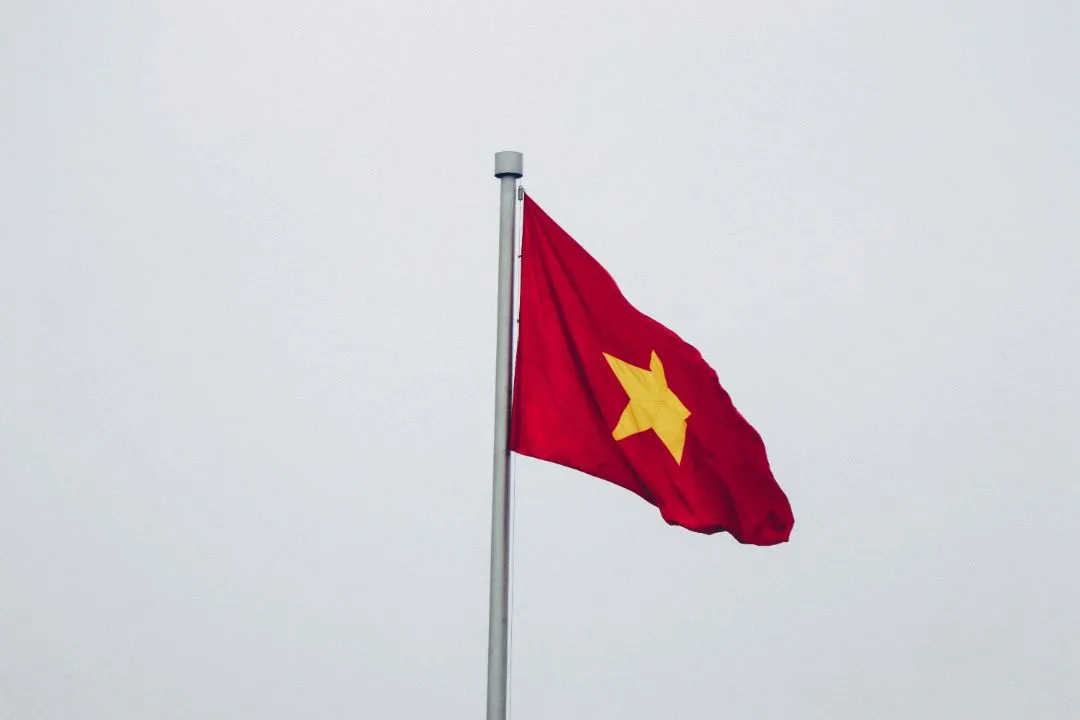
Positive signals in Vietnam suggesting XRP payments adoption

Recent statements by figures well placed in the crypto space and within the Vietnamese government point to increased potential for greater adoption of XRP, the payments solution token first developed by Ripple Labs.Photo by Silver Ringvee on Unsplash‘XRP will be big in Vietnam’Yasin Mobarak is a prominent figure within the XRP community. He’s also the founder and managing member of Dizer Capital, a venture capital and private equity firm that specializes in blockchain, internet of things (IoT) and clean energy projects. On Saturday, Mobarak tweeted out: "$XRP will be big in Vietnam." While Mobarak didn’t comment further, he did include a link to an X social media post published by XRP community member Kenny Nguyen, relaying the news that Vietnamese Finance Minister Ho Duc Phoc had announced that the government is currently working with the Vietnamese Central Bank with a view towards studying and possibly implementing the use of XRP for cross border payments. Central Bank's consideration of XRPVietnam's Central Bank is actively exploring the integration of XRP for cross-border payments, both domestically and internationally. This move aligns with the region's swift adoption of XRP, driven by its promise of faster, cost-effective and secure cross-border payment services. Ripple's recent collaboration with TPB Bank, a major player in Vietnam's banking sector, is set to fortify the entire XRP ecosystem. In September 2023, SBI Remit, a financial service provider and subsidiary company of Japanese financial services conglomerate SBI Group, initiated an XRP-based remittance service covering Southeast Asian countries like the Philippines, Vietnam and Indonesia. SBI has a long-standing partnership in place with Ripple aimed at launching international payment services. As part of that announcement, SBI confirmed the participation of Malaysia-based cross-border payments hub Tranglo in the project. Crypto adoption and growthDespite legal constraints, Vietnam emerged as a leader in crypto adoption in Asia in 2023 by claiming the third position in Chainalysis’ 2023 Global Crypto Adoption rankings. The region, still adapting to the global rise of cryptocurrencies, is undergoing a transformation. While centralized exchanges dominate in various countries, regional preferences vary. In the Philippines, a noteworthy 20% of the population engages with crypto sites for gaming and gambling. In contrast, Vietnam and Pakistan distinguish themselves with citizens favoring peer-to-peer exchanges. This approach allows direct trading between individuals, bypassing large corporations. A report produced by Kyros Ventures and Coin68 in conjunction with Hong Kong’s Animoca Brands last year found that 76% of Vietnamese crypto holders determine their investment choices based upon recommendations from friends and people within their peer group. The collaboration between regulatory bodies, financial institutions, government and crypto projects illustrates the growing integration of digital assets into traditional financial systems. This latest example pertaining to Vietnam and XRP certainly offers the potential of a much greater level of adoption in the region. While activity within Vietnam may be a key consideration for XRP investors and stakeholders in 2024, the potential for a Ripple initial public offering (IPO) is also something they’re likely to be watching out for. Over the course of the past six months, a Ripple IPO has been the subject of speculation. That speculative interest has likely increased following Circle, the issuer of U.S. dollar stablecoin USDC, filing for an IPO last week.  

news
Policy & Regulation·

Sep 29, 2025

Japan surges to the front of Asia’s crypto pack as policy tailwinds mount

Japan’s cryptocurrency market has surged to become the fastest-growing in the Asia-Pacific region, driven by a government overhaul of its digital asset policies. On-chain transaction value jumped 120% in the year ending June 2025, according to a new report from Chainalysis. The expansion signals renewed activity in a market long characterized by its cautious approach. The Japanese government is increasingly open to crypto as a mainstream investment class through a series of reforms, including proposed friendlier tax laws and the licensing of regulated stablecoins, aiming to attract investment and foster a domestic Web3 industry.Photo by Daniel Hehn on UnsplashOverhauling a strict tax codeA central pillar of the reform is a proposed change to Japan’s tax code, which currently subjects crypto gains to rates of up to 55%, compared with a flat 20% on stock profits. The ruling Liberal Democratic Party is backing proposals to introduce the same 20% rate for crypto starting in fiscal 2026, along with rules that would allow investors to carry forward losses for up to three years. The measures, which require parliamentary approval, are intended to align digital assets more closely with traditional financial instruments. Uncertainty has emerged, however, with Prime Minister Shigeru Ishiba’s decision to resign. Ishiba has been supportive of the crypto industry, and the LDP’s leadership election on Oct. 4 could reshape the policy outlook. Sanae Takaichi is seen favoring tighter oversight, Shinjiro Koizumi more receptive to digital assets, and Finance Minister Katsunobu Kato stressing a balance between investor protection and innovation. Paving the way for a stablecoin eraThis political transition coincides with a shift in the Japanese market, which remains heavily concentrated in just a few assets. Over the past year, yen-denominated trading was dominated by XRP with $21.7 billion in volume, outpacing Bitcoin ($9.6 billion) and Ethereum ($4.0 billion). While political developments add unpredictability to the outlook, successful regulatory reforms could set the stage for positive change. One potential catalyst is the government’s recent licensing of the first issuer of a yen-backed stablecoin. Stablecoin issuer JPYC received Japan’s first funds transfer service provider license in August, with its launch anticipated in October. Broader access to stablecoins, digital tokens pegged to fiat currencies like the U.S. dollar or yen, is expected to provide Japanese traders and institutions with a more familiar tool for settlement. Major financial players are also moving in this direction. SBI Group, a leading financial conglomerate, recently deepened its partnership with Ripple to distribute RLUSD, an enterprise-grade U.S. dollar-backed stablecoin, in Japan. SBI plans to make the regulated stablecoin available by March 31, 2026. Corporate Japan bets on blockchainAt the same time, SBI Group also recently partnered with infrastructure provider Startale Group to build a blockchain-based trading platform for tokenized real-world (RWA) assets like stocks. The venture is a bet on the burgeoning tokenization market, which Ripple and Boston Consulting Group (BCG) project could reach nearly $19 trillion by 2033. Alongside moves by major financial groups, Japan is also nurturing its homegrown Web3 talent through the J-StarX Program, coordinated by JETRO Dubai and sponsored by the Ministry of Economy, Trade and Industry. This year, more than half a dozen Japanese startups, together raising over $17 million, were selected for the initiative, spanning blockchain infrastructure, AI-driven platforms, and advanced fintech solutions.  Since August, the cohort has been preparing for international exposure, with showcases scheduled at GITEX GLOBAL 2025 in Dubai and a visit to Abu Dhabi’s Hub71 in October. The initiative reflects Japan’s strategy of expanding overseas networks for its startups while positioning them to access the UAE’s growing Web3 and fintech markets. 

news
Policy & Regulation·

Apr 26, 2023

Terraform Labs Co-Founder Indicted in South Korea

Terraform Labs Co-Founder Indicted in South KoreaTen individuals linked to the Terra USD collapse have been indicted in South Korea on charges associated with violations of capital markets law, including the Co-Founder of Terraform Labs, Daniel Shin. That’s according to a report published by Bloomberg on Tuesday.©Pexels/Donald TongTwo of the ten were charged with breach of trust while the remaining eight, including Shin, were charged with illegal trading. Prosecutors confirmed that all of the charged individuals have ties to Terraform Labs, the company responsible for developing the Terra protocol, and the Terra USD (TUSD) stablecoin and Luna cryptocurrency which collapsed in 2022.It’s understood that the ten individuals were also accused of illegal disclosure of clients’ payment information and the embezzlement of corporate funds. The authorities have claimed that the ten individuals are responsible for causing “astronomical damage” to investors. They estimate that all ten of them took 463 billion won, around $347 million, in profit.Business interestsShin co-founded Terraform Labs with Do Kwon in 2018. He left the project in 2020, long before its spectacular failure in 2022. However, he would have profited considerably from the project. Prior to co-founding Terraform Labs, Shin had founded lifestyle commerce company TMON in 2010. Two years later, he founded venture capital and private equity firm, Fast Track Asia while in 2017 he was a founding partner of another venture capital and private equity firm, Bass Investment.He remains involved in all of those other businesses. Furthermore, Shin founded integrated payments firm PortOne Global in January 2020, immediately upon exiting Terraform Labs. He remains CEO of PortOne Global today.$185 million frozenOn Tuesday, the Seoul Southern District Prosecutor’s Office outlined that it had frozen assets to the value of 246.8 billion won, approximately $185 million, belonging to those that it has brought charges against. South Korean authorities had previously acknowledged a difficulty in seizing assets related to Terraform Labs Co-Founder Do Kwon. It’s understood that a transfer of funds from Do Kwon to a prominent South Korean law firm is being investigated. Otherwise, the search for funds has led them overseas where it’s understood that Do Kwon purchased real estate in his mother’s name in the United States in a bid to evade asset confiscation.Free pending trialShin remains at liberty pending trial. Back in December, a South Korean court turned down a request to arrest him on the basis that he wasn’t likely to destroy evidence and wouldn’t pose a flight risk.That hasn’t proven to be the case where his former colleague Do Kwon is concerned. Do Kwon fled to Montenegro where he was recently charged with having entered the country on false documents. Both South Korea and the United States have formally applied for his extradition. In the United States, the Securities and Exchange Commission (SEC) has sued both Do Kwon and Terraform Labs. Terraform Labs subsequently submitted a request to the courts in the US to dismiss the lawsuit, claiming the SEC lacks jurisdiction.

news
Loading