Top

Foblgate adds Ripple market for increased investor opportunities

Web3 & Enterprise·December 05, 2023, 9:42 AM

South Korean cryptocurrency exchange Foblgate has added a Ripple (XRP) market, where cryptocurrencies can be traded for XRP, according to an article published by South Korean news outlet Blockchain Today. This is the third crypto-to-crypto market on Foblgate along with Bitcoin and Ethereum, providing users with expanded investment opportunities and convenient trading options.
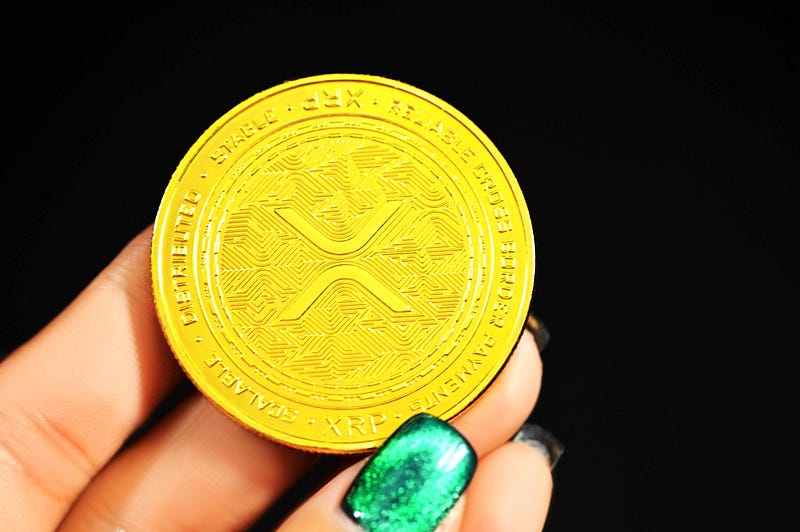
Photo by Kanchanara on Unsplash

The Ripple market opened at 10 a.m. today (local time) with a transaction fee of 0.01% and a minimum order amount of 6.5 XRP. Currently, it supports trading for EOS and BNB. Foblgate plans to add more trading pairs in the future.


Ripple’s rise in South Korea

The exchange revealed that it decided to add a Ripple market due to the cryptocurrency’s fast transaction speed and low trading fees, along with its popularity in the South Korean market. The company also emphasized the widespread expansion of Ripple’s ecosystem based on its blockchain network, XRP Ledger, and active participation from the country’s Ripple community.


Foblgate’s vision

“We have always been sensitive to the demands of investors and market changes,” said Ahn Hyun-jun, the CEO of Foblgate. “The launch of our XRP market aims not only to provide new investment options but also to play a role in promoting the growth and innovation of the crypto industry.”

More to Read
View All
Policy & Regulation·

Apr 11, 2023

Korean Prosecutors Say Do Kwon and His Colleagues Knew Terra Was Unviable from the Beginning

Korean Prosecutors Say Do Kwon and His Colleagues Knew Terra Was Unviable from the BeginningKorean prosecutors claimed that Terraform Labs founder Do Kwon and the key members behind the Terra-LUNA crash were aware of the project’s unviability from the beginning, according to a file issued by the Seoul Southern District Court.©Terraform LabsTerraform Labs founders misleading Korean investorsTerraform Labs founders Do Kwon and Daniel Shin attracted 280,000 investors in Korea alone, claiming that the Terra stablecoin is a means of transaction, even though the company leaders had been notified by the financial authority that Terra-accepting businesses were impermissible. It is reported that during a search and seizure of the company, Korean prosecutors collected evidence that its employees shared such knowledge on their internal messaging system.Terra’s cross trading on crypto exchangesKnowing their cryptocurrency’s unviability, Terra executives registered its sister token LUNA for listing on major Korean crypto exchanges in May 2019. According to the Korean prosecution, they used a bot to create a trade volume of more than 800 million won in three domestic crypto exchanges by cross trading between 2019 and early last year.Cross trading is illegal in the stock market, as it is considered as an act of price manipulation, but LUNA was traded in crypto exchanges and it hasn’t been determined whether their token is a security or not. Under current Korean law, the court has to accept it as a security to punish those behind the Terra collapse.Shin’s denial of allegationsMeanwhile, Daniel Shin denied the prosecution’s allegations and argued that they had never received such a notice from the financial regulator.

news
Web3 & Enterprise·

Aug 02, 2023

Binance Set For Japanese Market Re-Entry With 34 Token Listings

Binance Set For Japanese Market Re-Entry With 34 Token ListingsBinance, the world’s largest cryptocurrency exchange, is gearing up to re-enter the Japanese market with a bang on August 14. According to a report published by local crypto media outlet Coinpost, Binance Japan is set to immediately list an impressive 34 tokens.The move will put Binance ahead of its domestic rivals, as the offering will be the most extensive in terms of the selection of tokens made available to Japanese customers.Photo by David Edelstein on UnsplashBNB token offeringIn addition to that, Binance intends to make its native token, BNB, available in Japan for the first time. Exchange tokens have proven to be controversial in recent times. In November 2022, FTX’s reliance on their native token FTT caused a run on the exchange which Binance started once it started to sell off the token. Similar concerns have been expressed ever since about a similar reliance within Binance relative to its BNB token.The expansion into Japan will likely prove a tonic for Binance, given the difficulties it has experienced in other markets recently. Regulatory pushback has forced Binance out of markets such as Germany, Belgium, the Netherlands, and Cyprus over the course of the past three months.The company has been actively working to comply with Japan’s regulatory environment. In a Twitter video posted in July, Changpeng Zhao (CZ), Binance’s Founder and CEO, expressed his excitement about re-entering the Japanese market. He praised Japan’s clear and progressive approach to crypto regulations, citing the well-established framework that dates back to 2017, as well as recent developments, including the opening up of crypto listing frameworks and the passing of stablecoin regulations in June.Roadmap to market re-entryBinance’s journey back into Japan started in November 2022 when it acquired 100% ownership of Sakura Exchange BitCoin (SEBC). The acquisition paved the way for Binance to be regulated by the Japan Financial Services Agency (JFSA). As part of this move, SEBC underwent a name change, rebranding itself as Binance Japan Inc. The company then announced in May its plans to re-enter the Japanese market.The re-entry comes after the JFSA had previously issued warnings in 2021 against Binance for operating in the country without proper registration. Now, with the acquisition of SEBC and its regulatory compliance, Binance has gained a foothold in the Japanese market once again.Binance Japan aims to provide a comprehensive suite of services to its Japanese customers. New users can access spot trading, Earn products, and the NFT marketplace, while existing customers can migrate to the local subsidiary starting August 14. The token offerings include a diverse range of assets, and the addition of BNB presents exciting opportunities for traders and investors in Japan.Rival exchanges such as Coinbase and Kraken have decided to halt their operations in the country as they struggled to adjust to Japanese market conditions. The move by Binance to re-enter Japan’s market will be closely watched to see if it can succeed where others have failed.

news
Policy & Regulation·

Aug 24, 2023

Celebrating a Decade of Crypto in South Korea: Experts Convene to Chart the Future

Celebrating a Decade of Crypto in South Korea: Experts Convene to Chart the FutureThe MK Virtual Asset Conference, an event held in Seoul yesterday to celebrate the 10th anniversary of South Korea’s cryptocurrency industry, convened experts, politicians, and stakeholders to discuss the future of blockchain and digital assets.The conference was hosted by Maeil Business Newspaper and its blockchain subsidiary Mblock, and sponsored by cryptocurrency exchange Korbit, the Korean Securities Association, and the Korea Derivatives Association. It served as a valuable opportunity to evaluate the current state of the crypto market and explore solutions for pressing challenges.Photo by Ciaran O’Brien on UnsplashInevitable rise of blockchainOne of the distinguished speakers at the event highlighted the inevitable rise of blockchain technology. Kim Yong-beom, CEO of Hashed Open Research, the research arm of Seoul-based crypto venture capital firm Hashed, said, “Blockchain is the antithesis of the modern financial and capital system. While traditional finance possesses its own merits, it also carries substantial transaction fees and is confined within national boundaries. It is only natural that such a counterforce has emerged to address these issues.”He continued, “Given that traditional finance properly responds to blockchain technology’s rise and overcomes its limits, blockchain may lose its competitive edge. However, if traditional finance fails to do so, blockchain will not be easily dismissed.”CEO Kim also highlighted the third section named “Blueprint for the Future Monetary System” of the Bank of International Settlements’ 2023 Annual Economic Report, which was published in June. The report states, “The BIS Innovation Hub, in partnership with central banks around the world, stands at the forefront of experimentation with CBDCs and tokenization.” According to Kim, the traditionally conservative financial institution, which had previously been skeptical about blockchain-based distributed ledger technology, has now shifted its position to be more accepting of blockchain.Importance of institutional investorsDuring the conference, an academic underscored the importance of allowing institutional investors to enter the virtual asset space. Kang Hyoung-goo, an assistant professor in the Department of Finance at Hanyang University Business School, pointed out that the crypto market, when primarily driven by retail investors, tends to favor volatile assets over stable ones. Due to this inclination, more individual investors are attracted to exchanges where speculative trading is a frequent occurrence. This dynamic creates a vicious cycle, he explained.Defining digital assetsOn a different note, Lee Han-jin, a lawyer at Kim and Chang, one of the largest law firms in the country, emphasized the crucial need to establish a legal definition of digital assets. In Lee’s view, digital assets exist in the form of data on the blockchain, setting them apart from traditional assets. He argued that without a legal definition outlining the nature of these assets, they could potentially devolve into entities that mislead the public, lacking both legal reliability and trustworthiness.Political voicesPoliticians also took the stage to share their thoughts. Back Hye-ryun, a Democratic Party of Korea member, expressed in her congratulatory speech her commitment to protecting virtual asset users through legislation. Kim Jong-min, another lawmaker from the same party, underscored the unstoppable nature of the blockchain trend. Yun Chang-hyun, a lawmaker of the ruling People Power Party, mentioned that while Bitcoin couldn’t establish itself as a key currency in an anarchic manner, stablecoins and central bank digital currencies (CBDCs) are now positioned to fill that role.Regulatory considerationsMeanwhile, Kim So-young, Vice Chairman of the Financial Services Commission, stressed the ongoing uncertainty surrounding the societal impact of cryptocurrencies and how governments should oversee them. He emphasized that the Korean government aims to establish a balanced framework to facilitate the responsible development of digital assets. Furthermore, he highlighted the necessity of collaborating with major economies due to the global nature of virtual assets.

news
Loading
