Top

Samil PwC seminar informs companies about crypto accounting amid shifting Korean regulations

Web3 & Enterprise·November 24, 2023, 8:03 AM

With the South Korean government anticipated to finalize a plan aimed at enhancing cryptocurrency transparency within this year, companies are preparing to swiftly respond to the changing accounting landscape.

A seminar held on Thursday (local time) in Seoul by Samil PwC, the Korean member firm of the London-headquartered accounting firm PricewaterhouseCoopers, exemplifies these efforts. This meeting featured presentations from Samil staff, focusing on the implications of the new upcoming crypto accounting guidelines for businesses and exploring strategies for effective response.
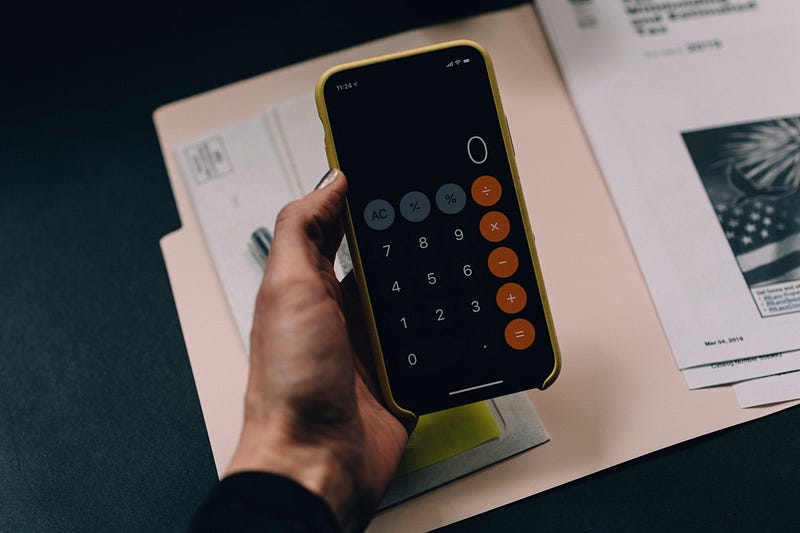
Photo by Kelly Sikkema on Unsplash


Govt to soon finalize crypto accounting guidelines

During the meeting, an official from Samil PwC said that the Virtual Asset User Protection Act is set to be implemented next July. The accounting expert also noted that the Financial Services Commission’s guidelines on virtual asset accounting and the requirement for disclosing virtual assets in financial statement annotations, issued this July, are expected to be finalized shortly.


From accounting to internal controls

As the first speaker of the seminar, Lee Seung-wook, Partner at Samil PwC, delivered a presentation on the management of cryptocurrency accounting and the disclosure of cryptocurrency holdings within financial statement annotations. Lee classified companies into three categories: crypto issuers, crypto holders or investors and companies operating crypto businesses. He provided detailed guidance on what each category of companies should consider in their approach to managing and disclosing virtual assets.

In particular, Lee drew attention by clearly explaining the accounting approaches companies should adopt in various scenarios, such as when offering cryptocurrency as an incentive to employees or airdropping cryptocurrency to customers for marketing purposes.

Following this, Partner Jo Sung-jae delved into enhancing internal controls related to virtual assets. Drawing from PwC’s own framework, he presented practical methods to mitigate risks associated with cryptocurrencies, such as the loss of private keys, vault breaches and embezzlement.

The seminar also covered the topic of Information Technology General Controls (ITGCs). Partner Lee Jeong-mi made a comparison between ITGCs in traditional business environments and those specific to the cryptocurrency industry, highlighting the unique considerations that crypto businesses need to be aware of. Furthermore, Managing Director Lee Eun-young discussed the tax implications related to cryptocurrency.


Anticipation of uncertainty reduction

Lee Jae-hyuk, who oversees the cryptocurrency division at PwC and served as the overall manager of the seminar, expressed optimism that the government-led guidelines would reduce the uncertainty surrounding cryptocurrency accounting. He also conveyed his hope that the seminar would provide attendees with the opportunity to consider the influence of digital assets on corporate accounting, internal controls and tax implications, as well as their potential impact on future industry trends.

Samil PwC stands out as one of the first Korean accounting firms to establish a dedicated blockchain division within its Digital Innovation Lab, incorporating a team of developers. Leveraging its accumulated expertise in this field, Samil PwC offers a broad range of services, including internal controls consultations, accounting audits, financial advice and tax filing. Further emphasizing its commitment to the evolving field of cryptocurrency, in June of this year, Samil PwC collaborated with the Korean Accounting Association (KAA) to conduct research focused on cryptocurrency accounting.


More to Read
View All
Policy & Regulation·

Sep 26, 2025

Kazakhstan pilots tenge-backed stablecoin with Solana and Mastercard

Kazakhstan’s central bank has begun testing a stablecoin tied to the national currency, advancing a broader plan to modernize the country’s financial infrastructure. According to Cointelegraph, the pilot, run inside the National Bank of Kazakhstan’s Digital Assets Regulatory Sandbox, introduces Evo, a token with the ticker KZTE that is built on Solana and backed by the tenge. Intebix, a local crypto exchange, and Eurasian Bank are issuing KZTE. Mastercard is preparing connections that would link the token with major stablecoin issuers worldwide. The central bank is not minting the asset, but it is providing the regulatory framework that allows the token to be created and tested. Intebix founder Talgat Dossanov said the initiative is the first instance of the monetary authority directly engaging in the process of stablecoin issuance.Photo by GuerrillaBuzz on UnsplashBuilding a national crypto ecosystemEarly use cases focus on practical payments and on-ramps. The token is designed to widen the bridge between crypto and fiat, support conversions on exchanges, and enable spending through crypto cards. Officials described the pilot as a building block in a national digital asset ecosystem that aims to nurture new financial tools and deepen the local market. The program aligns with guidance from President Kassym Jomart Tokayev, who in a Sept.  8 address urged faster development of a comprehensive digital asset environment. He called for a new banking law to boost competition, attract new players, strengthen fintech, and ease the circulation of digital assets. Tokayev also cited progress with the digital tenge, already in use to finance projects through the sovereign wealth fund, and proposed creating a state crypto fund under the central bank’s investment arm to launch a strategic reserve of promising tokens. USD stablecoin accepted as regulatory feesRegulatory efforts extend beyond the sandbox. On Sept. 4, the Astana Financial Services Authority (AFSA), the independent regulator of the Astana International Financial Centre (AIFC), launched a pilot that lets companies based at the center pay regulatory fees using stablecoins backed by the U.S. dollar. More than 4,000 firms from over 80 countries are registered at the AIFC, and Bybit was the first to sign a multilateral memorandum of understanding with the regulator. Under the fee pilot, licensed Digital Asset Service Providers may join as Providers and act as agents for payers who choose to settle obligations to the regulator with stablecoins. AFSA chief executive Evgeniya Bogdanova said the initiative is meant to position the financial center as a hub for digital finance and to keep pace with global trends in stablecoin adoption. Together, the sandbox stablecoin, the digital tenge rollout, and the AIFC payments pilot signal a coordinated push to make digital assets a larger part of Kazakhstan’s financial system. Authorities are testing how these tools can operate within clear rules, with an eye to drawing investment and keeping the country connected to fast-moving changes in global finance. 

news
Policy & Regulation·

Jul 14, 2023

Busan City Aims to Cultivate Growth in Blockchain and Fintech Industries

Busan City Aims to Cultivate Growth in Blockchain and Fintech IndustriesThe South Korean Ministry of SMEs and Startups (MSS) convened a meeting at the Korea Technology Finance Corporation today to address issues related to emerging industries, including blockchain and fintech, and devise strategies for their growth in Busan, a city rapidly establishing itself as a global hub. That’s according to a report by local news media News1.Photo by Minku Kang on UnsplashBlockchain, fintech, and hydrogenThe meeting saw the presence of MSS Minister Lee Young, Lawmaker Park Soo-young, Busan government officials, and university representatives. Local business leaders specializing in blockchain, fintech, and hydrogen also attended to provide their opinions.During the meeting, two presentations were delivered, each focusing on key policies. The first presentation outlined Busan’s strategic initiatives aimed at bolstering the finance and hydrogen sectors. The second presentation detailed the plans of the MSS’ Busan branch to support innovative enterprises.Following the presentations, local businesses put forth additional ideas pertaining to the policies. Minister Lee presided over a 100-minute discussion, facilitating an in-depth exploration of these ideas and extracting valuable insights. The proposed ideas encompassed mid-to-long-term strategies aimed at strengthening the connections between innovative firms, streamlining inspection standards for hydrogen containers, and promoting systematic research and development to address the sluggish adoption of new services in the fintech industry.Government’s visionExpressing the government’s commitment, MSS Minister Lee stated that up to ten global innovation clusters will be established across the nation by 2027, accompanied by expanded R&D support for new technologies. She called upon local governments and businesses to collaborate and spearhead innovation in the region.Meanwhile, in February, the MSS implemented a regulatory forecasting system to provide small businesses with advance notice of forthcoming regulations and gather their opinions for consideration. Additionally, the MSS intends to select two municipalities outside of the Seoul metropolitan area by October to enable businesses to drive innovation with minimal regulatory barriers.Busan’s blockchain driveBusan has been actively promoting blockchain initiatives through various events. An example of such an event, as reported by local news outlet Erounnet, is an upcoming three-day educational program on blockchain technology, organized by the Busan Creative Economy Innovation Center. The program will take place from July 25 to 28, followed by another event scheduled for September.

news
Web3 & Enterprise·

Sep 06, 2024

WazirX hack: Hacker launders $10M through Tornado Cash amid legal disputes and partial withdrawals

In the aftermath of the massive $235 million hack of the WazirX cryptocurrency exchange on July 18, users and stakeholders are grappling with its devastating consequences. The breach, which compromised a significant portion of the exchange’s reserves, has led to a series of legal, financial and security-related challenges, leaving millions of users uncertain about the future of their funds. The hack and its aftermathWazirX, once a leading Indian cryptocurrency exchange, lost approximately $235 million due to a breach in one of its multi-signature wallets. This included significant amounts of Shiba Inu (SHIB), Ethereum (ETH) and other assets. The hack crippled the exchange, forcing it to temporarily shut down operations and seek a restructuring process under Singapore's insolvency laws. The WazirX hacker has since begun laundering the stolen assets through Tornado Cash, a crypto mixer known for obscuring transaction details. According to blockchain security firm Cyvers, the hacker transferred over 5,000 ETH (approximately $12 million) to a new wallet and laundered $10 million in Ethereum through Tornado Cash. This mirrors the tactics of the North Korea-backed Lazarus Group, which has used similar methods in past high-profile crypto thefts. Photo by GuerrillaBuzz on UnsplashUsers seeking redress and government interventionAs the victims of the hack face uncertainty, over 4 million active WazirX users are expected to suffer a loss of at least 43% of their funds due to the restructuring process. Frustrated by the lack of action from Indian authorities, many users have sought help from Indian Prime Minister Narendra Modi, who was visiting Singapore at the time. Users took to social media to air their grievances and demand justice, urging the government to intervene. WazirX co-founder Nischal Shetty, who is based in Dubai, added to the confusion by stating that he does not know who is responsible for safeguarding user crypto funds on the platform. His statement has fueled outrage among users, who feel abandoned by the exchange’s management. Legal and ownership disputesAmid the chaos, WazirX is also battling a legal dispute over its ownership with Binance, the world’s largest cryptocurrency exchange. Shetty has repeatedly claimed that Binance acquired WazirX, granting it significant control over the platform's operations. However, Binance founder Changpeng Zhao (CZ) refuted these claims in 2022, stating that the acquisition deal was never completed. The uncertainty surrounding the ownership of WazirX has further aggravated users, many of whom are demanding a clear statement from Binance. So far, Binance has remained silent, neither confirming nor denying its involvement. This ambiguity has intensified calls for clarification, with users fearing that a lack of transparency may worsen their chances of recovering their funds. Partial withdrawals and restructuring effortsIn response to the crisis, WazirX has initiated phased withdrawals for users, allowing them to access 66% of their Indian Rupee (INR) token balances. Initially set for September 9, the withdrawal window was moved forward, offering some relief to users. However, many are dissatisfied with the partial access to their funds and are questioning when full crypto withdrawals will resume. WazirX’s legal team has indicated that users may recover only 55% to 57% of their crypto holdings, sparking further discontent. Meanwhile, the exchange has filed a moratorium application in the Singapore High Court, seeking a six-month reprieve from legal actions as it works on a restructuring plan. Looking aheadAs the WazirX saga unfolds, the future of the exchange and its users remains uncertain. The legal battles, ownership disputes and the ongoing laundering of stolen assets pose significant challenges to the platform's recovery. For now, users can only hope that the restructuring process will bring them closer to recovering their lost funds and that authorities will step in to provide clarity and resolution. 

news
Loading