Top

Chinese VC plans $10 billion Web3 fund launch

Web3 & Enterprise·December 29, 2023, 1:40 AM

While the Web3 sector seemed to be hamstrung by litigation and regulatory scrutiny in 2023 following multiple platform failures, it's going out with a bang in China with news of a $10 billion fund in Shenzhen to support Web3 startups.

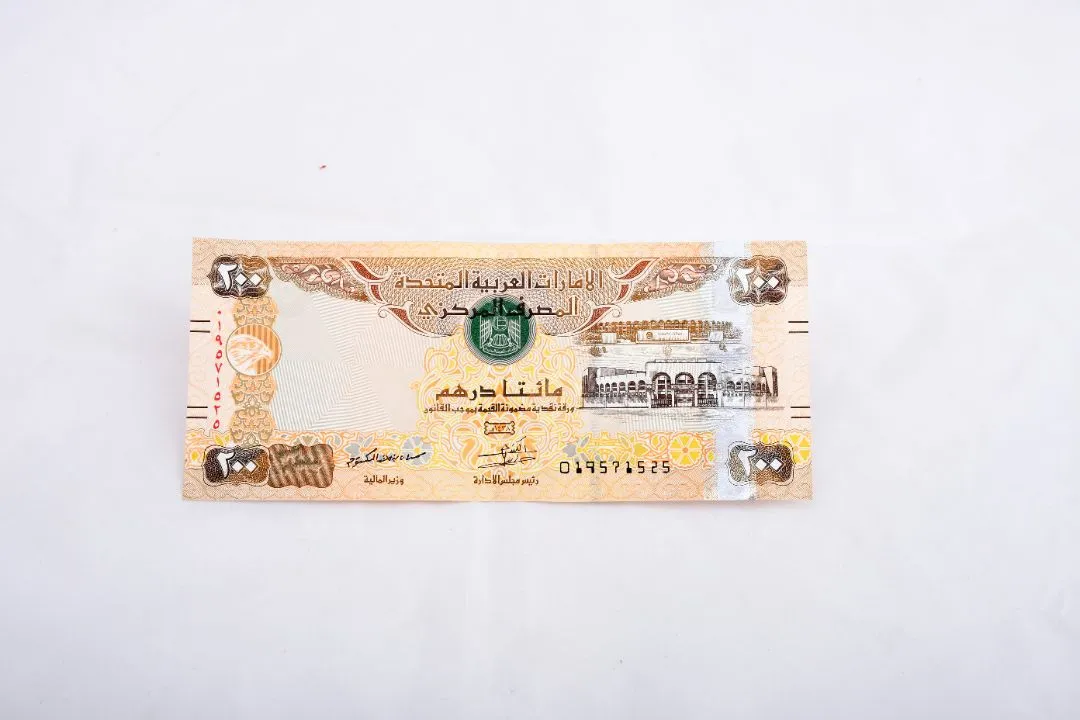
https://asset.coinness.com/en/news/ab22a14a6af1bb4a69a0b26a5c7045ab.jpg
Photo by 李大毛 没有猫 on Unsplash

Fueling Web3 startup growth

GBA Capital, a Chinese venture capital (VC) firm, made a significant announcement during the Guangdong-Hong Kong-Macao Greater Bay Area Digital Economy Development Conference on Tuesday. The firm, backed by China's state-owned National Engineering Laboratory, unveiled plans to launch a substantial $10 billion Web3 fund.


The conference also served as an educational platform, enlightening investors and attendees unfamiliar with the intricacies of the Web3 industry. Luo Jinhai, founder of Huoxun Finance and creator of the "Yuan Asset" concept, elucidated on the unique attributes of specific forms of digital assets, including independence, privacy, security, scarcity and liquidity.


Metaverse focus

This initiative aims to fuel the growth of startups specializing in virtual reality, the metaverse and non-fungible tokens (NFTs), ultimately transforming the Guangdong-Hong Kong-Macao economic region into the global "meta-asset capital."  Meta-assets are virtual objects that serve as key components within the make-up of the metaverse.


Haolong Li, the chairman of GBA Capital, outlined the ambitious vision, stating that the conference would facilitate "meta-asset global tours" in key international hubs such as Japan, Singapore, Dubai, Silicon Valley and Europe. The objective is to enhance the visibility of meta-assets and position the economic area as a leading force in the emerging Web3 landscape.


Previous developments that have played out over the course of 2023 suggest that China is placing a particular focus on embracing metaverse technology, with a view towards integrating the metaverse with existing systems in the country.  


The Ministry of Industry and Information Technology of China, in response to a proposal about promoting the development of the Web3 industry, emphasized ongoing research in areas such as the Metaverse, NFTs and decentralized identity management. In September the Ministry set out an action plan for the cultivation of a domestic metaverse. As part of that plan, it aspires to nurture three to five metaverse companies of global significance.


GBA Capital, established by China Europe International Financial Group in Hong Kong, boasts strategic partnerships with key financial institutions, including the Asia Pacific Investment Bank and China's state-owned National Engineering Laboratory. The firm's focus on investment and incubation in the digital economy aligns with its goal of integrating industrial clusters, capital resources, corporate resources and policy advantages to offer comprehensive support and services to enterprises.


In a related development, GBA Capital's subsidiary Zhongrong Global successfully raised an angel funding round at a valuation of 100 million Chinese yuan ($14 million) back in May. The funds will be allocated to Web3 project incubation and industrial services in the artificial intelligence sector.


The Guangdong-Hong Kong-Macao Bay Area has experienced a surge in Web3 startups and overseas corporate relocations since the beginning of the year, setting the stage for GBA Capital's substantial Web3 accelerator fund.


More to Read
View All
Web3 & Enterprise·

Jul 13, 2023

Suspected Malicious Activity Drains AnySwap Tokens via Multichain Executor

Suspected Malicious Activity Drains AnySwap Tokens via Multichain ExecutorAccording to an on-chain sleuth known as Spreek, a person is using the Multichain Executor to drain tokens associated with the AnySwap bridging protocol.Multichain is a cross-chain routing network, established and maintained by a Chinese developer team. It supports in excess of 25 blockchains and more than 1,100 tokens.Photo by Marek Piwnicki on Unsplash$100 million outflowThis revelation comes after abnormal outflows of over $100 million from Multichain bridges on July 7, which were flagged by the Multichain team. Spreek’s report via Twitter on July 10 states that the Multichain Executor address has been draining anyToken addresses across multiple chains and transferring them to a new externally owned account (EOA).Evidence provided in the report includes an Ethereum transaction, 0x53ede4462d90978b992b0a88727de19afe4e96f0374aa1a221b8ff65fda5a6fe, which called the “anySwapFeeTo” method on the Multichain Router: V4 contract. This transaction resulted in approximately $15,275.90 worth of anyDAI being minted on Ethereum, sent to the Multichain Executor, burned, and exchanged for the underlying DAI backing the asset.The funds from these transactions were sent to the following address:0x1eed63efba5f81d95bfe37d82c8e736b974f477b. Similarly, on the BNB Smart Chain (BSC), the Multichain Executor used the anySwapFeeTo function to convert $208,997 worth of anyUSDC into Binance-pegged USDC and sent them to the same address. Additionally, 50.80 anyBTC, equivalent to $39,251.43 at the time, was converted into Binance-pegged Bitcoin and sent to the address.In total, approximately $263,524.33 worth of tokens were sent to this address through the anySwapFeeTo method. Spreek suggests that this behavior could be part of the protocol’s normal functioning. However, a different account engaged in similar activity the day before and ultimately sold the drained tokens, indicating malicious intent.Potential exploitSpreek theorizes that the attacker may be exploiting the anySwapFeeTo function by setting fees to an arbitrarily large amount, allowing them to drain users’ funds. The function apparently permits setting any value, enabling the address to choose the total value of the token held in that anyToken.The Multichain incident has puzzled blockchain analysts, as it remains unclear whether it resulted from an exploit or if it was simply large token-holders moving their funds between networks. The mystery began on July 7 when over $100 million worth of tokens were withdrawn from the Ethereum side of Multichain’s bridges and transferred to wallet addresses with no prior transactions. This represented the majority of funds held on each bridge.Hack or rug pullThe Multichain team labeled these withdrawals as “abnormal” and advised users to stop using the protocol. However, they have not disclosed the source or nature of the anomaly. In response to the incident, stablecoin issuers Circle and Tether froze some of the addresses involved in the suspicious transactions. Chainanalysis, a blockchain analytics firm, has commented that the incident appears more like a hack or rug pull rather than a migration.Adding to the complexity, the Multichain team has reported that their CEO is missing, and they have shut down certain bridges due to losing access to some of the network’s multi-party computation network servers. There have been various concerns relative to Multichain since May. The situation continues to evolve, with ongoing investigations and efforts to mitigate any potential damage caused by the suspected malicious activity.

news
Web3 & Enterprise·

Aug 01, 2023

Blockchain Solutions Provider Block Odyssey Launches NFT Ticket Service, “MakeDrop”

Blockchain Solutions Provider Block Odyssey Launches NFT Ticket Service, “MakeDrop”Korean blockchain solutions startup Block Odyssey said Monday it is launching an NFT-based ticket issuance service dubbed “MakeDrop” in an effort to revolutionize ticketing and event services in the era of Web3.Photo by Andrey Metelev on UnsplashLimitations of traditional digital ticketsUntil now, major ticket reservation platforms have made it challenging for event organizers to streamline the ticketing process for events such as corporate or campus gatherings, concerts, festivals, and more.Event organizers have thus had to manually send notifications via text messages and emails, print paper tickets, and directly manage overall ticket sales and distributions. The absence of tools to identify ticket holders from attendees also makes it difficult to accurately determine participation and contribution ratios.Blockchain meets ticketingBut with the rapid advancement of digitized ticket issuance, NFT tickets have been gaining traction as a transparent and secure solution to such challenges. These tickets are verified and stored on a blockchain, setting them apart from traditional forms of digital tickets such as barcodes.About MakeDropBlock Odyssey’s MakeDrop is an open service that allows anyone to easily create, issue, and manage one-of-a-kind NFT tickets with individual ownership rights and transaction history. If secondary ticket transactions occur, all ownership changes can be verified on the blockchain, making it possible to block attempts at fraudulent or repetitive secondary trading.The service is particularly convenient for users, as they can automatically generate a wallet address for storing their NFTs by logging in to social media accounts without having to install a separate cryptocurrency wallet.As for event organizers, they can swiftly issue mobile tickets without using third-party ticket reservation platforms. Ticket invitations are sent to recipients via KakaoTalk, South Korea’s most popular messaging app, making the service more accessible as well. Those who have not received an invitation can still apply for participation if the event is public. Upon acceptance by the organizer, they will receive an approval notification through KakaoTalk, Block Odyssey explained.Participants can then present the NFT ticket’s QR code on the day of an event, and organizers can conduct real-time validation using the QR check feature provided by MakeDrop.Notably, while traditional ticket reservation platforms often do not share ticket holder information with event organizers, MakeDrop allows independent information management for all events. This allows organizers to identify low-engagement or idle members and offer more benefits to loyal participants.As part of its website launch promotion, MakeDrop is currently holding an event to distribute 100,000 free NFT tickets. The company also plans to release a mobile app in the future after incorporating user feedback and enhancing functionalities.

news
Web3 & Enterprise·

Feb 22, 2024

Kakao Games affiliate Metabora Singapore announces partnership with Oasys

Metabora Singapore (Metabora SG), a blockchain content platform and an affiliate of multi-platform game company Kakao Games, announced a partnership today with Oasys, a blockchain platform tailored for Web3 games.  According to local media outlet Dailian, the partnership is expected to attract more users to Oasys’ Web3 gaming platform by enhancing its interoperability, expanding its ecosystem and providing “killer content,” all of which are the pillars of “Dragon Update,” a vision to achieve for Oasys for the year 2024.  Oasys has been emerging as a blockchain for Web3 gamers, as it continues to forge partnerships with Asian tech and game giants such as Com2uS and Ground X, a blockchain subsidiary of Kakao. Com2uS is the developer of popular games such as “Summoners War: Chronicles” and “Walking Dead: All Stars”, while Ground X operates its own crypto wallet.  Photo by Fredrick Tendong on UnsplashMaking inroads into the Japanese gaming market It is anticipated that Metabora SG will make use of Oasys’s strong network and powerful user base to enter the Japanese gaming market, which is deemed one of the biggest global markets boasting $44.4 billion in sales this year, according to Statista.  Oasys is known to have forged deep partnerships with major gaming companies in Japan, of which Oasys serves as their network validator. Metabora SG will be able to leverage Oasys’ support when entering the Japanese market.  Collaboration on blockchain technology “We are delighted to partner with Metabora SG, a company that fully shares our vision of revolutionizing the gaming industry through the use of blockchain technology. As we aggressively move forward and expand our business relationships with various gaming giants based in Korea, the partnership with Metabora SG by Kakao Games marks another important milestone for further business expansion in the region,” said Dominic Jang, the head of global business development at Oasys and the head of Korea at Oasys. “We are keen to nurture a more in-depth relationship with the Metabora SG team to maximize the synergy with Oasys, advancing the mass adoption of blockchain gaming,” he added.  With its extensive experience in offering immersive gaming experiences to users, Metabora SG is on its way to revolutionizing the gaming industry by integrating eco-friendly technology provided by Oasys.  Vincent Lim, CBO of Metabora SG, said that behind this partnership are people who share the same vision of enhancing the Web3 gaming ecosystem. He added that the two companies will provide immersive games that are easy to access to gamers all across the world, who haven’t yet experienced blockchain-based games. 

news
Loading