Top

United Nations report cites popularity of USDT for fraud in Southeast Asia

Policy & Regulation·January 16, 2024, 7:13 AM

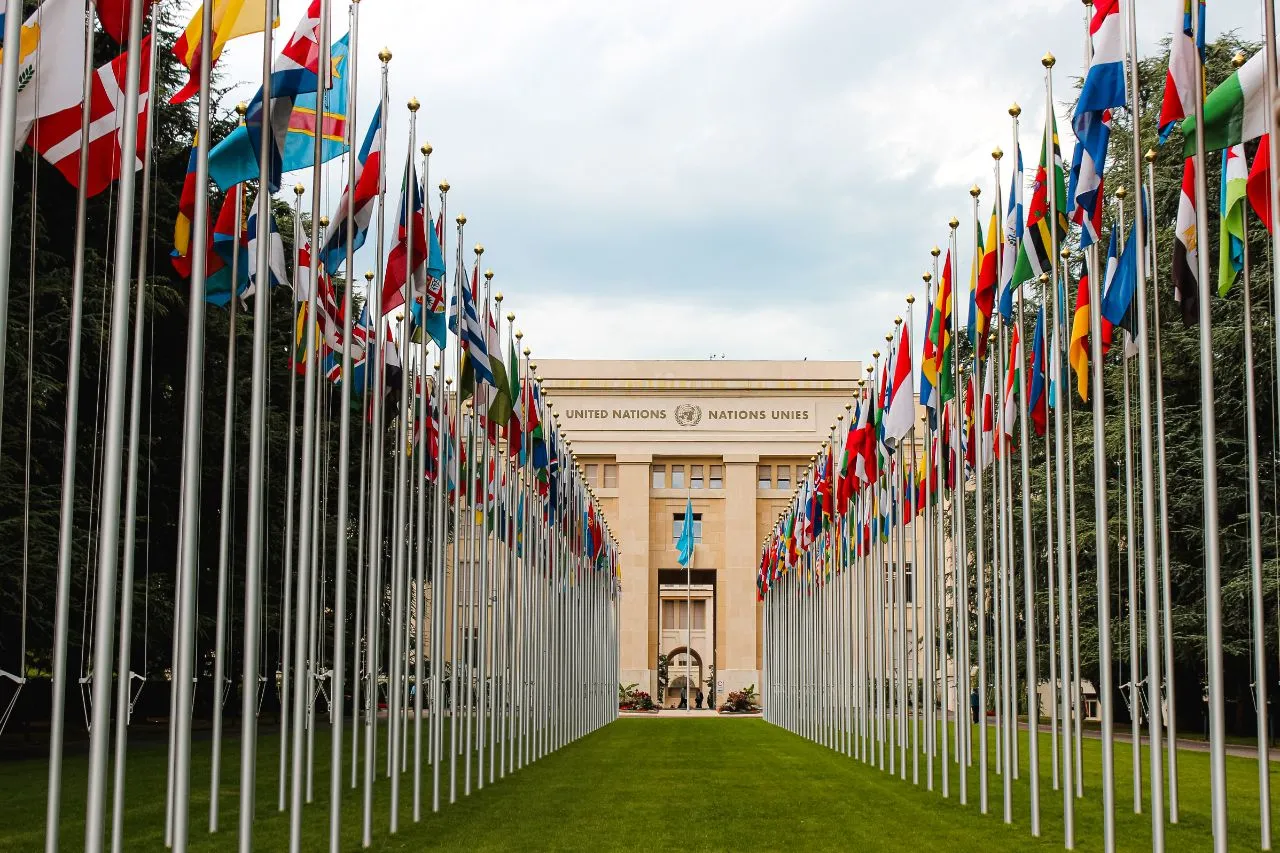
USDT, the leading U.S. dollar stablecoin issued by Tether, has been highlighted as a major conduit for money laundering and scams in Southeast Asia, according to a United Nations report released on Monday.
https://asset.coinness.com/en/news/84663d44b651855dce5794a5d64c40c6.webp
Photo by Mathias Reding on Unsplash

Illicit stablecoin use

The report has been titled “Casinos, Money Laundering, Underground Banking, and Transnational Organized Crime in East and Southeast Asia: A Hidden and Accelerating Threat.” It points out that online gambling platforms, particularly those operating illicitly, are among the favored channels for cryptocurrency-based money launderers, with a notable emphasis on the use of Tether or USDT.


In a foreword to the report, Jeremy Douglas, the UN’s Regional Representative for Southeast Asia and the Pacific, noted that technology had aided crime networks in Asia, and in particular, the Mekong Delta region. Developing upon that idea, he added:

”This has necessitated a revolution in the regional underground banking architecture, resulting in the development of systems and infrastructure capable of moving and laundering massive volumes of state-backed fiat and cryptocurrencies.”

The report itself asserts that illegal and under-regulated crypto exchanges have become “foundational pieces of the banking architecture used by organized crime.”


The document highlights law enforcement efforts in disrupting multiple money laundering networks linked to the illicit transfer of Tether funds. Last August, Singaporean authorities dismantled a network through an operation, recovering approximately $735 million in both cash and cryptocurrency.


‘Pig butchering’

The UN report further suggests that USDT has been extensively employed in various underground fraud activities, including so-called "pig butchering" romantic scams. Last November, Tether froze $225 million in stolen USDT following investigations by Tether in collaboration with crypto exchange OKX and the U.S. Department of Justice.


The money had been held in self-custodied wallets associated with an international human trafficking group in Southeast Asia orchestrating a pig-butchering scam.


In December, Tether CEO Paolo Ardoino informed U.S. legislators in a shared letter that the company has enlisted the U.S. Secret Service and Federal Bureau of Investigation onto its platform.


Later that month, the Chinese authorities uncovered a massive underground banking operation that was designed to evade the country’s foreign exchange controls. There was more related activity in December when it emerged that USDT has been integrated into the shadow economy in Cambodia, against a backdrop of the currency being prohibited for the purpose of trade within the Southeast Asian country.


TRM Labs report

In July of last year, a report by blockchain analytics firm TRM Labs, found that pro-ISIS terrorist groups in Central and Southeast Asia and the Middle East are increasingly using cryptocurrency, with a particular preference for USDT transacted over the Tron blockchain network.


The UN report cites the popularity of USDT among those engaged in cyber-fraud and online casino operations, located in Myanmar, along the border with Thailand.


Throughout 2023, Tether witnessed a notable expansion in its share of the global stablecoin supply, growing from 50% to 71%. At the time of writing, USDT has a market cap of $95 billion with stablecoins having an overall market capitalization of $134 billion.


The UN's findings raise concerns about the stablecoin's role in facilitating illicit activities and underscore the need for enhanced regulatory scrutiny within the rapidly evolving crypto landscape.

More to Read
View All
Policy & Regulation·

May 10, 2023

Hong Kong Says No to Light Touch Regulation

Hong Kong Says No to Light Touch RegulationThe CEO of the Hong Kong Monetary Authority (HKMA) has said that while the autonomous territory will allow innovation to develop in the crypto space, that will not mean light touch regulation.Photo by Ruslan Bardash on UnsplashLowering guard railsAfter a three year hiatus, the Bloomberg Wealth Asia Summit returned to Hong Kong on Tuesday. Speaking at the conference, Eddie Yue, the CEO of the HKMA, Hong Kong’s regulatory body, outlined that the territory intends to enable innovation relative to crypto businesses that establish themselves in Hong Kong.“We will let the industry develop and innovate, we will let them create an ecosystem here,” he said. However, he added the following caveat: “But that doesn’t mean light touch regulation. If any participant thinks that the regulation is too tight, they’re welcome to go elsewhere.”Yue outlined that over the course of the past three years, guardrails relative to the operation of crypto-related activities were excessively high. Yue alluded to a new approach that sees those guard rails dropped to a level whereby innovation will be enabled in the digital assets space. However, he followed up by underlining the fact that the Authority has no intention of following a light touch regulatory approach.No safeguards not an optionAlthough acknowledging that Hong Kong may have been excessively crypto unfriendly relative to digital asset regulation in the recent past, he believes that Hong Kong has now got it right. “Our guardrails are lower, to a reasonable and sustainable level,” Yue said.The HKMA regulator flagged jurisdictions that provide little or no guardrails at all as the ones that will run into difficulties. “If you look elsewhere, there are no guardrails in some places, the guardrails are very low and there you see problems”, Yue clarified.He cited FTX as a stand out example of a basic lack of internal controls. FTX International was based in the Bahamas. While customers of FTX International find themselves in a difficult position, those of subsidiary companies FTX Japan and FTX Europe are having their funds returned as a direct consequence of much better regulatory safeguards in those regions.“All those wrongdoings by the platforms that we saw in the last one or two years will not happen in Hong Kong,” Yue claimed.A continuing trendWhile many commentators and critics from the conventional world have described bitcoin and crypto as a ponzi or a passing fad, Yue pointed out that digital assets are not going anywhere and that the trend towards digital assets will continue. Expanding further, he articulated that the overarching digital assets sector encompasses much more than just crypto: “Virtual assets or crypto is actually a very broad term. It’s not really about crypto, you’re talking about stablecoins or tokenized assets in the future.”A mere $0.3 trillion of illiquid real world assets have been tokenized thus far. It’s anticipated that this level of tokenization will climb to $16 trillion by 2030.

news
Web3 & Enterprise·

Aug 02, 2023

Binance Set For Japanese Market Re-Entry With 34 Token Listings

Binance Set For Japanese Market Re-Entry With 34 Token ListingsBinance, the world’s largest cryptocurrency exchange, is gearing up to re-enter the Japanese market with a bang on August 14. According to a report published by local crypto media outlet Coinpost, Binance Japan is set to immediately list an impressive 34 tokens.The move will put Binance ahead of its domestic rivals, as the offering will be the most extensive in terms of the selection of tokens made available to Japanese customers.Photo by David Edelstein on UnsplashBNB token offeringIn addition to that, Binance intends to make its native token, BNB, available in Japan for the first time. Exchange tokens have proven to be controversial in recent times. In November 2022, FTX’s reliance on their native token FTT caused a run on the exchange which Binance started once it started to sell off the token. Similar concerns have been expressed ever since about a similar reliance within Binance relative to its BNB token.The expansion into Japan will likely prove a tonic for Binance, given the difficulties it has experienced in other markets recently. Regulatory pushback has forced Binance out of markets such as Germany, Belgium, the Netherlands, and Cyprus over the course of the past three months.The company has been actively working to comply with Japan’s regulatory environment. In a Twitter video posted in July, Changpeng Zhao (CZ), Binance’s Founder and CEO, expressed his excitement about re-entering the Japanese market. He praised Japan’s clear and progressive approach to crypto regulations, citing the well-established framework that dates back to 2017, as well as recent developments, including the opening up of crypto listing frameworks and the passing of stablecoin regulations in June.Roadmap to market re-entryBinance’s journey back into Japan started in November 2022 when it acquired 100% ownership of Sakura Exchange BitCoin (SEBC). The acquisition paved the way for Binance to be regulated by the Japan Financial Services Agency (JFSA). As part of this move, SEBC underwent a name change, rebranding itself as Binance Japan Inc. The company then announced in May its plans to re-enter the Japanese market.The re-entry comes after the JFSA had previously issued warnings in 2021 against Binance for operating in the country without proper registration. Now, with the acquisition of SEBC and its regulatory compliance, Binance has gained a foothold in the Japanese market once again.Binance Japan aims to provide a comprehensive suite of services to its Japanese customers. New users can access spot trading, Earn products, and the NFT marketplace, while existing customers can migrate to the local subsidiary starting August 14. The token offerings include a diverse range of assets, and the addition of BNB presents exciting opportunities for traders and investors in Japan.Rival exchanges such as Coinbase and Kraken have decided to halt their operations in the country as they struggled to adjust to Japanese market conditions. The move by Binance to re-enter Japan’s market will be closely watched to see if it can succeed where others have failed.

news
Web3 & Enterprise·

Aug 28, 2023

Infinite Block Receives Certification for Information Security Management System of Blockchain…

Infinite Block Receives Certification for Information Security Management System of Blockchain PlatformSouth Korean blockchain fintech company Infinite Block announced on Monday that it has obtained ISO 27001 certification for the information security management system of its upcoming blockchain platform from Lloyd’s Register Quality Assurance (LRQA), a UK-based global assurance provider.Ramping up information securityISO 27001 is an international standard established by the International Organization for Standardization (ISO) for managing information security. It enables companies and organizations to establish a system that manages information security, cybersecurity, and privacy protection, thereby proving to their customers and partners that they protect important and personal data.Photo by Towfiqu barbhuiya on UnsplashThis latest development comes after the company recently received approval from the Korean Financial Services Commission to function as a virtual asset service provider (VASP), becoming the 37th entity to do so in Korea.“Although we are still a fledgling startup, we have made consistent efforts to establish an information security management system since our inception,” said Jeong Gu-tae, CEO of Infinite Block. “This certification is a testament to our dedication.”Comprehensive blockchain platformInfinite Block is currently developing a blockchain platform set to be launched soon that offers integrated support for virtual asset custody services, including transferring, storing, and managing virtual assets. It also supports various blockchain mainnets and tokens, including Bitcoin, Ethereum, Klaytn, Tezos, Polygon, and Avalanche.“We will continue to enhance and improve our information security system to further solidify user trust,” CEO Jeong added.

news
Loading