Top

HashKey Capital and FTSE Russell introduce crypto index suite

Web3 & Enterprise·January 26, 2024, 2:57 AM

HashKey Capital, a Singapore-based crypto fund manager, and FTSE Russell, a subsidiary of the London Stock Exchange Group (LSEG), have collaboratively launched a series of indices designed to track cryptocurrencies.


Three indices

Revealed on the FTSE Russell website on Wednesday, these three indices provide traders with the ability to monitor diversified baskets of digital assets aligned with various investment strategies. They cater to nuanced preferences across different crypto segments and market capitalizations.


The flagship index in this suite is the FTSE Custom Digital Asset Top 20 Index, tracking the top 20 crypto assets based on market capitalization. This index is positioned to accurately reflect more than 90% of the overall performance of the digital asset market, offering investors insights into the dynamics of the most significant players in the crypto space.

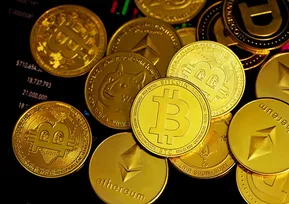
https://asset.coinness.com/en/news/78285ee8a1263625cb92ec2792b64e09.webp
Photo by Markus Winkler on Unsplash

Focus on infrastructure and application layer

Beyond tracking market capitalization leaders, the suite includes indices with a specific focus on the crypto ecosystem's infrastructure layer (FTSE Custom Digital Asset Infrastructure Index) and application functionalities (FTSE Custom Digital Asset Application Index).


One of them, the infrastructure index, zeroes in on digital assets forming the infrastructure layer, including smart contract platforms, protocol interoperability and distributed computation and storage. Meanwhile, the FTSE Custom Digital Asset Application Index concentrates on digital assets associated with application functionalities, such as those linked to staking instruments and decentralized finance.


From Wednesday, these indices have been made accessible on the FTSE Russell website, with plans for future availability through major data providers like Bloomberg, Factset, LSEG Data & Analytics, Morningstar and S&P Capital IQ.


U.S. ETF approval

The introduction of these indices follows the recent milestone approval by the Securities and Exchange Commission (SEC) of spot bitcoin ETFs in the United States. It’s likely that the milestone ETF approval in the largest capital market is having a knock-on effect, proving to be a catalyst for other such offerings implicating the intertwining of crypto and traditional finance on an international basis.


These products offer investors a more accessible entry point into the crypto market's largest asset, currently boasting a market capitalization of approximately $780 billion. Industry watchers anticipate the potential approval of a U.S. spot ether ETF later in 2024, with the SEC expected to make rulings on proposed funds by May.


Deng Chao, managing director of HashKey Capital, noted a significant surge in demand from investors seeking to diversify their portfolios beyond established cryptocurrencies. This move aligns with broader market trends, as investors increasingly explore opportunities in diverse crypto assets.


Notably, these index launches follow FTSE Russell's partnership with Grayscale Investments in October, aimed at enhancing crypto diversification. The earlier collaboration focused on various crypto sectors, including currencies, smart contract platforms, financials, consumer and culture and utilities and services.


This development comes on the heels of HashKey Group, the Hong Kong-headquartered parent company of HashKey Capital, securing $100 million in a Series A funding round at a $1.2 billion valuation. OKX Ventures participated in the funding round, signaling strong support for HashKey Group's plans to accelerate product diversification in its Hong Kong business and drive compliant and innovative development globally.  
 

More to Read
View All
Policy & Regulation·

May 31, 2023

Hong Kong SFC CEO Prioritizes Investor Protection in Crypto Regulations

Hong Kong SFC CEO Prioritizes Investor Protection in Crypto RegulationsAccording to a report by Chinanews, Julia Leung, Chief Executive Officer of the Hong Kong Securities and Futures Commission (SFC), participated in a seminar organized by the Hong Kong Academy of Finance (AoF). During the event, she emphasized the importance of investor protection in the formulation of guidelines for operators of virtual asset trading platforms.Photo by Kanchanara on UnsplashDevelopment of crypto in Hong KongAt the seminar yesterday, Leung discussed the development of virtual assets in the special administrative region of China. She recalled the pushback the SFC received in 2018 when it first proposed regulations for virtual asset trading platforms. Critics argued that the licensing system, demanding applicants to comply with stringent internal control and investor protection standards, might compel fintech companies to relocate their operations to other jurisdictions, such as Singapore.Market recognition of crypto regulationsDespite initial criticism, the market came to appreciate the importance of these regulatory standards, especially after witnessing the bankruptcy of several overseas cryptocurrency organizations.The guidelines for operators of virtual asset trading platforms in Hong Kong are set to take effect in June. Leung mentioned that these guidelines match market expectations and place emphasis on protecting investors. They encompass regulations for virtual asset custody, the segregation of client assets, and the avoidance of conflicts of interest. She also expressed satisfaction with the SFC’s role as a leading regulator in the virtual asset space.Crypto exchange ratingMeanwhile, Chinese blockchain news media Jinse Finance reported today the official establishment of the Hong Kong Virtual Asset Consortium (HKVAC), a private entity that rates virtual assets.It has also launched a virtual asset index and will introduce a virtual asset exchange rating system. The HKVAC Large Market Cap Cryptocurrency Index comprises the 30 leading cryptocurrencies by market capitalization. The index will be reviewed quarterly on the last day of each quarter (March, June, September, and December). The Virtual Asset Exchange Rating System will assess the credibility of trading platforms and enhance transparency and accountability in the virtual asset trading market.HKVAC was established by a team of industry experts and professional rating agencies. It brings together key stakeholders in the virtual asset industry, such as big data firms, exchanges, and institutional investors, along with the city’s licensed rating agencies. HKVAC aims to cultivate a secure environment for crypto investments and enhance the public’s understanding of virtual assets.

news
Web3 & Enterprise·

Apr 19, 2023

Korean Web3 Enabler Participates in NFT.NYC 2023

Korean Web3 Enabler Participates in NFT.NYC 2023The Moon Labs, a Korean Web3 enabler, participated in NFT.NYC 2023 that took place in New York from April 12 to 14, according to Maeil Business Newspaper.Photo by Luca Bravo on UnsplashCollaborations with SuperchiefIn collaboration with New York-based underground artist supporter Superchief Gallery NFT, the Moon Labs advertised its decentralized autonomous organization project LeisureMetaverse on Time Square’s digital screen. Previously, the Moon Labs co-hosted NFT Korea Festival 2023 with Superchief Gallery NFT.A2E incentivization modelThe Moon Labs boasts the web 3.0 community LM Nova, the NFT marketplace PlayNomm, and its native wallet, LM Wallet. In particular, LM Nova has adopted an act-to-earn (A2E) model to provide incentives to users.About NFT.NYCNFT.NYC, one of the world’s largest NFT events, has been held annually since 2018. The show attracted not only crypto entrepreneurs but also artists, investors, and influencers. More than 500 brands took part in the event, and over 1,500 speakers delivered their talks at the conference.The Moon Labs CEO Moon Seong-eok said the company will seize this opportunity to expand global partnerships and further commit to the growth of the NFT ecosystem.

news
Policy & Regulation·

Nov 25, 2025

Regulators clamp down on crypto energy as nations shift priorities

The blockchain network underpinning Bitcoin, the world’s largest cryptocurrency, requires an energy volume comparable to the annual consumption of Thailand. According to Digiconomist’s Bitcoin Energy Consumption Index, the protocol utilized roughly 204.44 terawatt-hours (TWh) of electricity between Nov. 18, 2024, and Nov. 18, 2025.Photo by Fré Sonneveld on UnsplashFiscal losses drive Malaysian oversightAmid these intense energy demands, Malaysia’s primary electricity utility has recorded substantial financial impairments attributed to illicit activities. Tenaga Nasional Bhd (TNB) reported losses totaling 4.57 billion ringgit ($1.1 billion) from illegal crypto-mining operations over a five-year span. In a Nov. 19 report by The Edge Malaysia, the Ministry of Energy Transition and Water Transformation (Petra) disclosed these figures to parliament, specifying that the unauthorized mining occurred at 13,827 locations between 2020 and August of this year. To counter these infractions through regulatory channels, Petra has formed a special committee scheduled to convene before year-end. This body aims to recommend enhancements to the Electricity Supply Act, which currently delineates penalties based on the offender's classification. Domestic violators face fines ranging from 1,000 to 50,000 ringgit ($240 to $12,000), imprisonment of up to one year, or both. Penalties escalate for non-domestic entities, involving fines between 20,000 and one million ringgit ($480 to $240,000) and potential prison terms of up to five years. Despite these provisions regarding electricity theft, a specific legal code regulating the act of crypto mining remains absent, creating a jurisdictional void. International bans and grid reallocationStrategies to curtail electricity usage by crypto miners are becoming evident elsewhere in Southeast Asia as well. Laotian Deputy Energy Minister Chanthaboun Soukaloun told Reuters last month that the nation intends to suspend electricity supplies to crypto miners by early 2026. He cited the sector's minimal economic contribution and low job creation as primary factors. Consequently, the state plans to redirect power to high-priority sectors, including AI data centers, metals processing, and electric-vehicle manufacturing. Parallel restrictions are emerging globally. In October, the government of British Columbia enacted a permanent prohibition on new BC Hydro connections for crypto miners to safeguard the Canadian province’s energy reserves. Officials pointed to the industry’s "disproportionate energy consumption and limited economic benefit" as the rationale for the policy. The debate over thermal innovationConversely, some enterprises are exploring methods to capture thermal output from Bitcoin mining to heat residential and commercial properties. If viable, such repurposing could utilize the considerable thermal byproducts of mining. A K33 Research study cited by CNBC indicates the industry generates roughly 100 TWh of heat annually, a figure sufficient to warm the entirety of Finland. However, industry consensus on the feasibility of these applications remains elusive. Proponents suggest that mining infrastructure could be situated in proximity to heat consumers. Skeptics, however, contend that the reliance on application-specific integrated circuit (ASIC) chips makes this impractical, arguing that the technical difficulty of mining a block renders household participation unfeasible. Despite these differing views, the concept continues to attract attention as a potential avenue for innovation in energy distribution. As jurisdictions like Malaysia and British Columbia tighten regulatory oversight, the cryptocurrency sector faces mounting pressure to address its energy footprint. The divergence between government restrictions and industry-led efficiency proposals underscores the complex relationship between digital asset infrastructure and global energy resources. Given the shifting landscape of policy and technology, the outlook for sustainable large-scale crypto mining remains uncertain, as governments weigh energy demands against economic benefits and the industry searches for more efficient ways to operate.

news
Loading