Top

Korean Web3 Enabler Participates in NFT.NYC 2023

Web3 & Enterprise·April 19, 2023, 3:43 AM

The Moon Labs, a Korean Web3 enabler, participated in NFT.NYC 2023 that took place in New York from April 12 to 14, according to Maeil Business Newspaper.

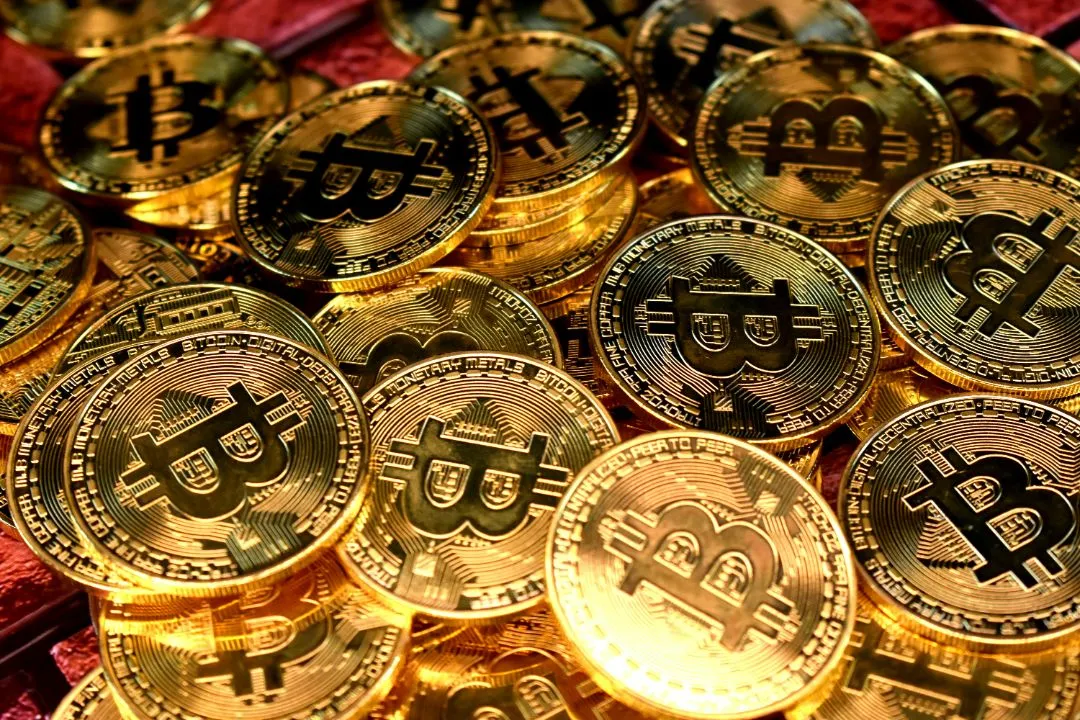
Photo by Luca Bravo on Unsplash


Collaborations with Superchief

In collaboration with New York-based underground artist supporter Superchief Gallery NFT, the Moon Labs advertised its decentralized autonomous organization project LeisureMetaverse on Time Square’s digital screen. Previously, the Moon Labs co-hosted NFT Korea Festival 2023 with Superchief Gallery NFT.


A2E incentivization model

The Moon Labs boasts the web 3.0 community LM Nova, the NFT marketplace PlayNomm, and its native wallet, LM Wallet. In particular, LM Nova has adopted an act-to-earn (A2E) model to provide incentives to users.


About NFT.NYC

NFT.NYC, one of the world’s largest NFT events, has been held annually since 2018. The show attracted not only crypto entrepreneurs but also artists, investors, and influencers. More than 500 brands took part in the event, and over 1,500 speakers delivered their talks at the conference.

The Moon Labs CEO Moon Seong-eok said the company will seize this opportunity to expand global partnerships and further commit to the growth of the NFT ecosystem.
More to Read
View All
Web3 & Enterprise·

May 08, 2023

Korbit, Ewha-Chain Leverage NFTs to Promote Blockchain Knowledge

Korbit, Ewha-Chain Leverage NFTs to Promote Blockchain KnowledgeEwha-Chain, a blockchain study group at Ewha Womans University, recently tweeted that it has collaborated with Korbit, one of South Korea’s leading cryptocurrency exchanges, to hold an non-fungible token (NFT) airdrop event for college students, offering free ice cream as an incentive.Hands-on experienceThe event aims to introduce participants to the crypto exchange and provide hands-on experience with Web3 and blockchain technology, as well as showcasing the benefits of NFTs.To participate, students have to create a Korbit account using their email address and register for an Ice-Chain NFT by completing a Google Form. Korbit will distribute the NFTs on the afternoon of May 11, the day before the event.Free ice creamOn the day of the event, Ice-Chain NFT holders can visit the Ewha Womans University branch of the Ice Girl Cream Boy ice cream shop to spin a wheel and win either free ice cream or Korbit merchandise.According to Korean economic news media Paxetv, Kim Il-kwon, head of business development at Korbit, said that the Ice-Chain event strives to familiarize university students with blockchain technology and promote the Korbit brand. Kim added that Korbit is dedicated to ongoing cooperation with Ewha-Chain and expanding channels to engage with millennials and Generation Z.Photo by ROMAN ODINTSOV on Pexels

news
Policy & Regulation·

Oct 16, 2025

U.S. seizes $14B in Bitcoin from crypto scheme linked to Cambodia conglomerate

The U.S. Department of Justice has filed a civil complaint to seize roughly 127,271 Bitcoin linked to an alleged fraud scheme tied to Prince Group, a multinational conglomerate based in Cambodia. That’s according to a press release from the U.S. Attorney’s Office for the Eastern District of New York. The digital assets are currently valued at approximately $14.18 billion and are now in the custody of the U.S. government. Prince Group chairman Chen Zhi, now indicted by U.S. authorities, has been named as the mastermind behind the operation. FBI Assistant Director in Charge Christopher Raia said Chen oversaw an international crypto investment scam connected to a labor trafficking network that defrauded thousands of victims worldwide.Photo by Kanchanara on UnsplashOperations across 30 nationsSince 2015, Chen Zhi has headed the Prince Group, which operates in more than 30 countries. Under his direction, the group allegedly established scam compounds across Cambodia that promoted fraudulent crypto investment scams. The operations targeted victims through social media and messaging platforms with false promises of high returns. According to the allegations, funds were stolen and laundered rather than invested, and perpetrators often built trust over time before carrying out the fraud. Authorities in Vietnam have uncovered a comparable case that did not involve the seizure of cryptocurrency. According to Tech in Asia, Hanoi police confiscated assets worth $34 million from Nguyen Hoa Binh, chairman of the tech company NextTech. The seized property includes 597 gold bars, deeds to 18 properties, and two vehicles. Investigators allege that Binh and nine associates raised funds for the AntEx cryptocurrency project by selling 33.2 billion tokens to 30,000 investors in 2021, collecting around $4.5 million. The defendants are said to have taken part in fraudulent appropriation of assets and accounting violations. Tepid business climate in VietnamThese incidents come as Vietnam’s government works to define its stance on digital assets. According to a Cointelegraph report published earlier this month, the Vietnamese Ministry of Finance said that since the announcement of the country’s five-year digital asset trading pilot plan, no companies have applied to participate. Sharing this update, the vice minister of finance expressed hope that this pilot would launch before 2026. The report points to strict requirements as a likely reason for hesitation. Licensed crypto asset service providers must hold at least 10 trillion dong, about $379 million, in capital. They are also required to back all digital assets with real and tangible assets only, and the framework explicitly prohibits using fiat currencies or securities as backing. These rules leave few options that would attract retail or institutional investors. Gemini eyes Southeast Asia as adoption growsMeanwhile, global firms continue to look to Southeast Asia as activity increases. Dow Jones Newswires reported that Gemini, the American crypto platform founded by the Winklevoss brothers, plans to expand its footprint across the region. In an interview, Saad Ahmed, Gemini’s head of Asia Pacific (APAC), said the company was strengthening its regional operations. A Chainalysis study provides context, showing that the APAC region recorded the fastest growth in on-chain activity compared to other markets in the 12 months ended June. The region saw total crypto transactions rise to $2.36 trillion from $1.4 trillion a year earlier. Although Ahmed did not share investment figures, he said Gemini’s Singapore headquarters has grown to about 65 employees, up from 15 in the final quarter of 2023. He added that the expansion reflects the company’s view of Singapore as a key base for its operations in Asia and globally. Recent criminal discoveries and tightening regulations reveal how Southeast Asia’s crypto scene remains nascent. Governments are stepping up enforcement and shaping new frameworks even as global firms expand across the region, motivated by growing adoption. How policymakers and market players respond to these early tests will define the next phase of digital asset growth in Asia. 

news
Web3 & Enterprise·

Jun 02, 2023

First Digital to Introduce USD-Backed USD Stablecoin

First Digital to Introduce USD-Backed USD StablecoinFirst Digital Trust, a Hong Kong-based qualified custodian and trust company, is set to introduce a new stablecoin called “First Digital USD,” with the short-code $FDUSD. This stablecoin will be pegged to the US dollar but regulated within Asia.Photo by Alexander Grey on UnsplashIntroducing $FDUSDAccording to First Digital, $FDUSD will be backed by one US dollar or an asset of equivalent fair value on a one-to-one basis. The reserves supporting FDUSD will be held in segregated accounts at institutions in Asia.$FDUSD aims to provide stability and will be programmable, enabling the execution of financial contracts, escrow services, and insurance without the need for intermediaries. In a statement published on Thursday, First Digital emphasized its commitment to full compliance with current and future laws and regulations. The company also expressed its intention to participate in shaping the regulatory landscape for $FDUSD and First Digital itself.The announcement of $FDUSD is particularly significant in light of the new “Guidelines for Virtual Asset Trading Platform Operators” set to take effect in Hong Kong on June 1. These guidelines outline rules for safe asset custody, client asset segregation, conflict of interest avoidance, and cybersecurity standards, as mandated by Hong Kong’s Securities and Futures Commission (SFC).Hosted on BNB Smart ChainFDUSD will operate on the BNB Smart Chain and will be issued by First Digital Labs, a subsidiary of First Digital Trust, a regulated digital asset custodian under the Hong Kong Trustee Ordinance. The law ensures that $FDUSD will be fully backed by US dollar reserves or highly liquid, high-quality assets held in regulated Asian financial institutions, with no commingling with other assets of First Digital.Vincent Chok, CEO of First Digital, emphasized the company’s commitment to regulatory compliance and setting a new standard for legitimacy in the industry. First Digital intends to comply with all applicable laws and regulations and actively contribute to the shaping of regulatory regimes for $FDUSD and First Digital in the future.The $FDUSD stablecoin will be redeemable for US dollars, providing users with a reliable bridge between the digital and fiat currencies.Biden administration's own goalAs regulatory uncertainty persists in the United States, some industry players are expressing concerns about losing the country’s leadership position in the crypto sector. They warn that the industry may be offshore to more favorable jurisdictions.News of First Digital Trust’s US dollar stablecoin intentions brought scathing criticism of US policy from US commentators within the crypto space. Austin Campbell, Managing Partner at Zero Knowledge Consulting, a firm that advises on crypto payments and stablecoins, stated that the US government and US regulators had created a paradigm where they now have less control over distribution and regulation while the product they were suppressing continues to exist and scales elsewhere.Nic Carter, Partner at venture capital firm Castle Island Ventures, wrote that “the wise sages in US government took one look at the onshore registered stablecoin market and decided they’d much prefer unaccountable offshore crypto-eurodollars.”Macro-economist Luke Gromen described this consequence of US policy as the “monetary equivalent of deciding they would prefer making their goods in China rather than paying US workers and deal with union labor.” Meanwhile, Caitlin Long, Founder and CEO of digital asset-focused Custodia Bank, suggested that US federal regulators “thought they could kill USD stablecoins” but that “they miscalculated.”

news
Loading