Top

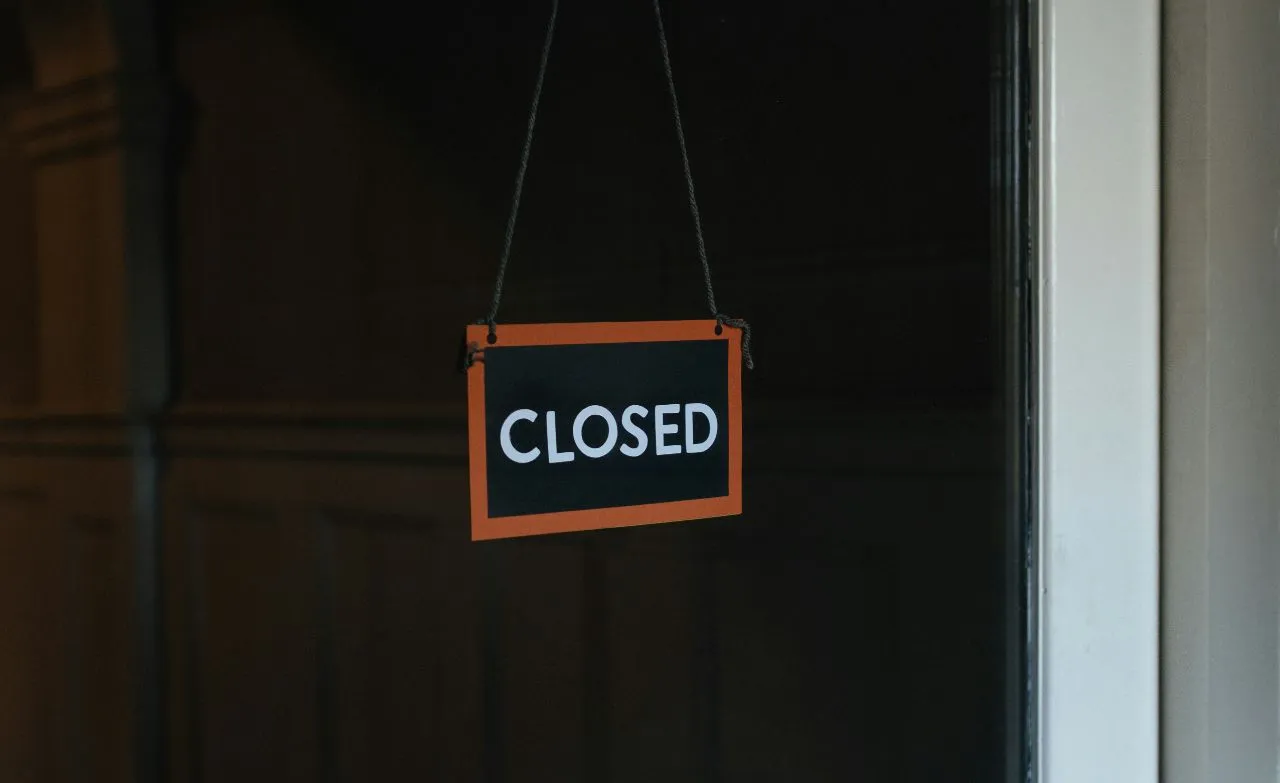
3AC-founded OPNX Exchange announces closure

Web3 & Enterprise·February 03, 2024, 3:13 AM

In a recent announcement OPNX, the Seychelles-incorporated cryptocurrency bankruptcy claims platform co-founded by the creators of the now-defunct hedge fund Three Arrows Capital (3AC), has revealed its decision to cease all operations.
https://asset.coinness.com/en/news/d10901ef092836a0c880a0a7968763cf.webp
Photo by Kelly Sikkema on Unsplash

February 14 shutdown

In a message to its users, subsequently shared on social media on Thursday, the OPNX team expressed its commitment to ensuring an orderly closure, urging users to settle all positions by Feb. 7 and withdraw their funds from the platform before Feb. 14, as all withdrawal functionality will be disabled thereafter. The team expressed gratitude to the OPNX community, acknowledging their dedication and trust throughout the platform's existence.


Short for "Open Exchange," OPNX served as both a hybrid bankruptcy claims platform and a crypto exchange, enabling users to trade creditor claims of bankrupt crypto companies.


The origin of OPNX can be linked to two defunct crypto entities — Coinflex and 3AC. Seychelles-based Coinflex was a crypto yield platform that was forced to suspend withdrawals in June 2022. It subsequently entered into a bankruptcy process. Coinflex co-founder Mark Lamb joined forces with 3AC’s Kyle Davies and Su Zhu to found OPNX. In October, Coinflex creditors sued Lamb, alleging that he had appropriated Coinflex's intellectual property, customer base, employees and technology to establish OPNX.


Mired in problems

Within its short existence, OPNX has been mired in problems. From the very outset, there was little goodwill for the new venture, given that many crypto sector participants took a dim view of Zhu and Davies due to the turmoil the collapse of 3AC caused within the industry.


In April of last year, OPNX claimed to have significant venture capital backing, only for many of the VC entities mentioned to quickly deny such claims subsequently. The following month, the local regulator in Dubai, the Virtual Assets Regulatory Authority, formally reprimanded the OPNX founders for promoting an unregulated business within the Emirate of Dubai. In August, it emerged that VARA had hit OPNX and its founders with a hefty fine.


Following the closure announcement, the native OX token of OPNX experienced a significant price decline. Over the course of the past 24 hours, the token unit price has fallen 13.6% to $0.007981.


The failure of 3AC led to Teneo, the firm responsible for liquidating 3AC's assets, subpoenaing Zhu and Davies for concealing details of their physical whereabouts through messages on social media platform X.


The closure of OPNX adds to the challenges faced by Zhu and Davies, as Teneo is actively seeking to recover $1.3 billion directly from the co-founders. The claim asserts that Zhu and Davies engaged in substantial leverage with investor funds after the insolvency of their hedge fund.


In September 2023, Singapore's central bank issued nine-year prohibition orders against Davies and Zhu, citing alleged violations of the country's securities laws at Three Arrows Capital.


All the while, crypto community sentiment remains negative where OPNX and its founders are concerned. Taking to social media, Ikigai Asset Management’s Travis Kling didn’t mince his words, stating:

”I mean it from the bottom of my heart when I say **** these criminals.”


As OPNX concludes its operations, the unfolding events surrounding its co-founders and their association with the failed hedge fund continue to draw attention to the need for the industry to raise its standards.




More to Read
View All
Web3 & Enterprise·

Mar 27, 2024

Coinone updates its mobile app to provide better UX for crypto investors

Coinone, one of the five fiat-to-crypto trading platforms in South Korea, unveiled an upgraded version of its mobile app charts for a better user experience. According to local news source Bizwatch, the update introduces an array of indicators at the bottom of the charts to facilitate more comprehensive analysis. Additionally, the app now includes three new chart features: a display of best orders, the capability to see price alert lines and access to a 90-day transaction history. Since last year, Coinone has rolled out 20 updates aimed at enhancing the trading experience and bolstering security for its users. This year also saw several new features. Among these are the integration of TradingView charts and the addition of share buttons for announcements. Additionally, Coinone recently started providing the functionality to print statements for crypto accounts.Photo by Kanchanara on UnsplashHiring more developersThese enhancements are part of Coinone's continuous efforts to elevate customer satisfaction and refine its services. Despite the downturn that the cryptocurrency industry faced last year, Coinone took a noteworthy step by bringing on board 20 new developers this year. This move underscores Coinone's proactive stance in improving its platform and offerings amidst challenging market conditions. Coinone's focus on meeting customer demands has led to a notable reduction in inquiries. Last year, the exchange reported that its efforts to enhance customer service resulted in a decrease of more than 45% in the number of customer inquiries. Compliance amid changing regulatory environmentMarking its 10th anniversary last month, Coinone has set its sights on emphasizing investor protection and regulatory compliance in anticipation of the upcoming implementation of the Virtual Asset User Protection Act, which is slated to take effect in July.  Cha Myung-hun, the CEO of Coinone, commented on the recent updates, noting that the surge in public interest towards virtual asset investment has prompted the decade-old exchange to enhance its chart functionalities, specifically catering to novice investors. 

news
Markets·

Nov 05, 2025

StanChart CEO predicts blockchain will replace cash in everyday finance

Bill Winters, the American banker who heads the British financial group Standard Chartered, appeared at the Hong Kong FinTech Week conference earlier this week, where he predicted a future in which cash will give way to blockchain-based systems for everyday transactions. According to Cointelegraph, Winters’ view aligns with that of Hong Kong regulators. At the same time, he stressed the importance of continued experimentation, noting that it remains uncertain how this transformation will ultimately take shape. Winters also commended Hong Kong’s leadership in exploring the potential of digital finance. Tech-driven finance has certainly been one of the key initiatives Hong Kong has been exploring. Recently, the Hong Kong Monetary Authority (HKMA) released its e-HKD Pilot Programme Phase 2 Report, which showed public support for tokenized deposits.Photo by Shubham Dhage on UnsplashReal-world assets gain ground on the blockchainOn-chain data also underscores the rapid growth of the tokenization sector. According to RWA.xyz, the total value of real-world assets (RWAs) deployed on-chain has climbed to $35.63 billion, up 7.8% from a month ago. A study by Ripple and Boston Consulting Group (BCG) estimates that tokenized assets could be worth $19 trillion by 2033, about 530 times their current value. Among RWA assets, the BlackRock USD Institutional Digital Liquidity (BUIDL) Fund, Tether Gold (XAUT), and Paxos Gold (PAXG) currently lead the market in terms of value. Over the past 30 days, BlackRock’s BUIDL Fund slipped 0.06%, while the two tokenized gold products, XAUT and PAXG, jumped 46.65% and 14.19%, respectively. These gains mirror gold’s bullish run in October, when its price surpassed $4,000 per ounce for the first time on Oct. 7. The momentum has since eased slightly, with gold now trading at around $3,969.55 per ounce. Tokenization brings 24/7 markets and P2P flexibilityIndustry experts point to the convenience of tokenization as a key advantage. Speaking to Yahoo Finance, Will Peck, head of digital assets at WisdomTree, explained that tokenized gold allows for around-the-clock trading and direct peer-to-peer (P2P) transactions. He added that gold and Bitcoin act as complementary stores of value, both serving as deflationary assets. Ian Kane, CEO of fintech company Firepan, said tokenized gold appeals to investors as it enables them to retain ownership, leverage their holdings for loans, and generate extra yield, while preserving their principal against debasement or devaluation. These views are not new. Earlier this month, Robinhood Markets CEO Vlad Tenev described tokenization as “a freight train” that “can’t be stopped,” predicting it will eventually transform the global financial system. Similarly, in his annual letter to investors in April, BlackRock CEO Larry Fink said the tokenization of assets could fundamentally reshape the way people invest. By digitizing ownership, tokenized venture capital funds could move beyond their closed circles, giving ordinary investors a stake in early-stage innovation and greater control over their capital. Venture capital faces hurdles in tokenization pushWhile tokenization promises greater accessibility and liquidity, not all market segments are ready for it. According to TheStreet, tokenized venture capital (VC) funds could open a traditionally closed market to more investors, but the process is more complex than it appears. In an interview with TheStreet, Elena Obukhova, founder of Supermoon Ventures, said that liquidity, not technology, is the main obstacle. Unlike tokenized company shares that can be traded freely on public markets, VC funds invest in private startups whose value may take years to materialize through an exit or acquisition. Allowing such funds to trade freely could increase volatility and pressure founders, as interim valuations might distort perceptions and weaken confidence in early-stage ventures. Still, the promise of tokenized venture finance remains within reach. Firms are testing models that limit trading periods, protect investor data, and refine valuation methods to better reflect the illiquid nature of startup investments. Since liquidity events such as initial public offering (IPOs) or acquisitions typically occur only every one to two years for early-stage startups, the path forward will depend on creating systems that can maintain stable and accurate valuations in the interim. Tokenization is rapidly emerging as a transformative force in the financial world, offering greater accessibility, liquidity, and efficiency. As more assets, from gold to venture capital, make their way onto the blockchain, the potential to reshape investment and trading markets grows. While challenges remain, particularly around liquidity and valuation in sectors like venture capital, the continued advancements in tokenization demonstrate its key role in the future of finance.

news
Web3 & Enterprise·

Oct 24, 2023

Global Blockchain Incheon Conference to Promote Web3 Exchange and Advancement

Global Blockchain Incheon Conference to Promote Web3 Exchange and AdvancementThe city of Incheon is set to host the Global Blockchain Incheon Conference (GBIC 2023) this year from October 30 to 31 under the theme “The Age of Discovery: Voyage to the New World of Blockchain.” The conference aims to provide a space for the exchange of Web3 technologies that are becoming a part of daily life and facilitating communication between businesses, all in the pursuit of establishing Incheon as a global blockchain hub.Photo by Jiho Choi on UnsplashThe city intends to reveal its master plan to achieve this pursuit, consisting of five major strategy points: citizen participation, sustainable growth, advanced innovation, development of a business-friendly environment, and global technological leadership.Exploring the rich tapestry of GBIC 2023The event will include an opening ceremony, keynote speeches, seminars, and additional activities such as hackathon competitions, photo exhibitions of cutting-edge technologies, and interactive zones. Keynote speakers include Marouen Zelleg, Head of Business Development at Polygon Labs’ Asia-Pacific region; Patrick Yoon, General Manager Korea at Crypto.com; Shun Ishikawa, COO at Astar Foundation; and Christopher Lai, Director of the Hong Kong Trade Development Council’s Korea branch.There will be sessions centered around various themes such as stepping into the future of blockchain, improving safety for the citizens of Incheon, delivering tangible innovation, integrating blockchain into daily life, venturing beyond regulations into new possibilities, disseminating technology, and innovating industrial ecosystems.In particular, the conference will also hold a demo day, where companies can showcase demos for their products and services to attract potential investors.Diverse experiences for visitorsAttendees will have the unique opportunity to see how blockchain technology is integrated into daily life by receiving non-fungible tokens (NFTs) minted with Incheon’s mascots — Deungdaeri, Bumi, Kkomi, and Aini — and participating in blockchain-powered games. Other NFTs, such as those issued by Shinhan Bank with records of information like confirmation of entry and coupon usage, will also be available.GBIC is also holding other online and offline activities for visitors to participate in, such as quizzes, social media events, and souvenir distributions.“We will demonstrate how digital technology is integrated into daily life through blockchain in the Web3 era that we are living in,” said Son Hye-yeong, Head of the city’s Data Industry Division. “We encourage everyone’s interest and participation in the blockchain presentations and forums led by global leaders.”GBIC will take place at Songdo Convensia in Incheon, an international conference complex located in Songdo International Business District.

news
Loading