Top

KODA’s crypto assets in custody surpass $6B

Markets·February 23, 2024, 3:17 AM

Crypto custodian Korea Digital Asset (KODA) has seen its custody assets exceed the $6 billion mark, equivalent to about KRW 8 trillion, according to game media outlet Kyunghyang Games. 


Established in November 2020 through a collaboration between KB Bank, the blockchain venture capital firm Hashed and blockchain tech company HatchLabs, KODA provides custodial services for crypto assets. A custodial service provider refers to a third-party institution that manages virtual assets on behalf of clients. Several big banks overseas such as Goldman Sachs and Citibank provide asset custodial services. 

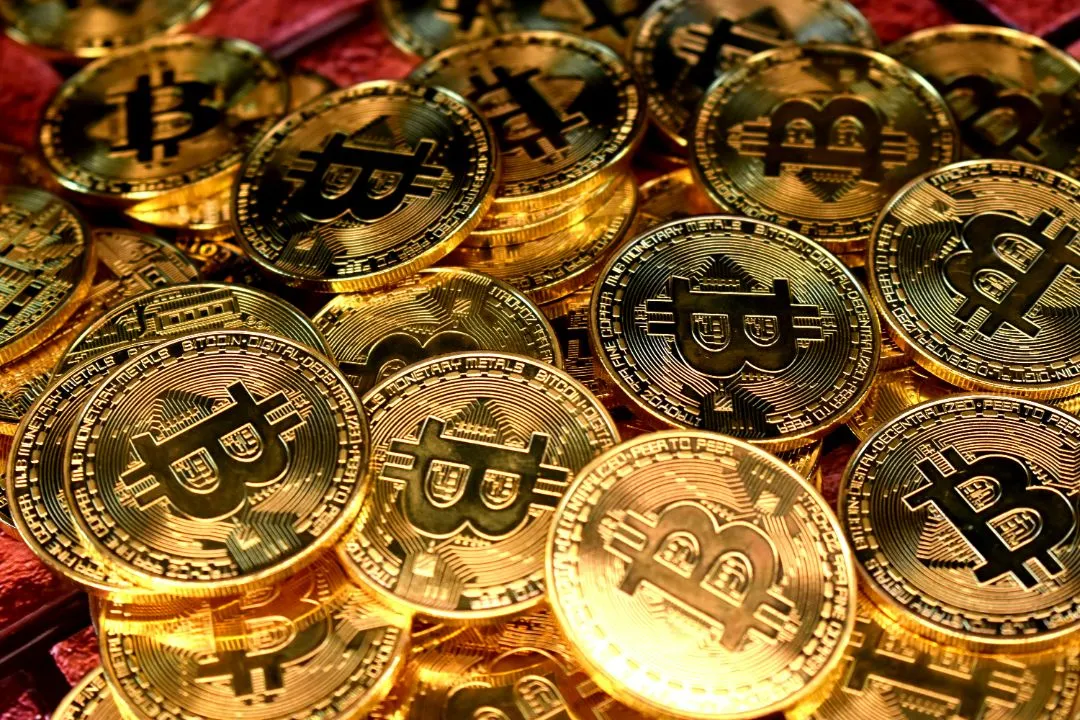
https://asset.coinness.com/en/news/93fa77a55ef5734859e587f4c4aa0b42.webp
Photo by Chris Liverani on Unsplash

A leading provider of crypto asset custodial services 

Having been offering one-stop crypto asset custodial services for companies and institutional clients since March 2021, KODA has become a notable virtual asset business operator in South Korea with it being registered with the Financial Intelligence Unit (FIU).


By the end of June 2023, KODA made up nearly 80% of the local custodial service market share, per FIU data. At the time, out of the total KRW 2.9 trillion in crypto assets held by 49 local custodial service providers registered with the FIU, KRW 2.3 trillion was managed by KODA. By December 2023, KODA announced it was managing KRW 8 trillion in crypto assets, with over 200 custodial wallets and about 50 institutional clients using its services. 


Bracing for the potential approval of spot bitcoin ETFs in Korea

The demand for crypto asset custodial services is expected to rise as Korea’s ruling and opposition parties are pledging to integrate crypto assets into the traditional financial system, leading up to the general election in April. Major political parties are considering the possibility of allowing transactions of spot bitcoin ETFs and legalizing investment in crypto assets by private companies.


Cho Jin-seok, CEO of KODA, said that the integration of digital assets into the traditional financial system is an unstoppable global trend that no one can resist, and that KODA will be able to serve as a key crypto infrastructure if the local financial authority approves trading spot bitcoin ETFs. 


Kim Seo-joon, CEO of Hashed, stressed the significance of preparing for the potential approval of spot bitcoin ETF transactions, noting how a number of spot bitcoin ETFs were released in the U.S. right after the approval. He added that KODA’s commitment to regulatory compliance and technological expertise would make it an essential partner in introducing virtual asset ETFs to the local market.

More to Read
View All
Policy & Regulation·

Feb 24, 2025

Hong Kong strives for crypto hub status through ‘ASPIRe’

The Hong Kong Securities and Futures Commission (SFC) has unveiled a new roadmap for digital asset regulation titled “ASPIRe.” The authorities in the Chinese autonomous territory have been working towards crypto hub status in recent years. This latest ASPIRe roadmap initiative has been formulated in an effort to future-proof Hong Kong’s status as a location that has been optimized for crypto businesses to form and develop. The ASPIRe roadmap was announced by the SFC on Feb. 19 with comprehensive details on the plan published to the regulator’s website. Photo by Skull Kat on UnsplashFive pillarsA-S-P-I-Re details five pillars that the regulator is focusing on in order to address challenges to strengthen Hong Kong’s crypto hub status going forward. The “A” pillar refers to “access,” with a focus on fostering an ecosystem that’s aligned with a regulatory regime that enables global participation. The regulator wants to attract “qualified participants,” while enhancing investor choice and integrating Hong Kong’s digital assets sector with global liquidity. The “S” pillar stands for “safeguards” with the objective of adopting risk-proportionate oversight, promoting regulatory clarity and aligning compliance requirements such that a balance is struck between core regulatory objectives and providing flexibility for the adoption of new technology. “Products” forms another pillar, with a focus on expanding the range of digital asset products and services offered by regulated service providers in Hong Kong. “Infrastructure” is another aspect that the plan homes in on. The focus in this regard is on modernizing reporting, surveillance and cross-agency collaboration through infrastructure building and the use of new technology.  The final pillar, “relationships” (Re), focuses on the empowerment of both investors and the industry in general through education, engagement and transparency. Influencing modern financeThe Hong Kong regulator is putting forward this plan with the understanding that the global virtual asset market was valued at $3 trillion in 2024. It suggests that the sector “has significantly influenced modern finance.” At Consensus Hong Kong 2025 this week, a crypto conference held in the Chinese autonomous territory, SFC CEO Julia Leung suggested that this plan will put Hong Kong in a strong position to secure its role as a crypto industry hub going forward. Hong Kong Financial Secretary Paul Chan Mo-po also delivered a keynote speech at the conference. He said that Hong Kong would “remain a stable, open and vibrant market for digital assets,” adding that Hong Kong is “investing heavily in the related infrastructure and talent development.” Mo-po went on to assert that Hong Kong’s Cyberport Web3 network and the Hong Kong Science and Technology Park are “vibrant hubs for Web3 innovation and fintech.” He also claimed that industry partnerships and the city’s universities are bringing through blockchain expertise.  The Financial Secretary understands the importance of appropriate regulation. He stated: “The key to success lies in maintaining an open, fair, balanced and forward-looking regulatory approach that is conducive to the sustainable and responsible development of financial innovation, including Web3.”

news
Markets·

Jun 04, 2024

Hackers spirit away over $300M in Bitcoin from DMM Bitcoin

Japanese crypto exchange DMM Bitcoin announced on Friday that over $300 million worth of Bitcoin was stolen from its primary wallet, marking one of the digital asset industry's largest hacks in recent years.Photo by Kanchanara on UnsplashHack confirmed without further detail"At approximately 1:26 p.m. on Friday, May 31, 2024, we detected an unauthorized leak of bitcoin from our wallet," the company stated, based on an English translation of its original statement in Japanese, which had been posted on the firm’s website. DMM Bitcoin is a subsidiary of DMM Group, which incorporates businesses covering a broad spectrum of activities including solar energy, gaming, 3D printers, FX, e-books and software. The company has, as yet, not provided any further detail relative to the manner in which the hack occurred. Notwithstanding that, DMM Bitcoin did confirm that measures have been taken to prevent any repeat of the hack. Furthermore, the company outlined that a full investigation into the hack is ongoing right now. Buy orders and leverage trades suspendedThe company has moved to reassure platform users that their digital assets are fully guaranteed. It stated: "Please rest assured that all of your bitcoin deposits will be fully guaranteed, as we will procure the equivalent amount of BTC that was leaked with support from our group companies."  The exchange has taken the decision to temporarily suspend a number of activities, including spot trading buy orders and the opening of leveraged trading positions. A temporary halt has been imposed on crypto withdrawals while Japanese yen withdrawals are permitted, albeit that the exchange suggests that service users may experience delays. Blockchain security sector responseIn light of the hack, a number of well-known blockchain security firms have been giving the matter their attention. Beosin, a blockchain security specialist, outlined that it is continuing to monitor the wallet addresses implicated in the hack, with a view towards tracing any further movement of the funds. Meanwhile, blockchain analysis firm Arkham Intelligence has offered a 1,000 ARKM token bounty to anyone who may provide information leading to the identification of the perpetrators of the hack. Blockchain analysis firm Chainalysis described the hack as “the 7th largest crypto hack ever.” The company has labeled the stolen funds within its products. Broader industry implications and historical contextThis hack is a significant blow to the industry, given that a hack on this scale has not occurred thus far in 2024 or at any point during 2023. The crypto industry has faced numerous significant breaches in the past. In 2022, a series of large-scale exploits targeted layer-1 blockchains, crypto exchanges and DeFi protocols. The largest hack amongst them implicated the BNB Chain (formerly Binance Smart Chain), which resulted in the loss of $566 million worth of BNB. The latest hack is second only (within Japan) in size relative to the 2018 hack of Coincheck, one of the country’s largest exchanges, when over $550 million worth of XEM was stolen. Japan was also host to the most infamous Bitcoin hack, that of the Mt. Gox exchange, whose bankruptcy administrators moved $9 billion worth of its remaining Bitcoin holdings on the blockchain in recent days for the first time in many years. 

news
Markets·

Nov 10, 2025

Bitcoin pullback tests sentiment as analysts revisit long-term targets

Despite Bitcoin’s recent decline, a South Korean analyst says investors’ trust in the market remains intact. He added that a U.S. crypto market structure bill, which Congress could approve as early as December, may give investors a chance to buy the dip ahead of a potential rebound. According to Etoday, Hong Sung-wook of NH Investment & Securities, one of South Korea’s major brokerage firms, noted that the crypto market has given back all gains made since mid-October, with Bitcoin briefly slipping below $100,000. Most altcoins also saw steep declines, erasing the advances they posted following roughly $19 billion in liquidations around Oct. 10. In this environment, Solana’s year-to-date performance has turned negative despite the recent launch of spot Solana ETFs in Hong Kong and the U.S., while Ethereum has similarly surrendered its earlier gains.Photo by Michael Förtsch on UnsplashContext from past declinesHong framed the latest pullback in a historical context. Since 2018, Bitcoin has recorded a daily closing price drop of more than 20% on seven occasions. The latest decline of about 21% from peak to trough, he said, is broadly in line with previous downturns. He added that Bitcoin is now less likely to experience the extreme volatility seen in earlier years, citing growing institutional participation and its increasing use in so-called “debasement trades,” or hedges against fiat currency inflation. Building on this, Hong attributed the recent weakness primarily to the liquidation wave and the temporary hit to sentiment. However, he argued that confidence could recover faster than in past stress events, emphasizing that trust in the market has not been fundamentally damaged, unlike in prior downturns triggered by unexpected “black swan” shocks. Policy progress could lift market moodIn the near term, Hong pointed to progress on the U.S. crypto market structure bill as a potential catalyst. Further movement on the bill, he said, could help improve sentiment, similar to the supportive reaction seen around the passage of the stablecoin GENIUS Act. Other market observers have expressed a comparable view on Bitcoin’s outlook. BeInCrypto underscored three key factors supporting its stance in an analysis published on FXStreet. First, citing Glassnode’s Accumulation Trend Score, it noted that Bitcoin has managed to hold above the $100,000 level thanks to a balance between whale sell-offs and continued accumulation by other investors. Second, expectations for U.S. interest rate cuts projected for December are seen as another supportive element. Third, Bitcoin continues to trade above its 50-week moving average (WMA), a technical level that has underpinned the market since BTC moved above it in 2023; even when brief sell-offs have pushed prices below this line, buyers have stepped in to restore it by the weekly close. Warning signs of weakening momentumAt the same time, signals of moderating momentum have emerged. Another BeInCrypto report pointed to CryptoQuant’s Bitcoin Bull Score, an on-chain metric that gauges the asset’s upside potential, which fell to zero on Nov. 6, its lowest level since January 2022, just before the market entered its last major bearish phase. This more cautious tone is reflected in institutional forecasts as well. Crypto financial services firm Galaxy Digital last week lowered its year-end price target for Bitcoin from $185,000 to $120,000. The firm cited heavy whale sell-offs, shifting investor focus toward AI, gold, and stablecoins, and the weak performance of Bitcoin-focused digital asset treasury (DAT) companies as key reasons for its downgrade. Even so, Galaxy Digital said it continues to view Bitcoin as a structurally strong asset.From a longer-term perspective, some high-profile experts have also trimmed their expectations. According to Decrypt, Ark Invest CEO Cathie Wood told CNBC she now sees Bitcoin reaching about $1.2 million in a bullish scenario by 2030, down from her previous $1.5 million target. She attributed the revision mainly to the rapid growth of stablecoins, which are expanding faster than Bitcoin and emerging as a new payment method, a trend she suggested could dilute some of Bitcoin’s potential price momentum over time.

news
Loading