Top

Crypto boom drives $17.5B surge in demand deposit at Korean banks

Markets·March 06, 2024, 8:20 AM

Among various accounts within a bank, a demand deposit account is considered a “station” where people can temporarily store their money and easily withdraw it for future investments. These accounts are highly liquid, since users can deposit or withdraw funds at any time without having to pay a penalty to a bank. 


Following the recent cryptocurrency boom, the five major banks in Korea – KB Kookmin Bank, Shinhan Bank, Hana Bank, Woori Bank and NH Nonghyup Bank – are seeing a significant influx of funds into their demand deposit accounts, according to local media outlet Money Today. This is partly attributed to an increasing number of youths who are seeking to invest in crypto assets, parking their money in these banks’ demand deposit accounts. Shinhan Bank and Nonghyup Bank have seen the highest increase in their deposits, owing to their affiliation with local crypto exchanges that have access to real-name accounts from these banks. 
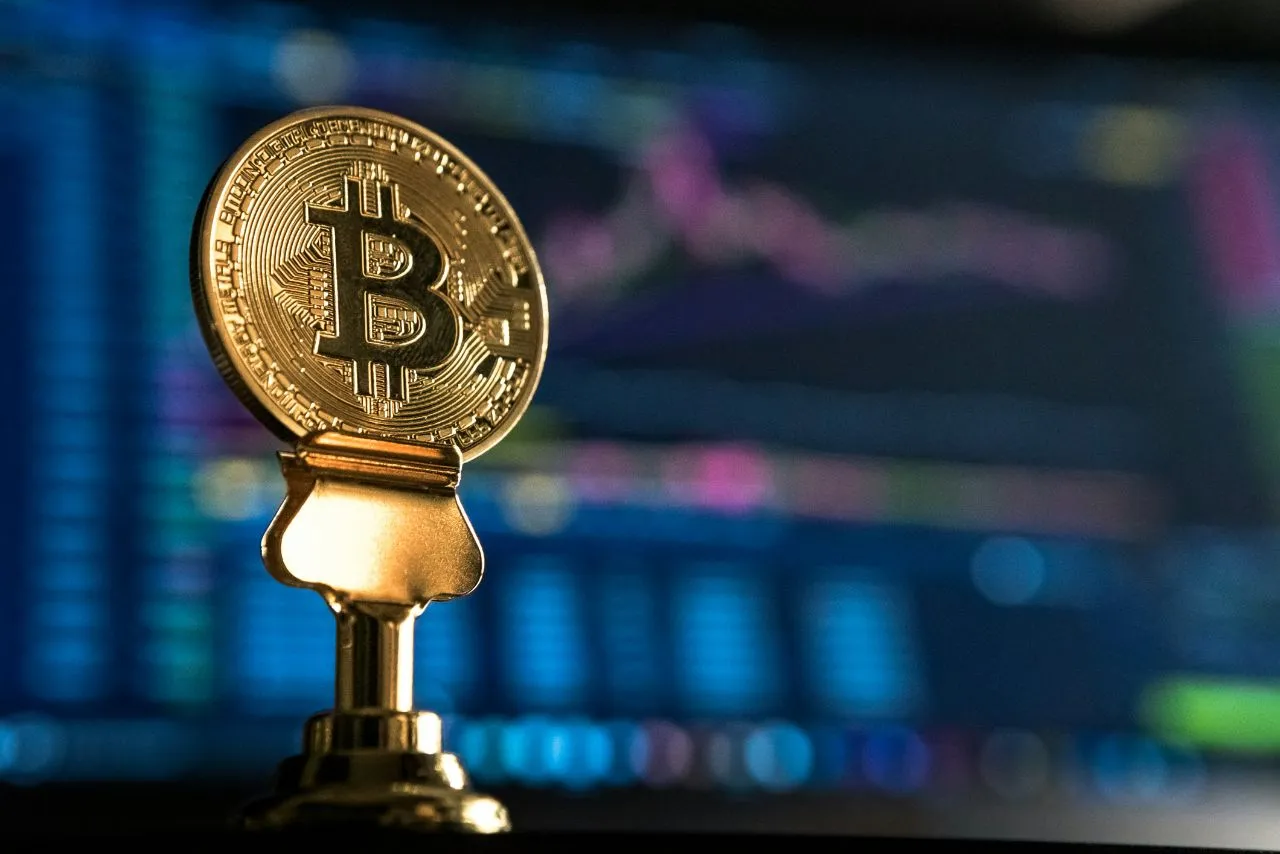
https://asset.coinness.com/en/news/43c2e4ebf68df9e379886cc37b37ebb1.webp
Photo by André François McKenzie on Unsplash

BTC’s surge attracting young investors to crypto

Experts say that these deposits could be potentially transferred to the crypto market by owners as Bitcoin’s value continues to climb. An insider from a crypto exchange noted that the bullish crypto market, spurred by the U.S. approval of spot bitcoin ETFs, is driving a number of young investors to turn to crypto investments, encouraging them to channel their deposits into buying crypto tokens. 


Data from these five major banks shows their total demand deposits by the end of February exceeded KRW 614 trillion ($460 billion), seeing a month-over-month increase of about KRW 23.5 trillion. During the same period, the banks’ combined regular savings grew by KRW 23.6 trillion, while their combined installment savings saw a decrease of KRW 13.3 trillion. This came after the government-led savings product “Youth Hope Installment Savings” reached its maturity, which returns users their principal with relatively large interest gains. 


Banks scrambling to attract crypto investors with new savings products

In response to the potential decline in interest rates in the second half of this year, an increasing number of customers are seeking to put their money into savings products with an interest rate of as low as 3%, according to a banker. In a bid to attract more users, local banks are busy introducing new savings products. 


KB Kookmin Bank launched a savings product offering a relatively high annual interest rate of up to 4%, and Shinhan Bank rolled out a savings product targeting youths with an annual interest rate of up to 3.85%. 


Meanwhile, Kbank, an online-only bank, is deemed among the largest beneficiaries of the crypto boom, as the bank saw its average daily new customers triple compared to last year. Since 2020, Kbank has served as the provider of real-name accounts to Upbit, the leading crypto exchange in Korea. 


Ha Joon-kyung, a professor at the Department of Economics at Hanyang University, said the sudden surge in demand deposits means that a significant portion of these funds will be invested in high-yielding but risky assets, including cryptocurrencies, stocks and real estate. 
 

More to Read
View All
Markets·

Aug 04, 2023

Crypto Trading Surges in South Korea While Global Trends Decline

Crypto Trading Surges in South Korea While Global Trends DeclineDespite a global decrease in cryptocurrency trading on centralized exchanges, South Korea has witnessed a significant increase in trading activities. Upbit, the nation’s largest crypto exchange, climbed to the second spot in global spot trading volume for July.Photo by Viktor Forgacs on UnsplashPlunges in global trading volumesAccording to an Exchange Review for July 2023 by CCData, a virtual asset data provider, the total global spot trading volumes on centralized exchanges dropped to $515 billion in July, a 10.5% decrease compared to the previous month, marking the second lowest level since 2019. Additionally, derivative trading volumes fell by 12.7% to $1.85 trillion, the second-lowest since December 2020.Experts attribute these declines to increased regulations on cryptocurrencies worldwide, such as legal crackdowns on exchanges like Binance and Coinbase by the US Securities and Exchange Commission.Binance, the world’s largest cryptocurrency exchange, recorded a trading volume of $208 billion with a market share of 40.4% in July, marking a five-month consecutive decline, although it still maintained its title as the largest platform worldwide for crypto spot trading.Coinbase — the largest cryptocurrency exchange in the US — and global exchange OKX also saw a decline in trading volume of 11.6% and 5.75% to $28.6 billion and $29 billion, respectively.Crypto exchanges flourish in KoreaContrarily, the majority of major crypto exchanges in Korea experienced significant growth in trading volume. Upbit’s trading volume skyrocketed by 42.3% to $29.8 billion in July, surpassing Coinbase and OKX for the first time to claim the second spot in global cryptocurrency exchanges behind Binance.Other Korean exchanges also saw remarkable increases in trading volume. Bithumb recorded $6.09 billion, a surge of 27.9%, while Coinone’s volume rose by 4.72% to $1.39 billion.These spikes in trading volume can be accredited to an increased interest in cryptocurrencies and blockchain technology among citizens throughout the country, despite global regulatory challenges impacting the market. As the cryptocurrency industry continues to evolve, Korean exchanges are showing resilience and maintaining their competitive positions on the global stage.

news
Web3 & Enterprise·

Feb 08, 2024

'Heroes of Mavia' token airdrop follows entry into crypto gaming sphere

The blockchain gaming realm witnessed another milestone moment as "Heroes of Mavia," the mobile gaming sensation backed by Vietnam-based Skrice Studios, set the stage for a token airdrop on Tuesday, according to an announcement by the studio. Top free mobile game on AndroidJust days since its launch on both Apple and Android platforms, "Heroes of Mavia" has surged past the milestone of 1 million downloads, with an impressive 230,000 daily active users already immersed in its captivating world. Garnering acclaim as the top free mobile game on Android devices in China and dominating the Google Play store charts in Nigeria, the game's ascent continues with high rankings in Poland, Finland and Canada on Apple's App Store, according to Skrice Studios. While the quest to propel blockchain gaming into the mainstream remains a formidable challenge, "Heroes of Mavia" is already carving a path to success. Joining the ranks of ambitious gaming ventures vying for mainstream acclaim, including "Star Atlas," "Illuvium" and "Shrapnel," its promising trajectory is marked by its early triumphs.Photo by LinkedIn Sales Navigator on Pexels100,000 benefit from airdropA grand total of 100,000 players have earned eligibility for today's token airdrop of the MAVIA token, with a generous allocation of up to 6,250,000 tokens available for claim, representing 2.5% of the total token supply of 250 million. With a valuation soaring to $100 million, Skrice Studios stands as a testament to its remarkable growth since its last funding round two years ago, which saw an infusion of $2.5 million led by Crypto.com Capital. The studio's ascent was further fueled by a $5.5 million seed round in 2021 spearheaded by Binance Labs. In total, Skrice Studios has amassed $9 million in funding, as disclosed in its latest statement. The studio's enduring appeal has attracted notable venture capital firms keen on blockchain gaming, evidenced by its seed round in January 2022. Led by Binance Labs, that round also saw participation from esteemed investors such as Genblock Capital, Delphi Digital, Mechanism Capital, Alameda Research and Animoca Brands, among others. In a strategic move to ensure the sustainability and vitality of its in-game economy, "Heroes of Mavia" officially enlisted in Machinations’ Game Economy Health Monitoring Service. The Machinations platform can be harnessed to design and predict game economies and systems for play-to-earn blockchain games. Drawing parallels to the iconic Clash of Clans, "Heroes of Mavia," captivates players with its strategic depth, emphasizing base building, resource management and immersive tactical combat. The highly anticipated "Heroes of Mavia" token commenced trading at 7 a.m. ET on Tuesday on major exchanges such as Bybit, KuCoin and HTX, debuting with a unit price of $1.83. As of the latest update, the token is trading at $3.62, signaling a promising start to its trading journey. Blockchain gaming emerged through projects such as Axie Infinity, developed by Vietnam’s Sky Mavis. Engaging gameplay didn’t factor in the first play-to-earn iteration. However, through projects like Heroes of Mavia, 2024 could prove to be very different. 

news
Policy & Regulation·

Apr 01, 2025

Japan to implement crypto insider trading restrictions

According to a report published on March 31 by Nikkei, a Tokyo-based financial news outlet, the Japanese authorities are gearing up to categorize digital assets as financial products, while in the process broadening the scope of insider trading restrictions. While the publication didn’t cite a particular source, it reported that the Japanese Financial Services Agency (FSA) is expected to file a draft amendment related to the existing Financial Instruments and Exchange Act in 2026.Photo by M.S. Meeuwesen on UnsplashFrom payment to investment productCurrently, Japan’s Payment Services Act categorizes crypto assets as a means of settlement. That categorization looks at these assets from the perspective of a payment tool rather than considering them as investment products. The move is understood to be part of a broader effort to copper-fasten crypto sector oversight. Earlier this month, the Japanese cabinet approved a proposal that seeks to amend the Payment Services Act.  At the time, it had been suggested that the amendment would look to exclude crypto assets from being classified as securities, while also bringing about a reduction in the capital gains tax rate as it is applied to digital assets. It’s likely that crypto assets will find themselves in a distinct category, apart from securities like stocks and bonds. Crypto adoptionActivity related to crypto assets has been growing in Japan. 7.34 million active accounts were found to be responsible for crypto transactions in Japan in January. That amounts to a tripling in such crypto transaction activity over the course of five years. Japan enjoyed greater adoption at a very early stage in the global development of crypto. However, following the Mt. Gox crypto exchange collapse in 2014, which at the time accounted for the loss of 7% of Bitcoin’s supply, regulators responded by clamping down on the sector.  That situation led to greater investor protection for Japanese investors but it presented as a difficulty for Japan-based exchanges to compete globally with other exchange businesses overseas. A conservative stance taken by the FSA has also held back crypto exchange-traded fund (ETF) approval and adoption. Bitcoin ETFs were approved in the United States over a year ago. Earlier this month, Astar Network founder Sota Watanabe outlined that the current ruling party in Japan plans to remove crypto assets from a securities classification, alongside other changes which could potentially lead to the approval of crypto ETFs. The Liberal Democratic Party has also put forward crypto tax reforms that, if implemented, would see a 20% tax rate brought into effect where capital gains on digital assets are concerned.The finer detail with regard to the nature of insider trading restrictions as they will be applied to crypto assets has yet to be revealed. Nikkei speculated that such restrictions would likely be similar to those applied to conventional financial products. Last week, the Asia Web3 Alliance Japan, a crypto advocacy group, put forward a proposal to the U.S. Securities and Exchange Commission (SEC) that, if implemented, would see collaboration between the U.S. regulator and Japan’s FSA, its central bank and the Ministry of Economy, Trade and Industry. The objective of the proposal is to bring about cross-border regulatory clarity related to the further development of the Web3 ecosystem in both Japan and the U.S.

news
Loading