Top

Korea’s daily crypto trading volume surpasses that of stocks at nearly $9B

Markets·March 11, 2024, 5:54 AM

With Bitcoin prices hitting an all-time high, the daily crypto trading volume in South Korea has surpassed that of the stock market, local media outlet The Financial News reported


As of yesterday at noon (KST), the local daily trading volume of cryptocurrencies over the past 24 hours stood at over KRW 11.8 trillion, or nearly $9 billion, according to data from crypto platform CoinMarketCap. Meanwhile, the daily trading volume on the Korea Composite Stock Price Index, or KOSPI, was KRW 11.4 trillion on Friday. 


The total daily crypto trading volume was tallied by adding trading volume across Korea’s five major crypto exchanges – Bithumb posted KRW 8.8 trillion, Upbit KRW 2.7 trillion, Coinone KRW 176.4 billion, Gopax KRW 55.2 billion and Korbit KRW 32 billion. 

https://asset.coinness.com/en/news/83efff6dda125f95cb40c4a4fe7750d2.webp
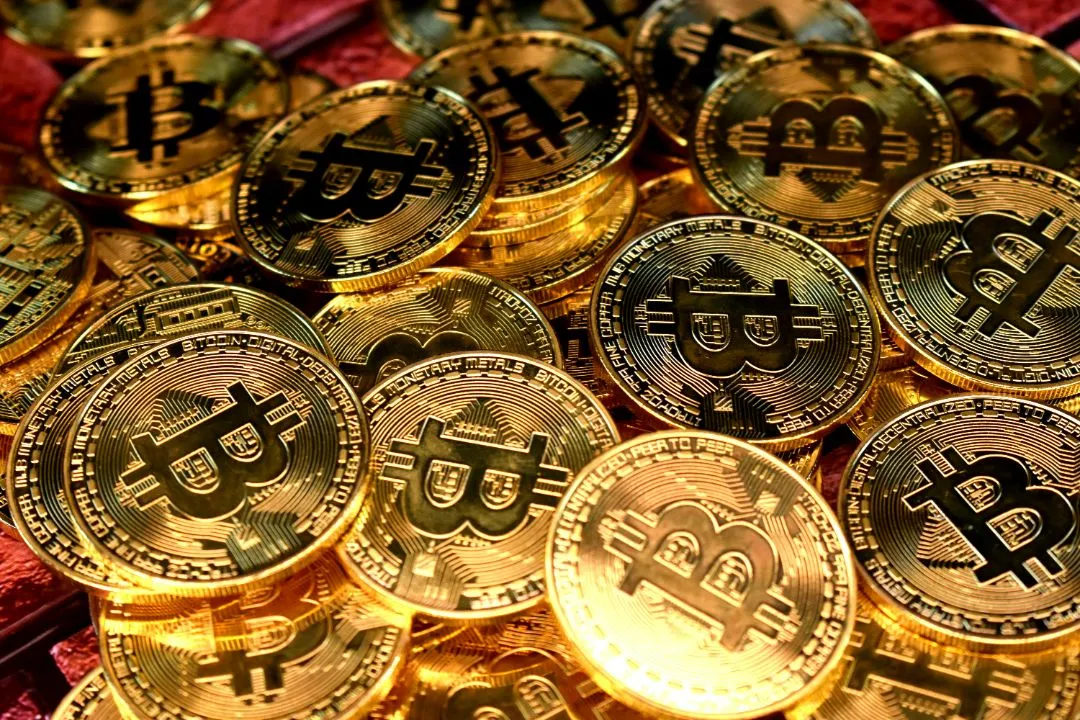
Photo by Alexander Mils on Unsplash

Unlike stock markets which have a closing time, crypto assets are traded 24/7, which makes it difficult to do an apple-to-apple comparison. Still, the numbers clearly demonstrate retail investors’ bullish sentiment toward the crypto market. 


According to the U.S. crypto exchange Coinbase, the Bitcoin price touched $70,199 on Friday (UST), just three days after the flagship coin surpassed $69,000 on March 5, an already record-breaking price in 28 months since November 2021. 


Inflation and recession drive retail investors to crypto 

Financial experts say that Korea’s persistently high inflation and slowing economic growth are driving local retail investors to seek relatively riskier yet high-yielding assets such as cryptocurrencies. Young investors in their 20s and 30s are particularly leaning towards investing in crypto, as they fear not being able to buy houses solely with their wages. Moreover, Koreans’ average monthly real wage declined by 1.1% year-on-year, which marks a continuous decline for two consecutive years since 2022. 


Despite the country’s economic slowdown, the KOSPI has actually risen, fueled by capital influx from foreign investors who are expecting a valuation increase in local firms. In contrast, local retail investors are rushing out from the stock market as they see a lack of outperforming companies. 


Data from the Korea Exchange (KRX), the sole securities exchange operator in the country, showed that foreign investors purchased KRW 4.4 trillion in stocks over the past month on the KOSPI market, while local retail investors sold KRW 3.3 trillion worth of stocks during the same period. 


Local crypto boom prompts ‘Kimchi Premium’ effect

The recent bullish sentiment in the Korean crypto market can largely be attributed to local retail investors, because current laws prohibit foreign investors from trading crypto assets in the country and regulations limit enterprises from making direct investments in crypto. 


While the KOSPI market grapples with the so-called Korea Discount effect, which refers to the undervaluation of the Korean stock market, the local crypto market is experiencing the exact opposite trend – crypto investors are benefitting from something called the Kimchi Premium effect, a newly coined term referring to the overvaluation of crypto assets in Korean crypto markets compared to those in their foreign counterparts. As of yesterday at 14:00 (KST), Bitcoin changed hands at KRW 917.4 million on foreign exchanges while at KRW 971.8 million on Korean exchanges, per data from local crypto exchange Upbit. 


Cho Dong-keun, a professor at the Economics Department at Myongji University, described the current Korean economic situation as “a competition for the country’s limited wealth”. He said that the stagnant national growth has pushed people to fight for more wealth, urging them to invest in crypto assets, adding that Kimchi Premium could substantially appeal to many retail investors. 


More to Read
View All
Policy & Regulation·

Dec 07, 2023

Korbit relists blockchain gaming token WEMIX

Korbit relists blockchain gaming token WEMIXKorbit, a major fiat-to-cryptocurrency exchange in South Korea, is relisting WEMIX, a cryptocurrency issued by blockchain gaming company Wemade. Korbit’s decision follows in the footsteps of its local competitors, Coinone and Gopax, who have also recently reinstated WEMIX. The WEMIX token is used to pay transaction fees, stake and vote on governance proposals.Starting at 1:00 a.m. UTC on Dec. 7, Korbit users gained the ability to create a WEMIX wallet and deposit the token on the exchange. Trading and withdrawals of WEMIX will be enabled at 3:00 p.m. UTC on the same day.The Korbit exchange only accepts WEMIX deposits originating from the Wemix network. Deposits of WEMIX sent from other blockchain networks, including BNB Beacon Chain, Ethereum and Klaytn, may be processed improperly and carry the risk of becoming irretrievable.Photo by Asa E-K on UnsplashDecision reversal and underlying rationalesOver a year ago, the Digital Asset eXchange Alliance (DAXA), a coalition of the five Korean fiat-to-crypto exchanges — Upbit, Bithumb, Coinone, Korbit and Gopax — collectively decided to delist WEMIX from all their platforms. This decision was based on several concerns, including unreliable disclosure of the token’s circulating supply, provision of inadequate and misleading information to investors and inconsistencies in the data provided during the explanation period. These issues collectively eroded trust in the company.However, Korbit has determined that the previously identified issues with WEMIX have been addressed. The exchange observed that the circulating supply of WEMIX has been reduced to a level that aligns with the schedule initially submitted to DAXA. The launch of the WEMIX mainnet rectified the discrepancy where the circulating supply displayed on crypto data platforms like CoinMarketCap was twice the actual figure. Additionally, the collateral that Wemade had deposited in decentralized finance (DeFi) protocol Kokoa Finance has been recovered.The crypto trading platform also believes that Wemade has resolved the problem of providing misleading information to investors by making corrections to its third-quarter earnings report.Regarding data fallacies, Korbit holds the view that the game publisher has taken steps to address the inaccuracies in the data previously provided to the alliance. These efforts to reduce uncertainty and fulfill disclosure responsibilities include several measures: Wemade now live-updates the circulating supply of WEMIX and other pertinent details on its official blog. The gaming company has also entrusted the management of its non-circulating WEMIX supply to Ceffu, the sole institutional custodian for Binance, a global crypto exchange. Furthermore, Wemade now makes announcements about token movements whenever they occur.Restrictions imposed on GopaxMeanwhile, Korbit stated its commitment to complying with voluntary regulations and common listing guidelines established between DAXA members. This statement is particularly noteworthy in light of the recent developments with Gopax. Gopax faced the three-month suspension of its voting rights from DAXA, following the relisting of WEMIX.

news
Web3 & Enterprise·

May 07, 2025

Metaplanet issues more bonds to buy Bitcoin & opens U.S. subsidiary

Japanese Bitcoin treasury firm Metaplanet has opened a U.S. subsidiary company in Florida while also issuing 3.6 billion Japanese yen ($24.7 million) in bonds for the purpose of buying more Bitcoin.Photo by Kanchanara on UnsplashAccelerating the Bitcoin strategyIn an announcement on May 1, the company outlined that it had established Metaplanet Treasury Corporation in Miami, Florida. The firm cited the purpose of the subsidiary as a means through which it can accelerate its overriding strategy of accumulating more Bitcoin. Metaplanet CEO Simon Gerovich commented on X on the rationale behind locating the U.S. subsidiary in Florida, stating:”The reason for choosing Florida is clear: the state is rapidly emerging as a global hub for Bitcoin innovation, corporate adoption and financial liberalization.” Gerovich added that the newly formed company will enhance Metaplanet’s “around-the-clock operational capabilities across time zones.” The Metaplanet CEO sees the development as part of the firm’s evolution as a global Bitcoin treasury company.  $250 million capital raiseThe company stated that it had already established a corporate entity in the British Virgin Islands (BVI), with the U.S. addition enhancing the company’s ability “to respond to market dynamics with speed and precision.”  Metaplanet intends to raise $250 million in funding through the Miami-based entity, having launched it with initial capital of $10 million. It’s envisaged that the U.S. subsidiary can act as a vehicle to attract institutional investment.  Back in March it was reported that Metaplanet was investigating the idea of listing its stock in the U.S. At the time, Gerovich stated that the firm was “considering the best way to make Metaplanet shares more accessible to investors around the world.” As part of that process, Gerovich met with officials from the New York Stock Exchange (NYSE) and the Nasdaq.  In further U.S.-related developments, the company appointed Eric Trump, second son of U.S. President Donald Trump, to its strategic board of advisors in March. Last week, Metaplanet appointed David Bailey, CEO of Bitcoin Magazine, to its strategic board of advisors. Bond issuanceIn a separate development, Metaplanet has issued 3.6 billion Japanese yen ($24.7 million) in 0% ordinary bonds to purchase additional Bitcoin. The company used its EVO FUND as the mechanism through which it issued the bonds.  It has set out a goal of accumulating 10,000 BTC by the end of the year. Currently, the company holds 5,000 BTC. One community member believes that Metaplanet could hit this target as early as July on the basis of ongoing share dilution.Appearing on The Bitcoin Treasuries Podcast earlier this year, Metaplanet’s Director of Bitcoin Strategy, Dylan LeClair, described how prior to adopting its Bitcoin treasury strategy in 2024, the firm was a “zombie” on the Tokyo stock exchange with the pandemic having had a negative impact on the company’s fortunes.  He outlined that the company consolidated and dealt with some debt issues, but at that point it lacked a clear strategy. It then set out to replicate the success of U.S. Bitcoin treasury pioneer, Strategy (formerly MicroStrategy). On May 1 Gerovich posted on X that the company had achieved unrealized gains on Bitcoin exceeding six billion yen ($41.68 million). 

news
Policy & Regulation·

Jan 16, 2024

New bill in Singapore could broaden MAS regulatory oversight of crypto

The Monetary Authority of Singapore (MAS) is set to gain enhanced powers through the Financial Institutions (Miscellaneous Amendments) Bill 2024 (FIMA Bill), currently under consideration in the country's parliament.Photo by Kenneth Koh on UnsplashProfound impactIf the bill passes, it could have a profound impact on cryptocurrency firms operating in Singapore. One significant aspect of the proposed amendments is the expansion of MAS's authority to issue directives to capital markets services license (CMSL) holders involved in unregulated business activities. This move is particularly aimed at firms offering unregulated products that might pose contagion risks to their regulated operations. The bill cites examples such as bitcoin futures and payment token derivatives traded on overseas exchanges. At the moment, the regulator is actively monitoring the crypto space in Singapore, issuing investor alerts relative to unregulated entities. Last month, MAS added imToken, a non-custodial crypto wallet, to its Investor Alert List. The list serves as a means for the regulator to draw attention to entities that may be actively trading within the city-state while being wrongly perceived by the investing public as licensed or regulated entities. Greater powersIn response to potential risks, MAS had previously issued guidance on risk-mitigating measures for CMSL holders conducting unregulated business with retail investors. The FIMA bill seeks to empower MAS further by enabling it to issue written directions specifying the minimum standards and safeguards for CMSL holders and their representatives engaging in unregulated businesses. Cryptocurrency exchanges, potentially categorized as CMSL holders, along with Major Payment Institution (MPI) licensees, may face increased regulatory scrutiny. MAS has been active in implementing measures to curb speculation in cryptocurrency investments and has updated its regulatory framework for stablecoins. The bill introduces additional provisions empowering MAS to compel individuals to participate in interviews and provide written statements. It grants MAS the authority to enter premises without a warrant and obtain court orders to seize evidence. Furthermore, the bill allows MAS to approve agents appointed by foreign regulators for inspecting Singaporean financial institutions. Precursor to ETF offeringThe potential ramifications of the bill extend beyond local regulatory dynamics. Industry observers suggest a connection between these developments and the recent approval of spot bitcoin exchange-traded funds (ETFs) in the United States. Lasanka Perera, CEO of Independent Reserve Singapore, recently highlighted that the approval of bitcoin ETFs in the U.S. will likely attract major global wealth management firms, intensifying the demand for bitcoin and transforming it into an accessible asset class for traditional institutions. Perera sees relevance in this proposed legislation as it pertains to the potential offering of spot bitcoin ETF products within the Republic of Singapore. While he speculates that it's too early to tell, he said Singapore’s proposed new bill to enhance regulatory authority over financial services, including bitcoin futures, makes provisions for possible spot bitcoin ETFs in the Republic. As Singapore continues to refine its regulatory framework, the proposed amendments reflect a broader trend of regulatory tightening in the global cryptocurrency landscape, emphasizing the importance of compliance and risk management for industry participants. 

news
Loading