Top

Bithumb lowers fees and enhances UX to bolster competitiveness

Web3 & Enterprise·April 02, 2024, 5:24 AM

One of South Korea's prominent cryptocurrency exchanges, Bithumb, has doubled down on its effort to solidify its position as a leading crypto trading platform in the country. Bithumb has recently announced its policy to offer the lowest withdrawal fees among all local crypto exchanges, while enhancing its user experience by upgrading the user interface (UI) and adding more features to its app, according to the local media outlet Kyunghyang Games


Already one of the few qualified fiat-to-crypto exchanges in Korea and a member of Digital Asset eXchange Alliance (DAXA) – a consultation group of the top five local crypto exchanges – Bithumb aims to further strengthen its competitiveness in the market. 
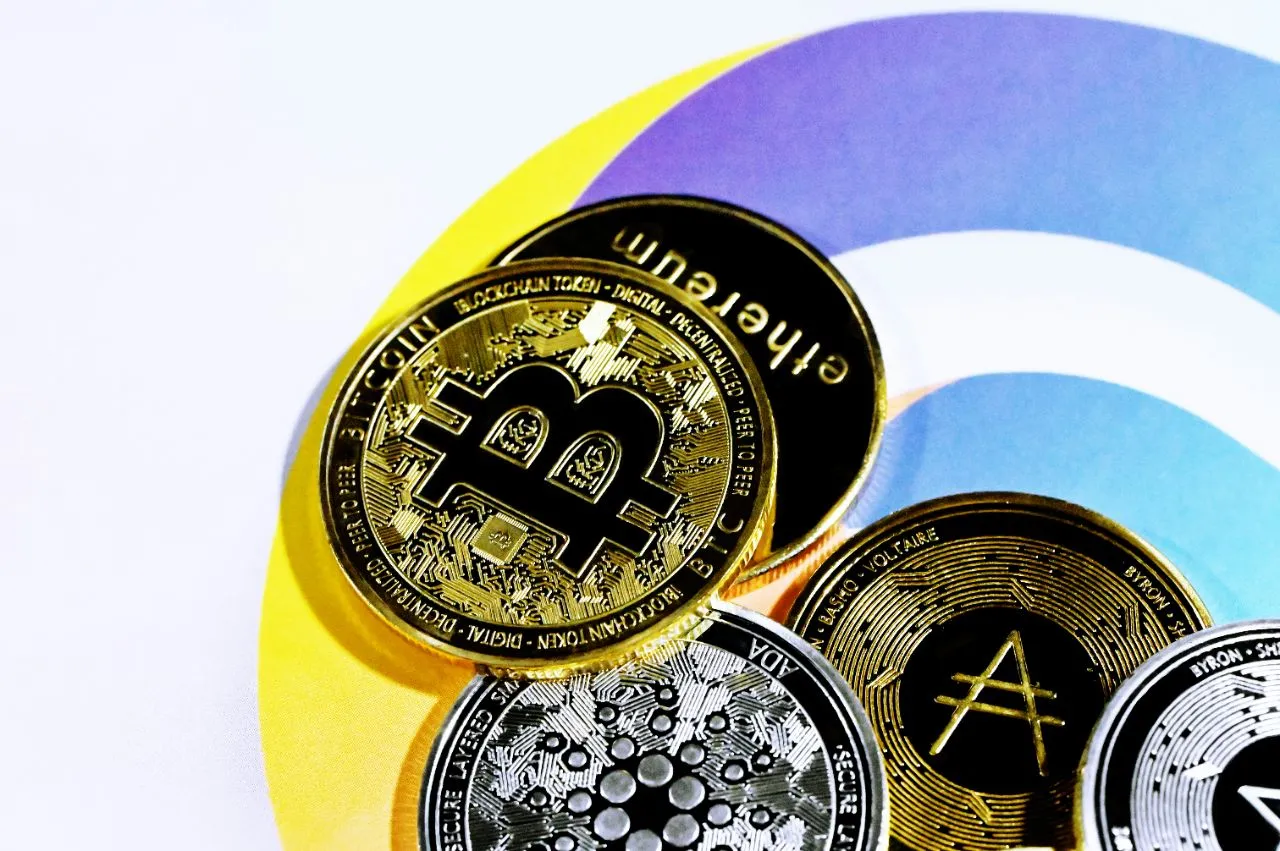
https://asset.coinness.com/en/news/e38783996df962fbff7474cc28e41713.webp
Photo by Traxer on Unsplash

Lower withdrawal fees with trading fees already at 0.04%

According to the press, Bithumb has announced to offer the lowest withdrawal fees in the local crypto scene to win the hearts and minds of investors. Under the updated fee policy, users are now charged 0.0008 BTC for withdrawing Bitcoin and 0.009 ETH for Ether. The exchange has also been known for offering one of the lowest trading fees at 0.04%. 


Making the deposit limit increase easier

Bithumb has long been getting complaints from users over its relatively unfavorable user experience and cumbersome processes required to increase the deposit limit of their real-name accounts. In response, Bithumb has introduced a new in-app feature that simplifies such procedures, so that users can raise their deposit limit with ease. 


Among users who joined Bithumb in March, those whose initial deposits have passed 30 days and who purchased crypto assets valued at over KRW five million ($3,700), are now eligible for the deposit limit raise, allowing them to deposit and withdraw up to KRW 500 million per day. 


Enhanced user interface and user experience 

One of the newly added features is the "Even Faster Chart," which provides users with four times faster response times following its transition from "Web view" to "Native view." 


Bithumb's Chief Operating Officer (COO), Moon Seon-il, stated that the exchange is improving its service in multiple ways, including offering the lowest fees, supporting multichain transactions and enhancing UI for users. 
 

More to Read
View All
Web3 & Enterprise·

Jun 14, 2023

Finblox Launching Tokenized US Treasury Bonds

Finblox Launching Tokenized US Treasury BondsHong Kong-based cryptocurrency firm Finblox has unveiled a groundbreaking solution aimed at meeting the growing demand among crypto investors for traditional assets that generate yields. By launching tokenized rights to US Treasury Bills (T-Bills), the company seeks to bridge the gap between the crypto and traditional financial worlds.In a tweet thread posted on Tuesday, the company set out some detail on the product offering it has been working on. In collaboration with smart-contract vault OpenEden, Finblox aims to tap into the trillion-dollar market of Web3 users. Finblox is a crypto app, with the enterprise being backed by leading venture capital firms such as Dragonfly Capital, Sequoia Capital, and Saison Capital. This innovative offering provides crypto investors with access to a highly secure AAA-rated financial asset, leveraging the advantages of blockchain technology.Photo by Karolina Grabowska on PexelsYield generationUnlike stablecoins, which have failed to deliver substantial returns, and crypto lending, which carries notable risks as recent defaults and insolvencies in the digital asset sector have shown, tokenized US T-Bills provide a reliable investment option.By converting the rights to these assets into digital tokens that can be traded and held within the blockchain ecosystem, Finblox enables fractional ownership. This means that users can invest small amounts and still earn proportional yields, opening up investment opportunities to a wider range of individuals.Through the Finblox platform, users can directly benefit from the yield generated by these tokenized T-Bills. Historically, Treasury Bills have been regarded as blue-chip financial assets, offering reliable returns and serving as a benchmark for global financial markets.OpenEden integrationTo ensure transparency and security, Finblox has integrated the T-Bill vault of Singapore-based OpenEden with decentralized blockchain Chainlink. This integration provides on-chain verification, guaranteeing that Finblox’s T-Bill tokens are backed by US Treasury securities, USDC stablecoins, and US dollars on a 1:1 basis.Finblox founder Peter Hoang emphasized the seamless and secure bridge that T-Bills offer between traditional and emerging markets in an interview with Tech in Asia. He stated: “With T-Bills, we are offering users a real-world asset while also benefiting from the custody of a regulated financial institution. It’s a seamless and secure bridge for both traditional and emerging markets, bringing safer yields to a wide range of users.”To access Finblox’s T-Bill tokens, investors need to follow a straightforward process. Initially, they must obtain USDC from a reputable exchange, either through Finblox or other exchanges. Once the know-your-customer (KYC) verification process is completed, users can swap their USDC for T-Bills within the Finblox platform.To enhance transparency, Finblox makes its wallets publicly available, enabling users to track deposits and withdrawals and verify the accuracy of transactions. The company also holds working capital in hot wallets to facilitate withdrawals below 2% of the entire pool, ensuring swift processing within three business days.It’s understood that Finblox will market the product offering to users in the Philippines, Indonesia, India, and Vietnam, among other jurisdictions within Asia.

news
Web3 & Enterprise·

Oct 04, 2023

Over Half of Leading Korean Conglomerates Are Venturing Into Web3 and Blockchain

Over Half of Leading Korean Conglomerates Are Venturing Into Web3 and BlockchainMore than half of South Korea’s conglomerates are ushering in the emerging era of Web3 in an attempt to seize new business opportunities presented by a decentralized internet that permits open access and sharing of resources as well as ownership of personal data.Photo by Abbe Sublett on UnsplashSurging interest among Korea’s biggest enterprisesAccording to a survey conducted by local news outlet E Today, 46 of Korea’s top 82 corporations as designated by the Fair Trade Commission (FTC) are pursuing ventures in Web3 and blockchain this year, including those related to non-fungible tokens (NFTs), security tokens, and logistics chains. The survey examined whether the corporations had issued coins, tokens, or NFTs; whether they had corporate divisions or subsidiaries dedicated to blockchain-related projects; and whether they had made investments in blockchain or digital asset-related companies as well as coin and token issuance projects. It was conducted remotely using publicly disclosed information and press releases.Of the 82 total companies, 48 are under the mutual investment restriction system, which prohibits independent corporations from investing their capital in the form of an exchange. Commercial law prohibits mutual stock holdings between parent companies and their subsidiaries in order to prevent a processive increase in company assets through mutual investments. Of those 48, the survey revealed that 32 are engaged in blockchain and Web3-related projects.Nearly 60.42% of the mutual investment restriction group and 48.78% of the total survey group were found to have become involved in the field by signing business deals with blockchain and digital asset-related companies or utilizing blockchain technology themselves.On the other hand, only seven corporations, or 8.54%, had directly issued digital assets or invested in related companies. On the other hand, 26 firms, or 31.71%, invested in NFT-related businesses.Navigating the path to Web3 adoptionHowever, although Web3 is gaining traction as the next generation of future innovation, it has not yet become the dominant trend as Web3 platforms have yet to attract a significant user base. This hindrance can be attributed to the ongoing crypto winter and strict financial regulations.Woo Jong-soo, Director of the Pohang University of Science and Technology’s (POSTECH) Blockchain Research Center and a professor at POSTECH’s Graduate School of Information and Communication, also pointed out that in order for blockchain to exert its influence as an innovative technology, it should be open to the public like Bitcoin. There will be limitations in implementing centralized private blockchains into corporate businesses, he said.But despite these challenges, major leading companies are still pushing their own Web3 and blockchain projects. “The current situation is not an ideal time for diving into Web3 and blockchain businesses, but everyone is quietly preparing while waiting for regulatory uncertainties to be resolved,” said an anonymous developer working at a major corporation.Notably, Park Hye-jin, a professor at the Seoul School of Integrated Sciences and Technologies, revealed that she had received separate Web3 business consultation requests from several teams under the same division of a particular corporation and that these teams were essentially unaware of each others’ ventures into the field. The corporation, which ostensibly announced that it had closed its business, also continues to request consultations, she claimed, highlighting the corporate world’s acknowledgment of Web3’s potential.“Individuals can now monetize and have control over their data, which big tech companies like Facebook and Instagram used to own,” Park explained. “The essence of Web3 is that it is ushering in an era where users have the ability to take initiative.”

news
Policy & Regulation·

Dec 28, 2023

China disrupts massive crypto-related laundering operation

While cryptocurrencies may be banned in China, crypto trading activity continues in some corners, nonetheless, sometimes through accessing overseas exchanges. With that, authorities recently uncovered a massive underground banking operation that exploited crypto trading platforms to evade local forex regulations.Photo by Manuel Joseph on Pexels$2.2 billion laundering operationOn Sunday, an account on popular Chinese social media platform WeChat run by China’s State Administration of Foreign Exchange (SAFE) published details of the $2.2 billion laundering operation bust. Xu Xiao, the Inspector at the Qingdao Branch of the State Administration of Foreign Exchange, revealed that the scheme involved underground banks who purchased virtual currencies and then sold the virtual currencies through overseas trading platforms to obtain the foreign currency they needed. This process, he explained, completes the conversion of yuan and foreign currencies, constituting the illegal act of buying and selling foreign exchange. Stringent capital controlsChina enforces stringent rules on money transfers outside the country. Citizens are limited to exchanging up to $50,000 in foreign currency and require a permit for transactions beyond that limit. Any transaction exceeding the limit without a permit is considered money laundering. During a recent investigation, authorities seized cryptocurrencies valued at approximately $28,000 in Tether, Litecoin and other digital currencies. However, the operation is estimated to have facilitated the movement of over $2.2 billion, involving more than a thousand bank accounts across 17 provinces and municipalities. Monetary control loopholesChina, once the largest cryptocurrency market, imposed a comprehensive ban on crypto exchanges in September 2017 and subsequently expanded its restrictions to include crypto mining and trading. Despite these measures, reports have surfaced about underground crypto exchange operations. Earlier this year, an investigative report by the Wall Street Journal found that global exchange Binance continues to do thriving business with Chinese customers. Global crypto exchanges are reportedly still onboarding Chinese clients indirectly. The South China Morning Post (SCMP) recently accused Binance of facilitating Chinese crypto trading accounts by falsely claiming they are from Taiwan. While mainland China adopts a hostile stance towards cryptocurrencies, the special administrative region of Hong Kong remains progressive in the sector. Hong Kong’s regulatory authorities have introduced specific rules for cryptocurrencies and are licensing crypto exchanges operating within the jurisdiction. Arthur Hayes, the co-founder of the BitMEX crypto derivatives platform, recently described Hong Kong as the gateway for mainland China to global capital markets. Hayes asserted that wealthy Chinese individuals all bank in Hong Kong and with that, they all have access to crypto exchanges and brokers. In Cambodia, it is understood that illicit Chinese-linked activities oftentimes implicate the use of U.S. dollar stablecoin Tether (USDT) to move funds in and out of China even though Tether is banned in Cambodia. The latest crackdown in China underscores the ongoing challenges faced by authorities in controlling crypto-related activities, highlighting the dynamic nature of such activity within and adjacent to mainland China. As regulatory scrutiny intensifies, the contrast between mainland China’s approach and Hong Kong’s more open stance toward cryptocurrencies becomes increasingly evident. 

news
Loading