Top

Over Half of Leading Korean Conglomerates Are Venturing Into Web3 and Blockchain

Web3 & Enterprise·October 04, 2023, 5:57 AM

More than half of South Korea’s conglomerates are ushering in the emerging era of Web3 in an attempt to seize new business opportunities presented by a decentralized internet that permits open access and sharing of resources as well as ownership of personal data.

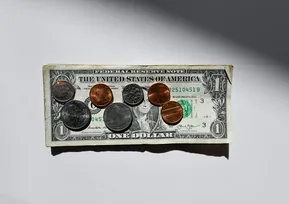
Photo by Abbe Sublett on Unsplash


Surging interest among Korea’s biggest enterprises

According to a survey conducted by local news outlet E Today, 46 of Korea’s top 82 corporations as designated by the Fair Trade Commission (FTC) are pursuing ventures in Web3 and blockchain this year, including those related to non-fungible tokens (NFTs), security tokens, and logistics chains. The survey examined whether the corporations had issued coins, tokens, or NFTs; whether they had corporate divisions or subsidiaries dedicated to blockchain-related projects; and whether they had made investments in blockchain or digital asset-related companies as well as coin and token issuance projects. It was conducted remotely using publicly disclosed information and press releases.

Of the 82 total companies, 48 are under the mutual investment restriction system, which prohibits independent corporations from investing their capital in the form of an exchange. Commercial law prohibits mutual stock holdings between parent companies and their subsidiaries in order to prevent a processive increase in company assets through mutual investments. Of those 48, the survey revealed that 32 are engaged in blockchain and Web3-related projects.

Nearly 60.42% of the mutual investment restriction group and 48.78% of the total survey group were found to have become involved in the field by signing business deals with blockchain and digital asset-related companies or utilizing blockchain technology themselves.

On the other hand, only seven corporations, or 8.54%, had directly issued digital assets or invested in related companies. On the other hand, 26 firms, or 31.71%, invested in NFT-related businesses.


Navigating the path to Web3 adoption

However, although Web3 is gaining traction as the next generation of future innovation, it has not yet become the dominant trend as Web3 platforms have yet to attract a significant user base. This hindrance can be attributed to the ongoing crypto winter and strict financial regulations.

Woo Jong-soo, Director of the Pohang University of Science and Technology’s (POSTECH) Blockchain Research Center and a professor at POSTECH’s Graduate School of Information and Communication, also pointed out that in order for blockchain to exert its influence as an innovative technology, it should be open to the public like Bitcoin. There will be limitations in implementing centralized private blockchains into corporate businesses, he said.

But despite these challenges, major leading companies are still pushing their own Web3 and blockchain projects. “The current situation is not an ideal time for diving into Web3 and blockchain businesses, but everyone is quietly preparing while waiting for regulatory uncertainties to be resolved,” said an anonymous developer working at a major corporation.

Notably, Park Hye-jin, a professor at the Seoul School of Integrated Sciences and Technologies, revealed that she had received separate Web3 business consultation requests from several teams under the same division of a particular corporation and that these teams were essentially unaware of each others’ ventures into the field. The corporation, which ostensibly announced that it had closed its business, also continues to request consultations, she claimed, highlighting the corporate world’s acknowledgment of Web3’s potential.

“Individuals can now monetize and have control over their data, which big tech companies like Facebook and Instagram used to own,” Park explained. “The essence of Web3 is that it is ushering in an era where users have the ability to take initiative.”

More to Read
View All
Web3 & Enterprise·

Nov 17, 2023

FD International joins hands with Lbank to expand global blockchain ecosystem

FD International joins hands with Lbank to expand global blockchain ecosystemFD International, the parent company of blockchain consulting and IT company Blockchain Innovation, announced on Friday (local time) that it has signed a memorandum of understanding (MOU) to collaborate with the global cryptocurrency exchange LBank.Photo by Shubham Dhage on Unsplash“Blockchain-related industries are growing exponentially worldwide, and we hope to create an ecosystem that can have a positive impact on many people through our well-prepped collaboration with LBank,” said FD Group CEOs Jeon Da-seul, Lee Seo-yeon, and Jeon Sol.Lbank’s global presenceEstablished in 2015 in Indonesia, LBank currently boasts a user base of over 10 million people and a daily trading volume of up to $1.5 billion. It currently supports over 50 fiat currencies, several major cryptocurrencies like Bitcoin and Ethereum and a wide variety of payment methods including Apple Pay. It also operates branches in other countries like the U.S. and Canada.Navigating regulatory landscapesFD International has been working on creating Travel Rule solutions for Korean exchanges such as Bithumb, Coinone and Korbit in accordance with relevant regulatory guidelines like the Act on Reporting And Using Specified Financial Transaction Information. The Travel Rule refers to the Financial Action Task Force’s (FATF) Recommendation #16, which outlines that VASPs must share certain personal information about customers — including names and account numbers — when facilitating crypto transactions that exceed a certain amount.The firm has also been leveraging its expertise in the blockchain and IT fields to help accelerate major companies such as Klaytn and Everscale. Notably, the company adapts its solutions and technological capabilities to regulatory trends, such as the Financial Services Commission’s (FSS) regulations on security token offerings (STOs) and the European Union’s Markets in Crypto-Assets Regulation (MiCA) legislation.

news
Web3 & Enterprise·

Jul 21, 2023

Bitget Targets MENA Business Expansion

Bitget Targets MENA Business ExpansionBitget, the Seychelles-based cryptocurrency derivatives exchange, is setting its sights on the Middle East and North Africa (MENA) as the region emerges as a fast-growing crypto hub.The firm announced its expansion plans via a press release which was published on Thursday. With countries like the United Arab Emirates (UAE) and Bahrain embracing crypto, more exchanges are taking notice and entering the market. Bitget has now joined the ranks of a series of crypto companies seeking to establish a foothold in the region.Photo by Kyle Glenn on UnsplashIncreasing crypto adoption and interestCiting the region’s impressive crypto adoption rate, which accounted for 9.2% of global transactions between 2021 and 2022, Bitget is capitalizing on the growing interest in digital assets. The UAE alone experienced a remarkable 400% increase in registered crypto businesses over two years, driving a surge in global digital asset trading by 10%. Moreover, blockchain-related educational programs have tripled in the region, which contributes to 8% of the overall mining hash rate. All of these are creating a favorable environment for Bitget’s expansion.Dubai officeTo support its entry into the Middle East, Bitget has opened an office in the heart of Dubai and has already hired 60 new employees for various mid and back-office positions. The company aims to scale its Middle East team further, with plans to hire 30 to 60 more professionals over the next two years.Bitget is not alone in recognizing the potential of the Middle Eastern market. Bybit, another major cryptocurrency exchange, recently obtained local licenses to operate in the digital assets space in the UAE, having moved its global headquarters to Dubai in April.OKX, one of the largest exchanges by volume, also received a Minimal Viable Product (MVP) Preparatory License from the Dubai Virtual Assets Regulatory Authority (VARA). Binance is also eyeing the Middle East, with Binance Dubai poised to become the primary focus for the company’s development efforts, given regulatory challenges in Europe and the US.Global expansion strategyBitget’s expansion into the Middle East is part of its broader global scaling strategy. The company has already registered as a Virtual Asset Service Provider (VASP) in Poland and Lithuania, and it launched a localized Turkish website earlier this year.Founded in 2018, Bitget boasts a user base of over 8 million users across more than 100 countries, offering copy trading services. The company’s move to the Middle East showcases its determination to tap into new markets and solidify its position as a global player in the cryptocurrency exchange landscape.There’s been a lot going on at Bitget in recent months, in addition to these regional expansion plans. In May the company announced a corporate social responsibility project named “Blockchain4Youth,” cleverly identifying the importance of connecting with the younger demographic which is far more likely to drive crypto and blockchain adoption.Earlier this month it launched a crypto loans product offering while last week it provided transparency via its proof of reserves initiative, demonstrating a 223% level of reserves and outlining that the company is debt free.

news
Policy & Regulation·

Nov 07, 2023

Hong Kong regulators consider opening up crypto ETFs to retail

Hong Kong regulators consider opening up crypto ETFs to retailHong Kong regulators are now exploring the possibility of allowing retail investors to participate in spot crypto exchange-traded funds (ETFs).The CEO of Hong Kong’s Securities and Futures Commission (SFC), Julia Leung, was cited by Bloomberg on Sunday as having indicated that provided that the necessary regulatory approvals and checks are in place, the regulator may be open to the notion of retail participation where spot crypto ETFs are concerned. Leung emphasized the regulator’s openness to innovative technology that enhances efficiency as long as it addresses potential new risks.Photo by Markus Winkler on Pixabay‘Happy to give it a try’She stated: “We welcome proposals using innovative technology that boosts efficiency and customer experience. We’re happy to give it a try as long as new risks are addressed. Our approach is consistent regardless of the asset.”While both the United States and Hong Kong currently permit futures-based cryptocurrency exchange-traded funds (ETFs), the adoption of such instruments has been relatively modest in comparison to the broader fund industry.In Hong Kong, there are currently ETF listings for products like Samsung Bitcoin Futures Active, CSOP Bitcoin Futures and CSOP Ether Futures, with a total combined asset value of approximately $65 million. In June, Hong Kong’s largest ETF manager, Hang Seng, suggested that it too was considering a crypto product offering.In accordance with the SFC’s digital asset regulations, individual investors already have the opportunity to trade prominent cryptocurrencies like Bitcoin and Ether on licensed cryptocurrency exchanges since June 1. Presently, BC Technology Group Ltd.’s OSL and HashKey Exchange are the only platforms in Hong Kong with permits for cryptocurrency trading. Additionally, there are expectations that mandatory regulations concerning stablecoins will be introduced over the course of the next year.Prioritizing investor protectionLeung expressed the regulator’s cautious approach, stating:“As the crypto ecosystem evolves step-by-step to the point where we’re comfortable, then we’re happy to open up more access to the wider investing public.”Notably, Hong Kong also recently unveiled its Web3 plans, highlighting its commitment to embracing blockchain and decentralized technologies.Hong Kong introduced a specialized regulatory framework for virtual assets in June which are designed to attract businesses while prioritizing investor protection. That need to protect consumers has been underscored recently by the alleged fraud that has subsequently been uncovered involving HK$1.6 billion ($204 million) at the unlicensed JPEX cryptocurrency exchange in the city.Market reactionThe significance of such a move isn’t lost on crypto market participants. Taking to X, one wrote: “Seismic shift. Hong Kong’s play could reshape the Asian crypto landscape. #Bitcoin ETFs? A strategic move to anchor HK as the digital nexus of Asia.” Another claimed that this “might redefine the crypto landscape and fuel the next bull market.”A report published by the Hong Kong Stock Exchange in April found that crypto ETFs have the potential to play a significant part in the next phase of digital asset innovation in Asia.Leung emphasized the importance of a strong and comprehensive regulatory structure, highlighting the SFC's efforts to enhance transparency in processing license applications for virtual asset exchanges.Moreover, the Hong Kong Monetary Authority (HKMA), the Chinese autonomous territory’s central bank, is actively exploring the possibility of offering guidance to banks regarding the provision of digital asset custodial services. These services are considered vital for nurturing the growth of a digital asset ecosystem and ensuring investor security.

news
Loading