Top

Metaplanet turns to Bitcoin amidst Japan's economic challenges

Web3 & Enterprise·May 16, 2024, 11:46 PM

Metaplanet Inc., a Tokyo-listed crypto investment and consulting firm, has announced its adoption of Bitcoin as its strategic treasury reserve asset. This decision comes in response to the ongoing economic challenges facing Japan, including high government debt levels, prolonged negative real interest rates, and a weakened yen.


Japan currently faces significant economic adversity, with the highest government debt-to-GDP ratio among developed countries at 254.6%, according to the International Monetary Fund. Despite the government's decision to raise interest rates in March, the Japanese yen experienced a sharp decline to its lowest level in 34 years last month, as reported by Reuters.

https://asset.coinness.com/en/news/f9ab642306a6c87b2df4a3151093bde2.webp
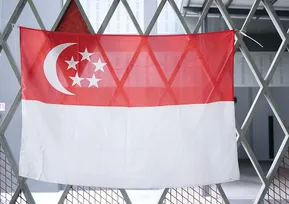
Photo by Takashi Miyazaki on Unsplash

Bitcoin as a store of value

Metaplanet Inc. highlighted Bitcoin's attributes as a non-sovereign store of value that has demonstrated appreciation against fiat currencies. The firm noted that Bitcoin's monetary policy is predetermined and immutable, with a maximum supply of 21 million coins set to be reached by the year 2140. This characteristic distinguishes Bitcoin from traditional monetary metals and other cryptocurrencies subject to centralized control.


Strategic approach

In its official release, Metaplanet Inc. stated its intention to leverage a variety of capital market instruments to enhance its bitcoin reserves. As of May 10, the company reportedly held 117.7 BTC, equivalent to $7.2 million, according to data from Bitcointreasuries.net. This move reflects Metaplanet's strategic response to Japan's economic conditions and its commitment to diversifying and growing its assets in the cryptocurrency space.


 

More to Read
View All
Web3 & Enterprise·

Nov 08, 2023

OKX announces delisting of 26 trading pairs

OKX announces delisting of 26 trading pairsCryptocurrency exchange OKX has made a significant announcement regarding the delisting of more than 20 trading pairs, with a view towards its ongoing maintenance of strict listing criteria and performance monitoring. This decision will impact a considerable number of trading pairs across various cryptocurrencies, with the process scheduled to commence later this week.OKX outlined details of this recent trading pair purge in a statement published to its website on Monday. Among the trading pairs set for removal are CELO-USDC, AXS-USDC, APE-BTC and the HNT-USDT trading pair, which will be delisted on Nov. 10. Notably, Bytom (BTM), a Chinese crypto project, which has experienced a substantial 46% drop in value since Monday, is also among the tokens to be delisted.The exchange is advising users to manage their assets accordingly in preparation for the changes. Withdrawals for these tokens will cease on Jan. 10, 2024. During this transitional period, OKX recommends that users cancel any open orders linked to the impacted trading pairs to avoid automatic cancellations, which could result in processing delays.Photo by Maxim Hopman on UnsplashSAITAMA delistingDeposits for the affected tokens, including HNT, BTM, and SAITAMA, were halted by OKX on Nov. 3. SAITAMA, an Ethereum-centric ERC20 token, is the primary payment medium on the Saitama platform. There were mixed reactions to the delisting of the coin. One community member took to X, stating:“I will say I do think it isn’t cool for OKX to delist #Saitama considering we didn’t get on there for the reasons specified of delisting. The listing was won through hours of Spaces and helping people get VPNs to win a contest. Regardless of what the market is doing we won fairly.”Another Saitama project supporter took a more pragmatic view, stating:“Delisting Is a tragedy? I don’t think so. What did the OKX listing for the token price? What is the difference between holding or selling with or without okx? Volume was too low, and this isn’t a news, so they will delist. They will relist again….#SAITAMA”OKX has embarked upon several initiatives over the course of 2023 in an effort to further the user proposition offered by the platform. From a marketing perspective, the company took the decision in October to retire the Okcoin brand, rebranding its various sub-platforms instead to OKX.The Seychelles-incorporated company indicated in September that it expects to have secured a virtual asset service provider (VASP) license in Hong Kong by June of next year.Delisting banksTokens are not the only items to be delisted by the exchange recently. Alongside competitor Bybit, the company decided to delist sanctioned Russian banks Tinkoff Bank and Sberbank from its peer-to-peer exchange platform.This move by OKX reflects the exchange’s efforts towards maintaining a high level of integrity and performance. Listing coins that fall below a minimum acceptable level of liquidity and trading volume can leave them much more exposed to the risk of manipulation. By adhering to stringent listing criteria and promptly addressing issues, the company is making a greater effort towards maintaining a position as a trusted and secure trading platform for cryptocurrency enthusiasts and investors.

news
Policy & Regulation·

May 19, 2025

South Korea’s DPK to propose crypto bill with $3.58M stablecoin reserve minimum

South Korea's Democratic Party of Korea (DPK) plans to introduce a bill this week aimed at establishing a legal framework for digital assets, according to Edaily. The move is part of the party's ongoing efforts to advance its crypto policy agenda ahead of the upcoming presidential election. The proposed law would define the legal status of digital assets and set rules for their issuance, distribution and listing. The bill is expected to keep the requirement for Korean won-pegged stablecoin issuers to obtain authorization with a minimum reserve of 5 billion won ($3.58 million), a key point of debate.Photo by Brady Bellini on UnsplashA DPK official stated that the bill has been drafted and is set to be introduced to the National Assembly this week, following feedback from internal subcommittees. Most of the provisions remain consistent with last month’s draft, but final comments are still being collected on stablecoin reserve requirements, which have been a major point of discussion. Defining digital assetsThe bill defines digital assets as "electronic records with economic value based on blockchain technology" and establishes a regulatory framework for issuers, exchanges and custodians. Key provisions include permitting initial coin offerings (ICOs) and creating a digital asset committee under the Financial Services Commission (FSC). This committee would oversee legal framework design, market monitoring, and policy promotion. Additionally, an industry association will establish a separate committee to oversee token listing practices, ensuring consistent listing standards across exchanges. The most contentious part of the draft has been the regulations for won-based stablecoins. It classifies stablecoins as digital assets akin to fiat currency, requiring a minimum reserve of 5 billion won and authorization from the FSC. It also mandates real-time reserve disclosures, secure asset custody and quarterly reporting. Divide over stablecoin reserve requirementOpinions on the reserve requirement are divided. Some industry insiders argue that the 5 billion won threshold is too high, creating a barrier for startups. Others believe a minimum capital requirement is necessary due to stablecoins' role in payments and their potential as currency substitutes. Lee Jung-yup, president of the Blockchain Law Society, stressed that stablecoins must maintain a basic level of trust, warning that those failing to meet the 5 billion won threshold could become prone to insolvency or fraud. However, Lee acknowledged concerns about the centralized regulatory approach led by financial authorities and the potential for market dominance by large corporations. He suggested exploring the creation of an independent regulatory body for cryptocurrencies, warning that overly strict regulations could stifle domestic digital finance innovation amid growing global competition. Crime surges with market growthWhile regulations continue to evolve, crypto crimes are also rising sharply amid the expanding digital asset market. According to Segye Ilbo, South Korean police arrested about 2,100 individuals for crypto-related offenses last year—17 times more than in 2017, when data collection began. The total losses from such crimes now exceed 1 trillion won ($714 million) annually. Since the election of U.S. President Donald Trump, known for his crypto-friendly stance, Korea's crypto market has experienced rapid growth. This surge has raised concerns about an increase in fraud targeting investors chasing quick profits. 

news
Web3 & Enterprise·

Oct 11, 2023

Dunamu Restructures Leadership at Its Blockchain Research Arm

Dunamu Restructures Leadership at Its Blockchain Research ArmDunamu, the operator of South Korea’s largest cryptocurrency exchange Upbit, has implemented leadership changes at its blockchain research arm, Lambda256. That’s according to a report by local media outlet Decenter.Photo by Lea L on UnsplashCo-leadership structureStarting this month, Lambda256 welcomes a co-leadership structure, with tech maven Chung Ui-chung and financial specialist Park Yong-shin stepping in as co-CEOs. Each CEO holds independent signing authority. Chung previously held the role of Chief Technology Officer (CTO) at internet messaging giant Kakao, while Park Yong-shin boasts a distinguished career in public administration and finance, having passed the civil service examination and later steering the helm at Heungkuk Investment Trust Management, currently known as Heungkuk Asset Management.Tech expert and gov’t affairs specialistThe reshuffle follows the departure of former CEO Park Jae-hyun, who resigned last month. Shedding light on the division of roles, a Lambda256 official mentioned that Chung will spearhead practical endeavors, whereas Park Yong-shin will liaise with government sectors. Industry analysts perceive this strategic move as Lambda256’s intensified drive to hone its technological edge and navigate the evolving government regulations surrounding security tokens and associated blockchain ventures.Dunamu, holding a dominant 60.6% ownership in Lambda256, established the company in 2018, entrusting the leadership to Park Jae-hyun, a former employee of SK Telecom and Samsung Electronics. The subsequent year saw Lambda256 evolve into a subsidiary, rolling out blockchain platforms like Luniverse. However, financial challenges loomed, with the firm recording net losses of KRW 2.1 billion ($1.6 million) in 2020, KRW 3.7 billion in 2021, and KRW 46.5 billion in 2022.

news
Loading