Top

Chinese police bust 1.9 billion USDT banking operation

Policy & Regulation·May 21, 2024, 7:26 AM

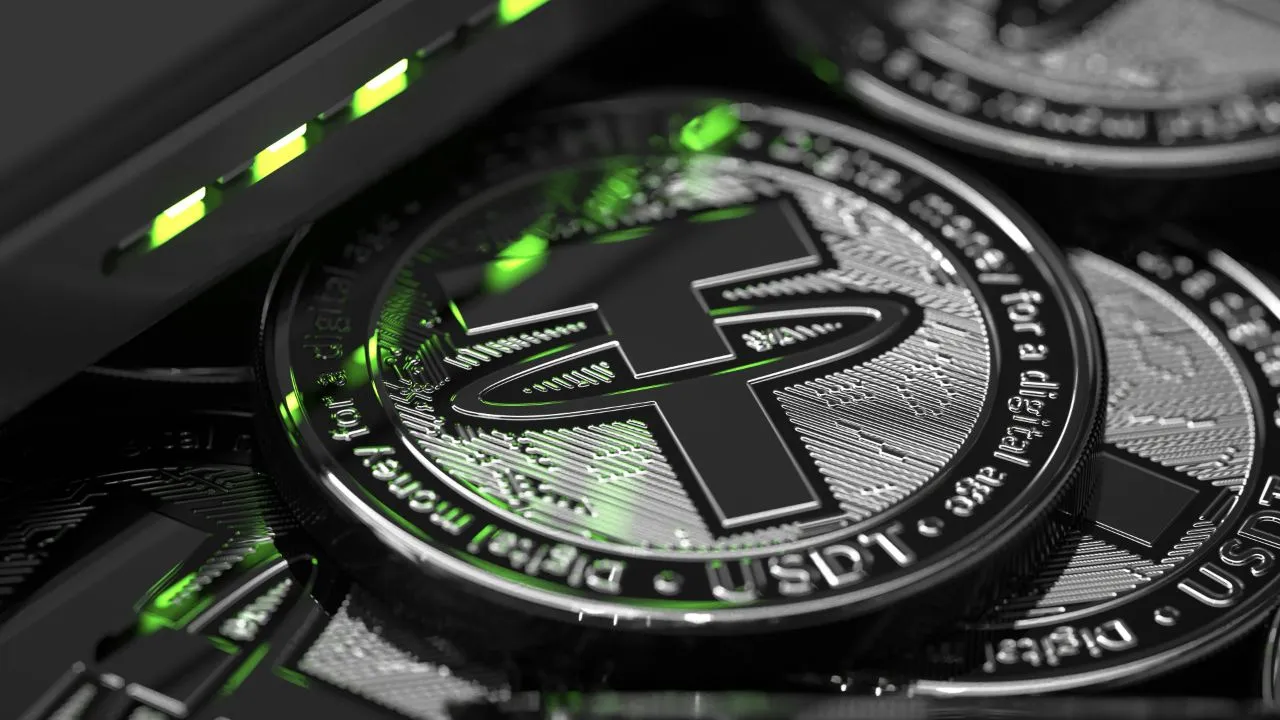
In a major crackdown, the Chengdu Public Security Bureau announced on May 15 the dismantling of an extensive underground banking network, resulting in the arrest of 193 suspects across China in an operation that unveiled illegal businesses using the U.S. dollar stablecoin, Tether (USDT).
https://asset.coinness.com/en/news/cd1bcc8fa6cc50d3d0bf670d4113d21d.webp
Photo by DrawKit Illustrations on Unsplash

Unauthorized foreign exchange settlements 

These activities involved illicit transactions amounting to approximately 13.8 billion yuan ($1.9 billion). The investigation began in November 2022 when authorities detected suspicious activities involving underground banks in Chengdu’s Longquanyi district. In response, a specialized task force was formed, integrating experts from various police departments, including economic investigation, cyber security and legal affairs. This team uncovered unauthorized foreign exchange settlements that bypassed national regulations.


On June 1 of last year, acting on instructions received from the Ministry of Public Security, the task force conducted coordinated raids in several major cities, such as Shanghai and Shenzhen. These efforts led to the capture of key figures in the criminal syndicate, involving the arrest of 25 suspects. Law enforcement seized numerous bank cards, payment instructions and other digital payment instruments tied to the illegal operations during these raids. A broader investigation across 26 provinces has resulted in 193 suspects being arrested.


Using USDT to evade regulation

Further investigations revealed that since January 2021, the syndicate exploited its import and export business to facilitate illegal activities. By using USDT as a medium, they bypassed official foreign exchange channels to service clients needing to transfer funds internationally. Moreover, these operations were intricately linked to other illicit activities, including financial fraud and smuggling.


In a related development, on May 13, BeInCrypto reported that the Chinese government arrested six individuals responsible for illicit crypto transactions worth $295 million. These arrests highlight the challenges and risks associated with cryptocurrency in unregulated environments.


Additionally, the Hong Kong police recently apprehended three men at a currency exchange shop following a deceptive transaction involving Tether’s USDT. The suspects allegedly showed a customer ceremonial "hell money" before deceitfully persuading him to transfer about $128,073 worth of USDT, only to refuse the agreed-upon cash exchange afterward. 


According to the South China Morning Post (SCMP), hell banknotes are a form of ceremonial paper money burned as an offering to ancestors or deities in traditional Chinese culture.


Late last year, USDT was used by a gang of gold smugglers in Nepal, who received $16 million in the Tether stablecoin in exchange for the precious metal. A joint investigation carried out by the authorities in Nepal and China led to the arrest of two Chinese and 13 Nepalese nationals in connection with the illicit activity.


Over the course of the weekend, it emerged that two Chinese nationals had been charged by the authorities in the United States with money laundering through Bahamas-based Deltec Bank. Deltec acts as the primary banker for Tether, prompting longstanding Tether critics to suggest illicit activity relative to the stablecoin issuer’s dealings with the bank.


This series of arrests and discoveries underscores the ongoing efforts of Chinese authorities to clamp down on illegal cryptocurrency activities. The activity also poses problems for Tether in its efforts to maintain compliance and stamp out illicit use in the face of ever-increasing regulatory scrutiny worldwide.



More to Read
View All
Policy & Regulation·

May 17, 2023

Korean Blockchain Game Publisher Joins UNGC to Bolster ESG Management

Korean Blockchain Game Publisher Joins UNGC to Bolster ESG ManagementWemade, a Korean blockchain game publisher, joined the United Nations Global Compact (UNGC) to bolster its environmental, social, and governance (ESG) management. The company announced its membership through a press release issued on Wednesday.Photo by Noah Buscher on UnsplashUNGC membershipSince its establishment in 2000, the UNGC has evolved into the largest corporate sustainability initiative worldwide. With a membership base of over 20,000 companies spanning across 162 countries, it serves as a platform for organizations to align their operations with ten principles encompassing human rights, labor, environment, and anti-corruption.Annual reportsUnder the guidelines of the UNGC, Wemade will fulfill its commitment by submitting an annual report called the Communication on Progress (COP). The company’s objective is not only to meet sustainable development goals but also to enhance its ESG management. Along with these endeavors, the company will strive to improve its corporate citizenship.ESG managementIn expressing his thoughts on the matter, Wemade CEO Chang Hyun-guk emphasized that the company’s inclusion in the UNGC would serve as a catalyst for driving sustainable growth through ESG management. He underscored its commitment to fulfilling corporate social responsibility and meeting global standards by practicing ESG management, given its position as a leading entity in the blockchain market.Wemade’s three main objectivesMeanwhile, Wemade is practicing ESG management centered on three main objectives: responsible environmental management, inclusive growth for future generations, and transparent governance.

news
Policy & Regulation·

Oct 21, 2025

Binance-Gopax deal under scrutiny as Korean lawmakers press for investor protection

During a National Policy Committee audit, South Korean lawmakers pressed financial regulators on their oversight of the domestic crypto market, focusing on Binance’s acquisition of local exchange Gopax, risks from order-book sharing with foreign platforms, and weaknesses in anti–money laundering (AML) controls.Photo by Kanchanara on UnsplashQuestions over Gopax compensationAccording to Kuki News, Democratic Party lawmaker Min Byeong-dug has urged regulators to reach out to Binance for details on its plan to compensate Gopax creditors following its acquisition of the local exchange. One of the nation’s five fiat-to-crypto exchanges, Gopax suspended withdrawals from its GoFi service, a yield-bearing product, in November 2022 after the collapse of the Bahamas-based FTX crypto exchange and the bankruptcy of Genesis, a U.S.-based crypto financial services firm. Citing investor losses estimated at 10 billion to 50 billion won (about $7 million–$35 million), Min said Binance had agreed to cover the shortfall as part of its cashless acquisition of Gopax, but full repayment to Korean users remains unresolved. He noted that the deal had faced delays due to concerns raised by the Financial Services Commission’s (FSC) Financial Intelligence Unit (FIU) over Binance’s eligibility as a major shareholder, and urged the FSC and FIU to ensure a clear and timely resolution for affected investors. Concerns over order-book sharingPeople Power Party (PPP) lawmaker Lee Heon-seung raised additional concerns about order-book sharing tied to the Binance–Gopax deal, warning it could create regulatory blind spots. According to Dailian, he asked the FIU about risks such as possible gaps in AML oversight at foreign exchanges and the potential exposure of Korean user data. FIU head Park Gwang said inadequate AML systems at overseas platforms can hinder fund tracing. He noted that separate approval is required before a domestic exchange can share its order book with a foreign platform, adding that no such request was under discussion. Park said the FIU would closely examine the matter and ensure protection of personal data. Lee also questioned how effectively regulators can supervise the crypto market given its scale, pointing to the Bithumb exchange as an example, where he had raised similar concerns about order-book sharing. Bithumb serves about 3.8 million users and records roughly 605 trillion won (approximately $426 billion) in annual trading volume. He said order-book sharing with major global exchanges such as Binance could complicate AML compliance, data protection, and regulatory oversight, and called for stronger enforcement. In response, Park said that the agency would ensure proper supervision to address these risks. Allegations of AML loopholes and illicit useAnother PPP lawmaker, Kim Jae-sub, flagged a potential AML loophole involving Binance, saying the exchange had allegedly been used by Cambodia’s Prince Group, which is linked to fraudulent schemes to conceal illicit funds. Last week, the U.S. Department of Justice filed a civil forfeiture complaint to seize roughly 127,271 Bitcoin linked to Prince Group’s operations, marking the largest seizure in its history. Kim also cited past allegations connecting Binance to illicit transactions involving Hamas and North Korea, and said the exchange’s founder faces related charges. He urged the FSC to conduct a thorough examination to determine the extent of any involvement if the claims prove accurate. As the parliamentary audit continues, lawmakers from both parties are pressing regulators to clarify standards, tighten oversight, and prioritize investor protection while maintaining fair and predictable rules for market participants. 

news
Web3 & Enterprise·

May 17, 2023

Sun Flags Unjust Token Profits of Huobi Founder’s Brother

Sun Flags Unjust Token Profits of Huobi Founder’s BrotherJustin Sun, Founder of the Tron blockchain and stakeholder in Seychelles-based global crypto exchange Huobi, has stated that the younger brother of the founder of the exchange, Li Wei, has received millions of Huobi tokens ($HT) when he shouldn’t have.Taking to Twitter, Sun wrote:“Li Lin’s younger brother Li Wei has repeatedly acquired a large amount of zero-cost HT through abnormal means. He has sold it on the Huobi platform many times in history, and has withdrawn huge amounts of cash”.Negotiating a refund and token burnSun went on to outline the action that he is in favor of taking in unison with decisions taken by the Huobi Global Advisory Committee (HGAC). “In order to protect people’s interests, the [HGAC] and the HT DAO community decided to recover and destroy the HT obtained by Li Wei at zero cost,” he wrote. “The HT destruction will be announced in the HT community. Such behavior will not be condoned,” he added.Sun complained that not only were the tokens wrongly allocated to Li Wei, he had been dumping the tokens on the market, selling them off for fiat money. In addition to the tokens being burnt, Sun says that he alongside the HGAC will “negotiate a refund” by engaging directly with Li Wei relative to the fiat money that he has already extracted through selling off the token.The Tron founder added that he doesn’t think it equitable that Wei should benefit from the token allocation as he hasn’t made any contribution to the Huobi community, stating that “fairness and the importance of rewarding those who genuinely contribute to the growth and development of HT DAO” are important.Double standardsSome in the crypto community would call double standards on Sun’s claims of a lack of fairness. At the time of the collapse of the FTX exchange in November of last year, Sun offered to help, collaborating with FTX’s Sam Bankman Fried to allow assets related to Sun’s crypto projects (TRX, BTT, JST, SUN, and HT) held by FTX customers on the exchange to be traded out of the exchange into external wallets.Trading in these assets recommenced for a time, with the price within the exchange being exorbitant relative to the regular market price outside of FTX. Many FTX customers ended up buying these tokens at excessive prices, without being able to extract them from the exchange like Sun had promised. To cap it off, those customers then had the newly installed FTX Debtor under the guidance of John J. Ray III, record their loss at the time the exchange officially went bankrupt at the normal market price for these tokens.Although originally a China-based exchange, Huobi moved out of the Chinese market due to adverse regulation, re-establishing itself in the Seychelles. The firm maintains offices in South Korea, the United States, Japan, and Hong Kong, where it has had a listing on the Hong Kong Stock Exchange since 2018.The $HT token has proven to be very volatile both in intraday trading on Tuesday and over the course of the past seven days. In both instances, it has hit high points in excess of $3.00 and low points of $2.70. At the time of publication, the token was trading at $2.90.Photo by Ant Rozetsky on Unsplash

news
Loading