Top

Hackers spirit away over $300M in Bitcoin from DMM Bitcoin

Markets·June 04, 2024, 3:28 AM

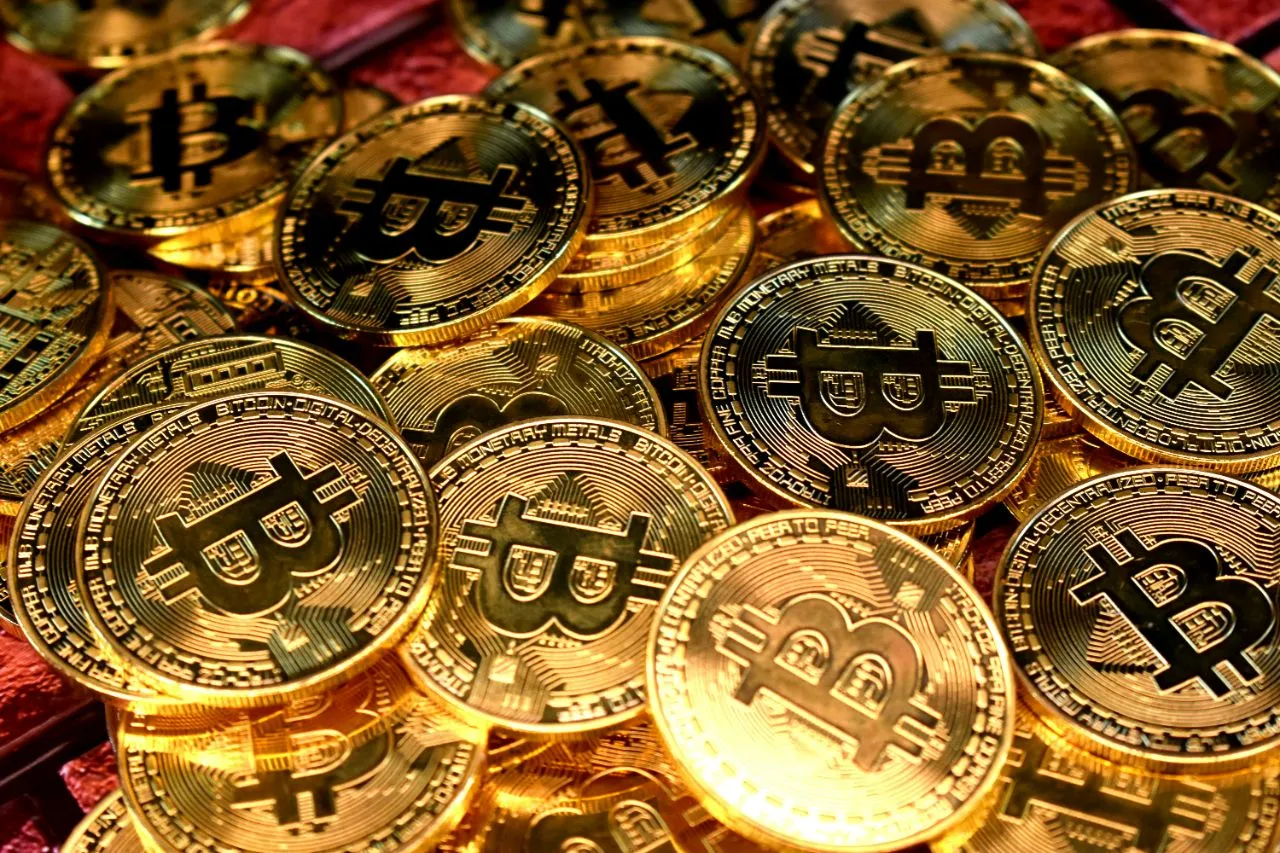
Japanese crypto exchange DMM Bitcoin announced on Friday that over $300 million worth of Bitcoin was stolen from its primary wallet, marking one of the digital asset industry's largest hacks in recent years.
https://asset.coinness.com/en/news/eebe7e21c5cf8ed0475ba0d9f4e98d52.webp
Photo by Kanchanara on Unsplash

Hack confirmed without further detail

"At approximately 1:26 p.m. on Friday, May 31, 2024, we detected an unauthorized leak of bitcoin from our wallet," the company stated, based on an English translation of its original statement in Japanese, which had been posted on the firm’s website. DMM Bitcoin is a subsidiary of DMM Group, which incorporates businesses covering a broad spectrum of activities including solar energy, gaming, 3D printers, FX, e-books and software.


The company has, as yet, not provided any further detail relative to the manner in which the hack occurred. Notwithstanding that, DMM Bitcoin did confirm that measures have been taken to prevent any repeat of the hack. Furthermore, the company outlined that a full investigation into the hack is ongoing right now.


Buy orders and leverage trades suspended

The company has moved to reassure platform users that their digital assets are fully guaranteed. It stated:


"Please rest assured that all of your bitcoin deposits will be fully guaranteed, as we will procure the equivalent amount of BTC that was leaked with support from our group companies." 


The exchange has taken the decision to temporarily suspend a number of activities, including spot trading buy orders and the opening of leveraged trading positions. A temporary halt has been imposed on crypto withdrawals while Japanese yen withdrawals are permitted, albeit that the exchange suggests that service users may experience delays.


Blockchain security sector response

In light of the hack, a number of well-known blockchain security firms have been giving the matter their attention. Beosin, a blockchain security specialist, outlined that it is continuing to monitor the wallet addresses implicated in the hack, with a view towards tracing any further movement of the funds.


Meanwhile, blockchain analysis firm Arkham Intelligence has offered a 1,000 ARKM token bounty to anyone who may provide information leading to the identification of the perpetrators of the hack. Blockchain analysis firm Chainalysis described the hack as “the 7th largest crypto hack ever.” The company has labeled the stolen funds within its products.


Broader industry implications and historical context

This hack is a significant blow to the industry, given that a hack on this scale has not occurred thus far in 2024 or at any point during 2023.


The crypto industry has faced numerous significant breaches in the past. In 2022, a series of large-scale exploits targeted layer-1 blockchains, crypto exchanges and DeFi protocols. The largest hack amongst them implicated the BNB Chain (formerly Binance Smart Chain), which resulted in the loss of $566 million worth of BNB.


The latest hack is second only (within Japan) in size relative to the 2018 hack of Coincheck, one of the country’s largest exchanges, when over $550 million worth of XEM was stolen. Japan was also host to the most infamous Bitcoin hack, that of the Mt. Gox exchange, whose bankruptcy administrators moved $9 billion worth of its remaining Bitcoin holdings on the blockchain in recent days for the first time in many years.


 

More to Read
View All
Web3 & Enterprise·

Nov 15, 2023

Bithumb records declining performance in Q3 amid market challenges and interest rate hikes

Bithumb records declining performance in Q3 amid market challenges and interest rate hikesBithumb Korea, the operator of the South Korean cryptocurrency exchange Bithumb, reported an on-year decline in performance compared to last year, driven by deteriorating market conditions. According to data from the Korean Financial Supervisory Service on Tuesday (local time), the exchange recorded a net loss of KRW 10.6 billion (approximately $8.1 million) and operating losses of KRW 650 million in Q3. Its revenue amounted to KRW 32.4 billion, a 53% decrease from the same period last year.Photo by Алекс Арцибашев on UnsplashFalling figuresBithumb had recorded KRW 28.8 billion and KRW 32.6 billion in operating and net profits, respectively, in Q3 last year, but both of these figures turned into a deficit for the same period this year.This worsened performance can be attributed to weakened investor sentiment amid the U.S. Federal Reserve’s ongoing interest rate hikes and a decrease in trading volumes.However, just last month, these conditions have begun drastically improving as excitement mounts for the potential approval of a spot bitcoin exchange-traded fund (ETF).Murky futureNevertheless, concerns about Bithumb’s profitability in Q4 are arising following the exchange’s zero trading fee policy that it implemented last month in a bid to regain its market share, especially because the primary source of revenue for crypto exchanges is trading fees. Bithumb had previously charged trading fees of between 0.04% and 0.25%.“We will do our best to enhance the competitiveness of our services to boost our market share,” Bithumb said. “At the same time, we will enhance the transparency of our operations through efforts such as our recent preparations for an initial public offering (IPO) and improvements in corporate governance.”The exchange’s upcoming IPO is part of efforts to be listed on Korea’s KOSDAQ stock exchange by 2025, which would make it the first virtual asset company to do so. It had previously considered preparing for an IPO in 2020 but suspended plans due to a lack of clear regulations for virtual assets. But with the upcoming Virtual Asset User Protection Bill set to take effect next July, Bithumb decided that the current regulatory landscape would be conducive to an IPO.Should it take effect, this IPO is also expected to pose a challenge to Upbit, which currently holds over 80% of the country’s market share. However, there is still a considerable amount of uncertainty shrouding this development, as financial authorities are maintaining a wary stance towards virtual assets.

news
Policy & Regulation·

Jul 14, 2025

Shanghai officials potentially signaling openness to stablecoins

The Shanghai office of a Chinese regulatory body which oversees assets belonging to state-owned enterprises (SOEs) is reported to have held a session dedicated to the topic of digital assets and in particular, stablecoins, fueling speculation of a positive shift in outlook on crypto in China.Photo by Hanny Naibaho on UnsplashOn July 11, Reuters reported that the State-owned Assets Supervision and Administration Commission (SASAC) held the meeting in Shanghai on July 10, with the publication suggesting that the event represented “a marked shift in tone” in the consideration of digital assets in China, bearing in mind that crypto trading and mining are banned within the country. Following the “development trend and response strategies” study session, He Qing, director of the organization, said that there was a need for "greater sensitivity to emerging technologies and enhanced research into digital currencies." The regulator called on Chinese state-backed agencies to consider the adoption of blockchain technology for use cases like real-world asset (RWA) tokenization, supply chain finance and cross-border trade. A policy expert from Shanghai-headquartered securities firm, Guotai Haitong Securities, attended the meeting, outlining details on the history, characteristics and categories of cryptocurrencies and stablecoins, while also discussing global regulatory frameworks. Last month, a subsidiary company of Guotai Haitong Securities, Guotai Junan International (GTJAI), became the first company from the Chinese mainland to be given approval by the Hong Kong securities regulator to offer digital asset trading services. Adapting to the stablecoin trendIn June, state-owned financial newspaper, Securities Times, called on Beijing to adapt “to the trend of stablecoins.” The publication claimed that industry insiders “generally believe that, as an emerging payment tool, the unique advantages and potential risks of stablecoins cannot be ignored, and that the development of [yuan-backed] stablecoins should be sooner rather than later”. The same month, Pan Gongsheng, governor of the People’s Bank of China, acknowledged that stablecoins are playing a role in disrupting global payments infrastructure.  It also emerged recently that JD.com, a Chinese e-commerce giant, and Ant Group, an affiliate company of the Alibaba Group, have been lobbying the Chinese authorities for the authorization of yuan-based stablecoins. On X, Shanghai Macro Strategist, a China strategist, claimed that the recent surge in the Bitcoin unit price had come about as a consequence of this stablecoin-focused SASAC meeting in Shanghai. At the time of writing, BTC has appreciated 9.3% over the course of the past seven days. The strategist suggests that the event is fueling speculation that “the Chinese government may be in the early stages of reassessing its official stance on the crypto industry.” In their monthly report for May, the strategist pointed out that “Beijing’s outright rejection of [Bitcoin] as a legitimate asset” was holding the leading asset back on its path to “reserve status.” The strategist added: “Over the longer term, a shift in China’s stance could prove to be the single most powerful bullish catalyst—elevating Bitcoin from a fringe asset to a globally recognized store of value.”

news
Web3 & Enterprise·

Feb 19, 2025

HashKey secures $30M in funding from Chinese VC firm

A Beijing-headquartered venture capital firm has invested $30 million in Hong Kong’s HashKey Exchange. That’s according to a report published by Bloomberg on Feb. 14, citing unnamed sources understood to be familiar with the matter. HashKey’s capital injection has come from Gaorong Ventures.  The Chinese VC firm was founded in 2014, initially known as Banyan Capital before rebranding as Gaorong Ventures in 2018. The VC firm focuses on early and growth-stage investments, with a specific interest in new technology.  Gaorong has 23 IPO portfolios on its books, together with 30 projects valued at in excess of $1 billion. It has been an early-stage investor in Chinese tech firms such as Chinese shopping platform Meituan and online retailer PDD Holdings.  Last year, the company participated in a funding round for Dongchedi, the car information and trading platform belonging to ByteDance, the parent company of TikTok.Photo by Towfiqu barbhuiya on UnsplashBeyond unicorn statusIn this instance, the funds were invested with HashKey Group weighing in with a post-money valuation in the region of $1.5 billion. That puts the company well beyond unicorn status, which it achieved in a previous $100 million funding round over a year ago. At that time, HashKey didn’t disclose the names of investors other than to state that they were “prominent institutional investors” and “leading Web3 institutions.” It’s understood that the round included both existing and new investors. Surging VC investment in crypto startups This latest investment comes amid a backdrop of a surge in venture capital investment into the crypto sector. Well-known American venture investors Sequoia Capital and Andreessen Horowitz (a16z) invested almost $1.2 billion in crypto projects last month.  In 2024, $13.7 billion was invested in crypto and blockchain startups by venture capital firms, marking a 28% increase on the previous year. In Q4 2024, the United States took first place, accounting for 46% of investment into startups across the market in general. Hong Kong weighed in with 17% in second place.HashKey is also playing its own role in crypto and blockchain startup investment. HashKey Exchange’s sister company, HashKey Capital, is an institutional asset manager that also invests in crypto startups. In recent weeks, the company has invested in SignalPlus, a crypto trading software firm focused on the Asian market, and Kelpr, a Cosmos (ATOM) ecosystem wallet project. More crypto VC investment in 2025In January, HashKey Capital CEO Deng Chao told Cointelegraph that he expected more VC capital investment in crypto startups in 2025. He stated: “As we enter into a supportive macro environment driven by stimulative US policies and the formalization of crypto regulatory frameworks, these macro tailwinds are set to drive more VC investments heading into 2025.” Meanwhile, the overarching HashKey Group is positive in its outlook with regard to the crypto and blockchain sector in 2025. Last month, it outlined that it expects Bitcoin and Ethereum to surge in price, the share of the market held by decentralized exchanges (DEXs) to increase, capital inflows into the sector from institutions to grow, the approval of more crypto ETFs and further development of layer-2 networks over the course of the year.

news
Loading
