Top

Hashgraph ecosystem developer explores use cases in Qatar

Web3 & Enterprise·September 23, 2024, 6:04 AM

The Hashgraph Association, a non-profit organization that focuses on building an ecosystem of startups and enterprises relative to the use of the Hedera Hashgraph public ledger, has announced that it intends to explore use cases for the technology in Qatar.


Hedera Hashgraph was first created in 2015 by Leemon Baird and Mance Harmon. The network is designed such that anyone can transact using it and deploy applications on it. However, governance is separated from consensus, with a group of businesses overseeing the network protocol.
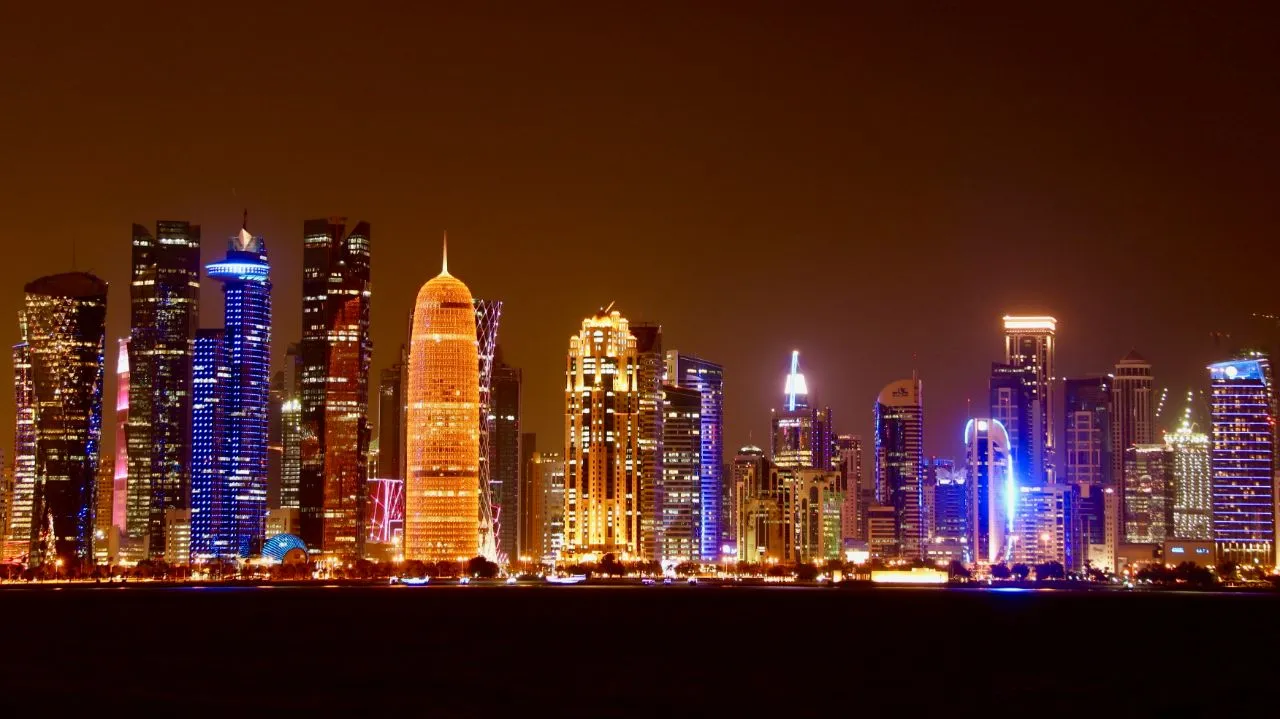
https://asset.coinness.com/en/news/9e70ddbfe97c737802a1c6356546da77.webp
Photo by Hongbin on Unsplash

Five key use cases

In a LinkedIn post published on September 19, the Hashgraph Association outlined that within the next 12 months, it would explore the implementation of five key use cases relative to the Hashgraph network in Qatar, collaborating with stakeholders within the Middle Eastern country in order to do so.


First on its list is the tokenization of equities. During the TOKEN2049 event in Singapore earlier this week, the HBAR Foundation, another entity which supports the creation of Web3 communities on the Hedera network, launched the Hedera Asset Tokenization Studio. 


According to the HBAR Foundation, the initiative “enables the seamless issuance and management of tokenized bonds and equities on the Hedera network.” The move, when considered in the context of the Hashgraph Association’s intentions relative to the pursuit of the tokenization of equities as a use case in Qatar, demonstrates that the distributed ledger technology (DLT) network’s most prominent stakeholders are homing in on this particular use case in furthering the use of the network. 


Dr. Sabrina Tachdjian, the HBAR Foundation’s head of fintech and payments, stated that the  Asset Tokenization Studio will lower technical barriers to the tokenization of bonds and equities, along with the recording of their underlying data on the ledger.


Sukuk tokenization

Other use cases up for exploration in Qatar are real estate tokenization and sukuk tokenization. A sukuk is an Islamic financial certificate. It’s a bond-like financial instrument which is sharia-compliant. The world’s first tokenized sukuk, linked to a sovereign instrument, was created in Malaysia in 2023. 


Fusang Exchange listed the product, as a digitized version of a sukuk issued by the International Islamic Liquidity Management Corporation (IILM), represented via an ERC-20 token. Shariah-compliant finance represents a $4 trillion opportunity.


Additionally, the Hashgraph Association is looking to exploit the carbon credit sector as a use case, while also looking towards the use of the Hedera Hashgraph ledger for the purpose of consumer engagement and loyalty programs.


Digital assets framework

On September 1, the Qatar Financial Centre (QFC) announced that the Qatar Financial Centre Authority (QFCA) and the Qatar Financial Centre Regulatory Authority (QFCRA) had launched the QFC digital assets framework. The Hashgraph Association believes that the regulations strengthen its role in “fostering innovation and trust within the digital assets ecosystem, further solidifying the region’s position as a global leader in fintech.”


In May, the Hashgraph Association announced at the Qatar Economic Forum a $50 million partnership with the QFC, with the goal of creating a digital assets venture studio in Qatar to support solutions built on the Hedera network.


More to Read
View All
Policy & Regulation·

Feb 28, 2025

First stablecoins gain DFSA approval in Dubai

The Dubai Financial Services Authority (DFSA), the financial regulatory agency of the Dubai International Financial Center (DIFC), a special economic zone, has approved two stablecoins under its crypto regulatory framework. The two stablecoins, USD Coin (USDC) and EURC, are both issued by blockchain-focused financial services firm Circle. While USDC is a U.S. dollar-backed stablecoin, EURC is a euro-backed stablecoin. In a press release published on the Circle website on Feb. 24, the company announced details regarding the approval. The stablecoins are the first to be recognized and approved by the DFSA.Photo by Christoph Schulz on UnsplashStablecoin integrationThe development means that firms based in the DIFC are now free to integrate either stablecoin into digital asset applications and products focused on areas such as payments and treasury management. A number of Circle executives took to social media to comment on the development. Circle Co-founder and CEO Jeremy Allaire outlined on X that the approval means that financial institutions in Dubai “are now able to transact in markets with USDC and EURC.” In legally recognizing the two stablecoins, Allaire pointed out that the DFSA had joined regulators in the European Union (EU) and Canada.  Last Summer, Allaire announced that Circle’s stablecoins complied with the EU’s Markets in Crypto Assets (MiCA) regulation. In December, Circle became the first stablecoin issuer to meet Canadian listing regulations. Dante Disparte, Circle’s chief strategy officer and head of global policy, pointed out that a trend is emerging requiring the pre-clearing of stablecoins prior to them entering into circulation or gaining regulatory approval. “In always-on finance, reciprocity is key,” he added.  Meanwhile, the firm’s EU Strategy & Policy Director, Patrick Hansen, underscored the significance of the approval. Hansen pointed to the fact that the DIFC is home to 6,000 registered entities, including 800 authorized financial firms. An ‘edge’ over TetherEugene Cheung, Chief Institutional Business Officer at Hong Kong-based digital asset platform OSL, said that the approval was “massive for institutional adoption,” while giving Circle an “edge” over Tether within the $157 billion stablecoin market. While Circle has always taken a regulatory-compliant approach, competitor Tether has struggled with compliance. In Europe, 10 companies have been approved to issue stablecoins under MiCA regulations, but Tether is not among them. This has led to a number of exchanges delisting Tether’s USDT in Europe. The DIFC was first established in 2004. The economic free-zone caters to firms operating within the Middle East, South Asian and African regions. The number of businesses registered within the free zone has increased by 25% since 2023. In November 2022, the DIFC recognized Bitcoin (BTC), Ethereum (ETH) and Litecoin (LTC). The following year, it added Toncoin (TON) and Ripple’s XRP, together with ZETA, the native token of the ZetaChain network. In 2024, the DFSA amended its crypto regulations to allow foreign funds to invest in recognized crypto tokens, while enabling domestic qualified investor funds to invest in unrecognized tokens.Although the regulatory approach taken by the authorities in Dubai accommodates stablecoins, algorithmic stablecoins are prohibited.

news
Policy & Regulation·

May 24, 2024

Gate.HK ceases operations and withdraws license application in Hong Kong

Gate.HK, cryptocurrency exchange Gate.io’s Hong Kong entity, is discontinuing its operations and has retracted its application for a crypto trading platform license with the local regulator. The company announced on Wednesday a planned "major overhaul" of its platform and has ceased new user registrations and deposits immediately. In compliance with local regulations, Gate.HK will delist all tokens—including major ones like Bitcoin, Ether and USDT—on May 28, urging users to withdraw their assets by August 28. The trading platform, which launched officially in May 2023, aims to re-enter the Hong Kong market in the future after securing the necessary approvals and contributing to the virtual asset ecosystem.Photo by Kelly Sikkema on UnsplashRegulatory environment and industry responseThe withdrawal of the license application, initially submitted in February 2023, was noted on the website of the Hong Kong Securities and Futures Commission (SFC) on May 22, without a disclosed reason for the withdrawal. The SFC mandates that crypto trading platforms without a submitted license application by Feb. 29 must shut down by May 31 or within three months upon receiving further notice. This regulation has impacted several platforms, including HKVAEX and Huobi HK, both of which have recently withdrawn their license applications and ceased operations or faced operational uncertainties in the region. Currently, the SFC is reviewing applications from 20 crypto firms, indicating significant interest among global exchanges in securing retail trading licenses in Hong Kong. 

news
Policy & Regulation·

Jul 24, 2025

Thailand’s SEC working towards updating ICO portal regulations

Thailand’s Securities and Exchange Commission (SEC), the independent state agency responsible for oversight and development of the Southeast Asian nation’s capital markets, is seeking public commentary on the updated set of rules it has proposed to regulate initial coin offering (ICO) portals.  In a notice published on its website on July 18, the SEC outlined that it is seeking public comments in relation to the criteria it has established for investor communication and service provision by ICO portals as part of its proposed regulations.Photo by Alin Meceanu on UnsplashEasing knowledge test requirementsThe regulations had been approved in principle last month and put an onus on ICO portals to ensure that retail investors take a knowledge test and pass that test before they are permitted to participate in trading ICO tokens. The current regulations stipulate that retail investors must undertake knowledge tests on an ongoing three-monthly basis. The updated regulations propose that ICO portals conduct suitability tests that are sufficiently comprehensive such that the investor understands the risks associated with any potential ICO-related investment. The SEC stated that the objective is that the investor has “a risk tolerance level appropriate and in alignment with the product risk.” Instead of quarterly knowledge tests, the proposed regulations require suitability assessments to be carried out once every two years. In this way, the commission believes that it will reduce the administrative burden for ICO portals while reducing friction for the investor. It stated: “These proposed requirements are in line with regulatory practices applicable to both securities and digital asset business operators.” Jagdish Pandya, founder of blockchain venture builder BlockOn Ventures, told Decrypt that “Thailand has been a first mover for crypto regulations and the SEC has played a pivotal role in providing all regulated activities and licenses, much ahead of Singapore, Malaysia, Philippines, and Vietnam in South East Asia.”  Moving past previous ICO market failuresPandya added that the proposed suitability tests would protect “amateur investors” from piling into ICOs and losing their funds like in the “old ICO scam era.” ICOs first gained significant popularity in 2017 as the crypto market started to expand. Around $6.2 billion in funding was raised by a broad range of crypto projects in that year. However, a complete lack of regulation at the time meant that the ICO marketplace was laden with outright scams. ICOs were being hyped up in pump-and-dump schemes, with investors losing most, if not all, of their funds as the fraudulent ICO promoters rug-pulled them, abandoning the projects and taking off with the ICO funding. Thailand’s existing ICO portal regulations were introduced in November 2023. The regulations require project promoters to make disclosures with regard to project creditworthiness and risk for debt-like tokens with a predetermined fixed rate of return.  Those promoting infrastructure-backed tokens, which allow the token holder to earn a revenue share from infrastructure projects, are subject to rules regarding items such as due diligence, asset valuation and issuer asset management.

news
Loading