Top

Ripple scores DFSA license approval in Dubai

Web3 & Enterprise·October 02, 2024, 2:57 AM

Blockchain-based digital payment network enterprise Ripple has announced that it has acquired in-principle approval of a financial services license from the Dubai Financial Services Authority (DFSA) in the United Arab Emirates (UAE).


In a press release published on the firm’s website on Oct. 1, Ripple claimed that the approval “unlocks Ripple’s end-to-end payment services in the UAE, boosting Middle East operations.”


The in-principle approval is a first step on the company’s path towards full approval. That eventuality will enable Ripple to offer cross-border payment services relative to fiat and digital assets, within the Dubai International Financial Center (DIFC) special economic zone.
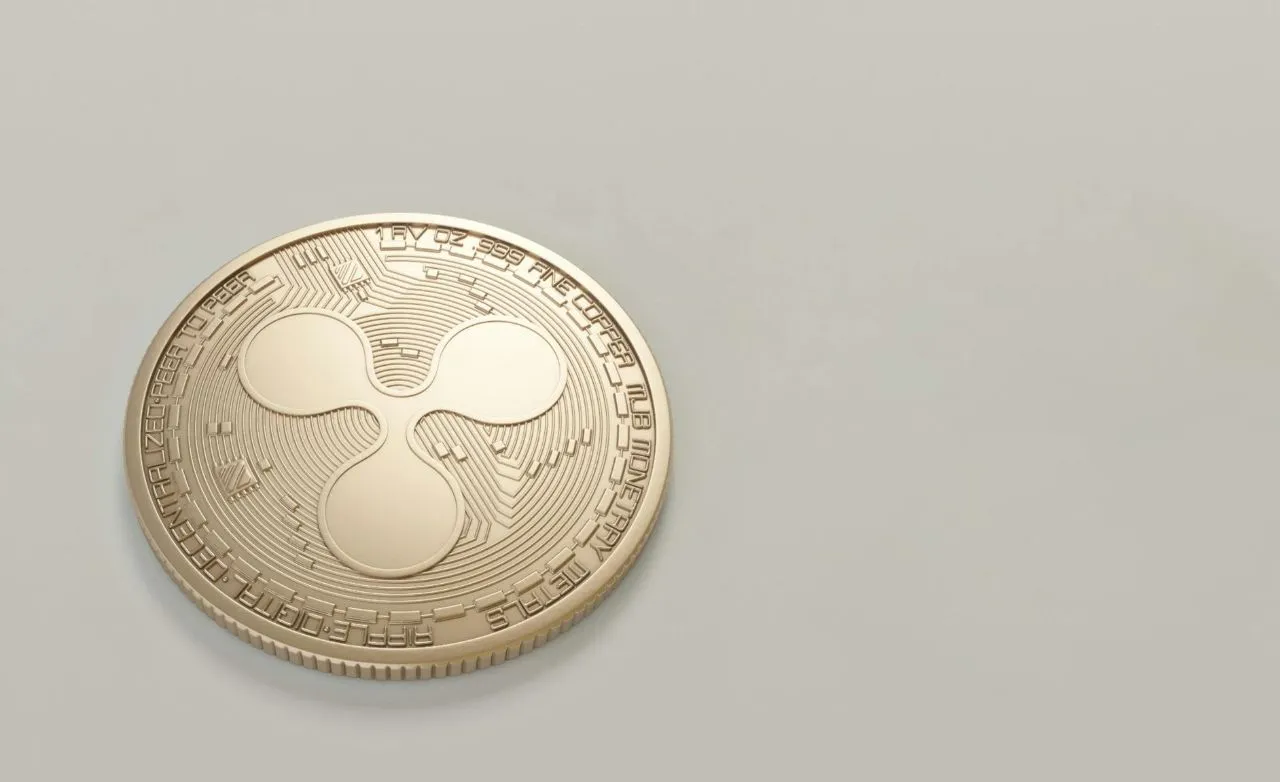
https://asset.coinness.com/en/news/aaf40f7199830707381fe5e0e24ec556.webp
Photo by Moose Photos on Pexels

Expanding Middle Eastern presence

The company claims that pursuing the license is part of a broader strategy to expand its Middle Eastern presence. It follows on from the firm’s move in 2020 to establish its Middle Eastern headquarters in Dubai. Ripple claims that the licensing “significantly strengthens Ripple’s global footprint as a regulated entity and enables the introduction of seamless cross-border payment services, including Ripple Payments Direct (RPD), in the United Arab Emirates (UAE).”


In moving from in-principle approval to full approval, Ripple will have further obligations to accomplish, such as securing office space within the DIFC special economic zone. The company had previously indicated its intention of establishing an office within the DIFC. Back in August, it emerged that Ripple had partnered with the DIFC Innovation Hub with a view towards promoting blockchain and digital asset innovation within the UAE.


Regulatory clarity in the UAE

Ripple is striving to become the first blockchain-enabled payment services provider licensed by the DFSA. Once licensed, the company plans to roll out its enterprise-grade digital asset infrastructure.


Ripple’s XRP has been one of five digital assets approved by the DFSA such that investment funds are allowed to invest in it, although the regulator did indicate in June that it is moving towards expanding the list of recognized tokens.


Mired in legal difficulties with local regulator the Securities and Exchange Commission (SEC) in its home market of the United States in recent years, the company signaled a change of strategy in 2023, indicating its interest in focusing more on international expansion.


While speaking at an event in Dubai at the time, Ripple CEO Brad Garlinghouse said that Ripple was expanding in Dubai. Taking to X in relation to this latest milestone, Garlinghouse wrote that “regulatory clarity is what businesses want, and what consumers need,” adding that “the UAE understands that.”


In the company’s press release, Garlinghouse referred to the “forward-thinking regulatory approach” being pursued in the UAE, which he believes is positioning the country “as a global leader in this new era of financial technology.”


The UAE isn’t the only focus for the company’s international expansion. Ripple has established an office in Singapore which handles over 50% of the firm’s payment flows. On Oct. 1, U.S. investment bank Houlihan Lokey published a report in which it highlighted Ripple as an emerging competitor to the SWIFT cross-border payments system. 


Although the company has had some success in navigating its way through litigation with the SEC in the U.S., it’s thought that the dispute may be prolonged further as some commentators have suggested that the SEC plans to appeal a recent court decision.


 

More to Read
View All
Policy & Regulation·

Dec 11, 2025

Japan to bring crypto under securities oversight amid rising demand

Japan is preparing to shift oversight of crypto assets from its payments rulebook to its main securities law, a move that would treat digital tokens more squarely as investment products rather than payment tools, according to a new report from the country’s financial regulator. In a working-group paper on crypto asset regulation released Dec. 10, the Financial Services Agency (FSA) said it plans to bring “crypto assets” under the Financial Instruments and Exchange Act (FIEA) instead of the Payment Services Act (PSA), as reported by local outlet CoinPost. The agency framed the change as an effort to strengthen investor protection as more households buy digital assets for investment purposes.Photo by Alessio Ferretti on UnsplashCrypto distinct from traditional securitiesThe regulatory perimeter itself would not expand. The FSA intends to keep using the PSA’s existing definition of “crypto assets,” while leaving non-fungible tokens (NFTs) and stablecoins outside the scope of the new framework. Under FIEA, crypto assets would be carved out as a distinct class separate from traditional securities, reflecting the fact that they generally do not confer legal claims such as dividends or interest payments. That distinction is already shaping how firms attempt to expand the economic utility of crypto assets. The move toward a clearer rulebook also arrives as market participants look for ways to construct return-generating mechanisms for assets that do not produce steady income on their own. Hong Kong–based Animoca Brands has partnered with Solv Protocol to provide Japanese institutions access to a Bitcoin-backed wrapper, according to Cointelegraph. The product is structured to generate returns in the 4% to 12% range for large holders, effectively layering yield on top of a token that otherwise provides no ongoing income. Rising retail demandThe regulator's report also details how deeply crypto has penetrated Japan’s retail market. As of October 2025, accounts at domestically registered crypto-asset exchanges had climbed past 13 million, with user deposits topping 5 trillion yen (about $32 billion). Roughly 70% of account holders fell into annual income brackets below 7 million yen (around $45,000), and more than 80% of individual accounts held less than 100,000 yen (about $640). The FSA said 86.6% of trading was driven by expectations of long-term price gains, indicating that most users view crypto primarily as an investment vehicle rather than a means of payment. Against that backdrop, the working group concluded that FIEA is a better fit than the PSA, which is geared toward payment services and anti-money-laundering (AML) controls. Shifting to the securities law would give regulators clearer authority to impose disclosure standards, govern conduct in the market, and levy penalties for unfair trading practices, the report said. The proposed framework would place heavier disclosure obligations on token issuances and initial exchange offerings (IEOs). Issuers or the listing exchanges would be required to provide key information to investors, and, in cases where an issuer does not have audited financial statements, offerings would be subject to investment limits. Crypto exchanges would face stronger due diligence requirements, tighter cybersecurity expectations, and broader insider-trading restrictions. Those rules would not only apply to employees at trading platforms but also to issuers and other insiders around listing events. Rules split for CEXs and DEXsCentralized exchanges (CEXs) would be supervised largely in line with securities firms. That would include requirements to maintain reserves or insurance to protect customer assets and expanded oversight of wallet-service providers connected to those platforms. Decentralized exchanges (DEXs), which have no central operator, would not be brought under the same regime. Instead, the FSA is proposing lighter, perimeter-based rules focused on disclosures by wallet providers and interface operators, coupled with efforts to warn users about the specific risks of trading on DEXs.  Industry participants, meanwhile, have raised concerns that licensed exchanges may face higher compliance costs in the near term as they adapt to the new regime.  Moving forward, the FSA is expected to refine the framework with an eye toward submitting a bill to the ordinary Diet session in the new year. 

news
Web3 & Enterprise·

Apr 24, 2023

Korean Cafe Attracts Customers with NFTs

Korean Cafe Attracts Customers with NFTsA South Korean cafe owner has employed non-fungible tokens (NFTs) as an ingenious marketing strategy to attract customers.©Pexels/Leeloo ThefirstNFT holder benefitsIn an interview with Korean crypto news outlet Digital Asset, Yoo Hyun, the entrepreneurial business owner, explained that he was seeking a strong marketing tool to capture the attention of the NFT market. Yoo was interested in seeing if his cafe could remain profitable while also offering substantial benefits to its customers.Since April 2022, Yoo has released a total of 50 Ethereum-based NFTs related to his cafe, Hide Me, Please (HMP), in two separate batches of 25 each. The first set of NFTs grants holders a free cup of coffee or drink daily for life, while the second set offers an extra drink or dessert with each drink purchased.Increased revenueThis unique NFT initiative has led to increased revenue for the cafe. Kim Dae-sung, the CFO of HMP, explained that the cafe’s monthly revenue increased by 15% compared to the same period last year.HMP is currently selling 500 NFTs as a third set and plans to release more depending on demand. Yoo highlighted the importance of an appealing interior design and tempting desserts, as NFT holders visiting for a free coffee may be enticed to purchase a dessert as well.Regular customersYoo asserts that the food and beverage industry hinges on retaining regular customers and believes NFTs can help achieve that objective. HMP aspires to become a community-based platform, and according to Kim, many digital artists are interested in the space that the cafe provides because it enables them to connect with clients. Collaborations often take place, and while the cafe charges for food and drinks, it does not charge for space rental. This approach fosters a positive impression and contributes to a strong brand image.High-quality cafeAt present, about 5% of HMP’s customers hold NFT memberships. Yoo and Kim plan to increase this number to 10% but no higher, as excessive reliance on NFT members could jeopardize the business. They underlined the significance of remaining a high-quality cafe, staying true to the core foundation of their enterprise. As they anticipate the growth of the Web 3.0 ecosystem, Yoo and Kim believe that with continued efforts, HMP will gain even greater value.

news
Web3 & Enterprise·

Sep 15, 2025

Bybit restores app access in India amid evolving regulatory stance

Cryptocurrency exchange Bybit has reinstated access to its mobile app for users in India via Apple’s App Store and Google Play, saying website access has been restored following regulatory steps taken earlier this year. The company said it registered with the Financial Intelligence Unit–India (FIU-IND) in January 2025 and re-enabled trading functions for eligible users on Feb. 25, with full app access announced on Sept. 8.Photo by appshunter.io on UnsplashPenalty and registration paved way for Bybit’s comebackThe return follows an enforcement action at the start of the year. On Jan. 31, FIU-IND imposed a penalty of 92.7 million Indian rupees (approximately $1.05 million) on Bybit for violations under India’s anti-money laundering law and said its website had been blocked under the Information Technology Act until compliance was achieved. The following month Bybit announced it had paid the penalty and completed its FIU registration. Bybit’s latest announcement comes against the backdrop of India’s cautious approach to sector-wide rules. A government document reviewed by Reuters indicates New Delhi is distancing itself from a comprehensive cryptocurrency law, citing the Reserve Bank of India’s view that regulation could confer “legitimacy” and elevate systemic risks, while an outright ban would not stop peer-to-peer or decentralized exchange activity. India does not have a comprehensive crypto law but applies a flat 30% tax on income from transfers of virtual digital assets (VDAs) and a 1% tax deducted at source (TDS) on consideration paid for VDA transfers under section 194S of the Income-tax Act. Platforms bet on India despite tighter oversightIt's worth noting that authorities had moved to bring offshore platforms within local oversight. FIU-IND issued show-cause notices to nine foreign exchanges (Bitfinex, Bittrex, Binance, Bitstamp, Gate.io, Huobi, Kraken, KuCoin and MEXC Global) in December 2023 and sought to block access to non-compliant services. App store removals of several offshore exchange apps occurred in January 2024 following the notices. Binance later registered with FIU-IND as a reporting entity after paying a fine of 188.2 million Indian rupees (about $2.14 million) for earlier violations, imposed in June 2024. KuCoin also registered, with a smaller penalty of $41,000. In March 2025, Coinbase joined the list by gaining clearance from the Indian financial regulator, announcing plans to launch offerings for retail customers in the country later this year, with other products to follow. Their rush to establish a foothold makes sense, as India topped the Chainalysis Global Crypto Adoption Index, underscoring the country’s widespread embrace of digital assets. Bybit’s re-entry follows a major security incident unrelated to India’s rules. In February, the exchange reported a theft of roughly $1.5 billion in Ethereum (ETH), which the U.S. Federal Bureau of Investigation later attributed to North Korean actors known as “TraderTraitor.” Shortly after the incident, Bybit CEO Ben Zhou said the exchange had replenished the gap in the ETH reserves. 

news
Loading