Top

Regulatory approach sees Singapore move closer to crypto hub status

Policy & Regulation·January 07, 2025, 2:06 AM

Crypto licensing developments in Singapore over the course of 2024, allied with feedback from industry insiders, suggest that the city-state has furthered its development as a crypto industry hub in the Asia-Pacific (APAC) region.
https://asset.coinness.com/en/news/227f80f6b1863cc163b343e43a2ce003.webp
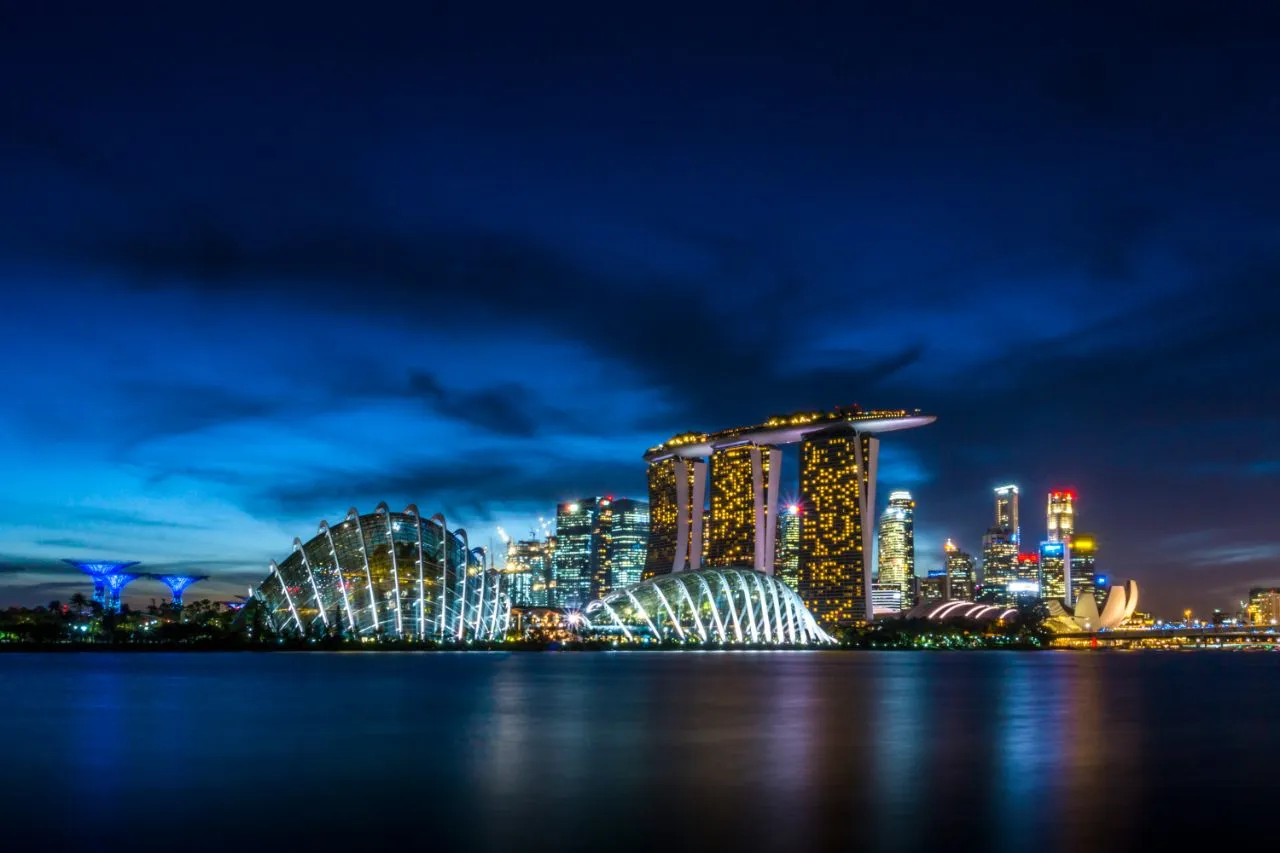
Photo by Mike Enerio on Unsplash

Doubling up on licensing issuance

According to a report published by Lianhe Zaobao, a Chinese language newspaper in Singapore, the Monetary Authority of Singapore (MAS), had issued twice the number of Major Payment Institution (MPI) licenses in 2024 by comparison with the previous year.


Four licenses were issued in 2023 to Crypto.com, Coinbase, Ripple and Blockchain.com. That compares with 13 licenses issued in 2024 to companies such as GSR, BitGo, Anchorage, Upbit and OKX.


This uptick in licensing signals a regulatory regime that is innovation-friendly, resulting in Singapore becoming a key destination for startup companies in the crypto and Web3 space.


Risk-adjusted regulatory approach

According to William Croisettier, chief growth officer at ZKCandy, Singapore is primed to continue its development as a leading crypto hub for Web3 businesses within the APAC region. ZKCandy is a gaming-focused hyperchain within the zkSync ecosystem that has developed due to a collaboration between the Ethereum layer-2 zkSync network and Southeast Asia’s largest gaming developer, iCandy.


Croisettier spoke to Cointelegraph on the matter recently, stating:


“The country adopts a risk-adjusted approach to crypto regulation, focusing on the biggest digital currencies to protect investors. Singapore also makes it easy for new crypto firms to interact with local banking partners, a provision considered a luxury in other parts of the world.”


Mouloukou Sanoh, co-founder and CEO of Dubai-based Mansa Finance, a DeFi platform that provides liquidity to cross-border payment companies, has also spoken positively about Singapore’s status within the crypto sector. Sanoh stated:


“With its clear regulations and support for innovation, Singapore attracts top companies and talent, fostering a thriving ecosystem. This proactive approach signals a strong commitment to digital finance, contrasting with Hong Kong's more cautious stance.”


Positive study findings

These views correlate with a recent study carried out by ApeX Protocol, a multi-chain liquidity platform. The study applied a ranking to ten jurisdictions based on factors such as jobs created in the blockchain field, the number of crypto exchanges located within a jurisdiction and the number of blockchain-related patents filed.


On that basis, it found that Singapore topped the rankings, ahead of Hong Kong in second place. Singapore was found to have 81 crypto exchanges located within the city-state, over 1,600 blockchain-related patents filed and 2,433 crypto-sector jobs created.


A recent survey conducted by CoinDesk found that from a crypto adoption perspective, Thailand, followed by the United Arab Emirates (UAE) and India, lead the APAC region. Of the 10 countries surveyed, Singapore weighed in in seventh place with a 23% adoption rate, just one percentage point behind Hong Kong with 24%. As Hong Kong and Singapore compete to attract crypto-related business, both still have room for improvement when it comes to the crypto adoption metric in comparison with other Asian countries. 
More to Read
View All
Markets·

Dec 13, 2023

Creditcoin listed on Upbit

Creditcoin listed on UpbitCreditcoin (CTC) — an ERC20 token issued on the Creditcoin Network — was listed on South Korea’s largest cryptocurrency exchange Upbit on Tuesday evening (KST), according to an official announcement on the Upbit website.Photo by Maxim Hopman on UnsplashThe token was initially listed on Upbit’s BTC trading market, then on the Korean won-denominated market (CTC/KRW) trading market shortly after. In the announcement, the exchange clarified that it can only be deposited through the Ethereum network and not others like BNB Smart Chain (BSC).Major growthUpbit is the third Korean exchange that CTC has been listed on after Bithumb and Gopax. “Through this listing on Upbit, we expect that CTC’s liquidity will be boosted significantly since it will be traded in a broader market,” said Gluwa, the developer of the Creditcoin Network. Notably, the token’s price jumped 171.14% in just a day following the listing. It is currently $0.64 as of this writing, according to CoinMarketCap.Revolutionizing RWA investmentsCTC tokens power the Creditcoin Network’s global real-world asset (RWA) ecosystem, which functions as a platform for connecting investors and fundraisers. Fundraisers initiate offers on the network, which are pegged with CTC, and investors can choose which offers to invest in based on assessing the risk by examining the fundraisers’ decentralized and public credit history. In this process, blockchain technology plays an important role by facilitating direct contact between fundraisers and investors, building a sustainable cryptocurrency ecosystem and allowing users to share credit history without disclosing personal information to centralized institutions or intermediaries.Since its major Creditcoin 2.0+ mainnet update that transitioned the protocol from a proof of work (PoW) to a fully nominated proof of stake (NPoS) consensus model, Creditcoin has experienced an increase in the number of network participants and the amount of staked CTC.

news
Markets·

Feb 02, 2024

Survey reveals Singaporeans bullish on crypto with 50% adoption

In a recent survey conducted by personal finance management solutions provider Seedly, together with global crypto exchange Coinbase, it was discovered that over 56% of Singaporeans currently own cryptocurrency, with nearly half expressing bullish sentiments regarding its future prospects over the 12 months of this year.Photo by Zhu Hongzhi on UnsplashFuture of financeTitled "The Pulse of Crypto Singapore Report," the study surveyed 2,006 Singaporean adults across various age groups and household incomes from October to November 2023. Survey participants were deemed to be “finance forward Singapore-based adults who have a strong interest in personal finance and investments.” It determined that 56% of respondents believe cryptocurrency represents the future of finance. Participants cited short-term profitability, long-term capital appreciation and portfolio diversification as key factors driving their optimism. The report’s authors speculate that this optimism is also due to the city-state’s approach to digital assets and the regulatory framework that has been put in place by the Monetary Authority of Singapore (MAS). Yeap Ming Feng, head of marketing at Seedly, also attributed the optimism towards crypto to Singapore's vibrant Web3 ecosystem, which fosters collaboration among builders, investors and users. When selecting a crypto exchange for trading, crypto owners prioritize security, low fees, regulation and ease of use. Coinbase, one of the report’s facilitators, doubled down on its operations in Singapore in 2023, acquiring a Major Payment Institution (MPI) license from the Singaporean regulator, enabling it to expand its product offering. It extended its offering further last month when it launched USD transfers via SWIFT. Notably, the survey identified staking as the most prevalent use case for cryptocurrency in the city-state.  Non-crypto user concernsHowever, the study unveiled that non-crypto users harbor concerns about market volatility (57%), high risk (53%) and the absence of regulation (45%) in the crypto space. Singapore was disproportionately affected by the demise of a number of crypto platforms in 2022. An outsize number of citizens were caught up in the FTX collapse having utilized that crypto exchange instead of Binance, which had been prohibited from trading within the territory. Singapore was also home to failed crypto lenders such as Vauld and Hodlnaut, failed crypto hedge fund Three Arrows Capital (3AC) and UST stablecoin developer Terraform Labs. These high-profile crypto failures so close to home are unlikely to have put crypto skeptics at ease in Singapore where the consideration of risk relative to digital assets is concerned. That said, MAS is actively working towards implementing additional rules to safeguard Singaporean investors. Despite these reservations, the survey underscores a growing interest in and adoption of cryptocurrencies among the financially aware population in Singapore. This trend aligns with Singapore's commitment to remaining a leader in Asia for crypto readiness and supports the city-state's vision of becoming a global digital asset hub. The study also highlighted the progress that the crypto market in general made recently. Over the course of 2023, crypto market capitalization has gained momentum, from $829 billion at the outset of the year, culminating at $1.72 trillion towards the end of the year, according to a report by CoinGekco.

news
Policy & Regulation·

Apr 27, 2023

Terraform Money Trail Leads to Swiss Bank

Terraform Money Trail Leads to Swiss BankAuthorities in both South Korea and the United States continue to advance their investigations into Terraform Labs, the Singapore-based company behind collapsed algorithmic stablecoin Terra USD (TUSD) and its South Korean CEO, Do Kwon, with the latest developments involving transfers made to a Swiss bank.©Pexels/Robert StokoeFollowing the moneyIn a lawsuit filed by the Securities and Exchange Commission (SEC) in the United States in February, the Commission claimed that Do Kwon and his company Terraform Labs transferred 10,000 Bitcoin to a Swiss bank. It now appears that the bank in question is digital asset banking specialist, Sygnum Bank.It’s understood that Do Kwon converted a large proportion of that Bitcoin into cash. According to Finbold, the Financial Securities Crime Joint Investigation Division at the Seoul Southern District Prosecutor’s Office has disclosed that it is following the digital asset trail to Switzerland in an effort to secure associated funds.LFG fundsThe funds are believed to have belonged to the LUNA Foundation Guard (LFG), an entity that was established with the objective of building reserves and safeguarding the USD peg of the Terra USD algorithmic stablecoin during volatile market conditions.Roughly 130 billion won, or $100 million, is being pursued, between digital assets and cash held within various Sygnum accounts. South Korean authorities had previously indicated that they were investigating transfers made by Do Kwon to a prominent Korean law firm. Earlier this week, they charged ten individuals connected to Terraform Labs with various offenses.During the press conference in which those charges were brought, the Seoul Southern District Prosecutor’s Office stated:”We have also confirmed that $100 million has been used in several places, not left in the Sygnum account as it is, and some transfers have been made to the Kim & Chang law firm account (at the attorney’s expense) and the remaining amount is about billions of won.”International complexityThis recent phase in the investigation is revealing the international nature of the case and the complexity that brings with it. Authorities in the United States and South Korea have submitted requests to have certain Sygnum Bank accounts frozen. Do Kwon and Terraform Labs are trying through the courts to have the SECs involvement dismissed on the basis that Terraform was a Singaporean company and Do Kwon a South Korean national, and on that basis they claim that the SEC lacks jurisdiction.Sygnum, being a Swiss entity will have to abide by what Swiss authorities instruct it to do relative to the Terraform-related funds held in accounts with the bank. Sygnum told Finbold that it couldn’t comment on whether it had received requests to freeze assets.The bank stated: “We can communicate that after the collapse of Terra in May 2022, on the basis of an official court order, Sygnum transferred more than 70% of the Bitcoin-sale FIAT proceeds into the escrow account of an international and to other reputable law firms.” It added that no Swiss or foreign authority has accused Sygnum of any wrongdoing.

news
Loading