Top

Metaplanet issues more bonds to buy Bitcoin & opens U.S. subsidiary

Web3 & Enterprise·May 07, 2025, 12:17 AM

Japanese Bitcoin treasury firm Metaplanet has opened a U.S. subsidiary company in Florida while also issuing 3.6 billion Japanese yen ($24.7 million) in bonds for the purpose of buying more Bitcoin.
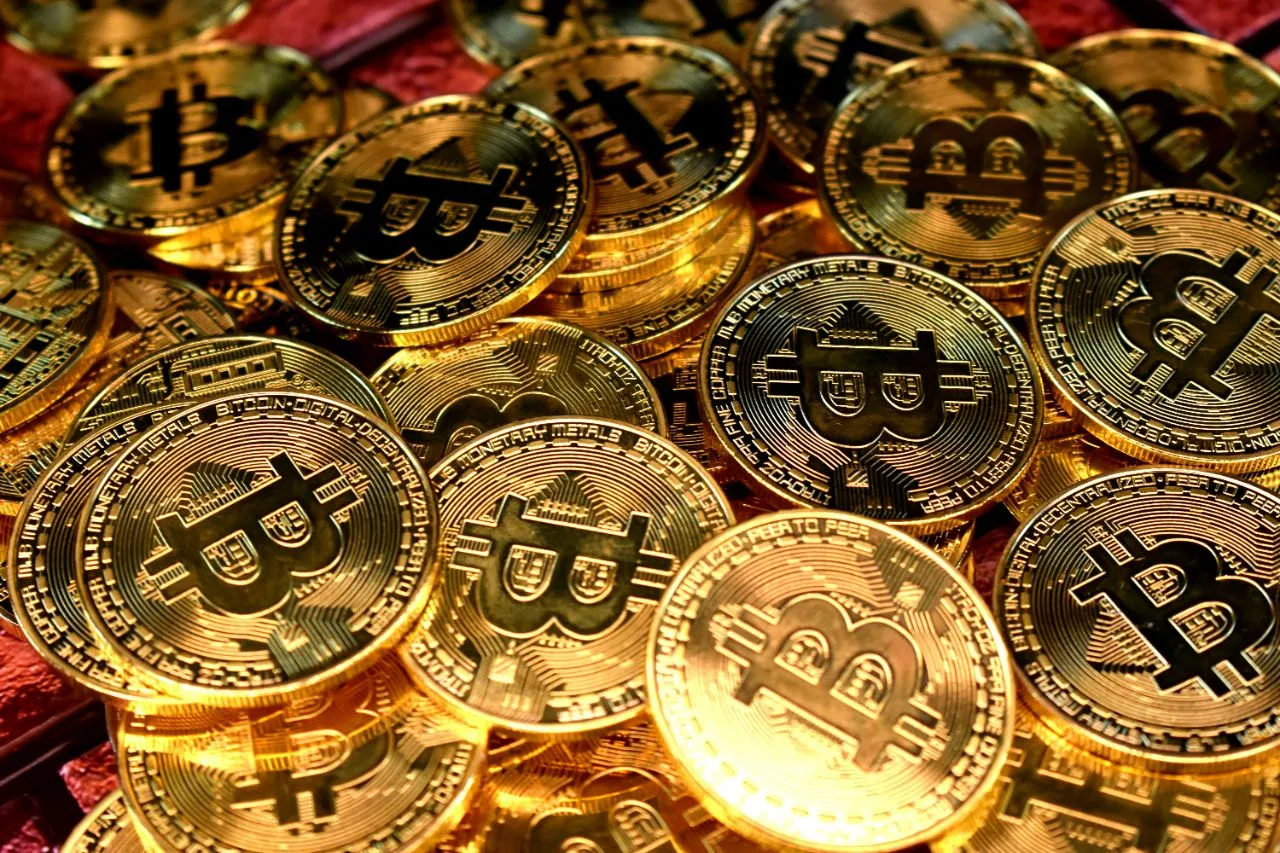
https://asset.coinness.com/en/news/946f7c120d3324c08ba0ea58b0d39489.webp
Photo by Kanchanara on Unsplash

Accelerating the Bitcoin strategy

In an announcement on May 1, the company outlined that it had established Metaplanet Treasury Corporation in Miami, Florida. The firm cited the purpose of the subsidiary as a means through which it can accelerate its overriding strategy of accumulating more Bitcoin.

Metaplanet CEO Simon Gerovich commented on X on the rationale behind locating the U.S. subsidiary in Florida, stating:

”The reason for choosing Florida is clear: the state is rapidly emerging as a global hub for Bitcoin innovation, corporate adoption and financial liberalization.”


Gerovich added that the newly formed company will enhance Metaplanet’s “around-the-clock operational capabilities across time zones.” The Metaplanet CEO sees the development as part of the firm’s evolution as a global Bitcoin treasury company. 


$250 million capital raise

The company stated that it had already established a corporate entity in the British Virgin Islands (BVI), with the U.S. addition enhancing the company’s ability “to respond to market dynamics with speed and precision.” 


Metaplanet intends to raise $250 million in funding through the Miami-based entity, having launched it with initial capital of $10 million. It’s envisaged that the U.S. subsidiary can act as a vehicle to attract institutional investment. 


Back in March it was reported that Metaplanet was investigating the idea of listing its stock in the U.S. At the time, Gerovich stated that the firm was “considering the best way to make Metaplanet shares more accessible to investors around the world.” As part of that process, Gerovich met with officials from the New York Stock Exchange (NYSE) and the Nasdaq. 


In further U.S.-related developments, the company appointed Eric Trump, second son of U.S. President Donald Trump, to its strategic board of advisors in March. Last week, Metaplanet appointed David Bailey, CEO of Bitcoin Magazine, to its strategic board of advisors.


Bond issuance

In a separate development, Metaplanet has issued 3.6 billion Japanese yen ($24.7 million) in 0% ordinary bonds to purchase additional Bitcoin. The company used its EVO FUND as the mechanism through which it issued the bonds. 


It has set out a goal of accumulating 10,000 BTC by the end of the year. Currently, the company holds 5,000 BTC. One community member believes that Metaplanet could hit this target as early as July on the basis of ongoing share dilution.

Appearing on The Bitcoin Treasuries Podcast earlier this year, Metaplanet’s Director of Bitcoin Strategy, Dylan LeClair, described how prior to adopting its Bitcoin treasury strategy in 2024, the firm was a “zombie” on the Tokyo stock exchange with the pandemic having had a negative impact on the company’s fortunes. 


He outlined that the company consolidated and dealt with some debt issues, but at that point it lacked a clear strategy. It then set out to replicate the success of U.S. Bitcoin treasury pioneer, Strategy (formerly MicroStrategy).


On May 1 Gerovich posted on X that the company had achieved unrealized gains on Bitcoin exceeding six billion yen ($41.68 million). 
More to Read
View All
Policy & Regulation·

Sep 13, 2023

Korean National Assembly Members’ Crypto Holdings to Undergo Investigation

Korean National Assembly Members’ Crypto Holdings to Undergo InvestigationThe Anti-Corruption and Civil Rights Commission of Korea (ACRC) has announced that it has convened a special investigative team to conduct an investigation into the virtual asset dealings of members of the 21st National Assembly, particularly details on acquisition, trading, and losses.Photo by Mediamodifier on UnsplashComing under scrutinyThe National Assembly passed a resolution back in May titled “The Resolution on Voluntary Reporting and Investigation of Virtual Assets of National Assembly Members,” requesting that all members of the Assembly should voluntarily report the status and changes in their holdings of virtual assets for a thorough investigation by the ACRC amid public concern about conflicts of interest and illegal transactions.As a result, individual consent forms for the collection, use, and third-party provision of personal information were submitted to the ACRC last Monday by Assembly members of the ruling and opposition parties.Other minor political parties like the Justice Party, Basic Income Party, and Transition Korea Party that had previously submitted their personal information consent forms have resubmitted their forms in accordance with the format of those submitted by the ruling and opposition parties. Independent lawmakers and some non-negotiation bodies have also voluntarily submitted forms of their own.Extensive legal probeThe scope of the investigation includes the domestic acquisition, trading, and losses of virtual assets by Assembly members starting from the beginning of their term on May 30, 2020, to May 31, 2023, when their personal information consent forms were submitted. The ACRC will compare this information with reports formerly filed by the members themselves.The ACRC appointed Vice Chairman and Secretary General Jung Seung-yoon as the head of the team and assigned some 30 investigators to carry out a census for 90 days starting on September 18. It will be executed under the Act On The Prevention Of Corruption And The Establishment And Management Of The Anti-Corruption and Civil Rights Commission and the Personal Information Protection Act.“As this is an important matter of public interest, we will conduct the investigation promptly and fairly in accordance with the law and guidelines,” said Jung. “We will also strictly protect the data acquired during the investigation process, including the personal information consent forms.”

news
Policy & Regulation·

May 03, 2024

Thai regulator takes action against deceptive crypto ads

In an effort to safeguard crypto investors from falling prey to misleading advertisements, the Securities and Exchange Commission (SEC) of Thailand has intensified its scrutiny of promotional campaigns within the crypto sphere.  Broker agent eventsOn April 29, the Bangkok Post reported that the SEC has raised concerns regarding the potential violation of local regulations through introducing broker agent (IBA) events. These events, the SEC clarified, may breach regulations as IBAs are only permitted to promote digital token services to deter speculation on cryptocurrencies, categorized as high-risk assets. IBAs, acting as local conduits for partner digital asset exchanges, typically earn commissions by onboarding clients within a specific market. Such practices are common for exchanges or brokers that don't directly operate in certain markets. Deputy Secretary-General Anek Yooyuen conveyed the commission's unease over crypto exchanges offering preferential treatment to onboard users. Yooyuen stated: "When operators organise sales promotions by offering rewards to entice people to use the service, this could encourage use of the service without considering the investment risks. This is especially the case for cryptocurrencies.”Photo by Than Diep on UnsplashWarning of consequencesHe cautioned that failure to adhere to these guidelines would result in “punishment according to the law.” While cryptocurrency exchanges are legal in Thailand, they must secure local approval. Notably, last month, Thailand even greenlit asset management firms to launch private funds, offering Bitcoin exchange-traded funds (ETFs) exclusively to institutional and ultra-high-net-worth investors. Nonetheless, the country recently prohibited the sale of cryptocurrency lending products and mandated that exchanges prominently display risk warning messages. International regulatory trendThis move by the Thai SEC mirrors actions taken by regulators in other major crypto markets. For instance, the United Kingdom's Financial Conduct Authority (FCA) issued 450 alerts for illegal crypto ads in 2023 alone. Similarly, Spain’s principal securities market regulator, the National Stock Market Commission, denounced fraudulent crypto asset promotions in November 2023, emphasizing companies’ obligations to adhere to local laws. Thai advertising guidelines mandate businesses and advertisers to substantiate the “facts” presented in their campaigns, failing which could lead to legal repercussions. A recent incident provides a case in point. Hackers hijacked advertisements on Etherscan, redirecting users to phishing sites aimed at draining crypto wallets. Scam Sniffer, a blockchain investigation firm, attributed the widespread phishing campaign to the inadequate oversight by advertisement aggregators. The company made the following statement on the matter: “Etherscan aggregates ads from platforms like Coinzilla and Persona, where insufficient filtering could lead to exposure to phishing attempts.” The wallet drainer scam involves enticing users to counterfeit websites and coercing them to link their crypto wallets, enabling scammers to siphon funds into their own wallets without user authentication or consent. This is not the first time that the authorities in Thailand have homed in on crypto-related advertising. In August 2023, the southeast Asian country’s Ministry of Digital Economy and Society (MDES) outlined that it had engaged with social media firm Meta, owner of Facebook, informing it that its response to the proliferation of fraudulent platform ads relative to crypto had been inadequate. 

news
Web3 & Enterprise·

Aug 11, 2025

Animoca Brands & Standard Chartered form Anchorpoint in Hong Kong

Animoca Brands, a company focused on Web3 and metaverse projects, has gotten together with the Hong Kong subsidiary of British banking giant Standard Chartered to establish Anchorpoint Financial Limited.In a press release published to its website on Aug. 8, Animoca Brands outlined that the joint venture company has been established with the objective of building a business model that will concern itself with the issuance and advancement of licensed stablecoins. The move follows Hong Kong’s Stablecoins Ordinance, which went live on Aug. 1.Photo by Andres Garcia on UnsplashHKT involvementThe partnership also involves Hong Kong Telecom (HKT), one of the largest telecommunications companies in Hong Kong. This collaboration is not something that has just been formed. The trio had been participants in a regulatory sandbox related to stablecoin issuance established by the Hong Kong Monetary Authority (HKMA) in 2024.  Back in February, it emerged that the three companies had entered into an agreement to establish a joint venture with a view towards applying to the HKMA for a license to cover the issuance of a Hong Kong dollar-pegged stablecoin. By June, the companies had formed that company. Applying for a licenseAnchor Financial has already informed the HKMA of its intention to apply for a stablecoin license. A recent Bloomberg report asserted that somewhere in the region of 50 companies have expressed an interest in obtaining stablecoin licensing in Hong Kong. However, the regulator is likely to issue no more than 10 licenses. Additionally, disclosure by the HKMA of strict customer identification rules related to the city’s new Stablecoins Ordinance has sparked concern among industry stakeholders. Know-your-customer (KYC) rules will put an onus on stablecoin issuers in Hong Kong to verify the identity of every stablecoin holder. Bo Tang, head and assistant director at the HKUST Institute for Financial Research, told Reuters that the rules were “a bit too strict and not good for acquiring users.” Ricky Xie, a crypto trader based in Hong Kong, pointed out that these KYC rules aren’t just for those who would hold accounts with the stablecoin issuer, but instead they will apply to every stablecoin holder. A number of Hong Kong stablecoin-concept stocks, that had been performing well in the market, fell by as much as 20% when these stringent rules were disclosed by the HKMA. Evan Auyang, group president of Animoca Brands, expressed contentment with Animoca’s partnership with HKT and Standard Chartered Bank (Hong Kong), while adding:”Stablecoins represent one of the most compelling use cases within Web3, and we believe we are still at the early frontier of widespread adoption across institutions and retail alike. As assets continue to move on-chain, the HKMA-regulated fiat-referenced stablecoin is important in reinforcing Hong Kong’s position as a leading international financial center.” The first stablecoin licenses are expected to be issued by the HKMA early next year.

news
Loading