Top

Japanese firms expand Bitcoin holdings amid growing institutional interest

Markets·May 15, 2025, 8:03 AM

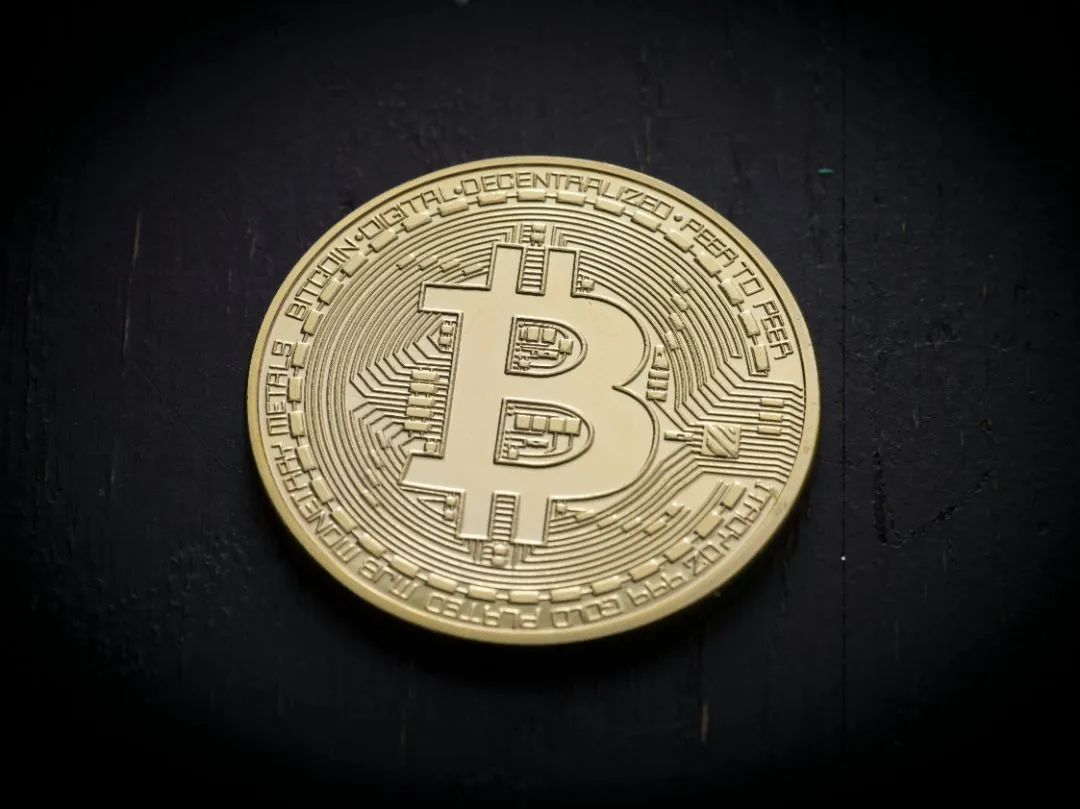
Several Japanese companies, including Remixpoint and Metaplanet, have been increasing their Bitcoin (BTC) holdings, underscoring the growing institutional interest in cryptocurrencies in the region.

https://asset.coinness.com/en/news/6ada883eea5175b8459aa46f35827f99.webp
Photo by Kanchanara on Unsplash

Remixpoint, an energy consulting firm listed on the Tokyo Stock Exchange, recently announced an additional purchase of 32.83 BTC valued at 500 million yen ($3.4 million), according to local news outlet CoinPost. This acquisition took place on May 13 at an average price of 15.23 million yen ($104,270) per BTC, bringing the company's total BTC holdings to 648.82 BTC. Remixpoint's crypto portfolio, including BTC, is now valued at 11.1 billion yen ($76 million) and also comprises Ethereum (ETH), Solana (SOL), XRP and Dogecoin (DOGE).


The firm began actively accumulating BTC late last year, motivated by multiple factors, including the positive price trend following the latest Bitcoin halving event, increased market activity after the latest U.S. presidential election and the growth in institutional participation, particularly after the approval of spot crypto ETFs in the U.S.


Metaplanet becomes a major BTC holder

Another notable player, Metaplanet, a publicly traded Japanese company specializing in Bitcoin investment, has positioned itself as one of the largest BTC holders globally. As of May 12, Metaplanet’s Bitcoin yield reached 170%, with total holdings of 6,796 BTC. This places it as the 11th largest Bitcoin holder worldwide and the largest in Asia, surpassing El Salvador, which currently holds 6,177 BTC, according to data from Arkham.


Metaplanet's ongoing Bitcoin accumulation aligns with CEO Simon Gerovich's advocacy for Bitcoin. In a March podcast, Gerovich said he encourages his friends to allocate "100% of their net worth into Bitcoin." The company’s strategic goal is to amass 10,000 BTC by the end of 2025 and 21,000 BTC by 2026. Reinforcing its influence, Metaplanet appointed Eric Trump, the second son of pro-crypto U.S. President Donald Trump, to its newly formed Strategic Board of Advisors in January.


Evolving crypto policies, including national reserves

Before Trump's second term, Gerovich expressed his expectation that other countries would follow the U.S. once it established a national Bitcoin strategic reserve—a move formalized by President Trump through an executive order in March. In a related development, Ukraine is reportedly drafting a bill to create a similar reserve in collaboration with Binance. Meanwhile, in Taiwan, lawmaker Ko Ju-Chun has been advocating for adding Bitcoin to the country's national reserves.


In a similar trend, another Japanese firm, Value Creation, disclosed plans last month to acquire 100 million yen ($660,000) worth of Bitcoin, further reflecting the growing interest among Japanese companies in crypto investments.


Complementing this corporate adoption trend, Japan's Financial Services Agency (FSA) has been shaping its regulatory framework for cryptocurrencies. The agency aims to redefine digital assets as financial products under the Financial Instruments and Exchange Act, a move viewed as an attempt to balance innovation with investor protection.


Building on this approach, an FSA discussion paper released on April 10, which remained open for public feedback until May 10, proposed classifying crypto assets into two categories: those used for fundraising and business activities, and those that are not—such as BTC and ETH. This regulatory evolution, alongside increasing corporate investment in BTC, reflects Japan's efforts to adapt to the evolving global crypto landscape.

More to Read
View All
Policy & Regulation·

Nov 11, 2025

Japan to tighten crypto lending rules as regulator backs bank stablecoin pilot

Japan’s Financial Services Agency (FSA) is moving to close gaps in crypto regulation and support a new bank-led stablecoin pilot, as markets watch for a potential Bank of Japan rate hike. Tougher oversight of crypto lending and IEOsAccording to a CoinPost report, at the fifth meeting of its Digital Asset Working Group held last week, the FSA discussed introducing new requirements to bring crypto lending clearly within the regulatory framework. While firms managing or staking crypto must register as exchanges, some operators have avoided registration by structuring services as borrowing schemes, which are not legally treated as asset management.Photo by Possessed Photography on UnsplashThe FSA flagged that users face both credit and volatility risks, yet operators are not required to segregate customer assets or use cold wallets. Some services offer returns around 10% or tie up funds for several years, with weak risk management and exposure to re-lending defaults and staking slashing. Under the new policy direction, operators will need stronger risk management for re-lending and staking, tighter custody controls, and clearer risk disclosures and advertising. Institutional-only borrowing not offered to the public will remain exempt. Some members questioned whether the new requirements would be practical to implement for off-chain operators, noting that staking is fundamentally on-chain. The group also examined initial exchange offerings (IEOs) lacking financial audits, particularly those aimed at retail investors. Members discussed limits similar to equity crowdfunding: investments over 500,000 yen ($3,000) capped at 5% of annual income or net assets, up to 2 million yen ($13,000). Most past domestic IEOs were under 500,000 yen ($3,200). Some warned such caps could be bypassed through secondary trading, where tokens are immediately tradable. Major banks pilot stablecoinAlongside stricter rules, the FSA will support a stablecoin pilot led by MUFG Bank, Sumitomo Mitsui Banking Corporation, and Mizuho Bank. CoinDesk Japan noted the project, the first under the Payment Innovation Project, will include three additional participants. Mitsubishi Corporation will oversee operations, while Progmat and Mitsubishi UFJ Trust and Banking will handle issuance and custody. The pilot, launching this month with implementation targeted within the year, will test whether a joint stablecoin by major banks can navigate regulatory and operational challenges. Rate hike speculation mountsJapan’s calibrated digital asset push comes as speculation grows over a possible Bank of Japan (BOJ) rate hike next month. Minutes from the BOJ’s October meeting, cited by South Korean outlet Edaily, show one board member saying most conditions for a hike have been met and that financial conditions would stay easy even after an increase. The BOJ kept its rate at 0.5% at that meeting. A rate hike was described as likely if firms are seen committing to wage increases ahead of next spring’s labor talks and if no major global shocks emerge. Markets, however, remain cautious, citing uncertainty over U.S. tariff effects and whether newly elected Prime Minister Sanae Takaichi will endorse such a hawkish stance. 

news
Web3 & Enterprise·

Nov 08, 2023

Korean crypto firms relocating for cheaper rent amid prolonged crypto winter

Korean crypto firms relocating for cheaper rent amid prolonged crypto winterAs the prolonged crypto winter continues to affect the industry, blockchain and cryptocurrency firms in South Korea are under pressure to economize. Faced with a deteriorating business and investment climate, numerous companies are reducing their office space and relocating to areas with cheaper rent, according to a Wednesday (local time) report by local media outlet Bizwatch.Photo by Nastuh Abootalebi on UnsplashReducing operating costsBizwatch reported, citing industry sources, that Parameta (previously Iconloop), a blockchain enterprise, has relocated its headquarters from Seoul’s upscale Signature Towers to a more economical shared office space this year. This strategic move is interpreted as an effort to slash operating costs by choosing a location with significantly lower rental expenses. A Parameta representative confirmed that the relocation was part of measures to reduce costs.Binance-backed Streami, which runs the Gopax cryptocurrency exchange, is also reportedly contemplating an office relocation after downsizing its staff. The company’s workforce has dwindled from over 100 employees earlier in the year to approximately 60 by September. A Streami spokesperson has indicated that they have yet to reach a decision regarding the relocation. Streami’s situation is particularly significant due to its ongoing challenges in securing approval from financial regulators for changes to its executive representatives since Binance acquired a majority stake. Recently, Streami appointed a new CEO from the domestic tech firm CityLabs, which has also purchased an 8.55% stake in Streami and intends to further increase its investment in the exchange operator.Similarly, Korea Digital Exchange, the operator of cryptocurrency-only exchange Flybit, has listed for sale one of its two floors of office space in Seoul’s Seocho district. This move comes nearly a year and eight months after the company expanded into the current premises.Changes in workforce sizesBefore the crypto winter, when the Korean crypto market witnessed unprecedented growth, numerous companies expanded their offices to make room for the growing workforce, bolstered by rising revenues. For instance, Dunamu, which runs Upbit — Korea’s largest crypto exchange — garnered attention for acquiring pricey real estate in Gangnam to construct a new office.However, the boom was short-lived. With the onset of the crypto downturn, numerous companies found themselves having to shut down. Blockchain technology firms are facing similar challenges, with many developers steering away from the sector due to persisting market instability. For many of these firms, the workforce has diminished as they’ve either undergone restructuring or struggled to recruit replacements for departing employees.An industry insider remarked that reducing operating costs is a logical step for companies facing a lack of investment and revenue. They noted that this only applies to those resilient enough to weather the hardship, adding that many cryptocurrency-only exchanges are likely to shut down completely in these challenging conditions.In fact, Cashierest, a crypto-only exchange, recently announced the cease of operations. Concerns about the company had been growing after staff layoffs and the departure of its CEO in July. A thorough analysis by the Financial Intelligence Unit (FIU) of the Financial Services Commission (FSC) found that, of the 21 Korean crypto-only exchanges, 18 are operating with negative shareholder equity as of the first half of this year. Moreover, 10 did not earn any revenue from transaction fees during the same period.Crypto-only exchanges typically see lower trading volumes as they cannot facilitate trades in Korean won. In South Korea, only five trading platforms — Upbit, Bithumb, Coinone, Korbit and Gopax — are officially registered with the financial regulator to conduct fiat-to-crypto transactions.

news
Web3 & Enterprise·

Feb 21, 2025

Shares in Moon Inc. surge following 1 BTC purchase

Shares in Moon Inc. (formerly HK Asia Holdings Limited), a publicly listed Hong Kong-based firm that acts as an investment holding company while engaged in activities such as wholesale and retail sales of prepaid products such as SIM cards, have surged following the company’s symbolic purchase of one Bitcoin (BTC).Photo by Thought Catalog on Unsplash93% share price increaseThe stock (1723.HK), which is listed on the Hong Kong Stock Exchange (HKEX), closed at HKD 5.50 following Monday’s trading. That represents a 93% increase compared to the closing share price following the previous day’s trading. The share price has settled somewhat following Tuesday’s trading, pulling back 16% to HKD 4.60. However, it jumped again on Feb. 21, closing at HKD 6.48. Bitcoin adoptionIt’s believed that the stock has been influenced by a decision taken by the company to adopt Bitcoin. The firm bought just one Bitcoin. However, the move has led to speculation as to whether Moon Inc. will become the MicroStrategy (now rebranded as “Strategy”) of China.  Michael Saylor’s Strategy has pioneered the use of Bitcoin as a corporate treasury asset. The company has positioned itself as the frontrunner in terms of the corporate adoption of Bitcoin. The company has amassed 471,000 Bitcoin within its reserves. This accounts for 2% of all Bitcoin. With Strategy’s Bitcoin playbook having been well documented, other companies now appear to be following its lead.  In recent weeks, Metaplanet, a Japanese Bitcoin treasury company, has demonstrated that it is pursuing the same strategy, outlining its ambition to build a reserve of 21,000 Bitcoin by 2026. On Feb. 18, it announced a 10-to-1 stock split in an effort to improve liquidity while executing on that overall Bitcoin treasury goal. Metaplanet shares have surged 3,900% over the course of the past 12 months on the back of its Bitcoin treasury pivot. On Feb. 16, Moon Inc. announced the purchase of its first Bitcoin at a unit price of $96,150. In a statement, the company said that the purchase was financed by way of the firm’s “internal resources.” An evolving global financial landscapeThe company’s board noted the increasing popularity of cryptocurrencies in the commercial world, with particular emphasis on the use of Bitcoin as an investment portfolio asset. It believes that Bitcoin acts as a dependable store of value. It added: “The Board believes that this initial investment is symbolic in scale, and marks a significant step toward aligning with the evolving global financial landscape, and would diversify the Group’s investment portfolio and enhance its asset value.” The company’s stock rose significantly last month when details emerged of a 70% stock position in the firm, taken by UTXO Management, in collaboration with Sora Ventures and other investors. Recently appointed board member John Riggins of BTC Inc. said that this recent Bitcoin purchase by Moon Inc. “is more than a transaction.” He stated, “It’s a bold step toward creating a vision for the future of the company.”

news
Loading