Top

Bybit enables stock trading with USDT

Web3 & Enterprise·May 26, 2025, 6:44 AM

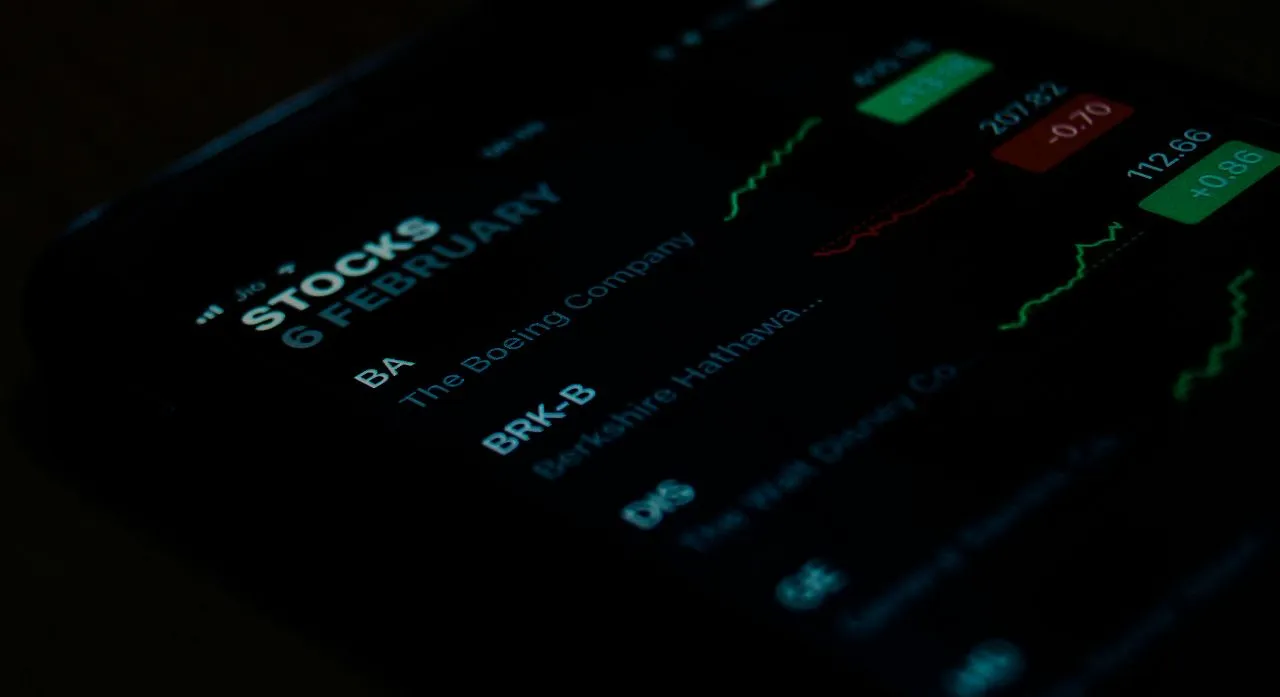
Dubai-headquartered crypto derivatives trading platform Bybit has moved to enable stock trading on its platform. 


The offering, initially featuring 78 stocks, is being provided via Bybit’s MT5 platform, which includes access to various financial instruments including forex, commodities, contracts for difference (CFDs) and crypto, according to an announcement made by the company last week.
https://asset.coinness.com/en/news/ad12b83bb59c2c6a821dab29c9f8a684.webp
Photo by Ishant Mishra on Unsplash

Stock derivatives via CFDs

Individual stocks are being offered in a pairing with U.S. dollar stablecoin USDT. Bybit’s MT5 is a trading platform originally developed by software company MetaQuotes, facilitating the integration of various asset classes within one platform.


Enabled through the use of CFDs, holders of such stock-derived CFDs can receive dividend adjustments based upon the ex-dividend events of the underlying stocks. A trading fee of 0.04 USDT has been set, with a minimum charge of 5 USDT per order.


Access to leading global equities

Bybit users will now be able to gain exposure to leading U.S. equities such as Apple (AAPL), Amazon (AMZN), Meta (META), Microsoft (MSFT) and Nvidia (NVDA). By adding this product to its multi-asset trading platform, Bybit has reduced a degree of friction for market participants. In pairing these stocks with USDT, it means that there is no fiat onboarding required and transferring funds in fiat from outside the crypto ecosystem is not required.


In a press release, the firm asserted that the development was a “landmark move bridging traditional and decentralized finance.” Bybit further asserted that with this product launch, it has become “the first and only major crypto exchange to unify crypto, stocks, and traditional assets under one roof.”


Previous offerings

A few years ago, global crypto exchange platform Binance had offered tokenized stocks through a partnership with German global financial services firm CM-Equity AG. However, it withdrew that product offering in 2021 when faced with growing regulatory pressure. 


Failed crypto exchange FTX also offered its users exposure to tokenized stocks, which was also facilitated by CM-Equity AG. That product offering came to an abrupt halt in November 2022 when the platform collapsed.


With a more positive regulatory position having been adopted in the United States following the election of U.S. President Donald Trump, tokenized stock offerings are emerging once again. In March Coinbase CFO Alesia Haas said that the Securities and Exchange Commission (SEC) could facilitate such offerings going forward. The U.S. crypto exchange platform has revived plans to tokenize its own COIN stock, alongside other securities.


Bernstein analysts recently predicted that the crypto sector is moving towards integrated platforms that offer both traditional financial products alongside digital assets. Further evidence of this approach emerged on May 22 with the news that global crypto exchange platform Kraken plans to add access soon to a range of tokenized stocks for its global user base. 


The company’s U.S. clients can already access in excess of 11,000 stocks and exchange-traded funds (ETFs). Blurring the lines further between TradFi and the digital assets space, JPMorgan CEO Jamie Dimon indicated last week that the investment bank will facilitate Bitcoin trading for clients from now on.


More to Read
View All
Markets·

Aug 13, 2024

OSL Executive: Crypto ETFs have challenge to overcome in Hong Kong

At the Foresight 2024 Hong Kong Summit on Aug. 11, Gary Tiu, director and head of regulatory affairs for OSL, a crypto market custodian, exchange and prime brokerage, outlined in a panel discussion that the crypto exchange-traded fund (ETF) market in the Chinese autonomous territory is challenged insofar as it lacks market incentives.Photo by Cecelia Chang on UnsplashThe intermediary problemTiu’s company hosted the event, alongside Foresight News and crypto publication The Block, who reported on Tiu’s comments. The OSL executive said that when it comes to funds and structured products in Hong Kong, there’s a “very rich layer of intermediaries— brokers, banks, private banks, retail banks, etc.” involved. Tiu explained that they make a lot of money from the distribution of such products, resulting in unlisted products being marketed far more effectively by comparison with listed products. It’s against that backdrop of misaligned incentives that Tiu identifies challenges for crypto ETFs on the public markets in Hong Kong. He stated: “So I think the incentive system in Hong Kong is one of the reasons why ETFs do have a bit of a hard time growing as a financial instrument.” In the case of ETFs, the OSL executive explained that equity brokers take just a few basis points in commission, only about 1-2% of what they make on the sale of structured products. Bias against Bitcoin and EtherTiu is also of the belief that cryptocurrencies like Bitcoin and Ether have a reputational problem among Hong Kong’s investment community, stating: “I think there is still a bit of a bias in the eyes of the regulators and also in the eyes of the financial institutions, that somehow bitcoin ETF is just this unique class of risk that you need to be extra cautious about.” Chen Zhao, who heads up the digital assets section of Hong Kong-based independent financial advisory firm Fosun Wealth, chimed in with his own concerns. According to Zhao, the crypto ETF products currently marketed in Hong Kong are lacking in terms of the depth of dealers and brokers offering the products. Zhao explained that there are three main types of market participant active on the Hong Kong markets, namely western institutions, Hong Kong-based institutions and their counterparts from mainland China.  Zhao stated: “Chinese brokers and dealers, they’re not allowed or they choose not to deal with the product, and for the western financial institutions, they don’t have the necessity of dealing the products because they acquire more fees and incentives, and have easier access to the U.S. ETFs.” While progress is far more modest by comparison with the U.S. market, the Hong Kong crypto ETF market continues to develop, with spot Bitcoin and Ethereum ETFs setting a record trading volume last week. In the same week, Mox Bank, a subsidiary of British banking multinational Standard Chartered, launched trading services relative to spot Bitcoin and Ethereum ETF products in Hong Kong. Last month, OSL CEO Patrick Pan, anticipated that an Ethereum ETF product that incorporated staking would launch in Hong Kong within six months. Many commentators have suggested that institutional interest in Ethereum ETFs will begin in earnest once a yield-producing staking product hits the market.

news
Web3 & Enterprise·

May 15, 2024

Liminal expands into Middle East via Abu Dhabi approval

Liminal, a Singapore-based digital asset custodian, has gained regulatory approval in Abu Dhabi, as part of a series of recent steps the company has taken to expand across Asia and the Middle East. Extending digital asset custody to the Middle EastTaking to the X social media platform on May 13, the company outlined that its First Answer Middle East subsidiary received Financial Services Permission (FSP) from the Abu Dhabi Global Market's (ADGM) Financial Services Regulatory Authority (FSRA) on May 9. The approval allows the firm to provide digital asset custody in the region. Liminal had initially been granted in-principle approval last year. In a series of posts, the company outlined that it sees Abu Dhabi’s regulatory framework in respect of digital assets as forward-thinking. It drew particular attention to the work of the FSRA in developing a robust framework to enable institutions to enter the digital assets space.Photo by Sohail Sarwar on UnsplashGame changerOn the actual license approval itself, the company stated, “The FSP license allows Liminal to hold, manage, and safeguard digital assets on behalf of institutions, hedge funds, venture capitalists and professional clients. This is a game-changer for digital asset custody practices in the region.” Further regional expansionOver the course of recent months, Liminal has scored a number of regulatory successes within the Asia Pacific (APAC) and Middle East and North Africa (MENA) regions. Its success within the United Arab Emirates (UAE) has not been confined to Abu Dhabi. In April, First Answer Custody FZE, a Dubai-based subsidiary company, secured initial approval from the emirate's regulator, the Virtual Asset Regulatory Authority (VARA).  Meanwhile, Liminal's Indian subsidiary, First Answer India Technologies, has been established and registered as a reporting entity. As a consequence, it has become the first digital asset custodian registered with India’s Financial Intelligence Unit (FIU), an organization that falls under the umbrella of the Department of Revenue, and  which collects financial intelligence relative to money laundering.  Making further in-roads within the world’s most populous country in November, India’s Central Bureau of Investigation (CBI) appointed the firm with a mandate to manage seized digital assets. Liminal has ties with India insofar as it was founded by Mahin Gupta in 2021, the co-founder of crypto exchange ZebPay. In an interview with CoinDesk, Manan Vora, senior vice president of strategy and business operations at Liminal stated:"We initiated a strategic drive two years ago to secure regulatory licenses in key markets across APAC and EMEA (Europe, Middle East and Africa), strategically positioning ourselves to cater to institutional clients.” Vora added: "Our strategic vision is to expand from our present technology presence in Europe and Taiwan to pushing for regulatory victories there. In Indonesia, we are already working as a technology provider for the nation's sovereign digital asset exchange." Within its home market of Singapore, Liminal was grandfathered into a new licensing system that the city-state introduced recently in respect of digital asset custody as a consequence of already having been a provider of such services in Singapore. The company has been given a grace period of six months. Within that timeframe, it intends to submit an application to local regulator, the Monetary Authority of Singapore. 

news
Web3 & Enterprise·

May 25, 2023

OCBC Bank Partners With ADDX to Launch Tokenized Note

OCBC Bank Partners With ADDX to Launch Tokenized NoteSingapore’s longest established bank, OCBC Bank, has partnered with blockchain-centric private market investment platform, ADDX, to launch a tokenized equity-linked structured note.Tokenized equity-based productsThe product is significant in that it represents the first tokenized equity-linked structured note that the cornerstone bank has offered. That in itself gives an indication of how conventional finance will mesh with tokenized products as both the conventional finance system and digital assets space evolve over the coming years.An equity-linked note is a debt instrument, normally in the form of a bond. It’s distinct from a standard fixed income security as it’s a market-linked structured product. That means that it performs in sync with a particular equity stock, a basket of equity stocks or with an equity index.ADDX CEO Oi-Yee Choo elaborated on the product offering: “Structured products are designed to provide investors with unique risk and return characteristics that may not be available through traditional investments, and are an attractive option for investors weighing yield-generating options in the current economic climate.”Photo by Shubham Dhage on UnsplashLeveraging tokenizationBy leveraging tokenization, the ADDX platform realizes cost savings, cutting out counterparties from the process. Additionally, tokenization allows fractionalization of assets and financial products, making a product offering accessible to all market participants. In this particular instance, the OCDC/ADDX product is restricted solely to accredited investors.Singapore-based ADDX currently lists in excess of seventy tokenized products on its platform right now. These range from commercial paper, bonds, real estate and equities or equity-based products.On those products it has collaborated with global alternative investment product specialists Investcorp and Hamilton Lane, telecommunications giant Singtel and securities broker CGS-CIMB Securities. Additionally, it has partnered with UOB, Singapore’s third largest bank, and a number of entities owned by state-owned Singaporean investing giant, Temasek.While the conventional finance world has been skeptical of digital assets and the overarching cryptocurrency and blockchain space has had its fair share of setbacks interlaced within its progression, forward-looking TradFi players are conscious of not getting left behind. That’s reflected in the comments of OCBC Bank’s Head of Global Treasury, Kenneth Lai, in relation to the ADDX partnership:”While we already have a comprehensive stable of treasury products which includes sustainability-linked interest rate swaps, cross currency swaps, structured deposits and green bonds, it is important that we continue to innovate and find new channels for our products. We are therefore pleased to be the first Singapore bank to offer an equity-linked structured note in tokenized form on ADDX. It is the first innovation resulting from a longer-term partnership with ADDX, and we are hopeful that it will lead to more diverse product offerings that are relevant and appealing to the global accredited investor base of ADDX.”Further comments by Choo suggest that the two firms have plans to broaden the partnership to encompass a greater range of products. She referred to more structured products being in the pipeline as the duo seek to exploit their combined expertise and capabilities.As it stands today, just $0.3 trillion in global assets are currently tokenized. That number is expected to grow to $16 trillion within seven years.

news
Loading