Top

Vietnam legalizes crypto assets

Policy & Regulation·June 17, 2025, 3:23 AM

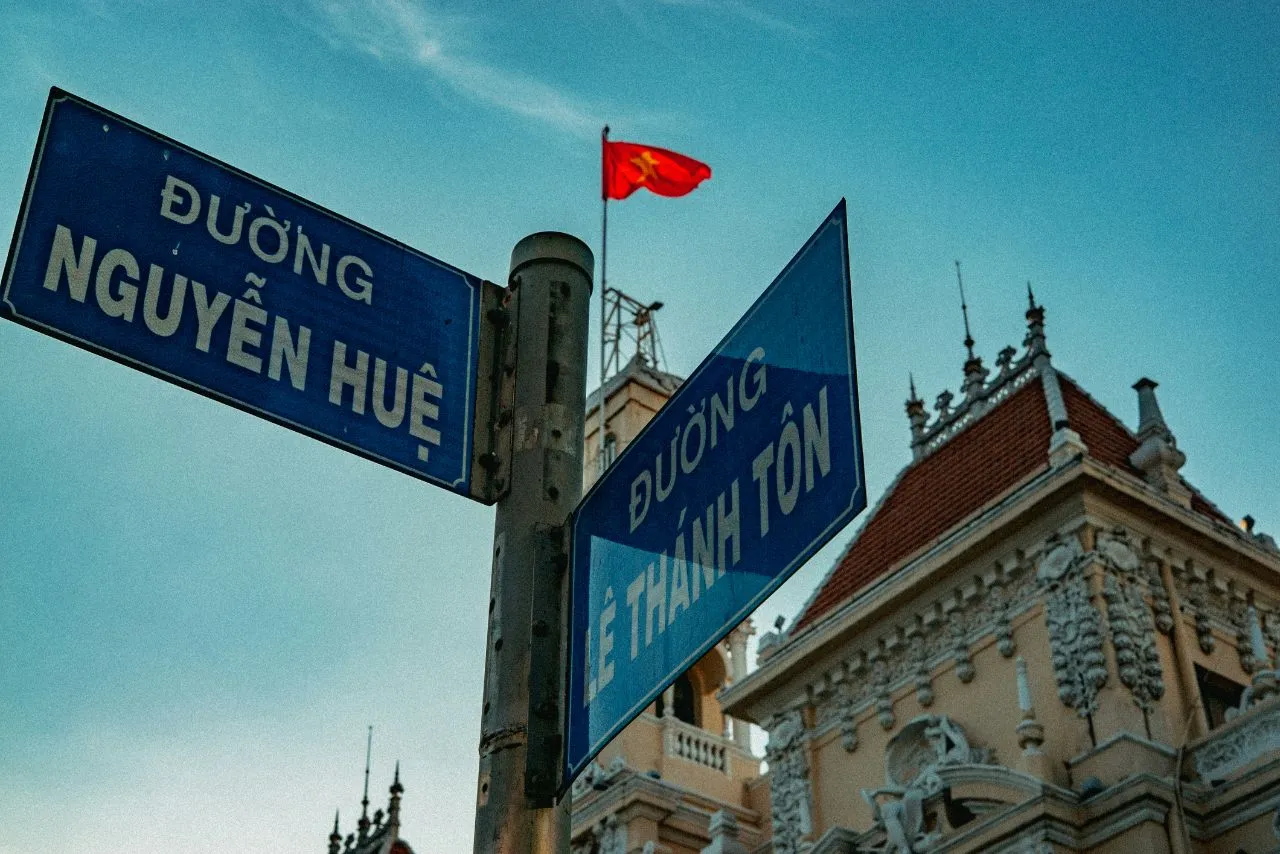
Vietnam has moved to take a positive approach to crypto assets by passing legislation to legalize them.


Last week, the Southeast Asian nation’s National Assembly passed the Digital Technology Industry Law, which takes effect on Jan. 1, 2026, according to a report published in the official online newspaper of the Vietnamese government. 
https://asset.coinness.com/en/news/f8a720939260258ecd14da1b761cc06e.webp
Photo by Daniel Bernard on Unsplash

Categorizing digital assets

The law sets out two categories of digital assets, virtual assets and crypto assets. The legislation frames virtual assets as digital assets used for exchange or investments. Meanwhile, crypto assets are to be regarded as digital assets utilized to validate transactions and confirm ownership while relying on the use of encryption technology. 

Neither category includes securities or digital versions of fiat currencies such as central bank digital currencies (CBDCs) or other financial instruments.


The legislation gives the Vietnamese government the authority to define and apply specific regulatory conditions when it comes to items such as anti-money laundering (AML) measures and the inclusion of international cybersecurity standards.


It is hoped that the law will pave the way for the development of home-grown technological enterprises within Vietnam, while also promoting a nationwide digital transformation process.


Regulatory clarity

The legislation is significant as it clearly sets out the legal status of digital assets in Vietnam after years of uncertainty and regulatory ambiguity. Singapore-based blockchain-focused Business Strategist, Anndy Lian, said that such legal clarity could result in Vietnam becoming a regional hub for the crypto sector. 


Anh Tran, who belongs to Superteam Vietnam, a community for Solana builders in Vietnam, said that the development was huge for founders, developers and investors in the crypto space in Vietnam. He stated:


“For a country who has always been at the forefront of crypto adoption, [Vietnam] is now a 'green-lighted zone' in principle, but we're still waiting at the red light for operational rules.”


He refers to the fact that Vietnamese regulators still have until Jan. 1, 2026, to flesh out the details in terms of defining who can issue, trade, custody or manage crypto, and how AML, cybersecurity and taxation are handled.


Vietnamese officials are likely to give strong consideration to AML measures relative to crypto given that the Southeast Asian nation has been on the grey list of the Financial Action Task Force since 2023. Countries who appear on the grey list are under considerably more scrutiny with regard to AML matters.


While another community member claimed that anywhere crypto regulation has been implemented, actual usage has declined, Tran maintained that regulation is inevitable and that “crypto doesn’t need to be lawless to be free.”


Last October, Vietnam set out its blockchain strategy, aspiring to the goal of achieving regional leadership in the sector by 2030. In March, the country’s Prime Minister, Pham Minh Chinh, requested that a legal framework for cryptocurrencies be established. 


According to Chainalysis’ 2024 Global Crypto Adoption Index, Vietnam ranks fifth in the world.
More to Read
View All
Policy & Regulation·

Apr 28, 2023

Hong Kong to Issue Digital Asset Licensing Guidelines in May

Hong Kong to Issue Digital Asset Licensing Guidelines in MayAccording to Hong Kong’s Securities and Futures Commission (SFC), the Commission will issue new guidelines for virtual asset exchanges within the Chinese autonomous special administrative region (SAR).© Pexels/Jimmy ChanSFC CEO Julia Leung made that announcement while speaking at an event in the city on Thursday, indicating that the guidelines are due to be released next month. Additionally the autonomous region intends to introduce a new licensing system from June 1 onwards, enabling the retail investors among Hong Kong’s populace to trade leading cryptocurrencies like Bitcoin and Ethereum.Hong Kong authorities had provided an insight into this approach back in February, when plans to provide retail access to digital assets were first set out. At the time, they outlined the need for retail customers to pass a knowledge test relative to digital assets or otherwise only being allowed to trade such assets once the customer had completed a certain level of training relative to digital assets, provided by a regulated crypto service provider.This latest announcement has arrived amid a backdrop of a series of recent indications that signify the intent of authorities in Hong Kong to make the autonomous region a major financial hub centered around digital assets.Leung articulated that the further development of this digital assets framework follows a consultation process that attracted more than 150 responses. Although virtual asset service providers (VASPs) will need to await the complete rollout of the licensing system, a handful of crypto businesses such as OSL and Hashkey, under the supervision of the Hong Kong regulator, have already started to offer their services.Crypto as propertyA Hong Kong court recently recognized cryptocurrency as property. The ruling emerged in a bankruptcy hearing pertaining to failed cryptocurrency exchange Gatecoin. In presiding over the case, Justice Linda Chan outlined that the autonomous region takes a broad view of what constitutes property. In finding crypto to meet the definition of property, she went on to clarify that it therefore has the capability of being held in trust.The finding has particular relevance in the crypto world right now given the consequences of an “in trust” custodianship of customer’s digital assets relative to numerous ongoing bankruptcy processes involving failed crypto businesses, and the pecking order of creditors in those instances, in their efforts to recover their digital assets.Positive approachWhile mainland China remains an adverse territory relative to digital assets, Hong Kong has taken to welcoming the sector and with that, enticing crypto firms to relocate to the autonomous region from the mainland. Leadership in the city has been making all the right soundings to demonstrate that it is actively trying to nurture the nascent sector.While recent months have seen the Biden administration in the United States attempt to close off banking from the crypto sector, in contrast, Hong Kong’s largest virtual bank, ZA Bank, was recently given permission to act as a settlement bank for regulated Web3 businesses located within Hong Kong.

news
Policy & Regulation·

Oct 23, 2023

Bithumb Live Files for Bankruptcy

Bithumb Live Files for BankruptcySouth Korean cryptocurrency exchange Bithumb’s live commerce platform Bithumb Live — an attempt at business diversification — has filed for bankruptcy. The platform entered bankruptcy proceedings last year, brought on by business difficulties and various suspicions of embezzlement involving its CEO.Photo by Melinda Gimpel on UnsplashAccording to legal sources on Monday, the Seoul Bankruptcy Court declared Bithumb Live’s bankruptcy last Monday. The court plans to hold creditor meetings and inspections on November 28 to incorporate creditors’ opinions into the bankruptcy proceedings and assess the status of the company. Major companies like LG Uplus, SK Telecom, SK Magic, and Lotte Card are among the platform’s creditors.Bithumb Live’s backgroundBithumb Live was founded in September 2021 by Bithumb and Bucket Studio, who each invested KRW 6 billion (approximately $4.4 million). Bucket Studio is a content distribution company that gained considerable attention with the global success of the Netflix original series “Squid Game” last year because it holds a 15% stake in Artist Company, an entertainment planning agency co-founded by “Squid Game” lead actor Lee Jung-jae and actor Jung Woo-sung. In particular, Bucket Studio’s CEO Kang Ji-yeon is the sister of Kang Jong-hyun, who is embroiled in allegations related to the ownership of Bithumb.Bithumb and Bucket Studio each hold a 37.5% share of Bithumb Live, making a combined ownership of over 75%. Bithumb Live, led by Kang Ji-yeon, had been established with the intent to create a commerce platform with various features like a metaverse, non-fungible tokens (NFTs), and cryptocurrency payments. After its establishment, it announced that it would challenge its key competitor Naver’s prominent live shopping platform by preparing to sign deals with 15 different companies.Financial hardshipsHowever, the platform hit a roadblock just one year after its establishment and found itself unable to escape financial difficulties. According to last year’s business report, Bithumb Live’s liabilities exceeded its assets by approximately KRW 248 million and the platform recorded a net loss of KRW 10.2 billion. Unable to withstand such losses, it announced an indefinite temporary closure via its internal messenger to employees in October of last year. The employees ended up working only four hours a day, resulting in a more than 50% reduction in working hours. Subsequently, the number of employees, which was 73 in September, plummeted to just four in January of this year, essentially signaling a total stop to business operations. In the first half of this year, Bithumb Live’s net loss amounted to almost KRW 1.1 billion.Management entanglementsOn top of these financial strains, the company was also plagued by Kang Ji-yeon and her brother Kang Jong-hyun’s owner’s risk, which encompassed allegations of embezzlement and misappropriation. In July of this year, Kang Ji-yeon was sent to trial on charges of embezzlement and misappropriation at Bucket Studio. Along with her brother and former Chorokbaem (CRB) Group Chairman Won Young-sik, she was accused of granting call options on convertible bonds held by Bithumb affiliates Vidente and Bucket Studio for free to companies controlled by Won’s children between December 2021 and July 2022, inciting damages worth approximately KRW 58.7 billion to the respective companies. In the process, she was also found to have received KRW 32.2 billion in acquisition payments. Kang Jong-hyun had been detained and on trial since February of this year.Bithumb Live’s largest shareholder, Bucket Studio, is also in a tight spot. Back in June, the Korea Exchange imposed a penalty of three points on Bucket Studio for reversing its disclosure. The company had been penalized five points the previous month after withdrawing its decision to issue convertible bonds. In particular, the studio also recorded an operating loss of KRW 7 billion and a net loss of KRW 195.6 billion last year based on consolidated financial statements. In the first half of this year alone, it suffered an operating loss of KRW 896 million, raising red flags for its management.

news
Web3 & Enterprise·

6 hours ago

Abu Dhabi broadens crypto regime with new stablecoin approvals and Binance licensing

While global cryptocurrency sentiment remains subdued, authorities and state-linked investors in Abu Dhabi are deepening their engagement with digital assets through expanded regulation and increased capital allocation. On Dec. 8, stablecoin issuer Tether and cryptocurrency exchange Binance announced they had secured regulatory approvals from the Abu Dhabi Global Market (ADGM), the international financial center and free economic zone in the UAE capital. The moves signal a continued effort by the United Arab Emirates to integrate blockchain technology into its formal financial system, creating a contrast with the broader market’s current “extreme fear” rating of 22 on the Alternative Fear and Greed Index.Photo by DrawKit Illustrations on UnsplashTether, Ripple stablecoins approvedTether confirmed that its USDT stablecoin has been designated as an Accepted Fiat-Referenced Token within the ADGM. This status allows financial entities licensed by the Financial Services Regulatory Authority (FSRA) to conduct regulated activities involving USDT across a broader range of blockchain networks, including Aptos, Celo, Cosmos, Kaia, Near, Polkadot, Tezos, TON, and TRON. The approval builds on previous authorizations for USDT on Ethereum, Solana, and Avalanche, and follows the FSRA’s recognition of Ripple’s RLUSD stablecoin last month. Binance fully cleared for regulated launch Simultaneously, Binance announced it has secured full authorization from the FSRA to operate a regulated platform within the financial center. Pending final operational preparations, Binance is scheduled to commence regulated activities on Jan. 5, 2026. The exchange will operate in Abu Dhabi through a three-entity structure that separates key functions, mirroring traditional financial infrastructure. Nest Exchange Limited (currently Nest Services) will function as the regulated arm for spot and derivatives trading, while Nest Clearing and Custody Limited will manage clearing and settlement. Broker-dealer activities will be handled by a third entity, Nest Trading Limited (currently BCI Limited). Circle awarded FSP for paymentsMore recently, Circle, the issuer of the USDC stablecoin, announced the receipt of a Financial Services Permission (FSP) license from the FSRA. The license allows Circle to act as a Money Services Provider within Abu Dhabi’s International Financial Centre (IFC), enabling it to support regulated payment and settlement services for businesses, developers, and financial institutions across the UAE. Circle has been expanding its regulatory presence in the region throughout the year. In February, the Dubai International Financial Centre (DIFC) recognized the company’s USDC and EURC tokens as permitted crypto assets under its virtual asset framework. This regulatory expansion comes amid the UAE’s efforts to develop a comprehensive financial compliance framework. A recent report by the Global Finance & Technology Network identified the UAE as one of seven jurisdictions globally that meet three core standards for anti-money laundering and counter-terrorist financing compliance. Those standards include know-your-customer (KYC) and identity verification, suspicious transaction reporting, and implementation of the Financial Action Task Force (FATF) Travel Rule. Institutional capital inflows riseIn parallel with the regulatory push, investment vehicles linked to the Abu Dhabi government have increased their exposure to digital assets. Bloomberg reported that in the third quarter, the Abu Dhabi Investment Council, a Mubadala subsidiary, increased its position in BlackRock’s iShares Bitcoin Trust ETF more than threefold to nearly eight million shares. Separately, the Royal Group, an investment firm associated with the Abu Dhabi royal family, currently holds roughly 6,516 Bitcoin, according to Arkham data. An earlier Crypto Briefing report noted that this acquisition was carried out through its majority-owned subsidiary, Citadel Mining. These simultaneous developments in licensing and capital allocation suggest a coordinated strategy to establish Abu Dhabi as a hub for institutional digital assets, with a focus on long-term infrastructure despite current market fragility. 

news
Loading