Top

China mulls yuan-pegged stablecoin approval

Markets·August 21, 2025, 2:33 AM

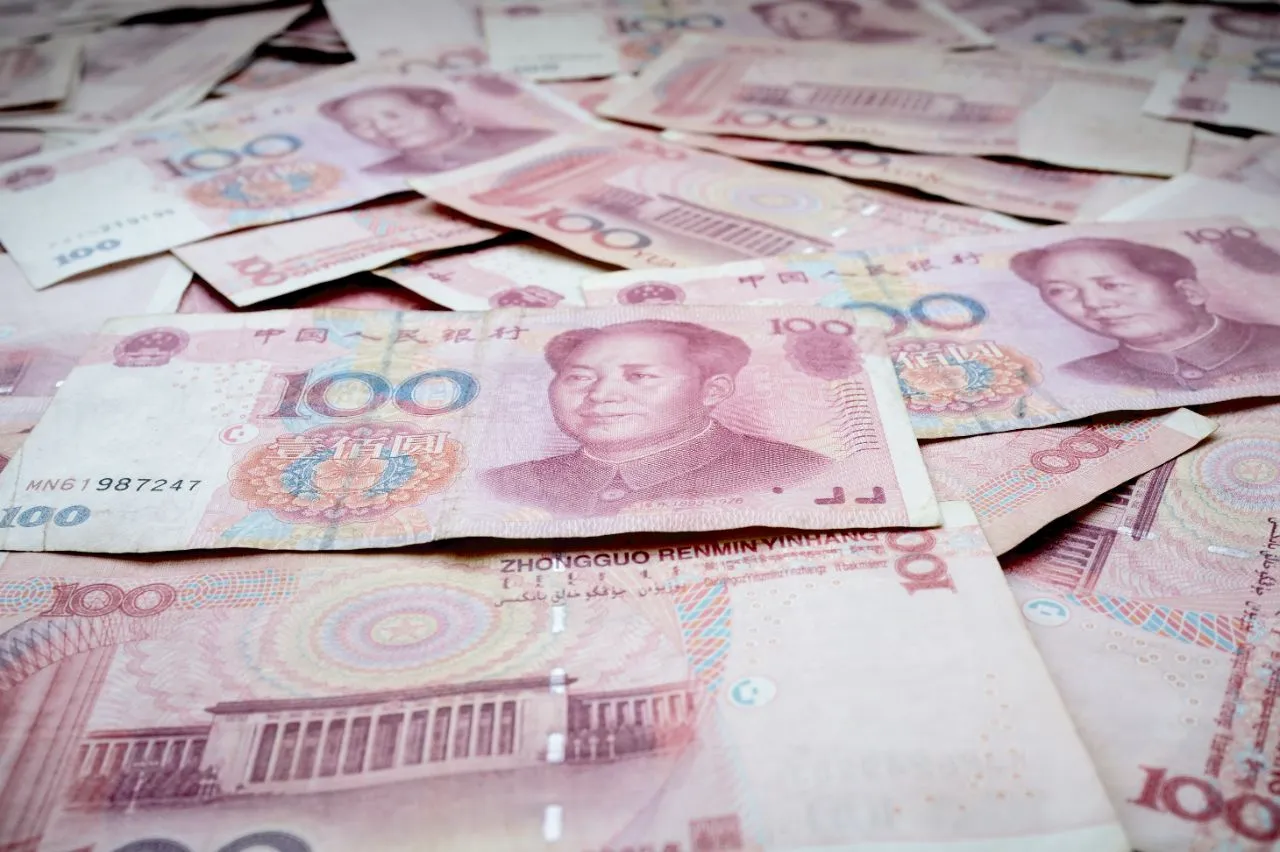
The Chinese authorities are reportedly mulling over the possibility of approving the use of stablecoins pegged to and backed by the Chinese yuan.


That’s according to a report published by Reuters on Aug. 20, with the publication citing “sources familiar with the matter.”
https://asset.coinness.com/en/news/cf8b7f92c82a395ababfae664b500dbc.webp
Photo by Eric Prouzet on Unsplash

Internationalization of the Chinese yuan

China’s State Council, its cabinet and primary administrative authority, has scheduled a review of yuan-backed stablecoins for later this month, a development that could potentially lead to their approval.


The Chinese have been leaders in recent years in the development of a central bank digital currency (CBDC), the digital yuan. The digital yuan was further along in its development than any other CBDC globally, with the Chinese making concerted efforts to bring the digital currency into use at home, with an eye toward global use for international trade.


While the U.S. dollar has enjoyed an extended period as the world’s reserve currency, the weaponization of the currency by the U.S., particularly through the application of sanctions, has led BRICS (Brazil, Russia, India, China and South Africa) nations to consider alternatives.


One of Reuters sources asserted that the Chinese authorities are now homing in on the potential to internationalize the yuan via stablecoins.


Setting the tone for stablecoin use

Members of the Chinese government leadership are expected to establish the tone for stablecoin use following their upcoming review, outlining the parameters within which the Chinese authorities will permit their use.


Reacting to this development, Robin Brooks, a senior fellow at the Brookings Institution, asserted that China’s newfound interest in yuan-backed stablecoins is a sign of “how insecure China is in the global financial system.”

Brooks added that the way to internationalize a sovereign currency is to promote the rule of law and property rights rather than pursue the use of stablecoins, which he described as “ridiculous.” 


Growing global interest

While the Brookings Institution is not directly backed by the U.S. government, the organization is nevertheless a Washington, D.C.-based think tank. Despite Brooks’ objection to the use of stablecoins, China is not the only nation to show interest in using them.

Taking to X, Raphaël Bloch, co-founder of crypto media platform The Big Whale, pointed out that increasingly, nations around the world are embracing stablecoins due to the efficiency of global currency distribution that is possible via public blockchain networks. 


Additionally, stablecoins offer an effective means of government debt financing, given that stablecoin reserves are backed by government bonds.


In the U.S., President Donald Trump has ruled out the pursuit of a CBDC. Last month, the U.S. House of Representatives passed the Anti-CBDC Act to prohibit the development of a CBDC by the Federal Reserve. Instead, Trump has said that a stablecoin regulatory bill working its way through the legislative system will ensure global dominance for the U.S. in the crypto sector.


In June a Deutsche Bank strategist claimed that the legislation would strengthen the U.S. dollar’s global dominance, with several American politicians having since expressed the same view.

Earlier this week, Japan’s Financial Services Agency (FSA) signaled that it is likely to approve the issuance of a yen-pegged stablecoin. Meanwhile, the authorities in South Korea are working on a bill related to won-pegged stablecoins.


More to Read
View All
Markets·

May 20, 2025

South Korea’s crypto market hits $968.5B in H2 2024 as Bitcoin rally lifts activity

South Korea’s cryptocurrency market experienced notable growth in the second half of 2024, as total trading volume climbed to 1.35 quadrillion won ($968.5 billion). This marks a 24% increase compared to the 1.09 quadrillion won ($782.7 billion) recorded in the first half of the year. The data was released on May 20 by the Financial Intelligence Unit (FIU), which operates under the Financial Supervisory Service (FSS).Photo by Daniel Bernard on UnsplashTrading volume and market cap surgeThe average daily trading volume rose by 22%, reaching 7.3 trillion won ($5.26 billion), with a significant surge observed after October. According to the financial authority’s report, this sustained momentum was driven by a broader bullish trend in the global crypto market, led by Bitcoin hitting all-time highs. Growing institutional interest following the launch of multiple spot Bitcoin ETFs in the U.S. and increasingly favorable crypto-related policies have further fueled the rise in asset prices. To evaluate the state of the domestic crypto market, the FIU conducted a survey of 25 virtual asset service providers (VASPs) during the second half of 2024. The survey covered 17 exchanges as well as eight entities providing either custodial or wallet services. By the end of 2024, South Korea’s total crypto market cap had surged to 107.7 trillion won ($77.55 billion), representing a 91% increase from 56.5 trillion won ($40.68 billion) in June. In contrast, the global crypto market grew by 60% over the same period, reaching a total of $3.59 trillion. However, the Korean market experienced a sharp decline in assets held by custodial and wallet service providers, which fell by 89% to 1.5 trillion won ($1.08 billion). This drop was largely attributed to a rise in business closures. Additionally, the number of users on these platforms plummeted by 99%, falling to just 1,300 customers who had completed Know Your Customer (KYC) verification. Performance and token preferencesDespite these setbacks, the 25 VASPs reported combined revenues of 1.22 trillion won ($878.5 million), marking a 15% increase. Operating profit also rose by 27% to 744.6 billion won ($536.2 million). However, capital adequacy weakened, with the capital-to-asset ratio falling by 12 percentage points to 36.5%. Meanwhile, Korean won deposits—cash held on platforms for trading—more than doubled, surging 114% to 10.7 trillion won ($7.7 billion). The number of employees at crypto exchanges increased by 18%, reaching 1,862, while staff dedicated to anti-money laundering (AML) efforts rose by 46% to 207 individuals. On average, fiat-to-crypto exchanges offered trading in 224 different tokens, an increase of 28 compared to the previous half-year. Among the top 10 cryptocurrencies by market cap in Korea, six—Bitcoin (BTC), Ethereum (ETH), Ripple (XRP), Solana (SOL), Dogecoin (DOGE) and Cardano (ADA)—also appeared in the global top 10. Collectively, these accounted for 71% of Korea’s total crypto market cap. However, the remaining four differed: Korean investors favored Ethereum Classic (ETC), Shiba Inu (SHIB), Stellar (XLM) and Bitcoin Cash (BCH), whereas global investors leaned toward Tether (USDT), Binance Coin (BNB), USD Coin (USDC) and TRON (TRX). User base growth and demographic trendsThe number of KYC-verified users eligible to trade reached 9.7 million in the second half of 2024, representing a 25% increase from the previous period. Individual users accounted for the vast majority, while corporate users made up less than 0.01% of the total. By age group, users in their 30s accounted for the largest share at 29%, followed by those in their 40s (27%), 20s and younger (19%), 50s (18%) and 60s and older (7%). The majority of users—66%, or roughly 6.37 million people—held less than 500,000 won ($360) in digital assets. In contrast, 12% of users held over 10 million won ($7,180), while 2.3% had portfolios exceeding 100 million won ($71,820). 

news
Policy & Regulation·

Oct 26, 2023

Binance Behind New Hong Kong Crypto Exchange Pursuing License

Binance Behind New Hong Kong Crypto Exchange Pursuing LicenseThe launch of a crypto exchange named HKVAEX in Hong Kong has raised eyebrows as it appears to be closely connected to the global cryptocurrency giant, Binance.Photo by Florian Wehde on UnsplashResource sharingWhile the two entities do not officially acknowledge any affiliation, they share resources and have some commonalities that suggest a deeper connection, according to a report published by the South China Morning Post (SCMP) on Wednesday.HKVAEX was established in Hong Kong as an independent entity under BX Services Limited. Despite the absence of shared names, official affiliations, or public statements, several clues point to a connection. The logos of Binance and HKVAEX bear a resemblance, and Binance’s official accounts, as well as CEO Changpeng Zhao (CZ), are among HKVAEX’s followers on social media platform X (formerly Twitter).Gaining a foothold in Hong KongIt’s worth noting that Binance’s services are not available in Hong Kong, which raises questions about the motivation behind establishing an independent entity within the city. While HKVAEX appears to be actively pursuing a virtual asset license in Hong Kong, Binance has been relatively silent about its own licensing plans within the Chinese autonomous territory. This move could potentially provide Binance with a strategic foothold in a market that is becoming increasingly significant for digital asset entities.Hong Kong has recently introduced a licensing scheme for digital asset entities, and this development has spurred enthusiasm among such entities to establish operations in the region. Alvin Kan, the Head of Asia at Sei Labs, has noted that Asia is poised to become a major expansion zone for the Web3 sector, with regulatory developments in the US creating opportunities for expansion beyond American borders.Stanley Fung, who currently heads up HKVAEX, previously served as the chief of Huobi’s Hong Kong operations until November 2022, according to his LinkedIn profile. His departure from Huobi coincided with the entrance of crypto entrepreneur Justin Sun into Huobi’s management.In a company-managed Telegram group, HKVAEX has emphasized its status as an “independent crypto exchange” in Hong Kong, separate from Binance. However, it also revealed that it sources liquidity from Binance. Despite asserting its independence and having its own technical team, there have been instances of collaboration between the two entities in Hong Kong, such as a promotional campaign where Binance was referred to as a “partner” in incentivizing the opening of an HKVAEX account.Changing strategyBinance has faced a series of regulatory challenges in recent times. In May, Binance exited the Canadian market due to new regulations related to stablecoins and restrictions on crypto exchanges. In the US, the two leading regulators have filed lawsuits against Binance, CZ, and related entities, leading to the departure of several top officials from the company.The leading global exchange appears to be pursuing a different strategy more recently. It has entered the Japanese and Thai markets through the acquisition of a local entity and a joint venture with a local company. While forced out of the Netherlands, its Dutch customers were moved to rival Coinmerce, which connects to the Binance trading engine and order books.The evolving regulatory landscape is reshaping the cryptocurrency industry, and the relationship between Binance and HKVAEX highlights the complexities and strategies adopted by major players in this evolving space.

news
Web3 & Enterprise·

Nov 08, 2023

GDAC joins hands with Zodia Markets to cultivate global digital asset network

GDAC joins hands with Zodia Markets to cultivate global digital asset networkGDAC, a cryptocurrency exchange run by Korean blockchain-based fintech company Peertec, has signed a business deal with Zodia Markets, a European digital asset marketplace under the UK’s Standard Chartered Group. As key institution-first digital asset platforms in their respective regional markets, the two enterprises plan to work together to build a global digital asset and stablecoin network to drive innovation, with a focus on preventing money laundering and reducing financial costs.Photo by m. on UnsplashAbout Zodia Markets and GDACThe Standard Chartered Group established Zodia Markets in 2021 following approval from the UK’s Financial Conduct Authority (FCA). The group’s latest partnership with GDAC represents a step further into the Korean market, in which it is already a major player through its local branch, the Korea Standard Chartered Bank.GDAC has been making strides in cybersecurity by forging partnerships. The exchange teamed up with Genians, a cybersecurity firm listed on the KOSDAQ stock exchange, and attracted investments from it to accelerate the establishment of a global security network. In October, GDAC entered into a collaborative agreement with crypto wallet provider Bitgo, aiming to enhance the security of the exchange’s wallet services.The exchange serves not only profit-oriented corporations but also non-profit organizations, such as the Community Chest of Korea. It also runs the GDAC Fund Service, a digital asset management solution for corporate clients that it jointly founded with Woori Financial Group.Dedication to different client demographics“Through our partnership with Zodia Markets, a subsidiary of the UK’s Standard Chartered Bank, we look forward to providing even higher-value digital financial services to our corporate clients,” said Lee You-ree, CCO of GDAC. “We also plan to continuously launch helpful, high-liquidity digital financial services for individual customers as well through our work with a European digital financial platform.”

news
Loading