Top

South Korea's ruling party forms task force to expedite stablecoin legislation

Policy & Regulation·September 24, 2025, 6:35 AM

South Korea’s ruling Democratic Party has set up a new task force to accelerate the creation of a clear regulatory framework for stablecoins, aiming to unify competing legislative proposals ahead of government guidelines expected in October.


According to Etoday, the nine-member group, chaired by Representative Lee Jung-moon of the National Policy Committee, is composed of lawmakers from three key parliamentary committees. Its primary objective is to consolidate the party's position on digital asset policy and coordinate with the Financial Services Commission (FSC) to establish a definitive rulebook for the burgeoning sector.


Lee stated that the task force would work to harmonize multiple stablecoin bills already circulating within the party, noting that there was mounting pressure from both regulators and the private sector. He explained that government agencies had urged swift legislative action, while financial institutions and exchanges preparing to launch won-pegged stablecoins were waiting for regulatory certainty.
https://asset.coinness.com/en/news/4dc3f3cedadf5744b5e9327858b0aa2d.webp
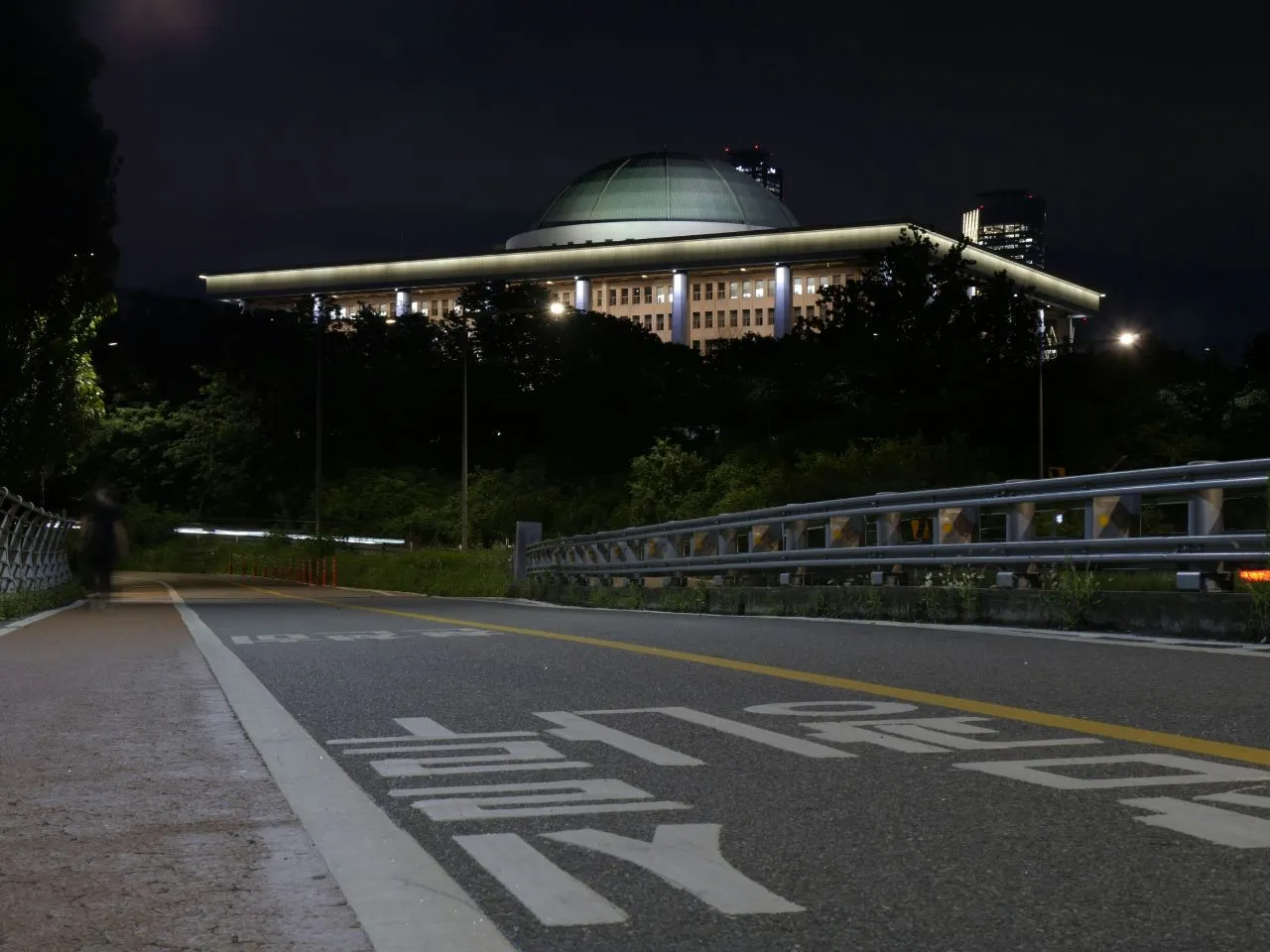
Photo by SC Jang on Unsplash

Regulatory debate over capital standards

A central point of contention for the task force will be establishing appropriate capital requirements for stablecoin issuers. Current proposals vary in scope, with suggested thresholds ranging from 500 million won (approximately $358,000), a figure intended to encourage fintech innovation, to as high as 5 billion won (about $3.58 million) to prioritize investor protection. The committee is tasked with striking a balance between fostering market growth and ensuring financial stability.


Seoul's initiative reflects a broader global movement toward formal oversight of fiat-backed digital currencies. The U.S. passed its GENIUS Act for stablecoins in July, while the EU has implemented its Markets in Crypto-Assets (MiCA) regulation. Similarly, Japan amended its Payment Services Act in 2023 to restrict stablecoin issuance to licensed banks and registered financial firms.


Former White House crypto advisor’s input

The push for clear rules has drawn keen interest from industry leaders. Speaking at Korea Blockchain Week 2025 in Seoul, Bo Hines, chief executive of Tether USAT, stressed the regulatory clarity provided by the GENIUS Act in the U.S. According to ZDnet Korea, he noted that his company's new dollar-backed token, USAT, is designed for full compliance with U.S. law, featuring one-to-one reserves and audits by top-tier accounting firms to attract institutional investors.


Hines, a former digital assets adviser at the White House, clarified that USAT is intended to serve the regulated U.S. market, complementing Tether’s flagship product, USDT, which has a global user base exceeding 500 million. He also discussed Tether’s view of South Korea as a key market, pointing to the significant USDT trading volumes there. Hines encouraged the country to adopt comparable stablecoin standards and expressed optimism that it would move toward a more open and efficient global financial network.


With the FSC’s guidance approaching, the Democratic Party’s task force is working to reconcile differing legislative proposals. The resulting framework will shape the pace at which stablecoins move from pilot projects to an established part of South Korea’s financial system.

 

More to Read
View All
Web3 & Enterprise·

May 03, 2023

Further Setback for Luno With Loss of Top Exec

Further Setback for Luno With Loss of Top ExecGlobal crypto exchange Luno has been challenged of late, with job cuts, the closure of its presence in Singapore and now the loss of a key executive from the company.According to a report published by CNBC on Tuesday, the embattled crypto firm is losing Vijay Ayyar, its Vice President of Corporate Development and International. The setback follows an announcement last month by the company to withdraw its presence from the Singaporean market.Photo by Marten Bjork on UnsplashUnrelated to Singapore closureAyyar made the following comment via WhatsApp message: “I’ll be leaving Luno after 7 years at the company. Given the time I’d spent at Luno, it just seemed like it was time for another challenge.” It’s understood that Ayyar has confirmed that Luno’s move to exit Singapore (where he was based) was not related to his own decision to move on. Instead the top executive has said that he will be joining another company within the crypto and over-arching Web3 space.Luno management had previously outlined that its decision to exit Singapore formed part of an overall “evaluation of [its] global strategy and presence.” As part of its retreat from that South East Asian market, it withdrew its licensing application from consideration by the local regulator, the Monetary Authority of Singapore (MAS).At the time of that announcement, the company stated: “ It’s not a decision we’ve taken lightly. It’s always been our mission to put the power of crypto in everyone’s hands. This is still true.”Organizational changesThe company is clearly going through a period of adjustment from a staffing and resourcing perspective. Last month, Luno announced that its co-founder, Marcus Swanepoel, would be stepping down as CEO. Filling his boots in that role will be Luno’s Chief Operating Officer (COO), James Lanigan.This organizational upheaval follows a further setback in January, when the company announced a 35% cut in headcount. The decision for those job cuts was taken as a knock on reaction to what had been a very challenging trading environment for Luno and crypto companies generally during a year long crypto bear market in 2022.A troubled parent companyLuno’s difficulties have been further compounded given that it is a portfolio company of crypto industry conglomerate, Digital Currency Group (DCG). DCG had acquired the company in 2020. DCG also owns digital assets-focused financial services firm Genesis which filed for bankruptcy in January. It owes $575 million to Genesis in a scenario that places DCG itself in default risk.Genesis and DCG have recently entered into a 30 day mediation process in order to reach a resolution relative to creditors who participated in the Gemini Earn programme associated with the Gemini cryptocurrency business run by Cameron and Tyler Winklevoss.As yet DCG has not sought to sell off any of its portfolio companies which includes Grayscale, CoinDesk and Foundry. However, it’s understood that Luno has hired investment bank Canaccord Genuity in an effort to garner suitors who would be interested in investing in the company. This may be part of a plan to unburden the troubled DCG parent company.

news
Web3 & Enterprise·

Sep 14, 2023

Sony Network Communications and Startale Labs to Launch Joint Blockchain Venture

Sony Network Communications and Startale Labs to Launch Joint Blockchain VentureProminent Japanese internet service provider Sony Network Communications and Singapore-based Web3 company Startale Labs are undertaking a new joint venture to develop a blockchain network for facilitating the worldwide adoption of Web3.Photo by CHUTTERSNAP on UnsplashCultivating an innovative Web3 ecosystemThis comes after Sony Network Communications’ initial $3.5 million investment in Startale Labs back in June. Both companies expressed their commitment to paving the way for revolutionary Web3 applications through the development of a solid blockchain infrastructure. To do so, they said that they would leverage Sony Group’s knowledge and expertise in various sectors, such as gaming, music, entertainment, and financial services, to apply a multifaceted approach to the joint venture.“By combining Sony Network Communications’ experience in communication, the Internet of Things (IoT), artificial intelligence (AI), and solution services with Startale Labs’ insights and technical prowess in Web3, we aspire to create a global infrastructure that underpins the Web3 era, driving innovation across existing industries,” said Jun Watanabe, President and Representative Director of Sony Network Communications.The new business will be established this month under the name Sony Network Communications Labs.“This joint venture is founded on the synergy created by our respective assets and knowledge, and it is aimed at collectively developing a leading blockchain ecosystem. We are determined to discern Web3 trends and drive them globally,” said Sota Watanabe, CEO of Startale Labs.Governmental supportSony Group, Sony Network Communications’ parent company, has consistently been making strides in the Web3 realm. Sony Bank, another affiliate of the group, joined hands with Mitsui & Co. Digital Asset Management (MDM) a few months ago to establish MDM’s security token service Alterna.These efforts have been encouraged by a backdrop of active support for Web3 and crypto businesses from the Japanese government. The Japanese National Tax Agency recently announced the revised corporate taxation rules for crypto assets, which renders companies exempt from taxes on unrealized gains from cryptocurrencies if the virtual assets were issued by the company and have been continuously held since issuance, or if they have remained subject to certain transfer restrictions since issuance.Startale Labs’ popular smart contract platform Astar Network also recently launched an Ethereum layer 2 scaling solution dubbed Astar zkEVM: Supernova with Polygon Labs in a strategic move to expand Web3 adoption in Japan and onboard more enterprise partners.

news
Web3 & Enterprise·

Dec 12, 2023

HTX experiences $258 million outflow post-hack

HTX experiences $258 million outflow post-hackHTX, the digital-asset trading platform associated with Chinese-born crypto mogul Justin Sun, has witnessed a substantial net outflow of $258 million since resuming operations after a significant security breach.According to Bloomberg, data from DefiLlama indicates that the outflow occurred between the exchange’s restart on Nov. 25 and Dec. 10, signaling unease among some clients following last month’s cyberattack. In November, HTX reported a loss of $30 million in crypto tokens due to the breach, prompting a temporary suspension of withdrawals and deposits.Towards the end of last month, the platform re-enabled withdrawal services for major cryptocurrencies, gradually bringing the exchange back to full service, supporting withdrawal of all digital assets.Photo by Amritanshu Sikdar on UnsplashMultiple hacksJustin Sun is also associated with the Poloniex exchange and the HECO Bridge, a network established by HTX for blockchain transfers. Both Poloniex and HECO fell victim to hacks in November, resulting in the theft of approximately $200 million in crypto. It’s worth noting that hackers had previously stolen $8 million from the HTX platform in September.HTX, which was formerly known as Huobi up until a business rebrand in September, boasts an average trading volume of $1.5 billion in the past 24 hours, securing its position as the fifteenth largest exchange when measured in terms of trading volume.Increased vigilanceIn the wake of several high-profile crypto platform failures in 2022, digital-asset investors are increasingly vigilant about monitoring flows and reserves at virtual currency exchanges. In particular, that trend gained momentum after the FTX platform’s collapse last year due to fraud.November turned out to be the most damaging month this year so far in terms of platform digital asset theft. Exit scams and exploits encountered during the month totaled a staggering $363 million in losses.In October, the UK’s Financial Conduct Authority (FCA) included HTX, alongside KuCoin, on a warning list, due to their promotion of services in the UK, without having obtained the required regulatory approvals.A third of reserves in BitcoinDefiLlama data reveals that Bitcoin constitutes the largest portion of HTX’s reserves, accounting for approximately 33%. Tron’s TRX token, launched by Sun in 2017, represents around 32% of the reserves. HTX’s native exchange coin, HT, makes up 14%, followed by a Sun-backed token named stUSDT at 12%.In August, Travis Kling, Founder of Ikigai Asset Management, had this warning relative to Sun and HTX:”Justin Sun is a criminal. There’s a hole in Huobi, a hole in TUSD and a hole in Tron DeFi. Act accordingly.”TRX, at the center of U.S. fraud allegations against Sun, prompted a March lawsuit by the Securities and Exchange Commission (SEC), accusing him and his firms of market manipulation to inflate the token’s trading activity. Sun dismissed the suit on the X social media platform back in March, stating that it “lacks merit.” On Sunday, Sun claimed that the Tron blockchain network which he founded had reached a new milestone of 200 million users.Despite security firm BlockSec reporting the recovery of the $8 million stolen in September, hackers still appear to control the $30 million taken last month. The ongoing situation raises concerns about the security measures and resilience of HTX in the face of persistent cyber threats.

news
Loading