Top

Singapore launches BLOOM initiative to advance digital finance infrastructure

Policy & Regulation·October 22, 2025, 6:24 AM

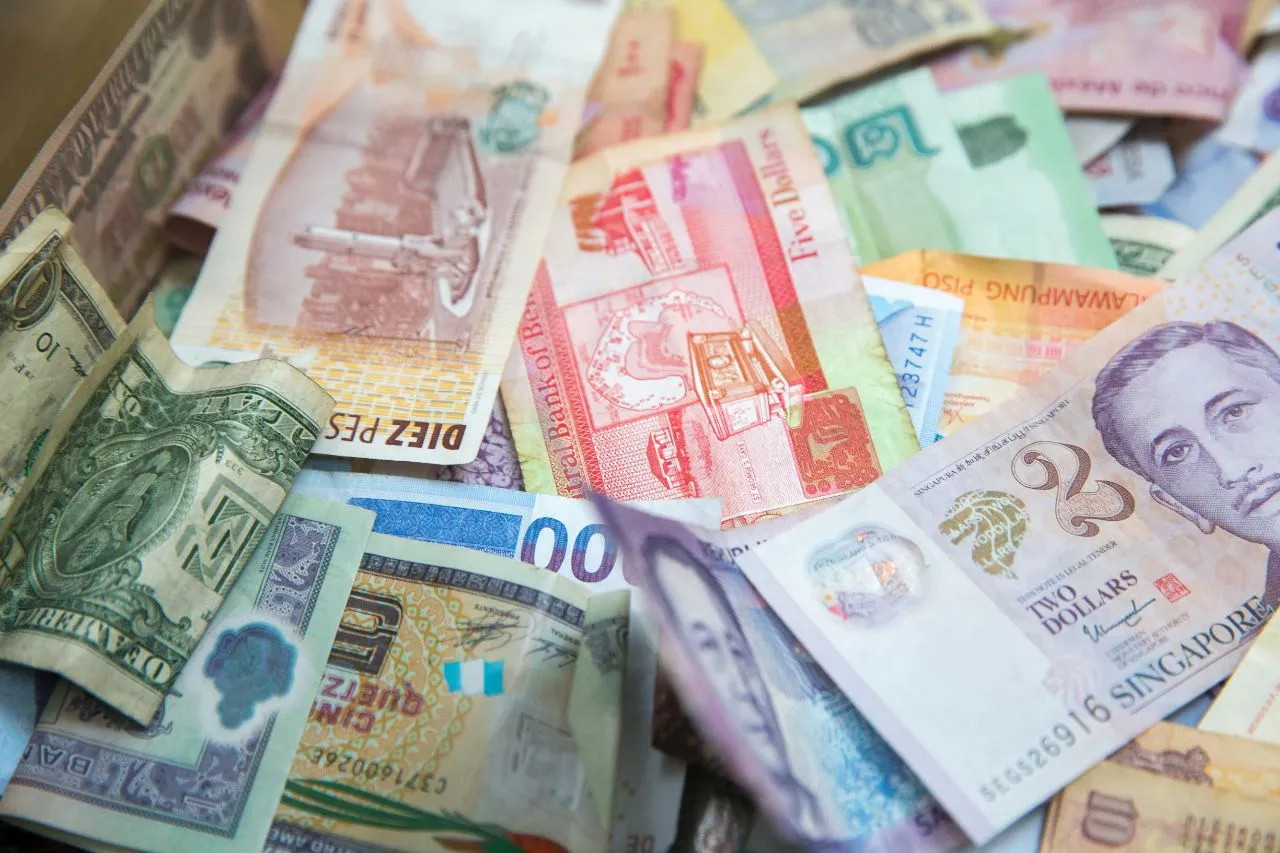
The Monetary Authority of Singapore (MAS) has unveiled a new initiative aimed at enhancing the nation’s financial infrastructure through the use of stablecoins and tokenized commercial bank money.


Announced on Oct. 16, the project, known as BLOOM, short for Borderless, Liquid, Open, Online, Multi-currency, brings together 16 financial sector participants, including Anchorage Digital, Ant International, Circle, Coinbase, and DBS Bank. According to MAS, BLOOM is open to additional participants through a registration form available on its official website.
https://asset.coinness.com/en/news/b7e8f857d6a29d71e67697f2da483a48.webp
Photo by Jason Leung on Unsplash

Building on Project Orchid

BLOOM operates under Project Orchid, a digital Singapore dollar initiative launched in 2021 to explore potential applications of central bank digital currency (CBDC) in strengthening Singapore’s financial ecosystem. Through BLOOM, it will examine use cases involving G10 and Asian currencies, covering both domestic and cross-border payments, as well as wholesale financial transactions.


The project’s focus includes coordinating interoperability between different networks to enable the distribution and clearing of settlement assets. It will also explore automated compliance checks and study methods to make wholesale settlements more efficient and cost-effective. Artificial intelligence (AI) agents are expected to play a supporting role, executing transactions automatically within predefined limits and regulatory parameters.


Expanding stablecoin usage in Singapore

The MAS initiative comes shortly after the listing of XSGD, a Singapore dollar–backed stablecoin, on the U.S.-based crypto exchange Coinbase on Oct. 1. XSGD is issued by StraitsX, a digital payments provider, and is fully backed by reserve assets held with DBS Bank and Standard Chartered.


Stablecoin payments have gained traction in Singapore’s retail sector as well. StraitsX recently began supporting settlements in USDT and USDC through OKX Pay. Consumers can use SGQR codes at participating GrabPay merchants to make everyday purchases, such as coffee, with transactions settled directly in Singapore dollars into merchant accounts.


Rising local interest in digital assets

Singapore’s growing engagement with digital assets reflects a broader trend of public interest. A report from ApeX Protocol, cited by Cointelegraph, ranked Singapore as the world’s most “crypto-obsessed” nation, awarding it a composite score of 100. The ranking considered ownership rates, adoption growth, search activity, and ATM availability. The study found that 24.4% of Singapore’s population holds cryptocurrency, ahead of the United Arab Emirates (UAE), which scored 99.7 despite a 25.3% ownership rate.


In a separate development, Channel News Asia reported that three Singaporeans have been implicated in a large-scale fraud scheme linked to Cambodia’s Prince Group. The U.S. Department of Justice recently confiscated 127,271 Bitcoin tied to the operation—the largest seizure in its history.


Following the investigation, the U.S. Department of the Treasury’s Office of Foreign Assets Control imposed sanctions on the three individuals as well as 17 Singapore-registered entities. The sanctions block access to any property in their possession and prohibit U.S. persons from engaging in transactions with them, citing risks to U.S. national security and foreign policy interests.


 

More to Read
View All
Web3 & Enterprise·

Jun 28, 2023

Korbit and SK Planet Team Up to Promote NFT Membership Program

Korbit and SK Planet Team Up to Promote NFT Membership ProgramKorbit, one of South Korea’s prominent cryptocurrency exchanges, has teamed up with SK Planet, a technology affiliate of the major conglomerate SK Group, in an effort to attract new users to Road to Rich, a non-fungible token (NFT) membership program.Photo by Mo on UnsplashWin up to 0.1 BTCUnder this collaboration, Korbit users will have the opportunity to win up to 0.1 BTC by completing assigned tasks. From those participating, 511 fortunate individuals will be selected as winners. The breakdown of prizes is as follows: 500 participants will earn 0.001 BTC each as third place winners; 10 second place winners will receive 0.01 BTC each; and the single top winner will be awarded the grand prize of 0.1 BTC.Quests, rewards, and rabbit NFTsRoad to Rich was introduced earlier this month by OK Cashbag, a popular customer rewards system offered by SK Planet. Road to Rich offers users daily quests involving rabbit character NFTs. Successful completion of these tasks allows users to gain various benefits, such as OK Cashbag points, which can be used at hypermarkets, restaurant chains, and other partner businesses. To participate in Road to Rich, users need to install the UPTN Station, a decentralized wallet developed by SK Planet, which allows storage, retrieval, and transfer of NFTs.According to a report by local news outlet Newspim, Oh Se-jin, CEO of Korbit, expressed the crypto exchange’s excitement about participating in the expansion of SK Planet’s Web3 ecosystem. Oh said that Korbit is committed to collaborating with SK Planet to deliver more convenient and valuable services to customers in the Web3 space.

news
Web3 & Enterprise·

Jan 05, 2024

2PointZero launch in UAE to incorporate crypto investment

International Holding Company (IHC), based in the United Arab Emirates, has green-lit the launch of 2PointZero, a holding company encompassing a diverse array of companies, marking a significant stride into various industries, including the burgeoning crypto ecosystem. Photo by Kevin Villaruz on PexelsIHC announced the launch of 2PointZero via a press release published to its website recently. The new holding company boasts a combination of entities with a cumulative asset value exceeding $27 billion, pending completion after securing all necessary regulatory approvals. IHC is one of the Middle East and North Africa’s (MENA) largest conglomerate companies. Founded in 1998 in Abu Dhabi, it contains 422 subsidiary companies with eight of them listed on the Abu Dhabi Stock Exchange Market (ADX). Business interests span sectors such as real estate, healthcare, food and beverage, industrial, IT and communications and agriculture.Tahnoon bin Zayed Al Nahyan, Chairman of IHC, expressed pride in announcing the formation of 2PointZero, positioning it as a next-generation holding company at the forefront of pioneering advancements across multiple sectors. The new holding company will concern itself with sectors that include private equity and alternative investments, venture capital operations, asset management, micro financing and insurance. Digital and cryptocurrency ecosystems is another sector that 2PointZero will invest in. Crypto mining interests2PointZero Holding will incorporate entities such as Chimera Investments, Lunate, Beltone, International Resources Holding (IRH), and Sagasse Investments. Within Lunate, one of Abu Dhabi’s newest funds, lies Citadel Technologies. Citadel stands as a key player in the cryptocurrency mining sector, operating a state-of-the-art crypto mining facility in Abu Dhabi. Specializing in Bitcoin mining, Citadel is committed to sustainable and efficient mining practices, benefiting from its strategic location in the UAE and leveraging the region's advanced infrastructure. In the fiscal year 2022, Citadel reported a revenue of AED 100 million with assets totaling AED 2.7 billion. IHC recently acquired a 10% stake in Phoenix Group, the manager of the "Citadel Project," solidifying Citadel's position as the largest crypto-mining facility in the Middle East. Potential to expand crypto-related investmentsBack in 2022, IHC had outlined its strategy to expand into new growth areas and to grow its digital assets portfolio. In December, an IHC subsidiary, Sirius International Holdings, formed a partnership with Indian infrastructure company Adani Group with a view towards developing AI, internet of things (IoT) and blockchain-based services and solutions. This recent development is encouraging in terms of the potential for far greater crypto-centric investment, given the size of the UAE-based entity. The press release states:”The 2PointZero portfolio, which is expected to surpass AED 100 billion in assets, reflects its commitment to excellence and strategic growth in the digital and crypto ecosystems, resource management, and beyond.” Al Nahyan emphasized 2PointZero's commitment to transformative global impact, particularly in areas such as technology, artificial intelligence (AI), financial services, investment banking and resource management. The vision extends beyond boundaries, with a mission to build sustainable ecosystems that empower communities, foster technological excellence and ensure financial resilience.

news
Web3 & Enterprise·

Oct 27, 2023

Bithumb and Korbit Struggle to Gain Traction Despite Zero Trading Fees

Bithumb and Korbit Struggle to Gain Traction Despite Zero Trading FeesSouth Korean cryptocurrency exchanges Bithumb and Korbit have recently eliminated trading fees, but their bold decision hasn’t yielded much results. Bithumb was the first to implement this change and attracted users for about a week, but it is now seeing a loss in market share. Korbit, following Bithumb’s example, is also struggling to achieve meaningful outcomes.Photo by Alexander Grey on UnsplashLimited impactLocal media outlet Chosun Biz used data from crypto data platform CoinGecko to draw this conclusion. On October 26, Korbit’s daily trading volume represented 0.19% of the total trading volume among South Korea’s top five crypto exchanges (Upbit, Bithumb, Coinone, Korbit, and Gopax). This figure marked a 0.14 percentage point increase compared to the 0.05% recorded on October 19. Korbit had implemented a zero trading fee policy at 9 a.m. (KST) on October 20. Additionally, they launched a promotion offering KRW 5,000 ($3.69) worth of bitcoin to users who transferred virtual assets totaling KRW 1 million or more from Travel Rule-compliant exchanges to Korbit. While the promotion did contribute to Korbit’s market share, it still remains below 1%.Bithumb’s performance showed some improvement, albeit briefly. As of October 26, Bithumb’s market share stood at 18%, marking a 4.7 percentage point increase from its 13.3% share on October 3, the day before it eliminated trading fees. However, it’s worth noting that its market share had reached almost 30% shortly after the promotion’s launch. This indicates that its strategy is losing efficacy over time.The less-than-enthusiastic results from their daring marketing endeavors can be attributed to their inability to draw in retail investors. To begin with, Upbit, the leading player in the market, had already been providing a relatively low fee of 0.05%. Furthermore, adapting to new user interfaces on these exchanges posed a challenge. Zero trading fees weren’t attractive enough for crypto investors to leave their current platforms.Trading volume mattersIn the case of Korbit, its lower trading volume was a disadvantage when it came to attracting users. On crypto exchanges, a higher trading volume typically translates to faster trade executions. As a result, users of Korbit might experience delays in executing trades at their preferred price.Jeong Hye-won, a research associate at crypto data analytics platform Xangle, told Chosun Biz that users on exchanges with lower trading volumes tend to experience slippages due to slower transaction speeds and sparsely populated order books. A slippage means the difference between the initially placed order price and the executed order price. Jeong further explained that Korbit’s zero trading fee policy didn’t have a significant impact because it offers fewer listed tokens compared to Upbit and Bithumb.There is speculation that the free-trading fee promotions introduced by Bithumb and Korbit, despite their revenue sacrifices, might conclude sooner than initially anticipated due to their perceived ineffectiveness. Bithumb derives 99.95% of its revenue from trading fees, while Korbit relies on trading fees for 99.79% of its income. An industry insider has commented that trading fees play a vital role in an exchange’s revenue, and given Bithumb’s reported loss in earnings during the second quarter, there are concerns about their capacity to sustain this strategy.

news
Loading