Top

EU bans Ruble-backed stablecoin A7A5 in latest round of Russia sanctions

Policy & Regulation·October 29, 2025, 6:31 AM

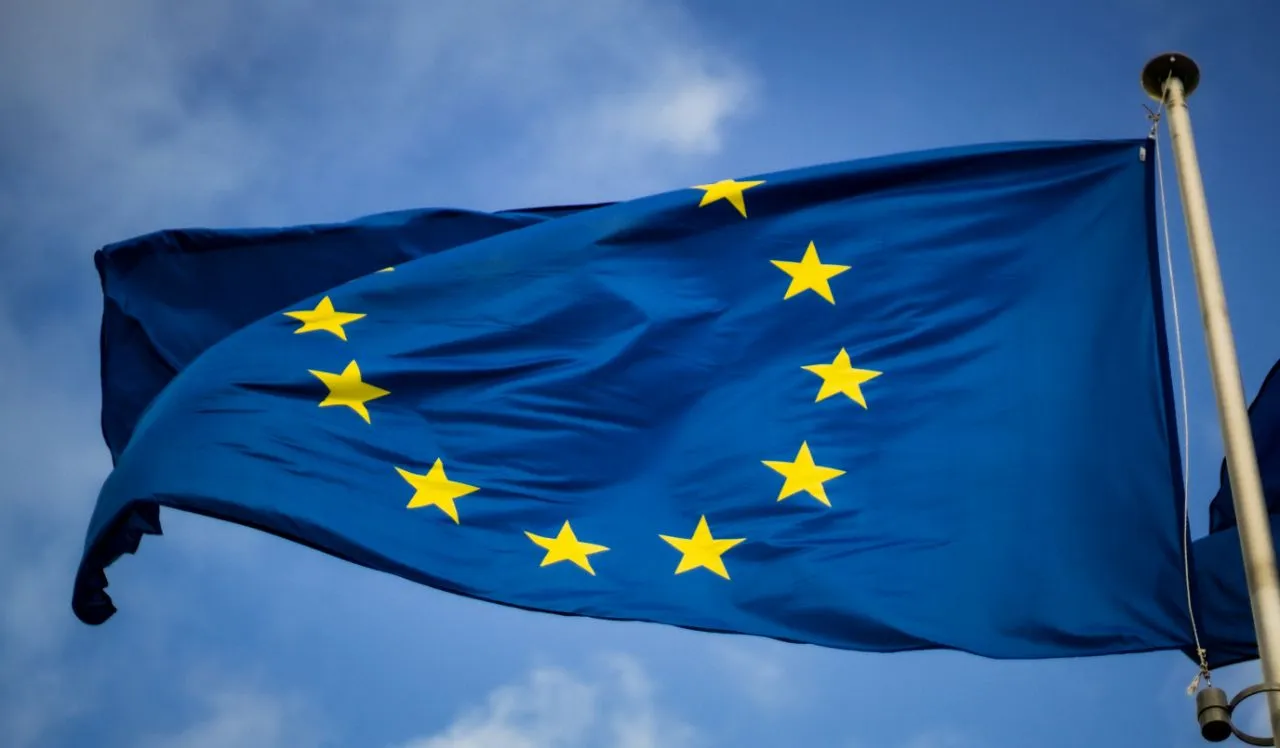
The European Council has banned all transactions within the European Union (EU) involving the Russian Ruble-backed stablecoin A7A5, according to a press release published Oct. 23.


The prohibition targets the stablecoin itself, its developer, its Kyrgyzstan-based issuer, and the operator of a platform that facilitates major A7A5 trades. The package also takes aim at Russian crypto exchanges.
https://asset.coinness.com/en/news/8d2f3591b98e3daf67502602aacc4069.webp
Photo by Christian Lue on Unsplash

Additional banking restrictions

This measure is part of a broader set of economic sanctions against sectors the EU stated assist the Russian invasion of Ukraine, including energy, finance, and defense industries. As part of this financial clampdown, the EU will also impose a ban on five additional Russian lenders starting Nov. 12. One of those lenders, Alfa-Bank, recently began offering Bitcoin buying and selling services, according to an X post by journalist Pete Rizzo.


The European body said the new crypto measures address Russia’s increasing use of digital assets to circumvent existing sanctions. Russian banks were cut off from the SWIFT international payment system in early 2022, following the onset of the Russo-Ukrainian war.


Reports of Russia using cryptocurrency to finance malign activities have surfaced previously. Earlier this month, Sławomir Cenckiewicz, the head of the Polish National Security Bureau (BBN), told the Financial Times that Russia has employed crypto to finance attacks on EU countries. Cenckiewicz said that a network of agents recruited by Russia’s GRU military intelligence agency and uncovered in Poland in 2023 had been substantially funded with cryptocurrency.


Reflecting this concern, lawmakers in Poland’s lower house approved a bill in September to strengthen national crypto oversight, a move also expected to help curb Russian funding channels. Cenckiewicz noted that Polish intelligence agencies are closely monitoring the legislation to prevent loopholes that allow foreign actors to support agents using digital assets.


Russia’s evolving crypto policy

The EU’s action comes as Russia itself is attempting to refine its own cryptocurrency rules.


According to the Moscow Times, Russia's central bank wants to limit cryptocurrency use strictly to cross-border payments within an experimental legal regime (ELR). The institution continues to reject recognition of cryptocurrency as a legal means of payment and has advocated banning its use for domestic payments and retail investment, while permitting trading only for high-net-worth individuals through licensed platforms.


Russia’s finance ministry has expressed a more flexible view, pointing to the scale of crypto adoption among the public. Earlier this year, the central bank estimated that domestic crypto transactions exceeded 1 trillion rubles (about $12.4 billion) per month, and that as of March, wallets linked to Russian users held roughly 827 billion rubles (about $10.2 billion).


The finance ministry and the central bank have agreed to tighten supervision of the crypto market, with officials expecting to finalize the new framework before the end of the year.

 

More to Read
View All
Web3 & Enterprise·

Nov 17, 2023

Korbit hosts its first cryptocurrency investment league

Korbit hosts its first cryptocurrency investment leagueKorean cryptocurrency exchange Korbit announced yesterday (local time) its inaugural virtual asset investment league, set to begin at midnight between Nov. 26 and 27. This event, a first since Korbit’s establishment, invites any investor with a Korbit account to participate. Interested individuals can join the league by using the mobile app to click on the “Join League” button and consenting to the collection and disclosure of their personal information.Photo by Florian Schmetz on UnsplashRealized returns in Korean wonKorbit’s investment league ranks participants every week, from the start of Monday (00:00) to the end of Sunday (24:00). The ranking is based on the “realized return” in Korean won (KRW), which reflects the profits earned by investors from their cryptocurrency investments. To qualify for the ranking, participants must have made cryptocurrency sales totaling at least KRW 100,000 (approximately $77.4).The exchange will reward the top 100 performers each week in the investment league with KRW points, which can be used for investing in crypto assets on their platform. The first, second and third-place winners will receive KRW 200,000, KRW 100,000 and KRW 50,000, respectively. Additionally, all participants who rank in the top 100 will be awarded KRW 5,000 each.Social trading opportunityThe league offers a great opportunity for social trading, allowing investors to study and emulate the tactics of the market’s top traders. Users can click on the profiles of the top 100 traders to view the three cryptocurrencies those traders engaged with over the week.Moreover, each investor on Korbit will have the ability to monitor their cryptocurrency holdings in real-time. They can also view their total realized return, calculated from the beginning of their trading journey on Korbit up to the present moment, irrespective of the league.Pre-event bonusesTo encourage active participation in the upcoming competition, Korbit launched a pre-event yesterday, scheduled to run until Nov. 26. During this period, the first 10,000 investors who agree to the collection and disclosure of their personal information will instantly receive KRW 1,000. Additionally, the first 1,000 investors who sell crypto assets worth KRW 100,000 or more within the first four weeks following the league’s commencement will be rewarded with an extra KRW 5,000.Commenting on the event, Oh Se-jin, the CEO of Korbit, emphasized that unlike a simulation, this competition involves real investments, offering customers a more authentic and immersive experience. Oh expressed his hope to regularly host such events, aiming to foster a community where investors not only compete for returns but also share information. This approach, he believes, will contribute to cultivating a healthy culture of cryptocurrency investment.

news
Web3 & Enterprise·

May 08, 2023

Japan’s Hokkoku Bank to Launch Local Digital Currency in Summer

Japan’s Hokkoku Bank to Launch Local Digital Currency in SummerEarlier this month, Hokkoku Bank, a Kanazawa-based bank in Japan, announced its collaboration with Suzu City, local community-based credit union Kono Shinkin Bank, and blockchain service provider Digital Platformer to launch a local digital currency in Suzu, Ishikawa Prefecture this summer, according to CNET Japan.Promoting cashless transactionsThe digital payment system aims to promote cashless transactions in the local area and digitize Suzu’s customer rewards program, enhancing capital flow and productivity. The local digital currency service for citizens, Suzu Tochituka, and the retail customer rewards program, Suzu Tochipo, are set to launch in the summer of 2023.By winter 2023, Hokkoku Bank plans to issue the stablecoin Suzu Tochika for use within Suzu. Retail stores will be charged a 0.5% fee for transactions made with Suzu Tochika.Photo by Ivan Samkov on PexelsFrom city to prefectureFollowing its services in Suzu, Hokkoku Bank intends to form an alliance with towns in Ishikawa and leverage blockchain interoperability to introduce Ishikawa Tochika, a digital currency for use across the entire prefecture. This project’s goal is to establish a payment system that encompasses all financial institutions. In Suzu and Okunoto, both Kono Shinkin Bank and Hokkoku Bank will cooperate to distribute and promote the payment system.Other regionsTowns and local financial institutions in other regions are also committed to collaborating on local digital currency promotion to enhance residents’ convenience, streamline administrative work, and boost productivity. To ensure security, Digital Platformer’s new blockchain-powered payment system Shiki will record and manage transaction data, offering high traceability and protection against forgery and counterfeit.

news
Web3 & Enterprise·

Feb 10, 2024

Solana Foundation partners with Abu Dhabi free zone to propel Web3

Abu Dhabi Global Market (ADGM), an international finance center and free zone, and Solana Foundation have forged a collaboration aimed at advancing the development of blockchain ecosystems. Nurturing DLT innovationThe primary objective of this partnership, which was announced earlier this week, is to enhance Distributed Ledger Technology (DLT) solutions and propel innovation within the blockchain sphere. Hamad Al Mazrouei, CEO of ADGM Registration Authority, expressed enthusiasm about the collaboration, stating:"We are excited to partner with Solana to pioneer the future of technology, and further enhance the level of knowledge in the space of blockchain by emphasizing the value of regulation and compliance in ensuring robust and sustainable development." Lily Liu, president of the Solana Foundation, shared her optimism about the partnership on the X social media platform, stating:“I spent the day with the @ADGlobalMarket leadership, and have come away with great optimism about their progressive, consultative approach to regulation.”Photo by Shubham's Web3 on UnsplashEmerging crypto hubAbu Dhabi is swiftly emerging as a prominent hub for crypto and blockchain ventures, attracting top firms globally due to its strategic location and supportive government policies. The ADGM has approved a raft of licenses for leading digital asset sector firms. New York-headquartered blockchain and tokenization infrastructure platform Paxos secured an in-principle license back in November. That same month, retail and social trading platform eToro and virtual asset firm M2 both secured trading licenses from ADGM. In September, Standard Chartered-backed digital asset marketplace Zodia Markets secured in-principle approval.Framework for DAOs and foundationsAbu Dhabi Global Market has created an enabling environment for such partnerships to flourish. The emirate has recently launched a $2 billion initiative dedicated to fostering startups in the Web3 and blockchain technology sectors, underscoring its commitment to nurturing the growth of the crypto and blockchain industry. Last year, ADGM introduced regulations to streamline the establishment of blockchain startups in its international free trade zone, aiming to attract investments and enhance market competitiveness and efficiency. In particular, it rolled out a framework for the establishment of decentralized autonomous organizations (DAOs) and blockchain foundations. To establish a distributed ledger technology (DLT) foundation, founders are required to submit a signed Charter to the Registrar, affirming compliance with all relevant laws and financial obligations. Notably, ADGM's regulatory framework for DLT foundations has already yielded significant results, with the recent announcement of the Berlin-based IOTA Foundation unveiling a $100 million foundation in Abu Dhabi. This latest Solana Foundation collaboration is further evidence of the fruits of that framework. In addition to regulatory advancements, Abu Dhabi Global Market introduced a virtual platform in 2022 to connect individuals with virtual asset firms, consolidating its status as a crypto hub. This initiative has attracted several crypto firms to the UAE, drawn by the region's plans to establish itself as a leading crypto hub. Dubai, Abu Dhabi's neighboring emirate, has also witnessed a surge in crypto firms, buoyed by the proactive approach of Dubai’s Virtual Asset Regulatory Authority, which serves as a global model for regulator-industry collaboration.   

news
Loading