Top

Hong Kong Crypto Exchange Contemplates Sale at HK$1 Billion Valuation

Web3 & Enterprise·October 17, 2023, 1:46 AM

Hong Kong’s BC Technology Group is reportedly considering the sale of its crypto platform, OSL, with a suggested valuation of approximately HK$1 billion ($128 million).

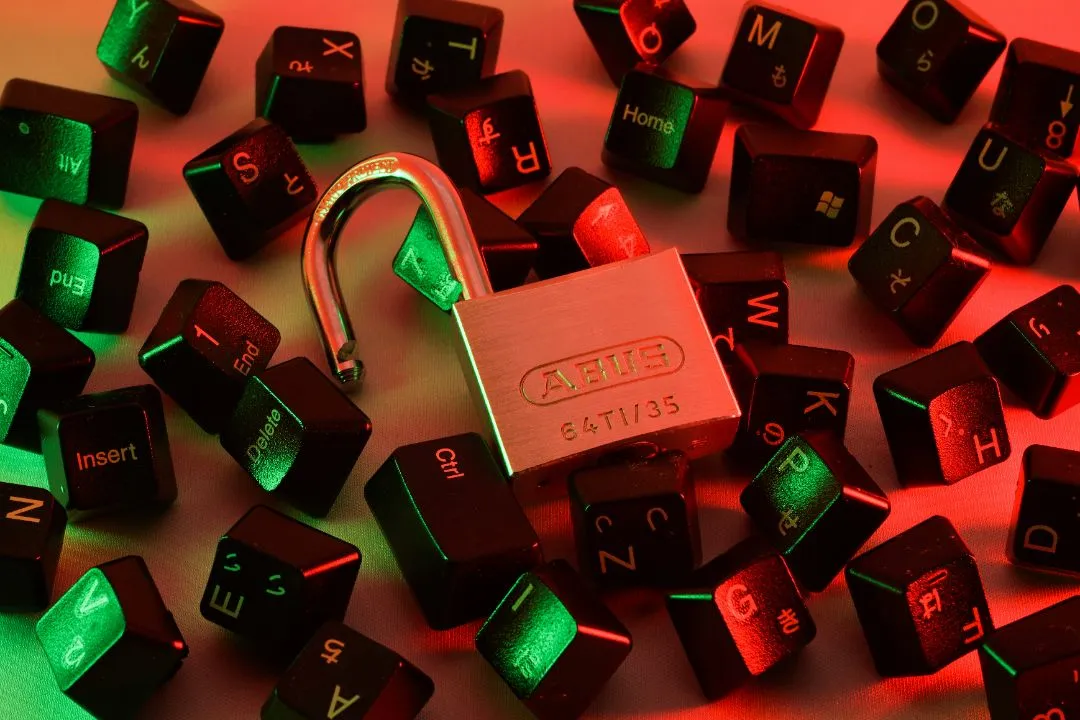
Photo by Samuel Chan on Unsplash


Discussions with potential buyers

That’s according to a report published by Bloomberg on Monday. OSL holds the distinction of being one of only two exchanges alongside competitor HashKey licensed under the digital asset regulations introduced by the city of Hong Kong in June. Bloomberg cited anonymous sources familiar with the matter having revealed that BC Technology has initiated discussions with potential buyers, including industry players and funds.

OSL’s platform encompasses prime brokerage, exchange services, and secure custody solutions for the cryptocurrency markets. Furthermore, OSL plays a pivotal role in facilitating financial institutions’ access to virtual asset trading. Rather than a complete sale of the company, BC Technology is considering the possibility of divesting specific parts of the business, according to these sources.

It’s important to note that these deliberations are ongoing, and there is no guarantee that they will culminate in a final deal, as highlighted by the insiders. In response to an inquiry from Bloomberg News, a representative from BC Technology stated:

“We are a highly transparent and regulated company. We do not comment on market rumors and speculations.”


Valuable trading license

OSL's regulatory licensing is likely to add considerably to its value. Earlier this year it emerged that digital asset sector firms were shelling out a range between HK$20 million and HK$200 million in their efforts to secure crypto trading licenses in Hong Kong.

In May the company obtained Type 1, 4, and 9 licensing from Hong Kong’s Securities and Futures Commission (SFC) through its OSL Asset Management (OSLAM) business. Following the acquisition of licensing, the firm moved to launch its first fund, concentrating on blockchain, artificial intelligence (AI), and Web3 technologies.


Hong Kong’s crypto hub challenges

Hong Kong enabled retail-level crypto trading on June 1, with the aim of further establishing the city as a hub for the cryptocurrency sector. The regulatory change enabled retail investors to trade larger tokens such as Bitcoin and Ethereum on licensed exchanges. Despite these efforts, demand for cryptocurrencies remains lackluster due to the lingering effects of last year’s wave of crypto sector bankruptcies.

To compound matters, Hong Kong is also grappling with the repercussions of the JPEX exchange scandal, an unlicensed Dubai-headquartered entity that further tarnished the reputation of the digital asset industry in the region.

BC Technology’s market value has shown substantial growth, surging to almost HK$1.9 billion from its low point earlier in the year. However, the company’s shares remain down by 80% from their peak in June 2021, which coincided with the cryptocurrency market’s frenzy during the pandemic.

In response to market developments, OSL has withdrawn its application for a digital asset license in Singapore and it is preparing a revised submission. It’s worth noting that certain clients from Singapore are being transitioned to the exchange in Hong Kong.

More to Read
View All
Policy & Regulation·

Oct 29, 2025

EU bans Ruble-backed stablecoin A7A5 in latest round of Russia sanctions

The European Council has banned all transactions within the European Union (EU) involving the Russian Ruble-backed stablecoin A7A5, according to a press release published Oct. 23. The prohibition targets the stablecoin itself, its developer, its Kyrgyzstan-based issuer, and the operator of a platform that facilitates major A7A5 trades. The package also takes aim at Russian crypto exchanges.Photo by Christian Lue on UnsplashAdditional banking restrictionsThis measure is part of a broader set of economic sanctions against sectors the EU stated assist the Russian invasion of Ukraine, including energy, finance, and defense industries. As part of this financial clampdown, the EU will also impose a ban on five additional Russian lenders starting Nov. 12. One of those lenders, Alfa-Bank, recently began offering Bitcoin buying and selling services, according to an X post by journalist Pete Rizzo. The European body said the new crypto measures address Russia’s increasing use of digital assets to circumvent existing sanctions. Russian banks were cut off from the SWIFT international payment system in early 2022, following the onset of the Russo-Ukrainian war. Reports of Russia using cryptocurrency to finance malign activities have surfaced previously. Earlier this month, Sławomir Cenckiewicz, the head of the Polish National Security Bureau (BBN), told the Financial Times that Russia has employed crypto to finance attacks on EU countries. Cenckiewicz said that a network of agents recruited by Russia’s GRU military intelligence agency and uncovered in Poland in 2023 had been substantially funded with cryptocurrency. Reflecting this concern, lawmakers in Poland’s lower house approved a bill in September to strengthen national crypto oversight, a move also expected to help curb Russian funding channels. Cenckiewicz noted that Polish intelligence agencies are closely monitoring the legislation to prevent loopholes that allow foreign actors to support agents using digital assets. Russia’s evolving crypto policyThe EU’s action comes as Russia itself is attempting to refine its own cryptocurrency rules. According to the Moscow Times, Russia's central bank wants to limit cryptocurrency use strictly to cross-border payments within an experimental legal regime (ELR). The institution continues to reject recognition of cryptocurrency as a legal means of payment and has advocated banning its use for domestic payments and retail investment, while permitting trading only for high-net-worth individuals through licensed platforms. Russia’s finance ministry has expressed a more flexible view, pointing to the scale of crypto adoption among the public. Earlier this year, the central bank estimated that domestic crypto transactions exceeded 1 trillion rubles (about $12.4 billion) per month, and that as of March, wallets linked to Russian users held roughly 827 billion rubles (about $10.2 billion). The finance ministry and the central bank have agreed to tighten supervision of the crypto market, with officials expecting to finalize the new framework before the end of the year. 

news
Markets·

Mar 25, 2024

South Korean crypto-only exchanges on the brink of closure

Several South Korean crypto-only exchanges have long been struggling to keep their business afloat due to their prolonged weak performances. The local news outlet Etoday reported that the persistent underperformance of these local crypto exchanges is mounting pressure on their corporate operation and management, resulting in them shutting down their businesses. The situation hinders them from meeting the requirements set by the Financial Intelligence Unit (FIU) of the Financial Services Commission (FSC).  Their inability to generate sufficient revenue, due to faltering token trading volumes, makes complying with the FIU guidelines a daunting task.Photo by Anne Nygård on UnsplashCascading closure of crypto exchanges According to crypto industry insiders, local crypto-only exchanges including Cashierest, Coinbit, Huobi Korea, Probit and Tennten have announced their service closure as early as the second half of last year. On Nov. 6, Cashierest announced it was shutting down its services, with Coinbit following suit in the same month. The cascading closure announcements from crypto exchanges raised concerns about their potential harm on investors.  In an effort to protect crypto investors, the FIU has released a statement that local crypto exchanges are obliged to meet the requirements of the FIU in compliance with the Virtual Asset User Protection Act, despite their closing of services. Furthermore, the regulator said finalizing business closure requires due assessment by the FIU.  "Virtual asset service providers (VASPs) must notify their users of the closure and explain how to reclaim their assets at least one month before the business closing date. They must also support users to withdraw their assets for at least three months before closing," the FIU stated.  Struggling to meet FIU requirements However, some point out that it would be challenging for near-bankrupt crypto exchanges to run a customer service center for more than three months. Some exchanges allow users to deposit and withdraw their assets until their closure, as they would under normal conditions, but charge additional fees afterward. "It is very demanding to operate customer services when we're seeing no actual gains," one exchange official said.  It has been found that some crypto exchanges failed to register a change in their business state with the FIU, which is mandatory in the event of business location or contact changes, under the Financial Transaction Reports Act.  When Etoday reporters visited the offices of some of these crypto exchanges, they were met with empty rooms. One person who is familiar with the matter said, "The exchange has moved its office to another location and is scheduled to resume service in March." 

news
Web3 & Enterprise·

Sep 14, 2023

BitMEX Returns to Derivatives Arena with Prediction Market

BitMEX Returns to Derivatives Arena with Prediction MarketBitMEX, a name synonymous with the early days of crypto derivatives, has made a return to its core focus with the launch of a prediction market.Through this new product, the company aims to captivate traders by offering them the opportunity to wager on real-world events, effectively extending the boundaries of crypto derivatives trading.Photo by Amjith S on UnsplashBetting on the outcome of real-world eventsThis shift in direction is being overseen by Stephan Lutz who took the helm as CEO and group CFO in 2021.In a blog post announcing the product launch on Tuesday, the firm expressed its vision for the prediction market, asserting that it would introduce an entirely new dimension to crypto derivatives trading.The product is designed to diversify traders’ portfolios and yield returns based on predicting the outcomes of real-world occurrences, an offering that the company feels holds significant promise. Especially in bear markets characterized by subdued volatility, the prediction market could serve as a valuable instrument for traders seeking to enhance their strategies.Novel initial wagersBitMEX’s inaugural move into the prediction market sees the firm offer an array of contracts for traders to explore. Among those initial offerings are contracts enabling wagers on various outcomes, such as the percentage recovery rate of FTX’s bankruptcy claims and the likelihood of the US Securities and Exchange Commission (SEC) approving a Bitcoin exchange-traded fund (ETF) by October 17. These contracts underscore BitMEX’s intent in covering a wide spectrum of topics, with the firm promising to introduce more options in the near future.The prediction market holds the potential to revolutionize the way traders engage with real-world events, introducing a novel form of participation that transcends traditional trading boundaries. This launch has significant potential for BitMEX as it endeavors to reclaim its position in the competitive crypto derivatives market.Change of strategyUnder the stewardship of former CEO Alexander Höptner, BitMEX embarked on a diversification strategy termed “beyond derivatives,” delving into areas like spot trading and exploring new business avenues. However, the departure of Höptner in October ushered in a change in direction for the firm. The introduction of the prediction market now symbolizes BitMEX’s return to its foundational business model, with a renewed focus on derivatives.In May, the Seychelles-headquartered firm introduced perpetual contracts relative to SUI and PEPE tokens. Later that month, it launched a dedicated virtual asset service to Hong Kong-based customers. Hong Kong was its original center of operations when the company was first formed. It has since moved those operations to Singapore while maintaining its corporate presence in the Seychelles.BitMEX’s fresh foray into the derivatives space not only signifies a return to its roots but also presents traders with a means to trade relative to real-world events. By offering an eclectic range of contracts, the platform seeks to attract traders who crave more than conventional crypto trading. This strategic move could serve as a catalyst for BitMEX as it strives to regain its foothold in the competitive crypto sector.

news
Loading
