Top

Singaporean VC Pledges Funding for Web3 Accelerator

Web3 & Enterprise·May 25, 2023, 2:58 AM

Singaporean crypto investment venture capital firm, Foresight Ventures, has committed to doubling down on funding a Web3 Accelerator.

Back in November, the firm launched Foresight X, a Web3-focused incubator program. At the time, it committed to allocating $10 million to be divided between three categories of Web3-centric projects and collaborations. Fast forward six months and the firm is now committing to stump up an additional $10 million in funding for the project.

Categories include ecosystem projects, research grants, and an eight-week incubator program which was initially offered to thirty early-stage projects. In that initial funding round, start-ups were being supported with funding of $50,000, up to a maximum of $200,000.

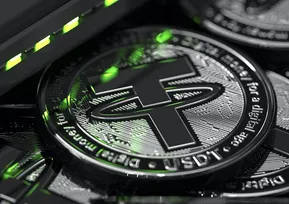
Photo by Shubham Dhage on Unsplash


Second phase

The project is now entering its second phase, accepting applications once again from a new round of start-up applicants. In this instance, the focus will move towards Web3 projects with an emphasis on artificial intelligence (AI), zero-knowledge cryptography, bitcoin, non-fungible tokens (NFTs), machine learning, and liquid staking derivative products.

With second-round funding, each selected project will be funded to the tune of $200,000 rather than the funding range of $50,000 to $200,000 employed on the first phase. Additionally, up to three mentors will be assigned to each successful applicant project. On top of that, one fund partner from Foresight Ventures will be assigned to each start-up in order to provide them with a steer towards growth and development. The program will culminate with a Demo Day, facilitating each project to showcase their service or product offering.


Bitget partnership

Founded in 2020, Foresight Ventures has progressed in a short space of time, from having $80 million assets under management (AUM) to an AUM of $400 million today. The venture capital outfit is led by seasoned venture professionals with backgrounds in companies like Google, Bitmain and Sequoia Capital.

Among its leading investments is SEI, the layer one blockchain project that is optimized for transaction speed and throughput. In April, the company committed $50 million towards SEIs $120 million ecosystem fund. In January, it invested $15 million in Singapore-based digital asset infrastructure and market making firm, CyberX.

Last month the firm partnered with crypto derivatives trading platform Bitget in contributing towards its Asia-focused Web3 fund. Focused on funding outstanding Web3 projects in the region, Bitget has put together a $100 million fund. Foresight Ventures joined Dragonfly Capital, SevenX Ventures, DAO Maker and ABCDE Capital in expressing interest in investing in the fund, ultimately investing and partnering with Biget on the initiative.

The firm has come a long way in a short space of time, signaling its intent in March 2022 when it committed to investing up to $200 million in Web3 start-ups and blockchain projects over the course of three years. Other key Foresight Ventures portfolio companies include Singapore-based digital assets financial services firm, Matrixport, and metaverse developer Everyrealm. Aside from its headquarters in Singapore, the firm also maintains a presence in Shanghai, allowing it the reach to cover crypto-related projects throughout the Asian region.

More to Read
View All
Markets·

Dec 15, 2025

Japan’s rate hike looms over Bitcoin as institutional skepticism persists

Bitcoin is facing growing uncertainty as it trades near $90,000, down nearly 30% from its October peak of $126,000. While the cryptocurrency remains under pressure, investors are increasingly focused on Tokyo, where a potential change in monetary policy could tighten global liquidity. According to CoinDesk, which cited a report from Nikkei, the Bank of Japan (BOJ) is expected to raise its policy rate by 25 basis points to 0.75%, a move that would push borrowing costs to their highest level in nearly three decades. Historically, a stronger yen has often been associated with weaker Bitcoin performance amid tighter global liquidity.Photo by Kanchanara on UnsplashYen carry trade in focusThe report suggested that higher rates could unwind the yen carry trade, a strategy in which investors borrow cheap yen to fund positions in higher-yielding assets such as stocks and U.S. Treasuries. A similar dynamic played out following the Japanese central bank’s July hike, which precipitated a market-wide selloff that dragged Bitcoin from roughly $65,000 down to $50,000. However, CoinDesk noted that a recurrence of such volatility cannot be assumed. It added that speculative positioning is already skewed toward yen strength, while steadily rising Japanese bond yields suggest monetary policy is adjusting to prevailing market realities. Institutional skepticism toward BitcoinBeyond the macroeconomic landscape, fundamental skepticism remains entrenched among traditional finance heavyweights. John Ameriks, Vanguard’s global head of quantitative equity, said at Bloomberg’s ETFs in Depth conference that the asset behaves more like a speculative digital collectible, comparable to a Labubu toy, than a conventional investment, citing its lack of income generation, compounding, and cash-flow characteristics. Ameriks’ comments follow Vanguard’s move earlier this month to permit trading of select third-party crypto ETFs. He said the decision was based in part on the funds’ ability to establish a track record since their January 2024 launch. While acknowledging that Bitcoin could theoretically offer value during periods of high inflation or political instability, he maintained that its history remains too short to draw conclusions. Bullish case for BitcoinA contrasting view was offered by Katherine Dowling, president of the Bitcoin Standard Treasury Company. Speaking with DL News, Dowling projected that Bitcoin would surge to $150,000 by the end of 2026. She pinned this bullish outlook on favorable U.S. regulatory shifts, increased liquidity from Federal Reserve rate cuts, and sustained institutional adoption via ETFs.The perceived influence of institutional flows was also underscored by a recent weekly survey of 2,000 South Korean investors conducted by CoinNess and Cratos. The data showed that 42.3% of respondents view flows into and out of spot Bitcoin ETFs as the primary price driver. Monetary policies in major economies like the U.S. and Japan ranked second at 26.7%, while 16.3% pointed to shifts in equity markets. Another 11.5% attributed price action to the halving cycle, and 3.4% said they could identify no specific catalyst.

news
Policy & Regulation·

May 11, 2023

A Korean Lawmaker’s Crypto Holdings Worth $4.5M Spark Controversy

A Korean Lawmaker’s Crypto Holdings Worth $4.5M Spark ControversySouth Korean lawmaker Kim Nam-kuk, a member of the opposition party Democratic Party of Korea (DPK), has recently come under scrutiny due to his reported possession of 800,000 WEMIX tokens from January to February last year, as reported by the Maeil Business Newspaper. These tokens were worth approximately 6 billion KRW or $4.5 million at the time. While Korean lawmakers are obligated to disclose their wealth, virtual assets are an exception. The disclosure of Kim’s ownership of these tokens has ignited controversy, as it unveiled a wealth magnitude significantly greater than previously understood.Photo by Karolina Grabowska on PexelsTravel Rule regulationA central issue in the unfolding dispute is the source of Kim’s investment in the WEMIX tokens. It has been reported that he purchased a significant amount of these tokens between January and February last year and withdrew the entire sum between February and March before the crypto exchange implemented measures to comply with the Travel Rule regulation. This rule requires that financial authorities be informed of transactions over 10 million KRW ($7,500). After the crypto exchange reported the transactions to the Financial Intelligence Unit of the Financial Services Commission, the government agency requested a warrant to search Kim’s account due to the transactions’ abnormality. However, the court dismissed the request.Jeonse deposit to LG Display sharesIn response to the controversy, Kim took to a YouTube channel on Tuesday to explain his WEMIX token investments. He stated that he had retrieved 600 million KRW ($450,000) after his jeonse contract expired and used the money to purchase LG Display shares. Jeonse a housing rental system in Korea where tenants put up a lump-sum refundable deposit on a rental space for a two-year stay. Kim claims that these LG Display shares later rose in value to 985.7 million KRW ($744,000) in January 2021 and that he used this sum to purchase the tokens.Account balance and WEMIX tokensDespite his explanation, there are still questions surrounding Kim’s sudden increase in his bank account balance. His account balance reportedly increased from 100 million KRW ($76,000) at the end of 2020 to 1.12 billion KRW ($850,000) by the end of 2021, which raised suspicions. If Kim had directed all the money withdrawn from the LG Display shares to WEMIX tokens, it is unclear where the additional $774,000 in his account came from. Kim has reportedly explained to his party’s leadership that he retrieved the principal amount of his investment due to the increase in the WEMIX token price. However, this explanation has not satisfied some critics.Insufficient explanationIn an attempt to address these concerns, Kim shared part of his bank transaction records on Monday. However, this disclosure has fallen short of addressing all the questions that have been raised, such as the precise amount invested in the tokens and their purchase prices. There is still significant public scrutiny and skepticism surrounding Kim’s explanation for his crypto holdings, and it remains to be seen if further disclosures will be made.Kim apologized to the Korean public via Facebook for any disappointment caused, especially amid challenging economic conditions. However, he denied accusations of using undisclosed information or unlawfully acquiring wealth. Kim maintained that all transactions were transparently made using only his own wallets through his real-name bank accounts.Potential insider trading and conflict of interestNevertheless, the public’s acceptance of his explanation is yet to be seen, as questions about his $4.5 million virtual assets persist, particularly given his reported total wealth of around $1.1 million. There are concerns surrounding the possibility of insider trading. Furthermore, Kim’s participation in proposing a bill to defer tax implementation on digital assets has triggered suspicions of a potential conflict of interest.Call for an impartial third partyRecent updates indicate that the prosecution is considering requesting a warrant against Kim in relation to the controversy surrounding his crypto holdings. The Anti-Corruption and Civil Rights Commission is also examining if his participation in proposing the bill constitutes a conflict of interest. It is evident that an impartial third party will need to investigate and analyze all relevant information to resolve this dispute. Until a thorough and unbiased investigation takes place, the public’s concerns and questions are likely to continue.

news
Policy & Regulation·

May 23, 2025

Pakistan establishes authority to regulate crypto

Pakistan’s Ministry of Finance has signed off on the establishment of the Pakistan Digital Assets Authority (PDAA), a body which will be responsible for the implementation of regulations governing blockchain and the digital assets sector. In a report published by Pakistani English-language newspaper Dawn, the media outlet outlined that the Ministry of Finance has taken this step in an effort to embrace future innovation in the finance sector.  The new agency will be responsible for monitoring the operations of digital wallet service providers, stablecoin issuers, the development firms behind decentralized finance (DeFi) protocols, crypto custodians and crypto exchange platforms. Photo by Hamid Roshaan on UnsplashFrom crypto ban to crypto regulationIn October 2022, Pakistan was removed by the Financial Action Task Force (FATF), a global money laundering and terrorist financing watchdog, from its grey list. The following year, Pakistan’s Minister of State for Finance and Revenue, Aisha Ghaus Pasha outlined that banning cryptocurrency was a condition of the country’s removal from the FATF grey list. Accordingly, the South Asian country proceeded to ban digital assets, with Ghaus Pasha declaring that crypto would “never be legalized in Pakistan.”Despite the adverse position taken previously by the authorities in Pakistan where digital assets were concerned, in 2024 a survey carried out by Chainalysis revealed that Pakistan featured strongly in terms of retail-level crypto adoption. With this latest development, Pakistan is moving forward progressively with digital assets, albeit that it is doing so while being cognizant of the current requirements demanded by FATF related to crypto. The newly-formed PDAA will act to ensure FATF-compliant innovation, while striving for economic inclusion and the adoption of digital assets in a responsible manner. Regulating to lead crypto innovation rather than catching upPakistan’s current Minister for Finance and Revenue, Muhammad Aurangzeb, said that “Pakistan must regulate not just to catch up — but to lead.” He added that through the establishment of the PDAA, a digital assets regulatory framework that protects consumers will be created. Furthermore, he claimed that such an approach would attract global investment, putting Pakistan “at the forefront of financial innovation.”Another area of focus for the PDAA will be the facilitation of the tokenization of government debt and national assets. Pakistan runs an annual average electricity surplus of 4,000 megawatts. In 2024, total electricity generation was recorded at 92,091 GWh while demand weighed in at 68,559 GWh. With that, the Pakistani authorities want the PDAA to create the correct conditions that will lead to regulated Bitcoin mining operators utilizing this energy resource. Other objectives which have been set out for the new agency include encouraging the growth of startups aimed at building blockchain-based solutions at scale, the regulation of what is estimated to be a $25 billion informal crypto market and the provision of legal clarity within the crypto sector in Pakistan for both local and international investors. This latest positive development follows the formation of the Pakistan Crypto Council (PCC) back in February. That event signaled a policy shift in Pakistan with regard to digital assets. In March PCC CEO Bilal bin Saqib said that Pakistan was done sitting on the sidelines and that the authorities now want to see Pakistan develop as a “leader in blockchain-powered finance.”

news
Loading