Top

HashKey Enhances User Security with Exchange Insurance Partnership

Web3 & Enterprise·September 08, 2023, 1:22 AM

Hong Kong-based cryptocurrency exchange HashKey has taken a step towards bolstering its users’ security by signing a memorandum of understanding (MOU) with fintech firm OneDegree to provide insurance coverage for digital assets held on the platform.
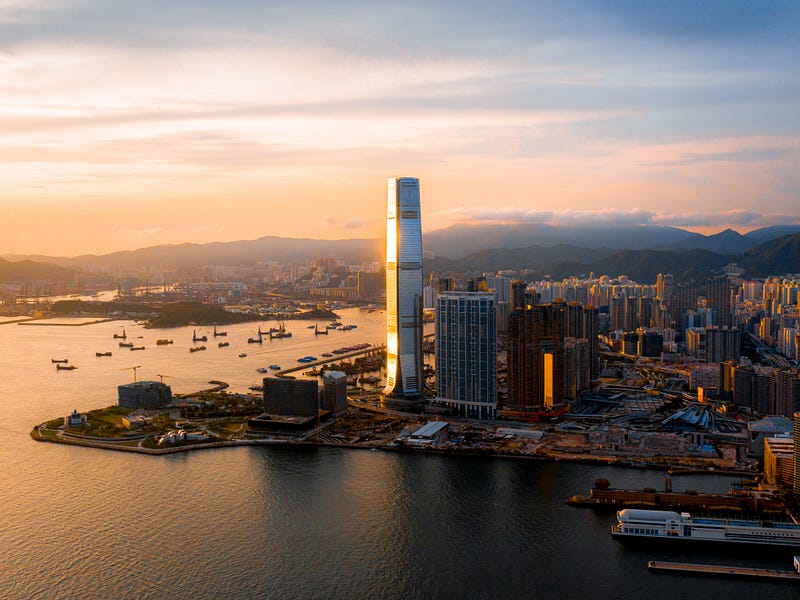
Photo by Manson Yim on Unsplash


Industry-wide significance

That’s according to a report in local news media on Wednesday. The move represents a positive development not only for HashKey users, as it extends protection to both hot wallets and cold storage addresses, but for the overall crypto space.

After the trail of destruction left by a series of high-profile crypto collapses in 2022, the overarching crypto space has been crying out for adequate solutions that reassure crypto market participants that their funds are safe when placed on centralized crypto platforms. In the traditional banking world, in most jurisdictions there are insurance-based schemes that guarantee a certain percentage or level of depositors funds. In many cases, these schemes are backed by the central government.

Asian crypto market participants have been hit harder than most due to these collapses having nothing in place in terms of deposit safeguards. In Singapore, crypto lenders Vauld and Hodlnaut failed, leaving deposit shortfalls. The city-state’s residents were particularly hard hit when it came to FTX as many Singaporeans had opted to use the exchange given that the authorities had banned Binance from trading there.

Xiaoqi Weng, the Chief Operating Officer of HashKey, emphasized the company’s commitment to fortifying its financial, technical, and service infrastructure to offer customers comprehensive protection. The goal is not only to enhance user security but also to contribute to the overall development of Hong Kong’s digital asset ecosystem.


Mitigating risk

Yanlin Guo, Co-founder of OneDegree, underscored the importance of establishing a robust framework for cryptocurrencies that includes insurance to identify and mitigate potential risks effectively. This collaboration between HashKey and OneDegree aims to provide added peace of mind to cryptocurrency investors who entrust their assets to the exchange.

HashKey achieved a significant milestone on August 3 when it became the first cryptocurrency exchange to receive regulatory licensing from the Hong Kong Securities and Futures Commission, enabling it to offer services to retail investors. Subsequently, on August 28, the exchange launched its trading services, albeit with relatively low trading volumes.

Currently, HashKey Hong Kong supports the trading of Bitcoin and Ethereum, with no options for margin trading or cryptocurrency derivatives. Nevertheless, the exchange accepts fiat deposits in both US dollars and Hong Kong dollars from authorized financial institutions worldwide.

The issue of user insurance has been a contentious topic in the cryptocurrency industry, with various exchanges offering different levels of protection. Some exchanges provide no insurance beyond a contractual claim to users’ assets in the event of bankruptcy. Others offer insurance solely for fiat deposits, while a select few, such as Binance and Bitget, extend coverage to crypto-related incidents.

HashKey has answered a market need by integrating this insurance product into its trading service. It’s likely that other platforms will follow suit in the not-too-distant future.


More to Read
View All
Policy & Regulation·

Aug 11, 2023

India Launches Crypto-Enabled Web Browser Initiative

India Launches Crypto-Enabled Web Browser InitiativeIn a further leap into the digital frontier, the Indian Ministry of Electronics and Information Technology (MeitY) has unveiled the Indian Web Browser Development Challenge (IWBDC), signaling a significant move towards reducing the nation’s reliance on foreign technology.Photo by Julian Yu on UnsplashIndigenous web browserCentral to this ambitious initiative is the creation of an indigenous web browser with an innovative twist — the integration of cryptographic features for digitally signing documents. This advancement is poised to heighten the security and efficiency of online transactions, elevating India’s digital landscape.The launch event for the challenge took place at the India Habitat Centre and showcased a collaborative endeavor involving MeitY, Controller of Certifying Authorities (CCA), and the Centre for Development of Advanced Computing (C-DAC).Harnessing blockchain technologyAt its core, this initiative aims to bridge the traditional internet framework with the burgeoning potential of blockchain technology. A press release published by MeitY on Wednesday clarified that the web browser will boast an embedded CCA India root certificate, bolstering the browser’s security framework and upholding the sanctity of data privacy.Sunita Verma, Research & Development Group Coordinator at MeitY, underscored the profound significance of this initiative in India’s digital narrative. She conveyed the message from Alkesh Kumar Sharma, MeitY’s Secretary, emphasizing that this challenge embodies a pivotal stride toward realizing the vision of an “Aatmanirbhar Bharat” or self-reliant India.Further echoing this sentiment, Verma stated:“Digital India has orchestrated a transformative shift in our nation’s operational fabric. As we journey forward, the convergence of technology and homegrown innovation stands as a critical waypoint. More than just a browser, this is a symbol of a self-sufficient, digitally empowered India.”Progressive use caseIn line with the drive towards digital sovereignty, Arvind Kumar, MeitY’s CCA, illuminated the paramount significance of trustworthiness and security in the realm of digital interactions. He expressed his confidence that the forthcoming browser, fortified with the India Root Certificate, will render the nation more resilient against internet vulnerabilities, ultimately curbing dependence on foreign technology players.The IWBDC extends an open invitation to innovators across diverse domains, encompassing academia, industry, startups, and individuals, to contribute their ingenuity to this groundbreaking venture. The challenge brings with it a substantial prize pool of Rs. 3.41 crore ($0.4 million), offering not only financial incentives but also a chance to shape the trajectory of India’s digital future.While establishment agencies in India have largely been opposed to the legalization of cryptocurrencies, this initiative demonstrates that others are looking to exploit the blockchain and cryptocurrency innovation.While the Indian government has been active in calling for global crypto regulation, the country itself has not as yet finalized any such legislation relative to Web3 and cryptocurrency. Initiatives like this one help to showcase the possibilities that this innovation can bring about. That should serve to steer regulation in India towards a set of rules that enable the further development of that innovation.As the curtains rise on the Indian Web Browser Development Challenge, the world’s most populous nation is taking a decisive stride towards asserting its tech self-reliance, intertwining innovation with security, and laying the foundation for a digitally progressive India.

news
Web3 & Enterprise·

Dec 05, 2024

dtcpay shifts exclusively to stablecoin-based payments

dtcpay, a regulated and licensed digital payment services provider headquartered in Singapore, has announced that it is changing direction, and adopting a stablecoin-only digital payments model. Phasing out Bitcoin, EtherThe company set out details of its new stablecoin-only approach in a series of posts on X on Dec. 3. dtcpay will phase out support for other cryptocurrencies such as Bitcoin and Ether by the end of 2024. It will then transition to the exclusive use of stablecoins, starting with Tether (USDT) and Circle’s USD Coin (USDC). Additionally, FDUSD, a U.S. dollar stablecoin issued by Hong Kong’s First Digital, and Worldwide USD (WUSD), a stablecoin which was developed by the Worldwide Stablecoin Payment Network (WSPN), a Singapore-based project, will be supported.Photo by CoinWire Japan on UnsplashVolatility issuesdtcpay cited the volatility of non-stablecoin cryptos as being an issue for payments. Volatility is driving the company’s plan to concentrate solely on stablecoins. Outlining its rationale further, the company stated: “By transitioning to focus dtcpay’s #DPT services purely on #stablecoins, we are setting the stage for the future of global, digital payments. This move is designed to provide our customers with a more reliable, scalable, & secure payment experience.” A significant portion of the firm’s transaction volume is already stablecoin-based. On that basis, the move can be viewed as aligning with the preferences of its current user base to a large extent. Originally established in 2019 by Alice Liu, Band Zhao and Sam Lin as Digital Treasures Center Pte. Ltd., the company later rebranded as dtcpay. In August 2022, the firm was awarded a full Major Payment Institution (MPI) license by the Monetary Authority of Singapore. In 2023, the company collaborated with Singaporean data-sharing platform PlatON and Chinese payments firm Allinpay, to launch a payments system using point-of-sale terminals which accepted Bitcoin, Ethereum and USDT. Asian expansiondtcpay has set out its objective as aiming to unify payment methods across Asia for the benefit of merchants and consumers alike. Last year, it identified Hong Kong and Dubai as locations of particular interest relative to the company’s expansion plans. In October, it furthered its international presence with the opening of an office in Kuala Lumpur. In an effort to make further in-roads into the payments sector, dtcpay announced a strategic partnership with Visa in September. The integration allows dtcpay to gain access to Visa’s global network of 130 million merchants across 200 countries. As part of the partnership, the company is rolling out its dtcpay Visa Infinite card, enabling users to convert digital currencies to fiat at competitive rates. In 2023, the company raised $16.5 million in a pre-series A funding round led by real estate development company Pontiac Land Group, which is controlled by Singaporean billionaire Kwee Liong Tek.

news
Web3 & Enterprise·

Dec 06, 2023

Bitcoin records this year’s highest in Korean market, surpassing KRW 60M

Bitcoin records this year’s highest in Korean market, surpassing KRW 60MBitcoin, the world’s largest cryptocurrency, exceeded the KRW 60 million (approximately $45,700) mark in the South Korean market on Wednesday (local time), reaching its highest value of the year.So far today, the nation’s leading crypto exchange, Upbit, saw Bitcoin’s price soaring to a daily peak of KRW 60,642,000. Meanwhile, another major trading platform, Bithumb, observed Bitcoin’s value touching a daily high of KRW 60,775,000.Photo by André François McKenzie on UnsplashHighest since November 2021This is the first time Bitcoin went above the KRW 60 million mark since November 2021. Amid this development, the Kimchi premium, a term indicating the gap in crypto prices between Korean exchanges and their foreign counterparts, has exceeded 4%. According to data from crypto information platform CoinNess, at the time of publication, the average price of Bitcoin on Korean platforms is KRW 59,986,250, while the average price of Bitcoin on foreign platforms is KRW 57,605,406.Ethereum prices are also on the rise. On Upbit, Ethereum reached its highest point of the day at KRW 3,163,000, and on Bithumb, it peaked at KRW 3,162,000.Rate hike halt and Bitcoin halvingThe ongoing surge in Bitcoin’s value is widely believed to be influenced by a halt in global interest rate hikes and the anticipated Bitcoin halving event scheduled for April 2024. Additionally, the potential approval of spot bitcoin exchange-traded funds (ETFs) by the U.S. Securities and Exchange Commission is seen as another significant factor contributing to the rise in the digital currency’s prices.Meanwhile, the Crypto Fear and Greed Index from software comparison platform Alternative.me currently indicates a sentiment of “Greed” with a score of 72. This index assesses various factors, including volatility, market momentum and volume, social media buzz, market dominance and trends. The scale ranges from 0 to 100, where 0 signifies “Extreme Fear” and 100 represents “Extreme Greed.” Scores nearer to 0 suggest increasing fear among investors, potentially signaling a buying opportunity. On the other hand, scores approaching 100 imply growing greed, hinting at the possibility of a market correction.Korean won as the top fiat trading pairDuring this latest Bitcoin rally, where the cryptocurrency climbed to over 50% of its highest price in almost two years, South Korean crypto traders have played a significant role, Bloomberg reported, citing data from CCData. In November, the South Korean won exceeded the U.S. dollar as the top fiat trading pair in the crypto market for the first time.

news
Loading