Top

Thailand’s Incoming Prime Minister Signals Crypto Embrace

Policy & Regulation·August 24, 2023, 2:08 AM

In a recent parliamentary decision on August 22, real estate magnate Srettha Thavisin emerged as Thailand’s forthcoming Prime Minister. Thavisin, acclaimed for his prior role as the CEO of Sansiri — one of Thailand’s major real estate developers — has a history entwined with the cryptocurrency sector, hinting at potential ramifications for the nation’s crypto landscape.
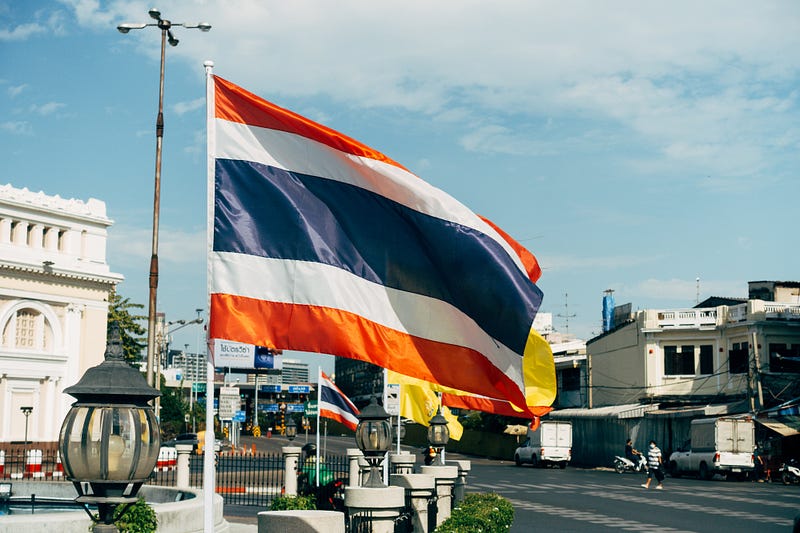
Photo by Markus Winkler on Unsplash


Parliamentary selection win

The appointment came under the banner of the Pheu Thai Party, with Thavisin securing 482 votes out of 747 in the parliamentary endorsement.

Thavisin’s ascent to power could potentially herald a significant shift in Thailand’s approach to cryptocurrencies, leveraging his involvement with Sansiri’s foray into the digital asset domain. Departing from his role as Sansiri’s CEO in April, Thavisin relinquished his 4.4% stake in the company, setting the stage for him to pursue a career in politics.


Crypto firm investment

Sansiri, under Thavisin’s leadership, undertook active participation in the country’s digital asset arena. Notably, in 2021, the company participated in a substantial $225 million fundraising round for XSpring Capital, a crypto-friendly investment management firm. This strategic partnership paved the way for XSpring to launch a fully integrated cryptocurrency trading platform in 2022, with aspirations to establish a presence among the top crypto exchange companies by 2025.

Thavisin’s impact on the crypto sector goes beyond investment. His company also introduced the “SiriHub Token” via XSpring in 2022, presenting a real estate-backed initial coin offering (ICO) that extended 240 million tokens to the public. This duality of involvement from crypto firm investment to token issuance, demonstrates that the new Thai premier has not been afraid to get involved with crypto innovation at an early stage.


Crypto airdrop proposal

It appears that Thavisin’s affinity for cryptocurrency transcends corporate endeavors, as his political affiliation with the Pheu Thai Party, which he joined in November 2022, introduced a novel proposition. The party proposed disbursing 10,000 Thai baht (approximately $300) to citizens, executed through digital currency transactions. The synergy between his cryptocurrency background and this proposal raises questions about the potential influence of his past on Thailand’s future crypto policies.

As Thavisin’s administration prepares to assume office by the end of September, the extent to which his crypto engagement shapes the nation’s policies remains a topic of speculation. However, the confluence of his real estate expertise and cryptocurrency ventures offers a unique blend of experiences that might foster innovative approaches.

Notably, Thavisin’s journey isn’t the sole instance of Thailand’s government engaging with the crypto industry. Earlier in 2023, Thailand’s cabinet introduced tax breaks for companies issuing investment tokens. These measures, announced in March, aim to generate 128 billion baht ($3.7 billion) from investment token offerings over the next two years.


Political importance

Thavisin’s perceived embrace of cryptocurrency in Thailand comes at a time when crypto and blockchain innovation is being supported by political candidates in multiple jurisdictions. In the United States, the Republican Party is holding a debate on Wednesday between its eight candidates for the presidential nomination, with several of them being pro-crypto.

On the Democratic Party side, Robert F. Kennedy is pro-bitcoin, having recently stated that bitcoin is an exercise in extending civil liberty. Meanwhile, in Argentina, Javier Milei, a libertarian pro-bitcoin candidate, topped the poll in the country’s recent presidential primary.


More to Read
View All
Policy & Regulation·

Nov 18, 2023

Kazakhstan achieves first retail payment with digital tenge

Kazakhstan achieves first retail payment with digital tengeBinur Zhalenov, Chairman of Kazakhstan’s National Payment Corporation (NPC), marked a historic moment at the XI Congress of Finance in Almaty on Wednesday by conducting the inaugural transaction with the country’s newly introduced Central Bank Digital Currency (CBDC), the digital tenge.Photo by J B on UnsplashDigital tenge debit cardThat’s according to a report published by local media outlet, Kapital.kz. Utilizing a debit card linked to the CBDC account, Zhalenov demonstrated the practicality of the digital tenge during his speech, showcasing its potential impact on the nation’s financial landscape.The official launch of the digital tenge on the retail market is expected to usher in a wave of development, with Zhalenov outlining that it will result in massive platform development in 2024. Collaborating with global giants Visa and Mastercard, as well as local banks, Kazakhstan aims to integrate the CBDC into plastic cards, enabling users to make digital tenge payments globally through platforms like Apple Pay and Samsung Pay.Eurasian Bank is one of the local banking participants in the project. Its CEO, Lyazzat Satiyeva, commented on the development:“Participation in the ‘Digital Tenge’ project opens up opportunities for launching innovative products for consumers and businesses using blockchain and cryptocurrency technology, developing a regulatory framework for digital assets and, in general, this is a big step in the development of a new digital economy in the country.”Meanwhile, Zhalenov emphasized the programmable capabilities of the digital tenge, envisioning its utilization in smart contracts, innovative financial services and digital asset transactions. Looking ahead, the CBDC’s development roadmap includes a focus on offline payments in 2024, with ambitions to incorporate the digital tenge into cross-border trade by 2025.The journey towards the digital tenge commenced in February 2023, with the NPC, established in September, spearheading the development and implementation of the CBDC. The launch of the NPC was likened to a restructuring of the Kazakhstan Center for Interbank Settlements. Its mandate includes overseeing interbank clearing services, managing digital identification and enabling money transfers.As Kazakhstan strides into the digital era, parallel measures have been taken to tighten oversight of the cryptocurrency market.‘Great Kazakh investment firewall’While the central Asian country may be progressing its CBDC, authorities in Kazakhstan appear to be taking a different approach to international crypto businesses operating within its borders. In September, reports surfaced of difficulties accessing major international crypto exchanges such as Coinbase and Kraken without a local license. Following this, local crypto mining operators addressed President Kassym-Jomart Tokayev in an open letter in October, urging a reconsideration of newly introduced tax rates on mining activities.Kazakhstan’s advancement of the digital tenge signals a transformative phase in the nation’s financial landscape, aligning with global trends in digital currency adoption. As the NPC continues its strategic development, the intersection of traditional finance and emerging digital assets in Kazakhstan is poised for further evolution.

news
Web3 & Enterprise·

Nov 03, 2025

Kyobo Life Insurance joins Circle’s Arc testnet amid growing crypto interest in Korea

Kyobo Life Insurance, one of South Korea’s largest life insurers, has become a participant in the recently launched public testnet for Circle Internet Group’s Arc. This new open layer-1 blockchain network aims to serve a broad range of use cases, including lending, capital markets, foreign exchange (FX), and global payments.Photo by Kindel Media on PexelsNotable global participants in the Arc networkAccording to a press release from Circle, published on Oct. 28, multiple prominent banks and asset managers are also engaging with the Arc network. Kyobo Life stands as the only South Korean entity involved in the initiative. Other notable global participants include BlackRock, Deutsche Bank, Goldman Sachs, SBI Holdings, and Standard Chartered. This move comes on the heels of Kyobo Life’s earlier participation in a stablecoin project spearheaded by the Seoul-based Open Blockchain & Decentralized Identifier (DID) Association. This highlights the insurer’s growing interest in exploring business opportunities within the digital assets space. Korean crypto exchanges step up oversightAs cryptocurrencies gain increasing recognition as a new asset class, South Korean exchanges have become more vigilant in monitoring user activities, partly to curb potential criminal behavior. A report by Money Today revealed that over the past six years, local trading platforms have halted a total of 82.9 billion won ($58.1 billion) in crypto withdrawals. Among these, Bithumb accounted for the largest share, suspending withdrawals totaling 50.5 billion won ($35.4 million) from 2020 to September 2025. Upbit suspended 25.6 billion won ($18 billion) in the same period, while other exchanges like Coinone, Korbit, and Gopax reported more modest suspensions. These actions are largely in response to the Virtual Asset User Protection Act, which came into effect in July 2024. The Act aims to enhance oversight and safeguard consumers, reflecting the government’s intent to regulate the sector more tightly. Surge in Korea-Cambodia stablecoin tradingParallel to these regulatory developments, a dramatic surge in stablecoin trading volume has been observed between South Korea and Cambodia. According to data from the Financial Supervisory Service (FSS) reported by the Seoul Shinmun, transactions between five major South Korean exchanges and Cambodia’s Huione Guarantee skyrocketed to 12.8 billion won ($8.98 million) in 2024, marking a staggering 1,400-fold increase compared to just 9.22 million won ($6,500) in 2023. This rise in activity coincides with recently uncovered criminal cases originating from Cambodia and has raised concerns about illicit practices within the crypto market. In response to these concerns, crypto exchanges are bolstering their efforts to cooperate with law enforcement. Binance, the world’s largest crypto exchange by trading volume, was recently honored with a commendation by the South Korean Minister of the Interior and Safety for its contributions to enhancing cybercrime investigations and administrative capabilities. This accolade comes amid Binance’s increasing presence in South Korea. Binance, which had acquired Gopax ahead of regulatory approval, has now received clearance from local financial authorities to become the Korean trading platform’s largest shareholder. Public sentiment on Binance’s acquisition of GopaxA recent survey conducted by CoinNess and the community-voting app Cratos, which polled 2,000 South Koreans, provided insights into the public’s perception of Binance’s acquisition of Gopax. Among respondents, 38.8% indicated that their decision to use the rebranded platform would depend on the benefits it offered compared to other exchanges, while 23.6% said they were already planning to use it. Together, these figures suggest that 62.4% of participants are open to the platform, although some are conditioned on its advantages. However, 27.5% rejected the platform entirely, and 10.2% stated they do not use local exchanges at all. As South Korea deepens its role in the global digital asset ecosystem, its growing participation in initiatives like Circle’s Arc network reflects an ambition to align with international finance trends. At the same time, stricter oversight and cross-border monitoring signal a firm commitment to transparency. The balance it strikes between innovation and regulation will define its path in the global crypto arena. 

news
Web3 & Enterprise·

May 09, 2023

Coinbase Signals Interest in UAE Base

Coinbase Signals Interest in UAE BaseIn further evidence of a contrast in progression relative to the approach taken to digital assets in the United States versus other world regions, US crypto exchange Coinbase is understood to be considering the United Arab Emirates (UAE) as a potential strategic hub for the company.Photo by Aleksandar Pasaric on PexelsCause and effectA number of weeks ago, while Gary Gensler of the Securities of Exchange Commission (SEC) was facing a grilling in a House Financial Services Committee hearing on Capitol Hill in Washington, Brian Armstrong of Coinbase put out a statement saying that if the regulatory approach to crypto in the United States didn’t change, then the company would choose to locate itself elsewhere.It hasn’t taken Armstrong long to act on that intention. Late last month, the digital assets platform took its first step outside the United States by securing a license to operate in Bermuda. In line with Armstrong’s earlier comments, the move was seen as a strategic action taken by the company to expand its operations on a global basis.Armstrong had warned that unless regulators in the US provided complete regulatory clarity in relation to the activities of cryptocurrency firms, then the innovation would quickly develop in offshore havens. Alongside the announcement of the license to trade in Bermuda, a blog article was published which indicated that the company was also in discussion with regulators in Abu Dhabi in the UAE with a view towards potentially obtaining a license to operate there.Blog articleFast forward to Sunday, with the publication of yet another blog article by the company, and it seems that the company is hinting at a much stronger likelihood of establishing a UAE base. The article outlines that over the course of the next week, the Coinbase founder and CEO and the company’s executive team are in the UAE to participate in a round of meetings with regulators, industry partners, policymakers, clients and web3/crypto founders.The article outlines that Armstrong would give a keynote at the Dubai Fintech Summit, while elaborating that “the region has the potential to be a strategic hub for Coinbase, amplifying our efforts across the world.” In a recent interview with Bloomberg TV, the Coinbase CEO said that “we are looking for a home to set up an international hub that could serve the long tail of countries in the world.”At the Dubai Fintech Summit on Monday, Armstrong stated that the UAE “is leading the way regionally in crypto” and that it could be a potential international hub. He added: “I would say that the UAE’s approach has been more forward thinking than the US.”UAE crypto aspirationsThere’s no doubt that the UAE is trying to develop itself as a center for crypto and digital asset innovation. The country’s Prime Minister has said as much, declaring his intention to establish the Middle Eastern nation as a key player in the future of crypto. Both the Emirates of Dubai and Abu Dhabi have been proactive in working towards a digital asset regulatory framework, complete with a crypto licensing program in recent months.

news
Loading