Top

Senior Gyeonggi Officials Required to Declare Virtual Asset Holdings by Sept 1

Policy & Regulation·August 21, 2023, 6:56 AM

The Gyeonggi province of South Korea is requiring officials of rank 4 or higher to report their cryptocurrency holdings from today until September 1. This move is in line with the amended Public Service Ethics Act, set to take effect on December 14, which will require senior government officials to declare their virtual asset holdings.

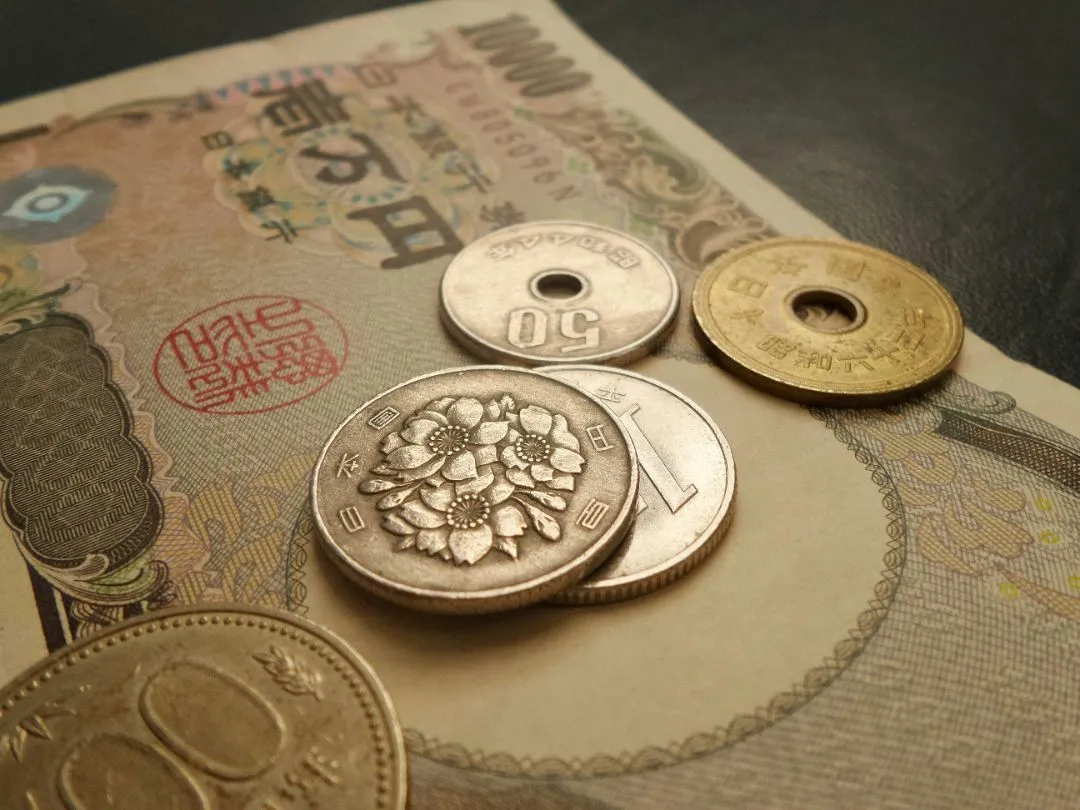
Photo by Mathew Schwartz on Unsplash


Revised code of conduct

The nation’s most populated provincial government announced today the finalization and implementation of revisions to the employee code of conduct. These changes intend to prevent government employees from exploiting their official positions for personal financial gains. Before finalizing these changes, the province had sought public feedback on the amendment until July 25.

In May, Gyeonggi Governor Kim Dong-yeon convened a meeting to call for devising a plan that encourages public officials under financial disclosure requirements to declare their virtual assets. He emphasized the importance of proactive measures in this regard.

On August 14, the provincial government presented guidelines on virtual asset reporting, detailing the reporting process, content requirements, and penalties for false submissions.


A move towards transparency

Lee Seon-beom, the Head of Gyeonggi’s Investigation Office, explained that this initiative is designed to alleviate the public’s concerns over virtual assets. It also aims to promote transparency among officials, ensuring they avoid unlawful accumulation of wealth.

More to Read
View All
Web3 & Enterprise·

Dec 12, 2023

HTX experiences $258 million outflow post-hack

HTX experiences $258 million outflow post-hackHTX, the digital-asset trading platform associated with Chinese-born crypto mogul Justin Sun, has witnessed a substantial net outflow of $258 million since resuming operations after a significant security breach.According to Bloomberg, data from DefiLlama indicates that the outflow occurred between the exchange’s restart on Nov. 25 and Dec. 10, signaling unease among some clients following last month’s cyberattack. In November, HTX reported a loss of $30 million in crypto tokens due to the breach, prompting a temporary suspension of withdrawals and deposits.Towards the end of last month, the platform re-enabled withdrawal services for major cryptocurrencies, gradually bringing the exchange back to full service, supporting withdrawal of all digital assets.Photo by Amritanshu Sikdar on UnsplashMultiple hacksJustin Sun is also associated with the Poloniex exchange and the HECO Bridge, a network established by HTX for blockchain transfers. Both Poloniex and HECO fell victim to hacks in November, resulting in the theft of approximately $200 million in crypto. It’s worth noting that hackers had previously stolen $8 million from the HTX platform in September.HTX, which was formerly known as Huobi up until a business rebrand in September, boasts an average trading volume of $1.5 billion in the past 24 hours, securing its position as the fifteenth largest exchange when measured in terms of trading volume.Increased vigilanceIn the wake of several high-profile crypto platform failures in 2022, digital-asset investors are increasingly vigilant about monitoring flows and reserves at virtual currency exchanges. In particular, that trend gained momentum after the FTX platform’s collapse last year due to fraud.November turned out to be the most damaging month this year so far in terms of platform digital asset theft. Exit scams and exploits encountered during the month totaled a staggering $363 million in losses.In October, the UK’s Financial Conduct Authority (FCA) included HTX, alongside KuCoin, on a warning list, due to their promotion of services in the UK, without having obtained the required regulatory approvals.A third of reserves in BitcoinDefiLlama data reveals that Bitcoin constitutes the largest portion of HTX’s reserves, accounting for approximately 33%. Tron’s TRX token, launched by Sun in 2017, represents around 32% of the reserves. HTX’s native exchange coin, HT, makes up 14%, followed by a Sun-backed token named stUSDT at 12%.In August, Travis Kling, Founder of Ikigai Asset Management, had this warning relative to Sun and HTX:”Justin Sun is a criminal. There’s a hole in Huobi, a hole in TUSD and a hole in Tron DeFi. Act accordingly.”TRX, at the center of U.S. fraud allegations against Sun, prompted a March lawsuit by the Securities and Exchange Commission (SEC), accusing him and his firms of market manipulation to inflate the token’s trading activity. Sun dismissed the suit on the X social media platform back in March, stating that it “lacks merit.” On Sunday, Sun claimed that the Tron blockchain network which he founded had reached a new milestone of 200 million users.Despite security firm BlockSec reporting the recovery of the $8 million stolen in September, hackers still appear to control the $30 million taken last month. The ongoing situation raises concerns about the security measures and resilience of HTX in the face of persistent cyber threats.

news
Policy & Regulation·

Jun 14, 2023

North Korean Hackers Take Off With $100M Atomic Wallet Honeypot

North Korean Hackers Take Off With $100M Atomic Wallet HoneypotHaving reported last week on a $35 million hack of Atomic Wallet users’ funds, an update on the matter reveals that the situation is much worse than originally thought, with losses now exceeding $100 million.Photo by Kenny Eliason on Unsplash5,500 wallets compromisedThe attack has sent shockwaves throughout the crypto community, raising concerns about the security of decentralized wallets. Atomic Wallet, an Estonia-based project known for its non-custodial approach where users take full responsibility for storing their assets securely, has been hit hard by this unforeseen breach.Elliptic, a crypto compliance analysis company, published an update on the situation on Tuesday. According to that blog article, it estimates that approximately 5,500 crypto wallets have been compromised, meaning that losses have risen to more than $100 million, highlighting the severity of the attack.Despite the significant impact on users, Atomic Wallet has yet to provide an explanation regarding the root cause of these substantial losses. Users have taken to social media in frustration, demanding clarification from the company. Surprisingly, the company’s last direct update on Twitter dates back to June 7, leaving users feeling even more anxious.User frustrationOne user, Ezra Carlson, expressed frustration, questioning why Atomic Wallet didn’t warn users when they were aware of the ongoing hack. Carlson tweeted: “@AtomicWallet why won’t AM give me a straight answer about why they didn’t warn me, knowing full well that they were being hacked, that it was not safe to use AM last week before I made a transfer to my wallet that was then hacked.”Another user, “Real Deal Crypto,” criticized Atomic Wallet’s lack of updates, stating: “Your last update was five days ago — SERIOUSLY?!?!”Although Atomic Wallet acknowledged reports of compromised wallets on June 3, downplaying the impact by claiming that less than 1% of users were affected, the staggering sum of losses indicates a significant breach. Its last communication on the matter came on June 11 when, in responding to a user, the firm said that it continued to investigate and to await Twitter updates on the matter.Hack tied to North Korea’s Lazarus GroupElliptic has connected this heist to the notorious Lazarus Group, a cyber-criminal organization with ties to the North Korean regime, responsible for stealing over $2 billion in crypto assets through various thefts. This attribution marks the first time a significant crypto heist has been openly linked to the Lazarus Group since their $100 million exploit of Horizon Bridge in June 2022.In response to the heist, Elliptic has been collaborating with international investigators and exchanges, mobilizing resources to recover the stolen assets. Their efforts have reportedly led to the freezing of over $1 million worth of funds. However, the thief has adapted its behavior in response to the freezing of assets, turning to the Russia-based Garantex exchange to launder the stolen assets, as noted by Elliptic.This recent attack adds to a series of notable breaches in the crypto industry. Jimbos Protocol experienced an exploit resulting in a loss of $7.5 million, and Tornado Cash faced a malicious proposal that seized control of its governance in May. According to a report by Chainalysis, crypto hackers made off with an estimated $3.8 billion in 2022, with North Korea being responsible for a significant portion of the attacks.

news
Web3 & Enterprise·

Sep 05, 2023

Hashed CEO Emphasizes South Korea’s Potential to Lead Mass Adoption of Web3 in Asia

Hashed CEO Emphasizes South Korea’s Potential to Lead Mass Adoption of Web3 in AsiaSimon Kim, CEO of Asian blockchain investment firm Hashed, highlighted South Korea’s potential to pioneer the mass adoption of Web3 during his keynote speech on Tuesday at Impact, the main conference of Korea Blockchain Week 2023 held at the Shilla Hotel in Seoul.“Korea possesses the strength to lead despite its small size,” he said. “The country will serve as the turning point for Web3.”Photo by Daniel Bernard on UnsplashTech trailblazerKim elaborated on the unique characteristics of Korea’s Web3 ecosystem, citing the so-called “kimchi premium” phenomenon, where cryptocurrencies in Korea are valued higher than other global exchanges, as well as the country’s role in leading altcoin price fluctuations and bull markets.Furthermore, Korea also has one of the world’s fastest and most widespread high-speed Internet networks, with nearly 100% coverage and a smartphone penetration rate exceeding 97%.According to Kim, digital natives are the driving force behind many inventions that have marked the country as a longstanding hub of innovation and digitization. Among these inventions is the world’s first online game, The Kingdom of the Winds, and the world’s first avatar-based social platform Freechal, as well as the pioneering e-sports league StarCraft League and game item trading platform itemBay.In particular, Freechal can be deemed as a forerunner to the current trend of using non-fungible tokens (NFTs) as profile pictures on social media. itemBay also serves as the precursor to both virtual asset and NFT exchanges. These types of early ventures are inextricably linked to the rise of cryptocurrency exchanges.Kim went on to underscore Korea’s prowess in the gaming industry, mentioning popular games like Dungeon Fighter Online, MapleStory, and PlayerUnknown’s Battlegrounds (PUBG). He noted that many local game developers have already established Web3 studios and are actively preparing to transition to the world of Web3 gaming. The K-pop industry has also been incorporating Web3 technology in various projects.Merging hemispheresHashed has been actively investing in projects since 2016, with over 150 projects in its extensive portfolio. Of these projects, approximately 71% of those based in Western countries are related to infrastructure, while 67% of those based in Eastern countries are related to digital content and apps. The company ultimately aims to serve as a bridge connecting the East and West by acting as a network builder to facilitate this exchange, Kim said.

news
Loading