Top

CME Group Expands Crypto Reference Rates to Asian Markets

Web3 & Enterprise·August 18, 2023, 12:57 AM

US derivatives marketplace CME Group is making strides in its efforts to cater to the Asian cryptocurrency market. In collaboration with crypto indices provider CF Benchmarks, the company is set to launch new reference rates for Bitcoin (BTC) and Ether (ETH) aimed specifically at the Asia Pacific (APAC) region.
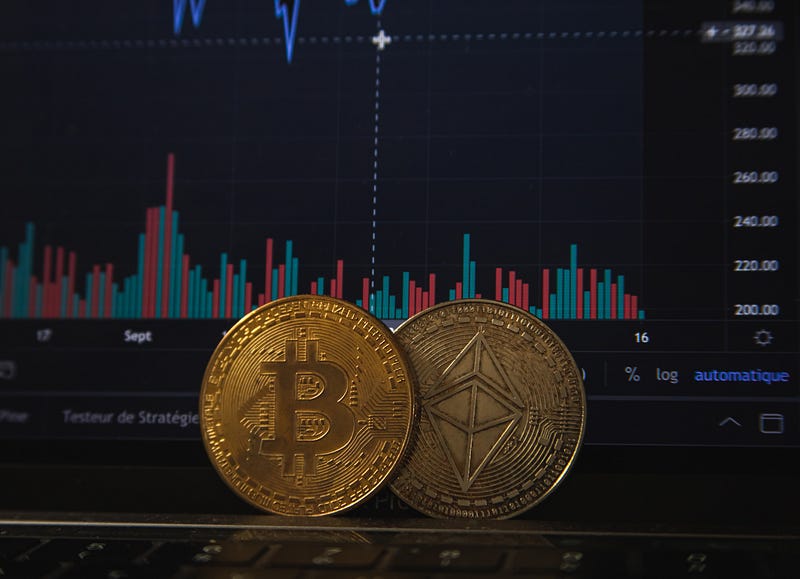
Photo by Pierre Borthiry — Peiobty on Unsplash


Going live next month

That’s according to a press release published by the company on Wednesday. These new rates, the CME CF Bitcoin Reference Rate APAC and CME CF Ether-Dollar Reference Rate APAC, are scheduled to become available on September 11, according to a joint announcement.

This move comes in response to the growing demand from Asian investors and institutions for accurate pricing data during their local trading hours. Currently, a substantial portion of CME Group’s crypto volume, about 37%, occurs outside of US trading hours, with approximately 11% of trades originating from the APAC region. The new reference rates will be published daily at 4 p.m. Hong Kong time, allowing APAC-based participants to align their crypto price risk management more closely with their portfolio strategies.


Building upon past efforts

CME Group’s efforts to provide accurate and timely reference rates have been ongoing. The company initially introduced its Bitcoin Reference Rate (BRR) in 2016, followed by the Ether Reference Rate in 2018. The BRR calculates the US dollar price of one Bitcoin as of 4 p.m. London time. It leverages the trade flow data from major Bitcoin spot exchanges within a one-hour window to provide an average of volume-weighted medians across 12 five-minute intervals during that period.

Notably, the newly announced Asia-focused reference rates will provide a variant to the existing rates tailored for London and New York. Giovanni Vicioso, CME Group’s Global Head of Cryptocurrency Products, emphasized that these APAC reference rates will facilitate more precise risk management for institutional clients utilizing Bitcoin and Ether futures products in their active portfolios or structured products like ETFs.


Focusing on Asia

CME Group’s expansion into the APAC region aligns with a broader trend of institutional interest in cryptocurrencies in Asia. The region has seen regulatory developments aimed at providing clarity to crypto businesses over the course of the past twelve months while a lack of regulatory clarity currently prevails in the United States. This move also coincides with the company’s push to further engage with the global crypto derivatives market, which accounts for around 75% of the overall crypto trading volume.

CME’s decision to launch Asia-focused reference rates is a strategic move to tap into the growing interest in cryptocurrencies from the Asia Pacific region. By offering accurate pricing information during APAC trading hours, the company aims to provide institutions and investors with better tools to manage their cryptocurrency price risks effectively. From the perspective of crypto market participants more broadly, the move is encouraging given that it comes from the world leader in derivatives markets.

More to Read
View All
Policy & Regulation·

Jul 11, 2023

Hong Kong Crypto Licensing Yet to Result in Job Surge

Hong Kong Crypto Licensing Yet to Result in Job SurgeWhile Hong Kong has seen a rush for crypto licenses, scrambling for licensing has not yet resulted in a corresponding surge in job opportunities, according to recruiters in the industry.Approximately 150 companies applied for a local crypto license on June 1, allowing them to operate crypto trading platforms, but recruiters have not witnessed a high demand for talent in the field. That’s according to reports received by Cointelegraph from a number of recruiters active in the crypto space in the Chinese autonomous territory.Photo by Simon Zhu on UnsplashBear market hangoverSue Wei, the Managing Director of major recruitment firm Hays, revealed that her firm has experienced a significant decrease in requests for recruiting technical talent since the recent dip in the crypto market. This decline was particularly notable when many talents were laid off en masse, which led to hesitancy among individuals to work for crypto companies due to the volatile nature of the business, heavily reliant on cryptocurrency prices.Neil Dundon, the Founder of crypto recruiter Cryptorecruit, also noted a lack of significant activity in the Hong Kong market. Despite the regulatory changes, venture activity remains low. However, Dundon expressed optimism that the market has reached its bottom and expects an upward trend to emerge soon.Olga Yung, the Managing Director of Michael Page Hong Kong, echoed the sentiment, stating that there hasn’t been a substantial increase in individuals seeking jobs in the Web3 sector, despite the government’s recent efforts to promote it. However, Yung did mention a slight increase in Web3 firms seeking legal and compliance hires in the latter half of Q2 2023.At the time of publication, 85 crypto-related jobs were being advertised on LinkedIn. Meanwhile, Hong Kong’s Cyberport, the city’s flagship technology hub, has attracted more than 150 companies operating within the Web3 space over the course of the past 12 months. Authorities in Hong Kong are also trying to entice Web3 companies based in mainland China to establish bases within Hong Kong.Increased job openings anticipatedAlthough these firms have displayed enthusiasm in entering the Hong Kong market, the recruitment needs of the crypto industry remain relatively light at present, as many Web3 companies are still in their early stages of development. However, recruiters anticipate a rise in job openings as these companies continue to grow and mature.Kevin Gibson, Founder of Proof of Search, a Web3 recruitment specialist, said that it may take six months before current crypto licensing activity in Hong Kong translates into a surge in demand for staff. Gibson maintains that specialist talent in Hong Kong is in short supply due to many such professionals having left the city in recent years.While Hong Kong has witnessed a rush for crypto licenses, the recruitment landscape in the industry has yet to experience a corresponding surge. However, recruiters remain optimistic about future job opportunities as Web3 companies progress and regulatory conditions stabilize.With Singapore-based Matrixport and international banking firm Standard Chartered both predicting a Bitcoin unit price in the region of $120,000 by the end of 2024, the market is expected to trend upward in the coming months. That could potentially lead to increased hiring activity in the crypto sector.

news
Web3 & Enterprise·

Mar 31, 2025

HashKey & Bosera launch world’s first tokenized money market ETFs

HashKey Group, a Hong Kong-headquartered digital asset financial services firm, has partnered with Bosera Asset Management (International) Co., the Hong Kong subsidiary of Chinese asset management firm Bosera Asset Management, to launch the world’s first tokenized money market exchange-traded funds (ETFs). In a press release published by PR Newswire on behalf of HashKey Group on March 28, HashKey outlined that the two funds are titled “Bosera HKD Money Market ETF (Tokenised Class)” and ”Bosera USD Money Market ETF (Tokenised Class).”While the products were launched last Friday, they won’t officially go live until April. Both products have been approved by Hong Kong’s Securities and Futures Commission (SFC). Photo by Vighnesh Dudani on UnsplashArising out of Project EnsembleThis latest product offering has its origins in Project Ensemble, an initiative launched by the Hong Kong Monetary Authority (HKMA) back in March 2024. The original aim of Project Ensemble was to support the development of the tokenization market in Hong Kong. The SFC got involved later that year, collaborating with the HKMA in the launch of a regulatory sandbox aimed at advancing the tokenization of assets in various financial sectors. In October 2024 it emerged that HashKey was participating within that sandbox, with these new products arising from those efforts. The company claims that these tokenized products improve upon what’s currently on offer via traditional finance, providing greater transparency and operational efficiency, thanks to the use of blockchain technology.  HashKey Tokenisation, the tokenization arm of the firm, takes care of full-process design and execution for tokenized issuance. Subsequently, these products will be deployed on HashKey Chain, a regulatory-compliant, institutional-grade layer-2 network geared towards bridging the gap between traditional finance and Web3. On that subject, HashKey Group Chairman and CEO Dr. Xiao Feng stated:"Bringing money market ETFs on-chain through blockchain technology is a crucial step for traditional finance to embrace Web3.” Looking towards the future, Feng added that the company expects “more traditional financial institutions to actively enter the crypto finance sector through innovative tokenisation products.”Anna Liu, CEO of HashKey Tokenisation, told the South China Morning Post (SCMP) that “the biggest advantages of this product are that the underlying assets are mature and high-quality, and it fully considers security and regulatory compliance while reducing investor costs and improving overall liquidity.” Liu added that the firm hopes that this product offering is the first of many, paving the way for subsequent tokenized real-world asset (RWA) offerings. Last month, Hong Kong-based digital asset platform OSL launched a tokenized mutual fund, the ChinaAMC HKD Digital Money Market Fund. The retail tokenized fund has been issued by China Asset Management (Hong Kong), with Standard Chartered Bank (Hong Kong) acting as tokenization agent, digital platform operator and administrator. In the U.S., financial services company Fidelity Investments recently filed documents with the intention of rolling out a tokenized U.S. money market fund. BlackRock, the world’s largest asset manager, launched its tokenized money market fund, BUIDL, last year. The fund is expected to surpass a market cap of $2 billion in the coming weeks.

news
Policy & Regulation·

Mar 24, 2025

Confiscated crypto fund proposed in Russia

While Russia had previously ruled out adding Bitcoin to its national reserves, the latest soundings from officials within the world’s largest country call for the creation of a crypto fund to hold and manage confiscated cryptocurrencies. According to a report published by Russian state-owned news agency TASS, Evgeny Masharov, a member of the Civic Chamber of the Russian Federation, has put forward a proposal for the formation of a special fund that would hold and manage cryptocurrencies that had been confiscated as the proceeds of crime by the Russian authorities.Photo by Artem Beliaikin on UnsplashMasharov told TASS: "Cryptocurrency confiscated in criminal proceedings should work for the benefit of the state. For these purposes, a special fund can be created, on the balance sheet of which these cryptocurrencies would be located, the capitalization of which will significantly increase over time.” In the future, Masharov proposes that the funds could eventually be used for educational, social and environmental projects. Enabling asset confiscationMasharov supported moves to define digital assets as property within the realm of criminal procedure legislation previously. Since 2021, legislation has been proposed to lay out a properly defined framework to enable the confiscation of such assets in criminal cases. As of last month, Russia’s Supreme Court is currently working towards establishing this. The Civic Chamber official expressed his willingness to discuss his proposal with other stakeholders such as crypto industry representatives and officials from Russia’s Federal Taxation Service. If this proposal was to be implemented, it would match a position taken in the U.S. with regard to a Bitcoin reserve. Earlier this month, U.S. President Donald Trump signed an executive order creating a strategic Bitcoin reserve which will be funded mainly by confiscated Bitcoin. Central bank resistanceRussia’s central bank has been largely opposed to the use of cryptocurrencies within Russia in recent years. Last December, central bank governor Elvira Nabiullina stated that the bank had no plans to invest in cryptocurrencies. Earlier that month, Anton Tkachev, a member of Russia’s State Duma, had put forward a proposal to establish a national Bitcoin reserve. With the onset of sanctions as a consequence of the conflict in Ukraine, the Russian government has softened its position with regard to cryptocurrencies. Digital assets such as Bitcoin are now seen as a mechanism to enable cross-border trade and cross-border payments, circumventing the international banking system. It was reported last year that Russia’s central bank had changed course and with that, it was leading efforts to assist Russian companies to use cryptocurrency for international trade, bypassing Western sanctions. Earlier this month, Reuters reported that Russian oil firms are now using leading cryptocurrencies such as Bitcoin, Ethereum and Tether in oil trade deals with their counterparts in China and India. In another development earlier this month, it emerged that the central bank is now allowing a limited level of crypto investment by investors. Faced with sanctions and current geopolitical realities, it’s understood that Russia had been considering the use of Bitcoin for reserve purposes, but for the time being, it has opted to concentrate on adding gold and the Chinese yuan to its sovereign wealth fund. 

news
Loading